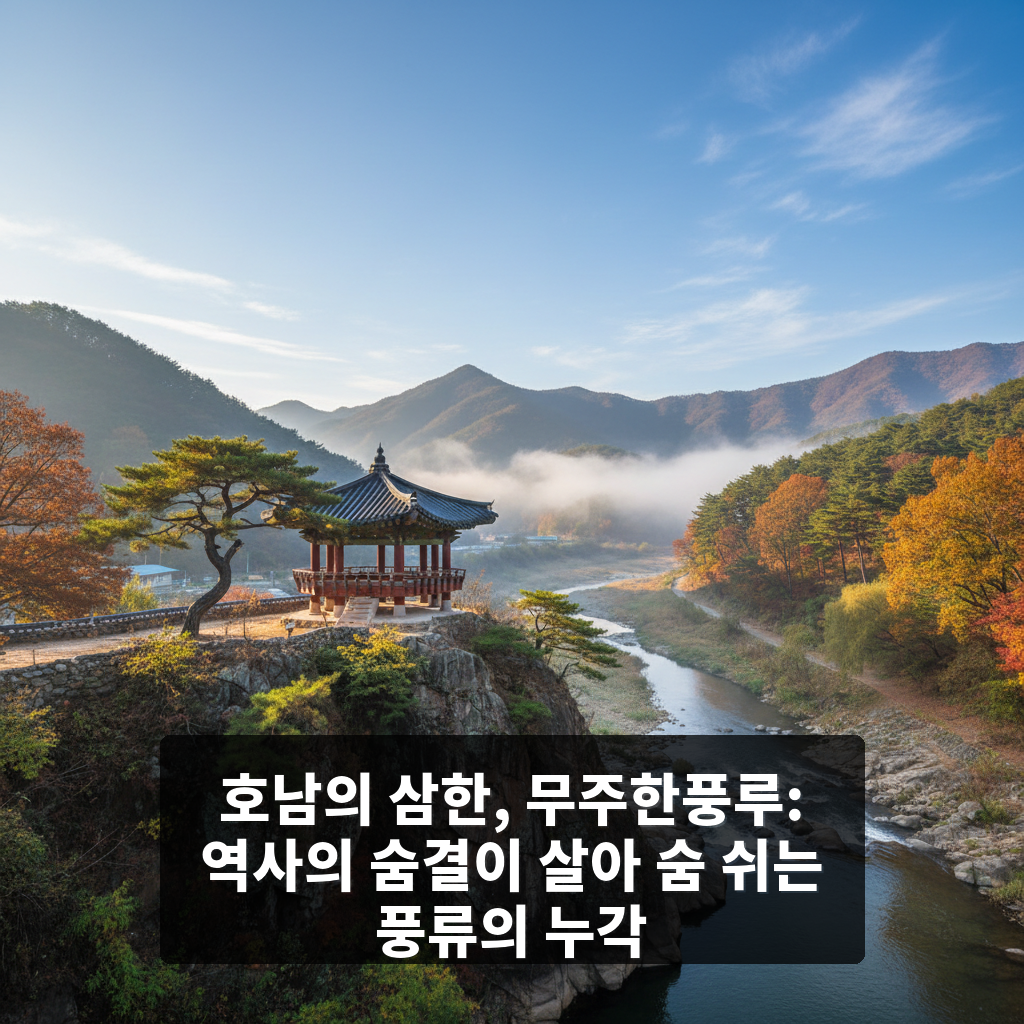
Honam’s Samhan, Muju Hanpungnu: A Pavilion of Elegance where the Breath of History Lives On


Would you believe that there is a place, along with Hanbyeokdang in Jeonju and Gwanghallu in Namwon, that is called the ‘Three Great Pavilions of Honam’? The traces of this brilliant history hidden in Muju are none other than Mujuhanpungnu. This pavilion, firmly rebuilt amidst the tragedy of the Imjin War, is not just a building but a place imbued with the wisdom and artistic spirit of our ancestors.
What stories, indeed, are embedded in this tranquil space? Through Mujuhanpungnu, which has withstood the test of time and still boasts its magnificent appearance today, we wish to unveil a forgotten page of history.
Although you cannot climb the pavilion, strolling around its perimeter and enjoying the unique atmosphere where past and present coexist offers a different kind of moving experience. Now it’s time to discover its hidden charm.
A Place Imbued with History and Elegance: Honam’s Foremost Pavilion, What’s its Secret?
Mujuhanpungnu, considered Honam’s best pavilion, has stood shoulder to shoulder with Hanbyeokdang in Jeonju and Gwanghallu in Namwon, making its name as one of the ‘Three Great Pavilions of Honam’. Although the exact year of its initial construction is unknown, it carries a history of miraculously rising again despite being tragically burned down by Japanese forces during the Imjin War.
In Seonjo 32 (1599), Imje, the elder brother who cherished Hanpungnu, appeared in a dream, earnestly wishing for its restoration. Imhwan, the younger brother and local magistrate (Hyeongam), inherited his will and rebuilt it. Later, in 1783, Hyeongam Imjungwon repaired and renovated it, giving it its present-day appearance. It is, in effect, an architectural masterpiece embodying an immortal will and artistic aspirations.
Reasons Why Mujuhanpungnu is Called ‘Honam’s Foremost’
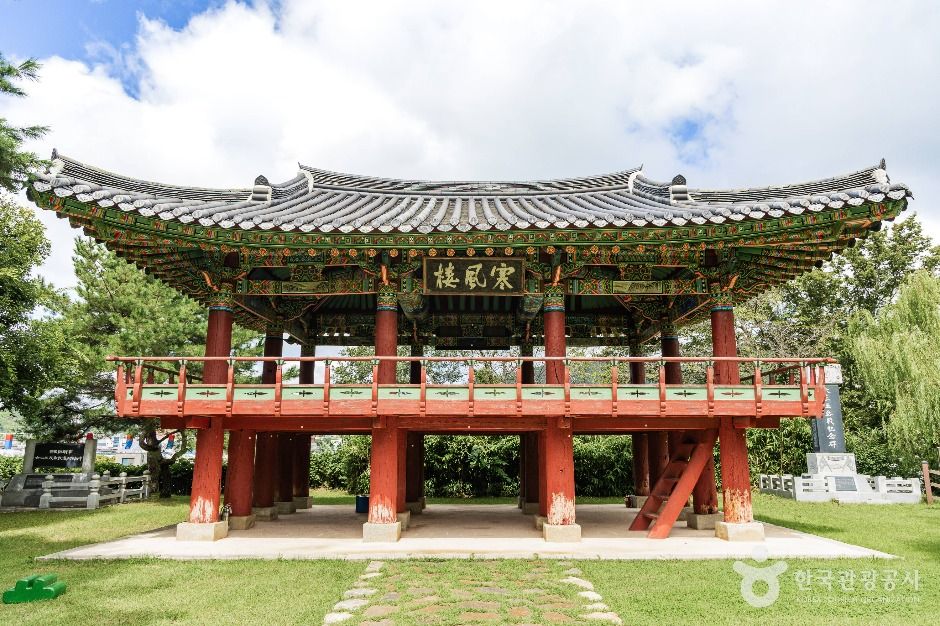
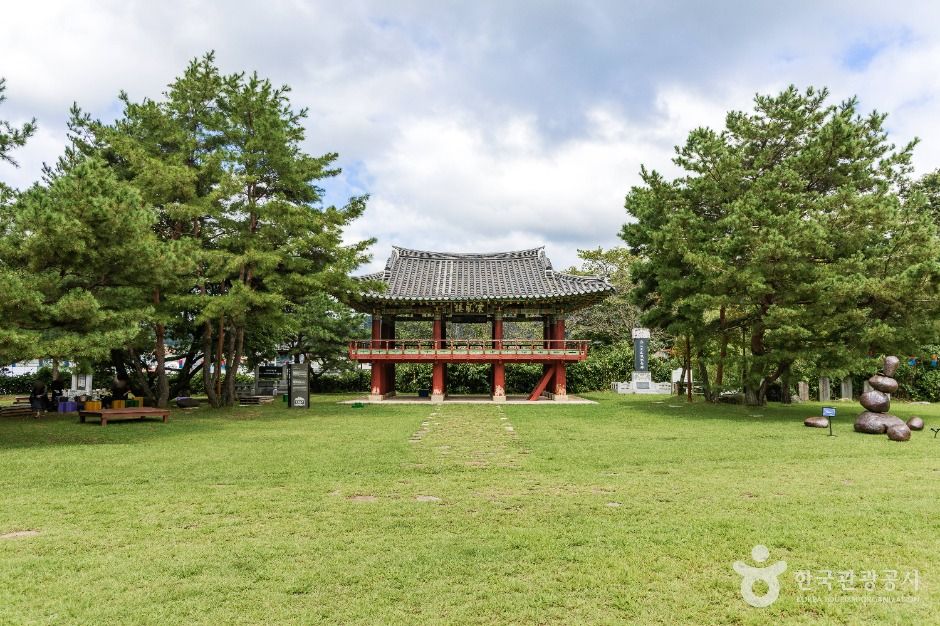
- Long History The tumultuous story of its destruction and rebuilding during the Imjin War represents not just a pavilion, but the history of the nation.
- Outstanding Scenery The surrounding landscape is so beautiful that ancient scholars (seonbi) ascended here to compose poetry and enjoy refined leisure, offering profound inspiration to beholders.
- Exquisite Architectural Beauty The unique structure of the two-story pavilion and its stable hip-and-gable roof beautifully showcase the architectural aesthetics of the Joseon Dynasty.
Architecture Embracing Time: Mujuhanpungnu’s Noble Appearance
Mujuhanpungnu is a two-story pavilion, and its structure allows us to glimpse the architectural aesthetics of our ancient ancestors. The lower level was grandly built with three bays in the front and four bays on the sides, while the upper level boasts an open sense of space with three bays in the front and two bays on the sides. In particular, the hip-and-gable roof, representing the beauty of traditional Korean architecture, features eaves that curve gracefully upwards towards the sky, harmonizing with the surrounding scenery to create a picturesque view.
Mujuhanpungnu, the Aesthetics of its Space
Klook.com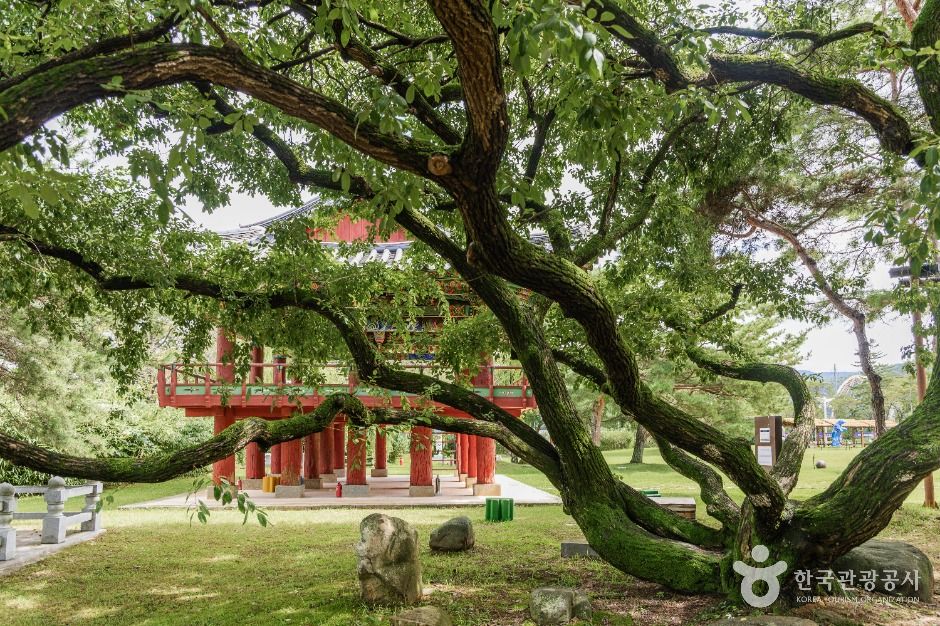
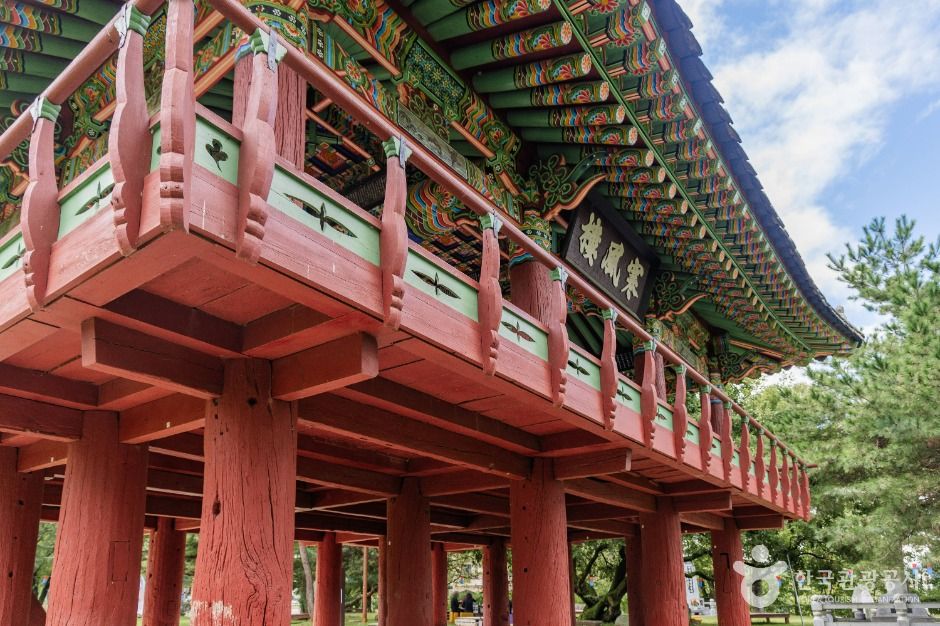
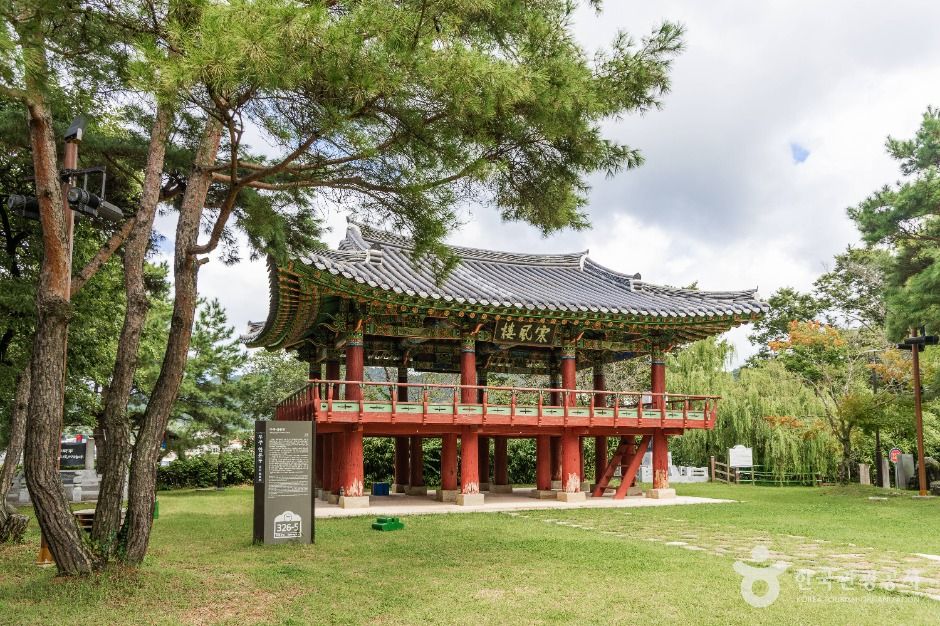
- Lower Level Structure Built solidly and robustly, it adds stability to the entire pavilion, and it is presumed to have been used for various purposes in the past.
- Upper Level Structure It offers an unobstructed view and is an optimized space for enjoying the surrounding scenery while feeling the refreshing breeze.
- Hip-and-Gable Roof Its elegant yet dynamic roofline showcases the essence of traditional Korean architecture, offering diverse beauty depending on the viewing angle.
Mujuhanpungnu, Walking in the Present: Location and Nearby Facilities
Unfortunately, direct access to the pavilion is prohibited, but the area around Mujuhanpungnu has been developed into a neighborhood park and sports facilities for visitors, allowing for a relaxed and lively time. After appreciating the tranquil beauty of the pavilion, you can enjoy a stroll in the well-maintained park or engage in light exercise to unwind.
Mujuhanpungnu, Where is it Located?
13 Hanpungnu-gil, Muju-eup, Muju-gun, Jeollabuk-do (Eupnae-ri 244-1). It is located within Muju-eup, offering good accessibility. (A detailed map will be automatically inserted upon publication of the article.)
Tips for Utilizing Nearby Facilities
- Stroll and Relaxation Stroll along the well-maintained neighborhood park and soak in the atmosphere of Hanpungnu. It’s a great place to sit on a bench and spend some time in contemplation.
- Healthy Leisure You can lightly move your body at the sports facilities to relieve travel fatigue and regain vitality.
- Family Outing There is also space for children to play, making it recommended for family visitors.
How to Enjoy Mujuhanpungnu More Specially
Mujuhanpungnu, combining historical value and architectural beauty, is a destination to be experienced with the heart, beyond just seeing it with your eyes. Here are a few tips for a more in-depth experience.
The Ultimate Checklist for History Travelers to Conquer Mujuhanpungnu
- Acquire Prior Knowledge Before visiting, research stories related to the history of Mujuhanpungnu to more vividly feel the meaning the pavilion holds.
- Linked Sightseeing in the Vicinity Within Muju-eup, there are many attractions such as Choe Buk Art Museum and Bandi Land. Plan a course to explore the charms of Muju along with Hanpungnu.
- Visit During Quiet Hours Visiting early in the morning or at dusk allows you to fully experience the true beauty of the pavilion in a tranquil and mysterious atmosphere.
- Document with Photos Take “life shots” (pictures of a lifetime) with the beautiful backdrop. Especially, the graceful curves of the hip-and-gable roof are an unmissable photo opportunity.
Mujuhanpungnu is a living history textbook, embodying the indomitable spirit that overcame past suffering, along with the outstanding architectural skills and refined elegance of our ancestors. Here, take a moment to pause and experience a special journey as if traveling back in time. Create unforgettable memories amidst the tranquil beauty that Muju offers.
Frequently Asked Questions
Q1. Is Mujuhanpungnu one of the Three Great Pavilions of Honam?
Yes, that’s right. It is referred to as one of the three pavilions of Honam, along with Hanbyeokdang in Jeonju and Gwanghallu in Namwon, and is considered the foremost among them, hence known as Honam’s best pavilion.
Q2. Can I climb Mujuhanpungnu?
Unfortunately, ascending to the pavilion building is currently prohibited for safety reasons. You can enjoy the beauty of the pavilion and relax in the surrounding neighborhood park and sports facilities.
Q3. When was Mujuhanpungnu built?
The exact year of its initial construction is unknown, but after being burned during the Imjin War (1592), it was rebuilt in Seonjo 32 (1599) by Hyeongam Imhwan, and later repaired and renovated by Hyeongam Imjungwon in 1783.
Q4. What facilities are around Mujuhanpungnu?
The area around Hanpungnu consists of a well-maintained neighborhood park and sports facilities. You can enjoy walks or light exercise, making it suitable for family visitors.
Q5. Is there anything special I should know when visiting Mujuhanpungnu?
Studying the historical background of the pavilion before your visit will deepen your appreciation. It is recommended to visit early in the morning or at dusk to experience its tranquil atmosphere.
 Love Korea? Promote it & Earn.