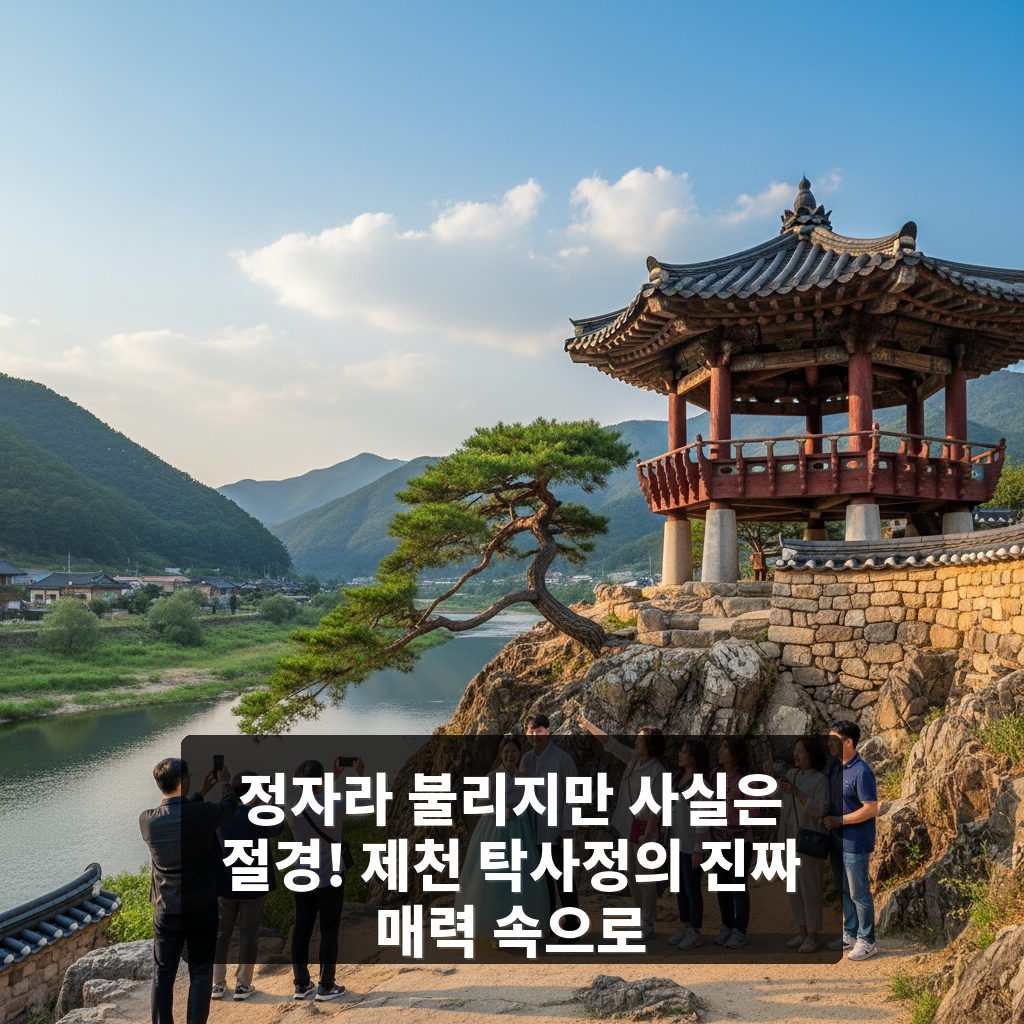
Though called a pavilion, it’s actually a spectacular view! Into the true charm of Jecheon Taksajeong


Although it has the name of a pavilion, when you actually visit, there is a place where your attention is first drawn to the overwhelming scenery around it rather than the pavilion itself. The boundary of Gangwon-do and Gyeongsang-do, where the spirit of the Charyeong Mountains and Taebaek Mountains flows, is a hidden gem of Jecheon, and this is the story of Taksajeong.
This place is not just a resting area, but a picturesque masterpiece created by a long history and the providence of nature, captivating the hearts of visitors. What kind of face will Taksajeong show us?
Taksajeong, the Hidden Gem of the Valley: What Kind of Place is It?
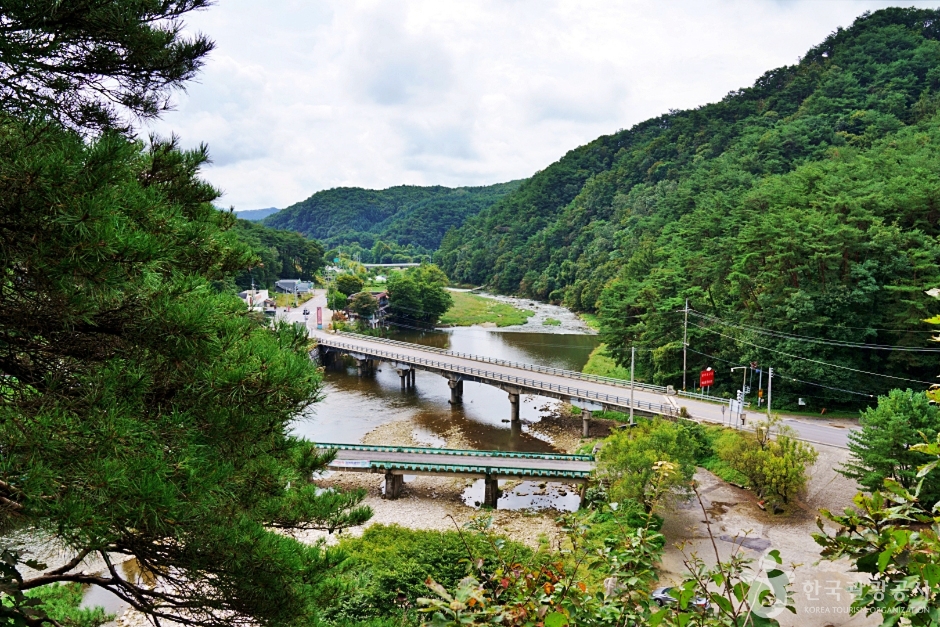
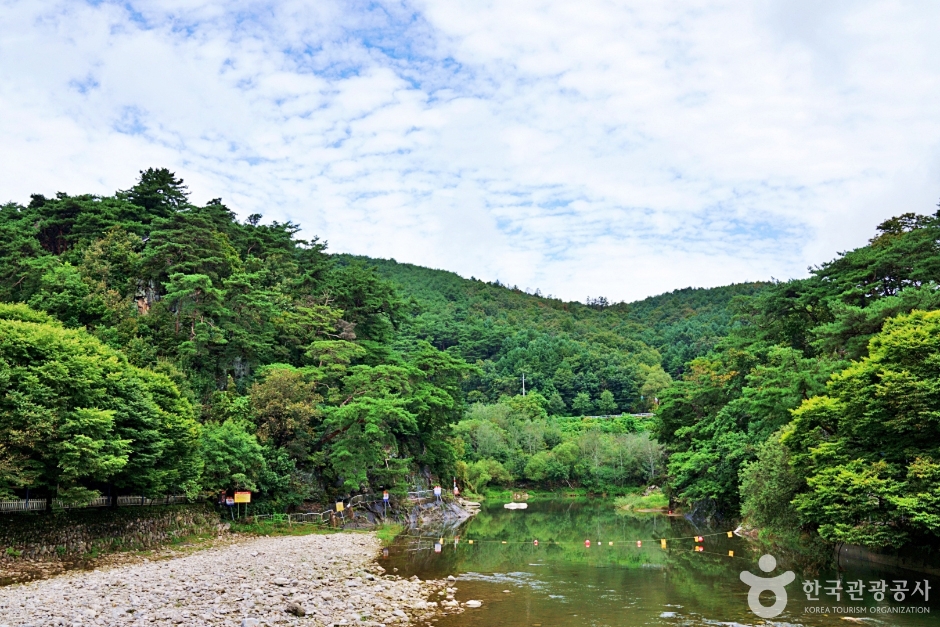
Many people often misunderstand Taksajeong as just a pavilion. However, this place, one of Jecheon’s Nine Scenic Views, is actually not the pavilion itself, but the name of a beautiful valley encompassing all the scenery surrounding the pavilion. The spectacular scenery created by the harmony of white sand, clear water, and towering old pine trees provides an unforgettable impression.
A Story Forged by Time, the Origin of Taksajeong
The history of Taksajeong dates back to the 19th year of King Seonjo of Joseon (1568). At that time, it is said that Im Eung-ryong, then the governor of Jeju, returned to his hometown and planted eight sea pine trees, calling them ‘Palsong’, and built a pavilion on top, naming it ‘Palsongjeong’. Palsongjeong, which had crumbled over time, was rebuilt by his descendant Yun Geun, and Won Gyu-sang gave it the current name ‘Taksajeong’, which it bears to this day. It is not just a simple landscape, but a space imbued with the breath of our ancestors, making it even more special.
- A picturesque masterpiece considered one of Jecheon’s Nine Scenic Views.
- The name referring to the entire valley, not just a pavilion.
- A descendant of Palsongjeong, where historic breath lives on.
The Grandeur Created by Nature: Indulge in the Scenery of Taksajeong
The Taksajeong tourist resort, nestled in the valley where the Charyeong Mountains and Taebaek Mountains diverge southwest, is truly a masterpiece of nature. In summer, cool valley breezes blow, providing relief from the heat, and the deep blue valley water offers a refreshing feeling that opens up your chest just by looking at it. The sound of small waterfalls adds tranquility like nature’s orchestra, and the surrounding magnificent old pine trees harmonize perfectly with this entire landscape.
The Diverse Aspects of Taksajeong Presented by the Four Seasons
Klook.com
| Season | Landscape Characteristics | Main Activities |
|---|---|---|
| Spring | Fresh sprouts and verdant green forests embrace the valley. | Walks, relaxation in tranquil nature |
| Summer | A summer resort with white sand, clear water, cool waterfalls, and old pine trees in harmony. | Water play, camping, fishing (limited to certain areas) |
| Autumn | Vibrantly colored autumn leaves adorn the valley, creating a spectacular view. | Autumn foliage viewing, trekking, healing |
| Winter | Snow-covered tranquil snowy scenery offers serene beauty. | Winter walks, ice scenery appreciation |
Especially in summer, the wide sandy area around Yongso beneath the pavilion bustles with vacationers enjoying camping and water play. For those who wish to relax comfortably in nature, Taksajeong will be an excellent choice without parallel.
Taksajeong: Insider Tips for Deeper Enjoyment and Nearby Attractions
Checklist to Confirm Before Your Visit
- Seasonal Preparations In summer, prepare swimwear, water play equipment, and mats, and in other seasons, comfortable shoes and light outerwear.
- Take Your Trash Back To preserve the beautiful nature, it is crucial to take any generated trash back with you.
- Adhere to Safety Rules When playing in the valley water, always be mindful of safety and it is recommended to only engage in activities within designated areas.
- Explore Nearby Restaurants There are many restaurants around that use Jecheon’s local specialties, so it is recommended to search for them before your visit.
Places to Visit Around Taksajeong
- Uirimji One of the oldest irrigation facilities in Korea, offering beautiful scenery and many attractions to enjoy.
- Cheongpunghoban A representative tourist destination in Jecheon, offering various experiences such as Cheongpung Cultural Heritage Complex and monorail.
- Bakdaljae A pass imbued with legend, boasting magnificent surrounding scenery and also great as a driving course.
Peace Found in Nature’s Embrace, a Special Day at Taksajeong
Walking among the dense old pine trees, dipping your feet in the clear valley water, and forgetting the hustle and bustle of daily life, Taksajeong becomes more than just a travel destination; it becomes a sanctuary for the mind. True to its reputation as one of Jecheon’s Nine Scenic Views, create unforgettable memories with your loved ones in this place that greets us with different beauty throughout all four seasons. A gift from nature, a day at Taksajeong will surely leave a deep impression on your life.
Frequently Asked Questions
Q1. Is Taksajeong a pavilion, or does it have another meaning?
Taksajeong refers not to the pavilion itself, but to the beautiful valley and entire landscape surrounding the pavilion that was once called ‘Daeam’, where Jeong Un-ho sang about Jecheon’s eight scenic views. It is a picturesque masterpiece counted among Jecheon’s Nine Scenic Views.
Q2. What is the best season to visit Taksajeong?
Taksajeong boasts different charms throughout all four seasons. Summer, in particular, is popular, attracting many vacationers with its white sand, clear water, and harmonious old pine trees, and autumn, with its beautiful vibrantly colored foliage, is also much loved.
Q3. Is water play or camping allowed at Taksajeong?
Yes, in summer, you can enjoy camping and water play on the wide sandy area around Yongso beneath the pavilion. However, it is necessary to adhere to safety rules and make efforts to maintain a clean environment, such as by taking all trash back with you.
Q4. Are there other tourist attractions worth visiting around Taksajeong?
Around Taksajeong, representative tourist destinations of Jecheon such as Uirimji, Cheongpunghoban, and Bakdaljae are nearby, allowing you to plan a richer trip by visiting them together. Experience the charm of each attraction together.
Q5. What is the historical origin of Taksajeong?
Taksajeong originated from Palsong (eight sea pine trees) planted by Im Eung-ryong during the Joseon King Seonjo era and the Palsongjeong pavilion he built. Later, his descendant Yun Geun rebuilt it, and Won Gyu-sang gave it the name ‘Taksajeong’, which it bears to this day.
 Love Korea? Promote it & Earn.