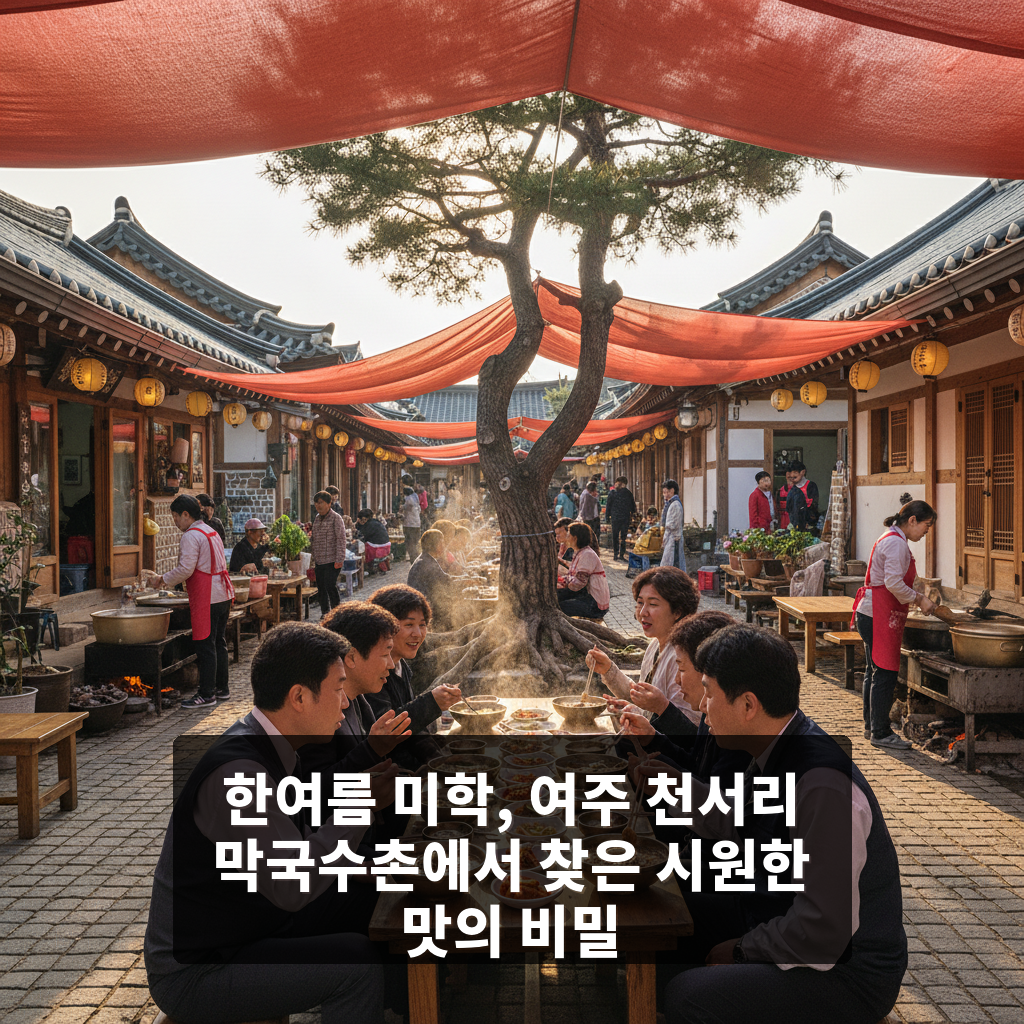
Midsummer Aesthetics, the secret of a refreshing taste found in Yeoju Cheonseori Makguksu Village


During seasons when it’s easy to lose one’s appetite, or when yearning for a special delicacy, it’s hard to resist the temptation of a bold yet refreshing flavor. A bowl of Makguksu, with its perfect cold broth combining the depth of pheasant broth and the freshness of dongchimi, topped with chewy buckwheat noodles, offers a gourmet experience beyond simple food. Cheonseori Makguksu Village, located in Yeoju, Gyeonggi Province, is a culinary pilgrimage site where food lovers from all over the country gather to seek that very experience.
As its name originates from a village located west of Sinnarecheon, which means ‘stream bestowed by God’, this place has preserved its long history and tradition while maintaining a special taste. Nestled at the foot of Pasasanseong Fortress, designated as a historic site, this unique flavor, born in the embrace of nature, leaves a strong, unforgettable impression once tasted. Today, it’s time for us to explore every corner of this charming Makguksu Village and uncover the essence of its uniqueness.
The Magic That Awakens Your Palate: The Ecstasy of Cheonseori Makguksu
The fame of Cheonseori Makguksu Village didn’t just start from a single delicious bowl. The spicy and refreshing flavor that comes alive with every bite is fundamental, but the core lies in its unique broth. Refusing to be ordinary, the broth here is made by mixing pheasant broth and cool dongchimi broth in a golden ratio. This cold broth is truly a magical presence that elevates ordinary buckwheat noodles into a special work of art.
Cheonseori Makguksu: What Makes It Different?
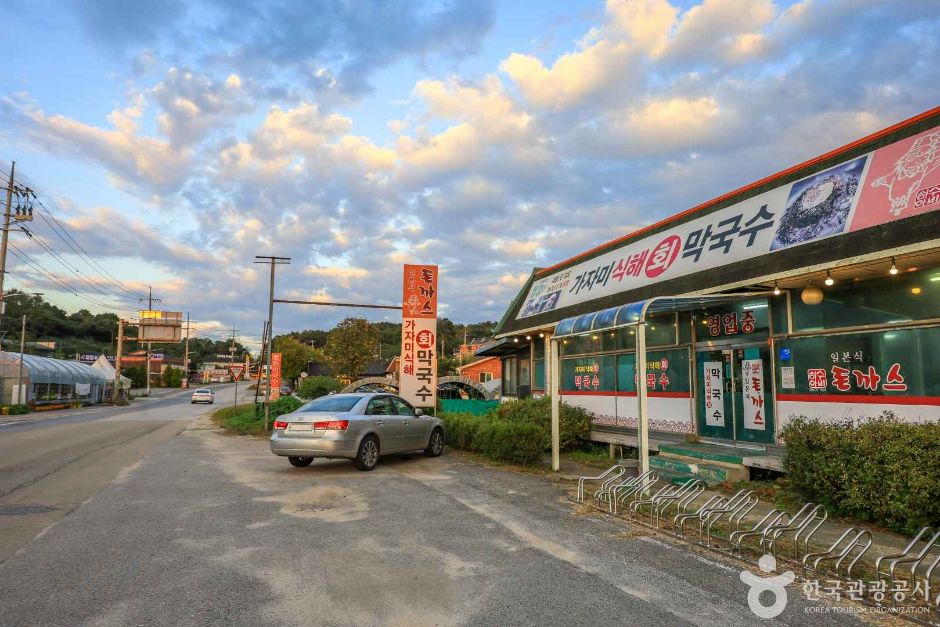
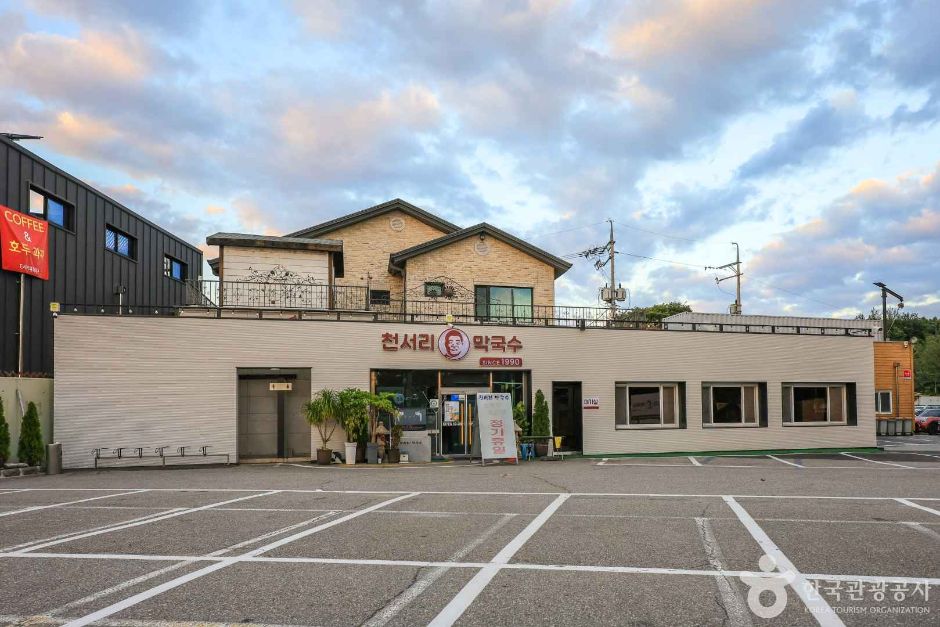
- Original Cold Broth A deep and refreshing flavor created by the exquisite encounter of pheasant and dongchimi.
- Chewy Buckwheat Noodles The unique aroma and chewy texture of buckwheat cultivated in the mountainous regions of Gyeonggi Province and Gangwon Province.
- Stimulating the Five Senses A harmony of nose-tingling spiciness, mouth-filling coolness, and clean flavor.
- Unforgettable Lingering Impression An addictive taste that you keep thinking about even after finishing a bowl.
Stories Within the Flavor, From Place Names to Noodles
The place name Cheonseori is said to have originated from being located west of Sinnarecheon, which means ‘stream bestowed by God’. Perhaps the secret to Makguksu’s mysterious flavor is hidden within its name. This is not just a place where restaurants gather, but a living culinary region that breathes with local history.
Buckwheat: More Than Just a Grain
Klook.com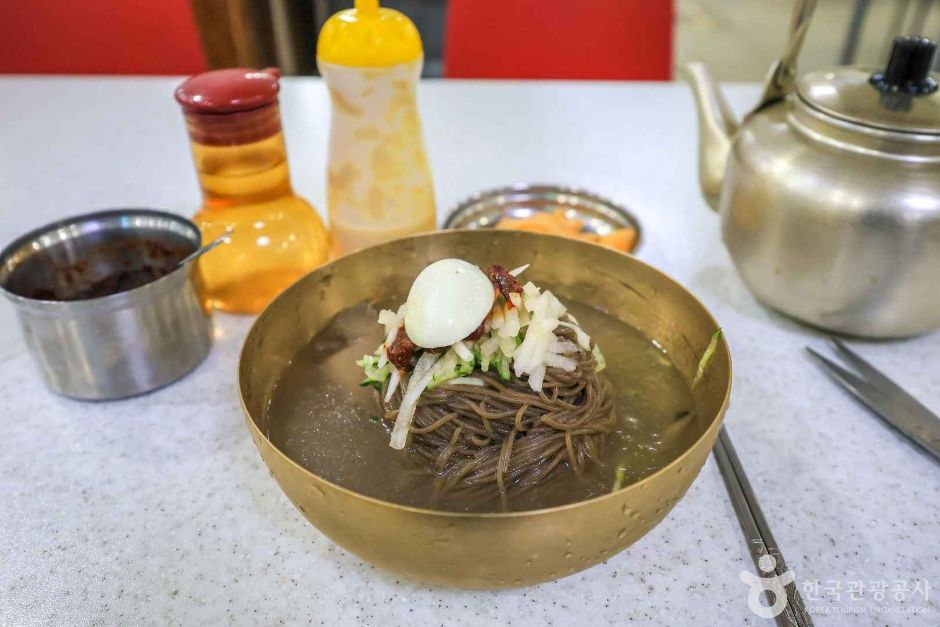
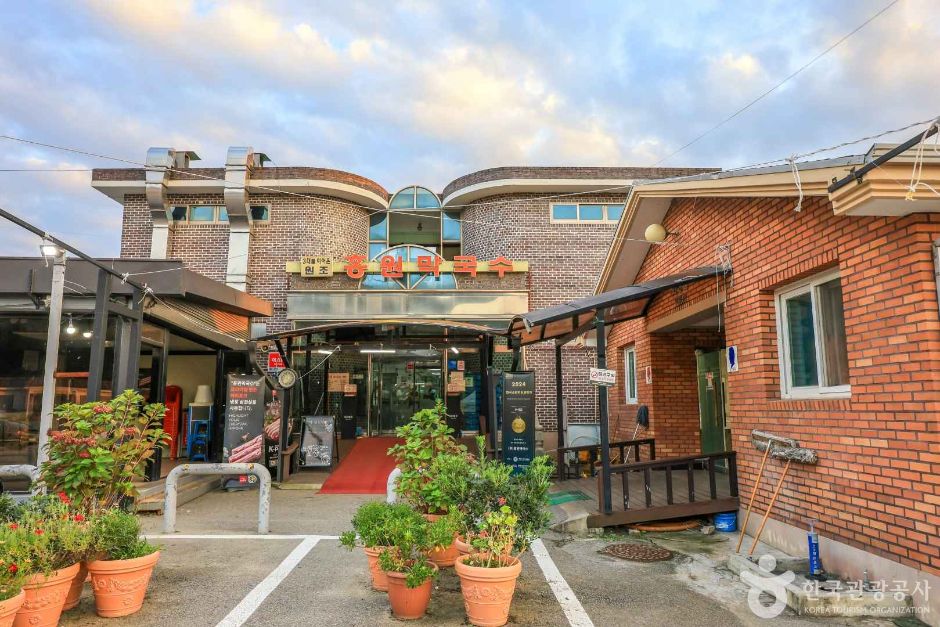
How Buckwheat Reaches Our Tables
- Long History Buckwheat has long been cultivated in the mountainous regions of Gyeonggi Province and Gangwon Province.
- Excellent Nutrition Known as a nutritionally excellent food, it was sometimes eaten as a postpartum meal, even before seaweed soup, in the past.
- Local Characteristics These regional characteristics have greatly influenced the development of Cheonseori Makguksu Village.
Beginning the Journey: The Way to Cheonseori Makguksu Village
The most important thing for embarking on a culinary journey is finding your way. Yeoju Cheonseori Makguksu Village is located in Cheonseori, Daesin-myeon, Yeoju-si, and its good accessibility attracts many visitors. When using public transportation, you can take a city bus or a taxi from Yeoju Terminal; when driving, you can easily find it by searching for ‘Yeoju Cheonseori Makguksu Village’ on your navigation system. Located near Pasasanseong Fortress, a designated historic site, it offers a two-for-one trip where you can enjoy Makguksu and admire the surrounding scenery.
Accessibility Checklist: Essential Checks for Your Makguksu Trip
- By Car Enter ‘Yeoju Cheonseori Makguksu Village’ into your navigation system. Parking spaces are mostly provided per restaurant or public parking lots are available.
- By Public Transportation We recommend taking a city bus (towards Daesin-myeon) or a taxi from Yeoju General Terminal.
- Connect to a Travel Course Plan a day trip by combining it with nearby Pasasanseong Fortress, Yeoju Ipobo, Silleuksa Temple, and other attractions.
A Bowl of Makguksu, More Than Just a Meal: A Cultural Experience
Beyond simply filling your stomach, a visit to Cheonseori Makguksu Village can be a cultural experience. In addition to the pleasure of eating delicious food, you can reflect on the historical significance of Pasasanseong Fortress and enjoy the beautiful scenery along the Namhangang River, purifying your body and mind.
Attractions Near Yeoju to Enjoy with Makguksu
- Pasasanseong Fortress An ancient fortress presumed to have been built during the Baekje period. Located directly behind Cheonseori Makguksu Village, it’s great for a light stroll.
- Ipobo Weir As a central point of the Four Major Rivers Bike Path, it’s perfect for cycling or strolling along the beautiful riverside scenery.
- Silleuksa Temple A tranquil temple located along the Namhangang River. With many treasure-class cultural heritage items, you can experience both history and culture.
- Yeoju Outlet A must-visit for those who love shopping. Fill your stomach with Makguksu and add the joy of shopping.
Cheonseori Makguksu Village: Tips for the Best Taste Experience
When faced with numerous Makguksu restaurants gathered here, you might wonder which one to choose. Most restaurants boast excellent taste based on long tradition and expertise, so it’s a good idea to research each restaurant’s unique characteristics beforehand or choose one that appeals to you on the spot. After your meal, explore the nearby attractions to complete a special day in Yeoju.
When is the Best Time to Visit? Seasonal Recommendations
| Season | Recommendation |
|---|---|
| Spring/Autumn | The clear weather makes it great for strolling around Pasasanseong Fortress and other nearby areas. With many visitors, you can feel a lively atmosphere. |
| Summer | The spicy and refreshing Makguksu shines brightest in this season. It’s the best choice to beat the summer heat. |
| Winter | Makguksu enjoyed with warm noodles or hot dumplings is also a delicacy. You can savor the taste in a relatively tranquil atmosphere. |
Frequently Asked Questions
Q1. What is the special broth secret of Cheonseori Makguksu?
Cheonseori Makguksu features a cold broth made by sequentially mixing pheasant broth and dongchimi broth. The harmony of these two ingredients creates a refreshing and clean taste.
Q2. Are there any other foods to enjoy at Cheonseori Makguksu Village besides Makguksu?
Most Makguksu restaurants also sell various side dishes that pair well with Makguksu, such as buckwheat crepes, boiled pork slices, and dumplings.
Q3. Where are some good places to visit near Cheonseori Makguksu Village?
Various attractions encompassing nature, history, and shopping, such as Pasasanseong Fortress, Ipobo Weir, Silleuksa Temple, and Yeoju Premium Outlets, are located nearby, making them great to visit together.
Q4. Is Cheonseori Makguksu very spicy?
Cheonseori Makguksu is characterized by its spicy and refreshing taste, but some restaurants allow you to adjust the level of spiciness. It’s best to inquire when ordering.
Q5. Which season is best for a visit?
Makguksu is great to enjoy year-round, but it’s particularly popular in the hot summer for its refreshing taste, and in spring/autumn for enjoying the surrounding scenery.
 Love Korea? Promote it & Earn.