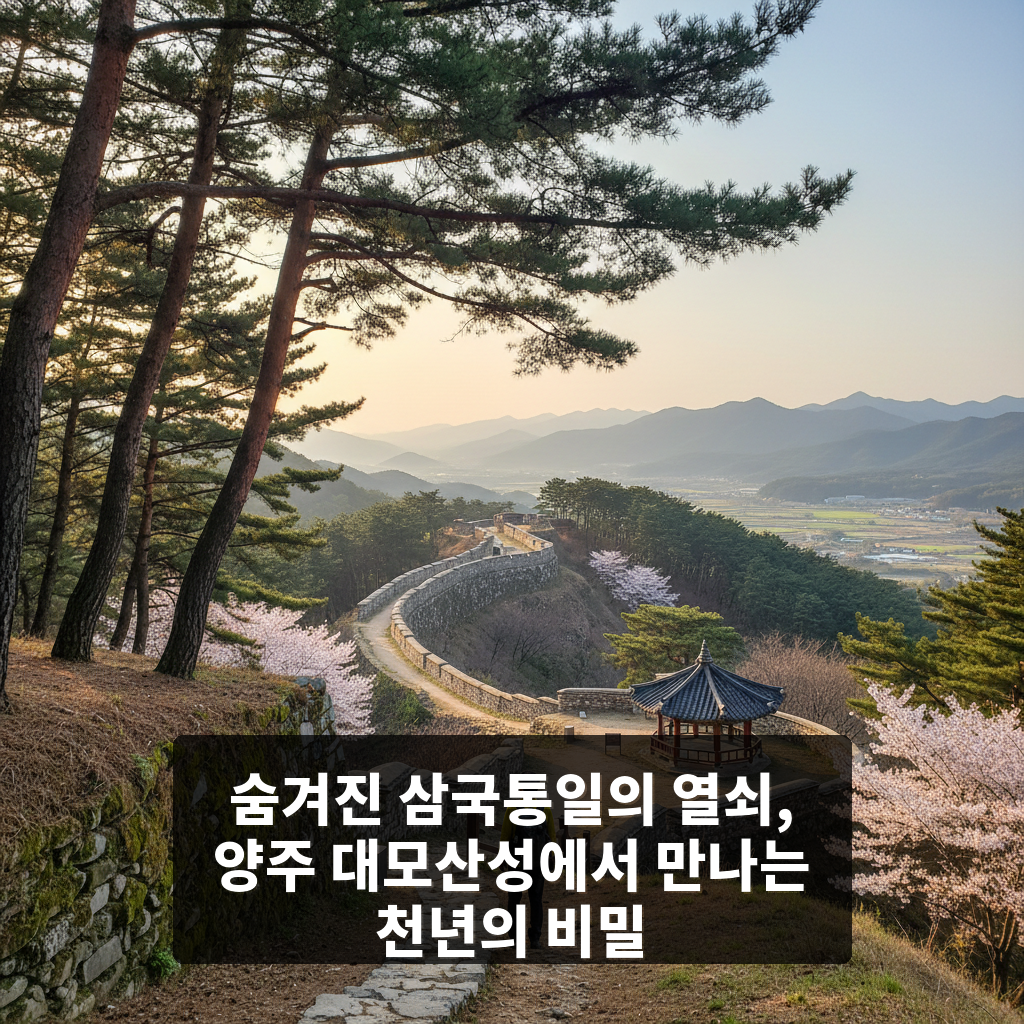
Hidden key to the Unification of the Three Kingdoms, a millennium-old secret found at Yangju Daemosanseong


What if a decisive battle that completely changed the course of Korean Peninsula history was hidden somewhere on an ordinary mountain peak we now pass by? And what if, at that very site, Silla’s final victory and the prelude to the unification of the Three Kingdoms began? Following the breath of history we never knew, we embark on a time journey to that very place, Yangju Daemosanseong.
This is not just a mountain fortress. It is a historic site presumed to be ‘Maechoseong’, which in 675 (15th year of King Munmu of Silla), became the decisive turning point for defeating the Tang Dynasty’s great army and achieving the unification of the Three Kingdoms. Located at a strategic transportation hub connecting the Imjin River and Han River basins, this is where the story of Yangju Daemosanseong, which has served its role as both a strategic point and an administrative center for a long time, now unfolds.
The Name That Changed the Course of History, Is it Maechoseong?
‘Maechoseong’, which only existed in historical records, is known as the place where the decisive battle took place, leading to Silla’s great victory over the Tang Dynasty’s massive army and the unification of the Three Kingdoms. Many scholars identify Yangju Daemosanseong, located on the peak of Daemosan (212m above sea level), spanning across Yangju-si Uyang-dong and Bangseong-ri, Baekseok-eup, as that very Maechoseong. If this assumption is true, then this place becomes more than just a historical site; it becomes a dramatic scene that reshaped the course of Korean Peninsula history.
Why is this place garnering attention as Maechoseong?
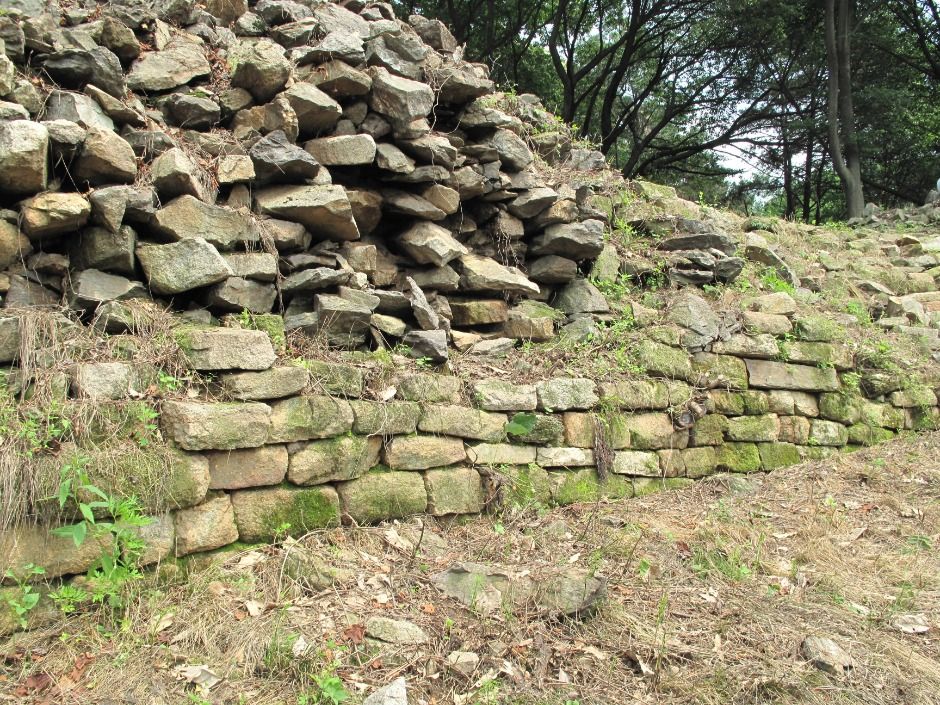
- Strategic Geographical Point Located at a crossroads connecting the Imjin River and Han River basins, it served as a very important military and administrative base since ancient times.
- Strategic Value It was a natural fortress capable of effectively defending various surrounding areas, and simultaneously fulfilled the role of an administrative center.
- Excavated Artifacts Within the fortress, a diverse range of artifacts from the Three Kingdoms period, as well as the Unified Silla, Goryeo, and Joseon periods, are evenly distributed, proving its significant role over a long period.
A Millennium of Time Carved into Daemosanseong
Yangju Daemosanseong, a stone-built mountain fortress constructed in a circular ‘temoe-sik’ style around the peak of Daemosan, itself embodies the undulations of history. The perimeter of the elliptical fortress wall measures approximately 1.4km, with a height of around 4-5m. Although many parts have collapsed, approximately 70-80m of the fortress wall in three locations, including to the left and right of the North Gate site and the eastern side, hints at its former grandeur.
Traces of Antiquity Found in the Fortress
Klook.com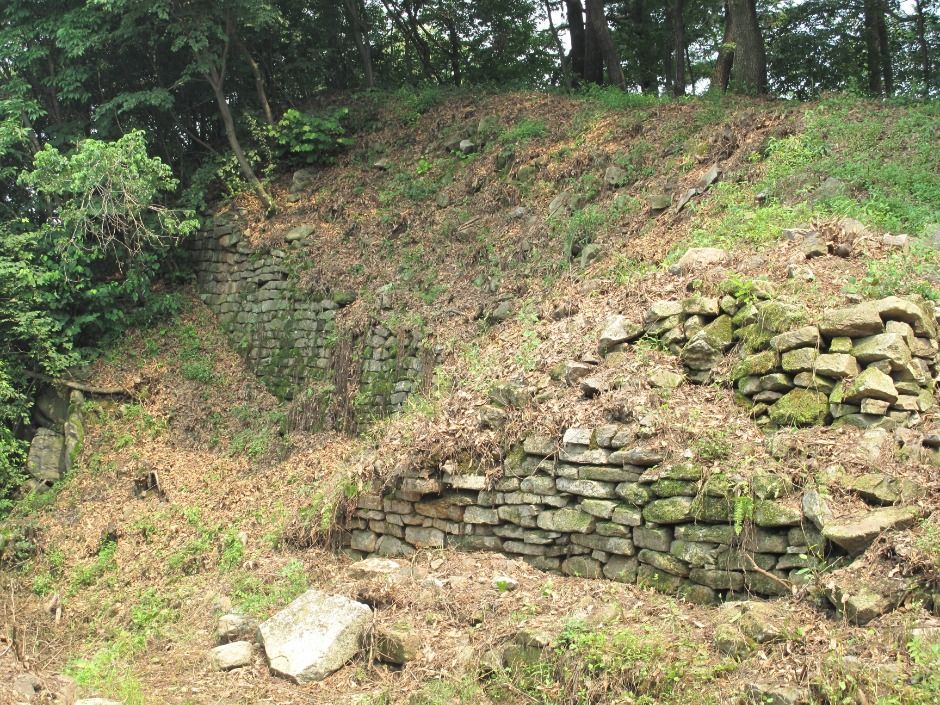
A total of three gate sites have been identified, and within the fortress, there are several flat areas presumed to be building sites. Notably, five wells have been discovered, offering a glimpse into the long-term occupation and daily life. Given such robust defensive facilities and living infrastructure, one can infer how crucial a role Daemosanseong played as a strategic stronghold.
| Identified Structures/Remains | Features |
|---|---|
| Fortress Wall | Perimeter approx. 1.4km, height 4-5m. Approximately 70-80m of the wall remains in good condition in 3 locations, including to the left and right of the North Gate site and the eastern side. |
| Gate Sites | 3 sites identified (presumed East, West, North Gate sites) |
| Building Sites | Several flat areas identified within the fortress, presumed to be former building sites |
| Wells | Total of 5 discovered, securing water supply necessary for long-term occupation |
Various artifacts have been unearthed from within the building sites and around the gate sites. Among the artifacts from the Three Kingdoms period, those from Baekje and Silla are predominant, and a balanced distribution of artifacts from the subsequent Unified Silla, Goryeo, and Joseon periods shows that this fortress was continuously utilized regardless of the era. Currently, traces of the fortress wall constructed by Silla remain.
A Journey Beyond Time, to Yangju Daemosanseong
Yangju Daemosanseong, holding such deep history, is located adjacent to Uyang-dong and Bangseong-ri, Baekseok-eup, Yangju-si, Gyeonggi-do. Located near Yangju Byeolsandae Nori Madang, you can plan a meaningful trip where history and culture blend together.
Daemosanseong Location and How to Get There
Tips for Visiting Daemosanseong
- Hiking Preparation As it is located on the peak of Daemosan, it is recommended to prepare comfortable hiking shoes and attire. There may be some uphill sections.
- Enough Water Although there are wells within the fortress, it is advisable to bring your own water bottle for drinking.
- Allow Ample Time Allow at least 2-3 hours to walk along the fortress wall and explore the internal historical sites.
- Choose the Season Spring and autumn offer pleasant weather, making them the best seasons for hiking and exploring the fortress. While the winter snowscape is beautiful, be cautious of slippery conditions.
- Connect with Nearby Attractions Visit in conjunction with the nearby Yangju Byeolsandae Nori Madang to experience both history and traditional culture.
Beyond Daemosanseong, Another Story of Yangju
After exploring Yangju Daemosanseong, you can explore other nearby attractions and experience the diverse charm of Yangju. There are many places where you can encounter not only historical sites but also beautiful natural scenery and traditional culture.
Yangju Attractions Where History and Culture Breathe
- Yangju Byeolsandae Nori Madang Located right next to Daemosanseong, this is a performance venue for Yangju Byeolsandae Nori, a UNESCO Intangible Cultural Heritage of Humanity. You can directly experience and appreciate Korea’s traditional culture.
- Yangju Gwanaji The site of the government office that was the administrative center of Yangju-mok during the Joseon Dynasty, it is currently being developed into a space where you can feel the breath of history through restoration projects.
- Hoeamsa-ji A large-scale temple site representing Buddhist culture from the late Goryeo to early Joseon periods, it is an important historical site currently being pursued for UNESCO World Heritage designation.
- Songam Space Center A great place to visit if you are interested in astronomy, it is equipped with celestial observation facilities and various space experience programs.
Frequently Asked Questions
Q1. What are the reasons why Yangju Daemosanseong is presumed to be Maechoseong?
Daemosanseong is known as ‘Maechoseong’, which in 675 (15th year of King Munmu of Silla), became the decisive opportunity for defeating the Tang Dynasty’s great army and completing the unification of the Three Kingdoms. Geographically, it is a strategic stronghold connecting the Imjin River and Han River basins, and the excavated artifacts also reflect the trends of that era, making it a strong candidate for this presumption.
Q2. Are there any precautions when visiting Daemosanseong?
As you need to walk mountain trails to reach Daemosanseong, comfortable shoes and attire are recommended. Especially after rain, the path can be slippery, so please be careful, and it’s good to bring enough water. Most facilities within the mountain fortress are historical sites, so special care must be taken to prevent damage.
Q3. What historical relics remain inside Daemosanseong?
Inside Daemosanseong, there are several flat areas presumed to be building sites, and 5 wells necessary for daily life have been identified. Furthermore, various artifacts from the Three Kingdoms period to the Joseon Dynasty have been unearthed from around the gate sites and within the building sites, allowing us to infer its history.
Q4. What is the best season to visit Daemosanseong?
Spring and autumn offer pleasant weather, making them the best seasons for hiking and exploring the fortress. Especially in autumn, the beautiful autumn foliage allows for even richer scenery. In summer, it is advisable to visit in the early morning or late afternoon to avoid the heat.
Q5. Are there any other places to visit around Daemosanseong?
Yes, right next to Daemosanseong is Yangju Byeolsandae Nori Madang, which is great for experiencing traditional culture. Additionally, there are various related tourist attractions such as historical sites like Yangju Gwanaji and Hoeamsa-ji, and Songam Space Center, allowing for a rich travel plan.
 Love Korea? Promote it & Earn.