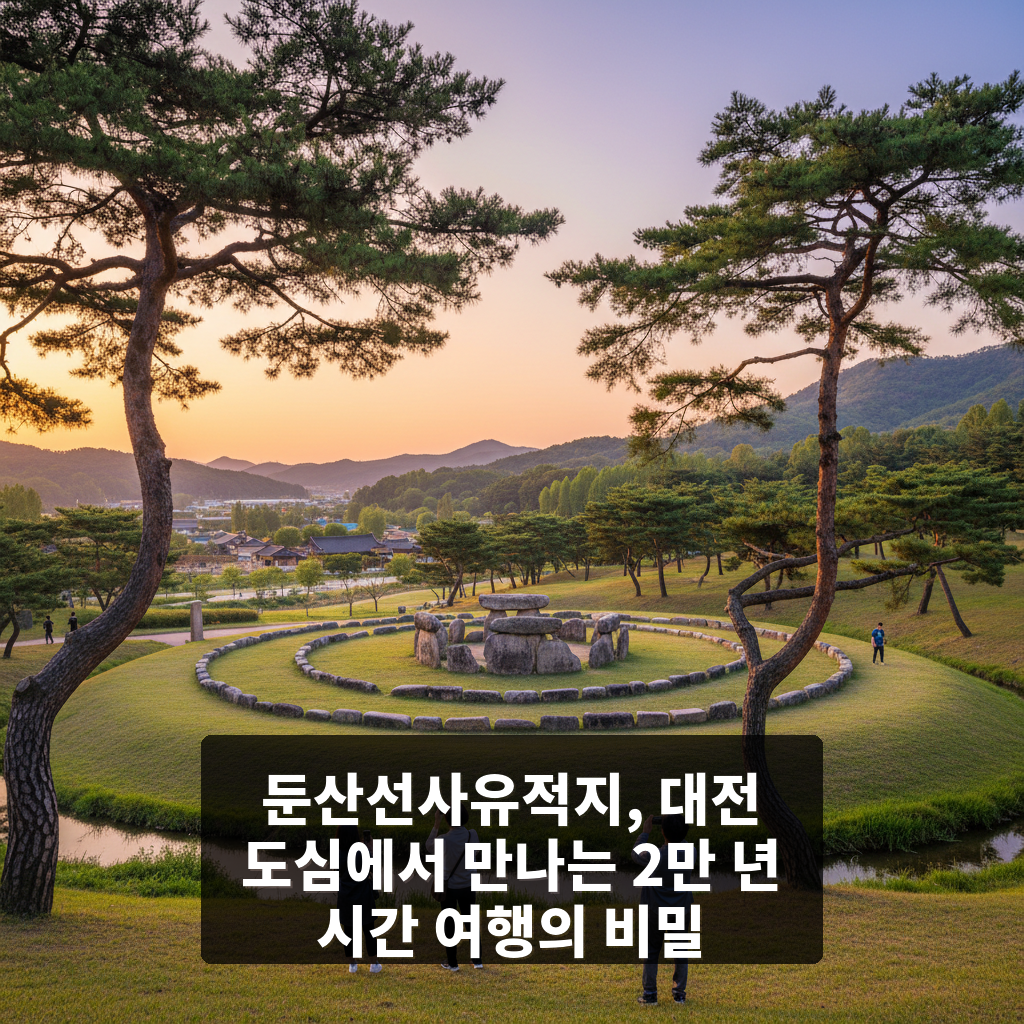
Dunsan Prehistoric Site, the secret of a 20,000-year time journey encountered in Daejeon’s city center


We are now standing in Dunsan District, often called the heart of Daejeon in the 21st century. But what if the breath of humankind from tens of thousands of years ago lies undisturbed beneath these bustling streets? As if traveling back in time on a time machine, Daejeon’s Dunsan Prehistoric Site opens that amazing door to time. This is indeed an unprecedented treasure trove of history, where traces of the Paleolithic, Neolithic, and Bronze Ages were discovered in one place.
In 1991, when the blades of development reached it, Dunsan District once led us into an unknown era. The relics unearthed at that time eloquently demonstrate how long ago humanity cultivated a homeland on the land of Daejeon. This Dunsan Prehistoric Site is not merely an artifact, but a living record containing the wisdom and sorrows of our ancestors’ lives.
A Timeless Encounter: The Prehistoric Three Musketeers in one place?

Can you imagine how wondrous it is that traces of the Paleolithic, Neolithic, and Bronze Ages were simultaneously unearthed in one place? Dunsan Prehistoric Site is a special place, the first in Korea where all of these ‘Prehistoric Three Musketeers’ were excavated together. This discovery clearly shows that Daejeon has been a historic homeland where humanity settled and lived from long ago.
Why here? Daejeon’s Geographical Blessing
For prehistoric people, securing water and food was paramount when choosing a settlement. The Dunsan area perfectly met these conditions. The gentle hills around Gapcheon River, vast agricultural land, and abundant water provided an ideal environment for many people to gather and live. This geographical advantage is precisely why this place could become a cradle of human civilization spanning the ages.
Traces of the Prehistoric Age Found in Dunsan


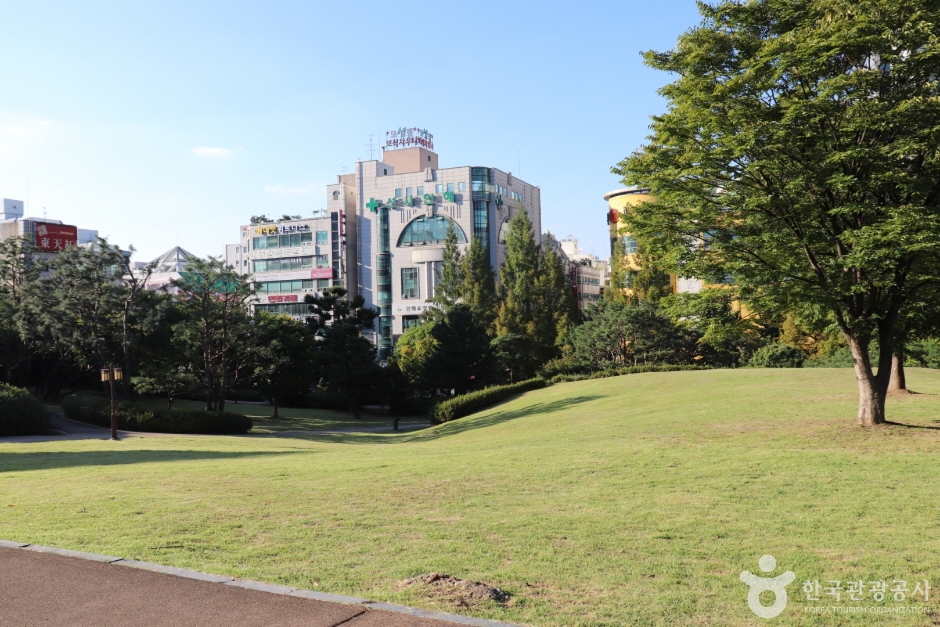
- Paleolithic Age: More than 50 chipped stone tools were excavated, indicating that humans engaged in hunting and gathering in the Daejeon area from a very long time ago.
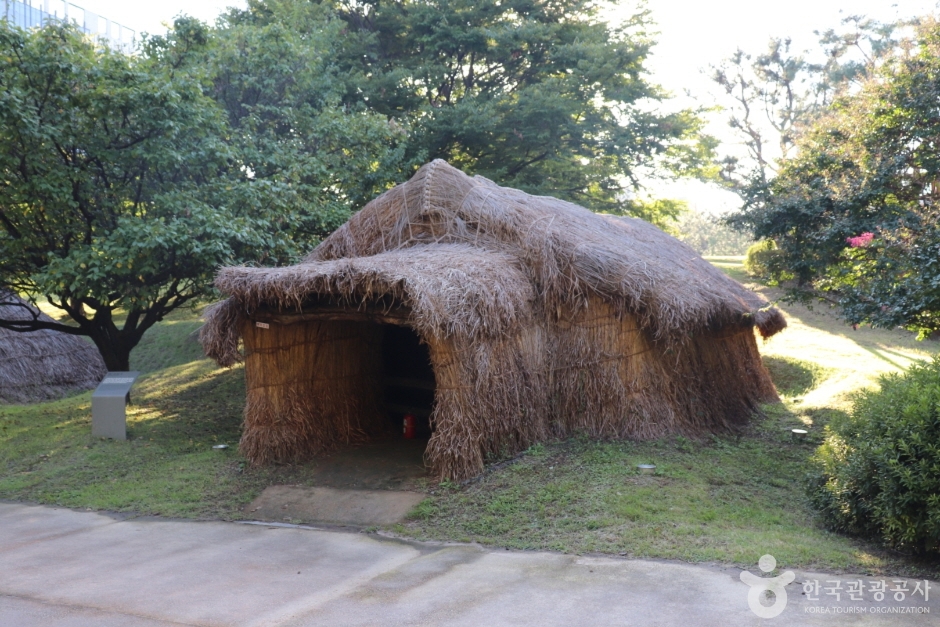
- Neolithic Age: Fragments of comb-pattern pottery, pit-houses, and pits were unearthed, offering a glimpse into the beginning of agriculture and settled life.
- Bronze Age: Three house sites were identified, suggesting the formation of a more organized and larger village community.
Dunsan, A Glimpse into Ancient Life: A Vivid Record of Human Civilization
The relics excavated at Dunsan Prehistoric Site are not merely old stones or fragments of earth. They are valuable clues that allow us to infer the lifestyle, technology, and social structure of the people of that time. From the pit-house sites, we can imagine their dwelling forms, and from the fragments of comb-pattern pottery, their methods of food preparation and storage.
| Prehistoric Period | Main Excavated Relics | Significance of Dunsan Prehistoric Site |
|---|---|---|
| Paleolithic Age | Approx. 50 chipped stone tools | Proof of the oldest human habitation in the Daejeon area |
| Neolithic Age | Pit-house sites, pits, fragments of comb-pattern pottery | Traces of the beginning of agriculture and settled life |
| Bronze Age | 3 house sites | Confirmation of organized village community formation |
These discoveries clearly show the significant academic value of the Dunsan Prehistoric Site. After excavation, the area was developed into a Prehistoric Relics Park, allowing ordinary citizens to directly encounter traces of the past. Recognizing its value, it was designated as a Daejeon Metropolitan City Monument on October 28, 1992.
In a Modern City, Searching for the Breath of Prehistory
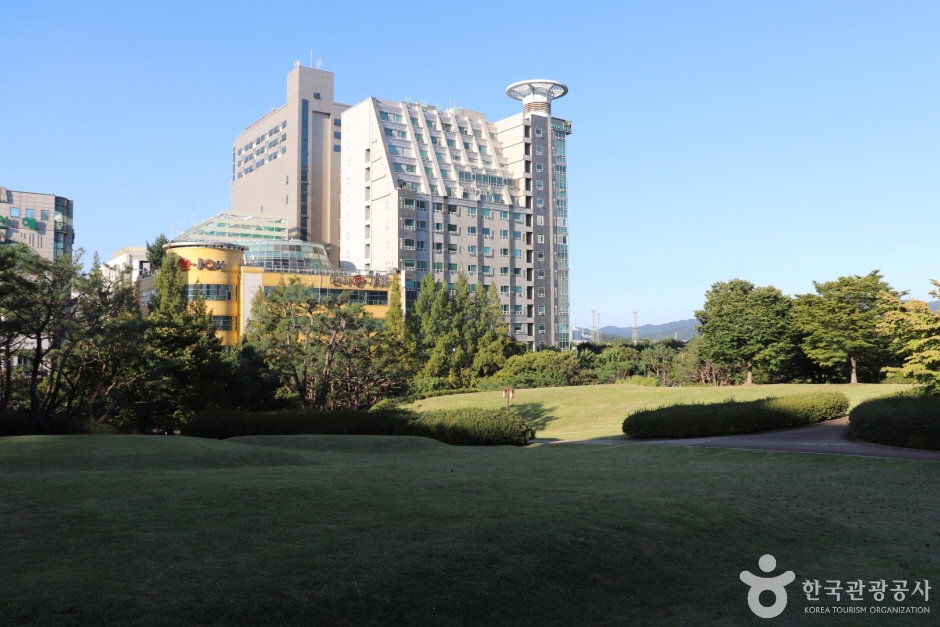

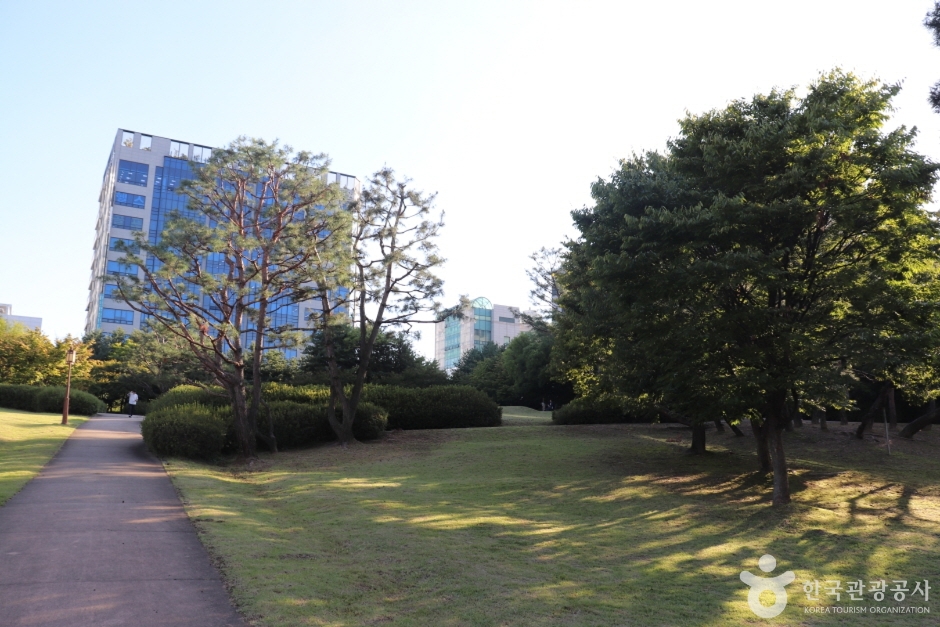
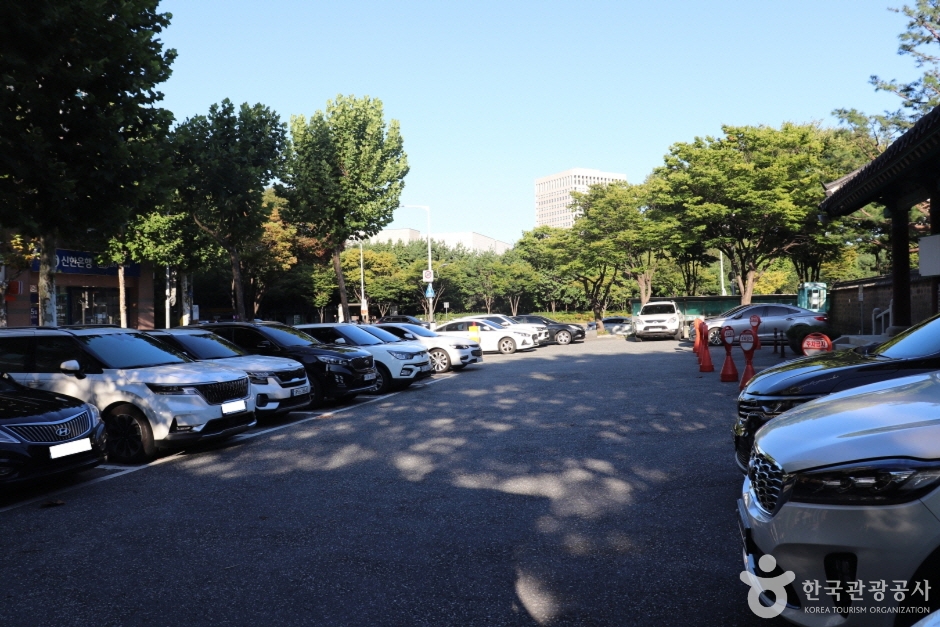
Prehistoric Site, How to Get There?
Visiting the Dunsan Prehistoric Site, following in the footsteps of time travel, is easier than you might think. Thanks to the convenient transportation network of the modern city. It is easily accessible via Daedeok-daero, and highway access is excellent when using a private car.
- By Private Car: Daejeon IC and Sintanjin IC on the Gyeongbu Expressway, and Yuseong IC on the Honam Express Expressway Branch are nearby, making it convenient to reach from anywhere in the country.
- By Public Transportation: You can easily access the site by using Daejeon Metro Line 1, Government Complex Daejeon Station. Walking from the subway station to the park, experiencing the coexistence of modern and ancient times, will also be a special experience.
Places to Visit After Your Time Travel
After encountering the wisdom of the prehistoric era, explore the beautiful nearby attractions to experience Daejeon’s charm more deeply. Right next to Dunsan Prehistoric Site is Hanbat Arboretum, an urban sanctuary. The National Science Museum, a landmark of Daejeon, and other sites are also not far, allowing you to plan a day of diverse experiences.
- Hanbat Arboretum: An ecological treasure trove in the city, adorned with diverse plants and beautiful landscaping. It’s great for a stroll after visiting the prehistoric site.
- National Science Museum: A space to experience and learn scientific principles, ideal for visiting with children.
Dunsan Prehistoric Site, Tips for a More Fulfilling Experience
Beyond just a park, the Dunsan Prehistoric Site is a living educational site where one can understand the lives of our ancestors and feel the flow of history. Here are a few tips for a more in-depth experience.
- Read the Information Boards Carefully: The information boards installed within the site contain detailed explanations about relics and historical sites from each period. Don’t just pass them by; read them thoroughly.
- Visit a Prehistoric Museum: If there’s a museum connected to the site, you can encounter history more vividly through the actual excavated relics. (Separate museum information needs to be confirmed)
- Enjoy the Seasonal Scenery: The Prehistoric Relics Park offers different charms with each season. In spring, you can reflect on history amidst flowers, and in autumn, with autumn foliage, in a tranquil atmosphere.
- With Children: It’s an excellent educational venue for children to imagine and directly experience the distant past. Utilizing history exploration programs is also recommended.
Daejeon’s Dunsan Prehistoric Site is a special place where the past and present coexist. Amidst your busy daily life, take a moment to pause, converse with humanity from tens of thousands of years ago, and reflect on the depth of our history.
Frequently Asked Questions
Q1. What kind of place is Dunsan Prehistoric Site?
It is a prehistoric site excavated in Dunsan District, Seo-gu, Daejeon, in 1991, and is the only special historical site in Korea where relics from the Paleolithic, Neolithic, and Bronze Ages were simultaneously unearthed in one place. It is currently developed as a Prehistoric Relics Park.
Q2. What makes Dunsan Prehistoric Site special?
Its most significant feature is that it is the first place in Korea where relics from the Paleolithic, Neolithic, and Bronze Ages were all discovered in one spot. This holds significant academic value, proving that humans inhabited the Daejeon area from a very long time ago.
Q3. What relics were excavated at Dunsan Prehistoric Site?
Approximately 50 chipped stone tools from the Paleolithic Age, fragments of comb-pattern pottery and pit-house sites from the Neolithic Age, and three house sites from the Bronze Age were excavated, offering a glimpse into the daily life of each period.
Q4. How do I get to Dunsan Prehistoric Site?
When using a private car, it is easy to access via Daejeon IC or Sintanjin IC on the Gyeongbu Expressway, and Yuseong IC on the Honam Express Expressway Branch, while public transportation is convenient by using Daejeon Metro Line 1, Government Complex Daejeon Station.
Q5. Are there any places to visit near Dunsan Prehistoric Site?
Yes, Hanbat Arboretum, a green urban resting place, is located near the site, making it good for a walk, and if you’re with children, a visit to the National Science Museum is also recommended.