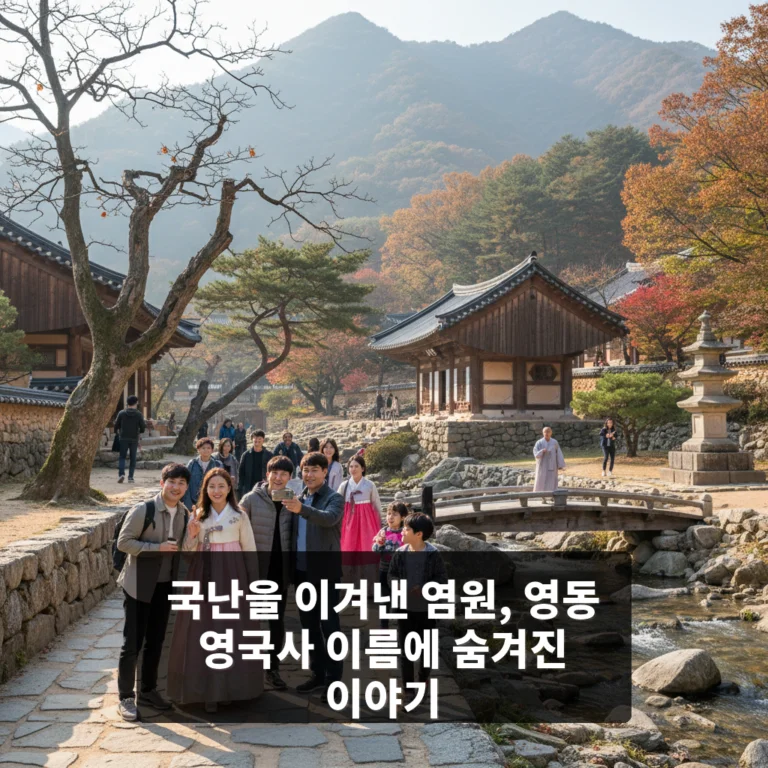

The aspiration that overcame national hardship, the hidden story in the name of Yeongdong Yeongguksa


Would you believe there’s a temple where a king personally visited to pray for peace at a moment when the fate of a nation hung in the balance? That place is none other than **Yeongguksa Temple (Yeongdong)** in Yeongdong, Chungcheongbuk-do. This place, whose very name evokes the overwhelming weight of history, is more than just a temple; it is a sacred ground imbued with the pain and the desire for overcoming shared by our nation.
Nestled deep within Cheontaesan Mountain, Yeongguksa Temple, considered the foremost of the Eight Scenic Views of Yangsan, boasts both outstanding natural beauty and a long, distinguished history. Since its founding in the 8th year of King Munmu of Silla (668 CE), it was known as Gukcheongsa during the Goryeo Dynasty, a special entity that prayed for the peace and prosperity of the royal family. What history, indeed, bestowed upon this place the name ‘Peaceful Nation (寧國)’?
Now, let’s uncover the hidden stories of Yeongguksa Temple, which has silently guarded over 1,000 years amidst the breathtaking scenery of Cheontaesan Mountain’s strange rock formations and three-tiered waterfall.
Destiny in its Name, the Tumultuous History of Yeongguksa Temple
Yeongguksa Temple in Yeongdong was founded in the 8th year of King Munmu of Silla (668 CE) and has witnessed the rise and fall of the nation for over a thousand years. Its status was particularly prominent during the Goryeo Dynasty; in the 12th century, during the reign of King Myeongjong of Goryeo, it was extensively rebuilt by National Preceptor Wongak, who succeeded Daegakguksa Uicheon’s Cheontae Order. Later, during King Gojong of Goryeo’s reign, new pagodas, stupas, and a main hall were constructed by royal command, and it became known as ‘Gukcheongsa,’ serving as a central temple praying for the nation’s peace.
A Name Embodying the Wish to Overcome National Crises: Yeongguk (寧國)
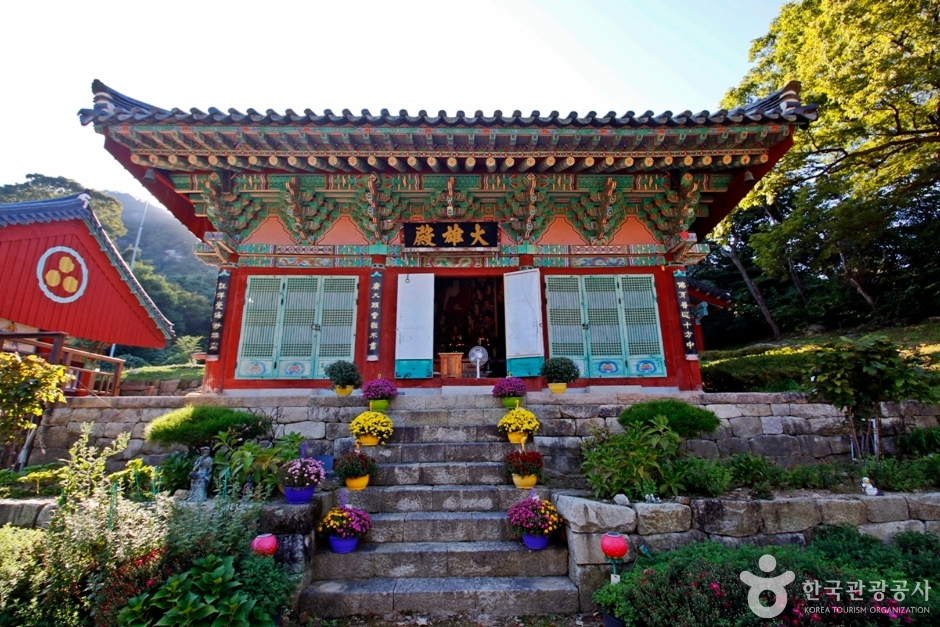

The decisive reason for the name change to **Yeongguksa Temple (Yeongdong)** dates back to the reign of King Gongmin of Goryeo. When the capital Gaegyeong fell due to the Red Turban invasion and the nation was in peril, King Gongmin sought refuge here and earnestly prayed for national peace and public welfare. And astonishingly, after the Red Turban Rebellion was overcome and the nation regained peace, King Gongmin, grateful that his earnest prayer had been answered, changed the temple’s name to ‘Yeongguksa,’ meaning ‘the nation has become peaceful.’ That a temple’s name could contain such a powerful royal wish, the pain of history, and the joy of overcoming adversity, makes the hearts of those who visit **Yeongguksa Temple (Yeongdong)** even more solemn.
- Founding: 8th year of King Munmu of Silla (668 CE) by National Preceptor Wongak.
- Extensive Reconstruction: Rose to prominence as the central temple of the Cheontae Order by National Preceptor Wongak during King Myeongjong of Goryeo’s reign.
- Renaming to Gukcheongsa: Named Gukcheongsa after a large-scale Buddhist project by royal command during King Gojong of Goryeo’s reign.
- Renaming to Yeongguksa: Renamed by King Gongmin of Goryeo after praying for the overcoming of national crises here during the Red Turban Rebellion.
The Dignity of Buddha Permeated in the Scenic Beauty of Cheontaesan Mountain
**Yeongguksa Temple (Yeongdong)** is situated in a wide basin on the mid-slope of Cheontaesan Mountain, 715m above sea level. This place boasts outstanding natural scenery, earning it the reputation as ‘the first of the Eight Scenic Views of Yangsan,’ and is also famous as a rocky ridge hiking destination. The path leading to the temple is also a continuous stretch of breathtaking scenery. Ascending the hiking trail from the entrance of Cheontaesan Mountain, you’ll encounter the magnificent sight of two valleys converging to form a three-tiered waterfall. Following the valley created by these water streams, the tranquil appearance of Yeongguksa Temple, nestled on the southwestern slope of the basin facing east, finally comes into view.
Cheontaesan Mountain’s Gift of Nature: Three-Tiered Waterfall and Hidden Scenery
Klook.com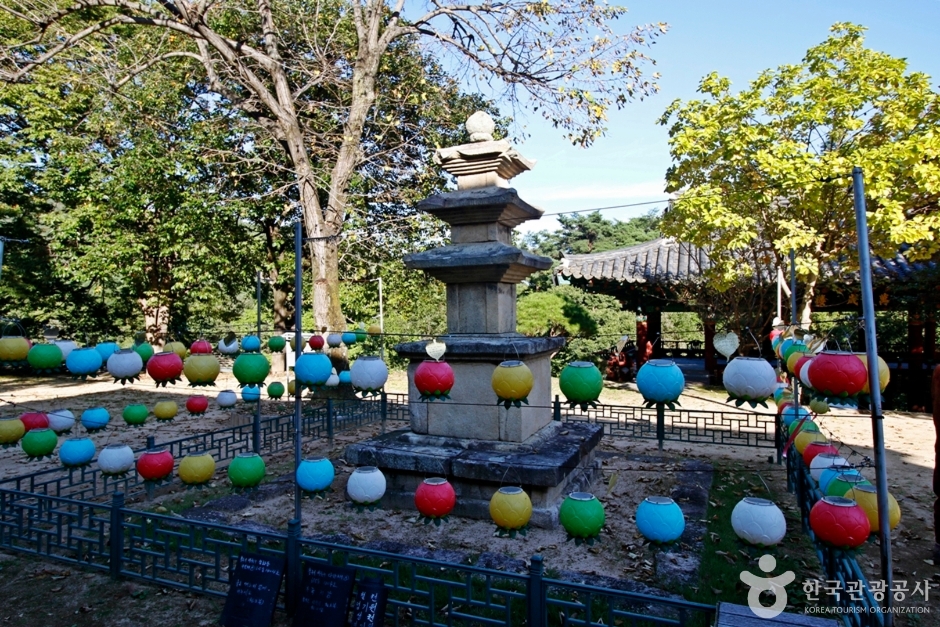
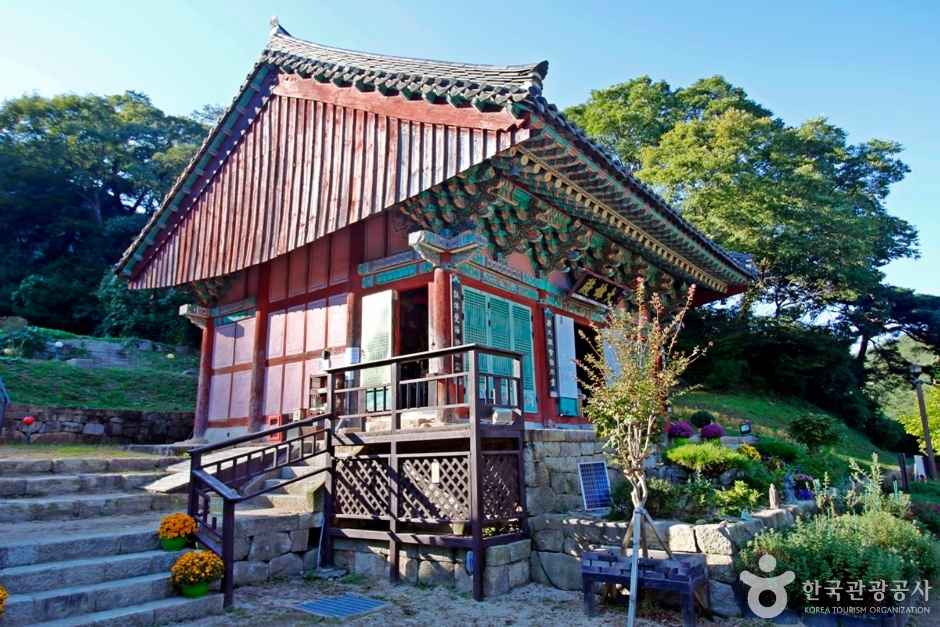
Although **Yeongguksa Temple (Yeongdong)** is located deep in the mountains, its surrounding scenery is so beautiful that it resembles a work of art in itself. The landscape of Cheontaesan Mountain, changing its attire with each season, offers deep inspiration to visitors. In spring, verdant sprouts emerge; in summer, lush greenery envelops the valley; and in autumn, colorful foliage surrounds the temple like a folding screen. In winter, the snowy landscape adds a mystical charm to the serene temple. All these scenes harmonize to further enhance the beauty of Yeongguksa Temple.
Must-Visit Attractions Around Yeongguksa Temple
- Three-Tiered Waterfall: A masterpiece of nature encountered on the path to Yeongguksa Temple. The sound created by its cool streams purifies the soul.
- Cheontaesan Peak: A place where you can experience splendid views and the thrill of rocky ridge hiking. Worth trying if you have the time.
- Eight Scenic Views of Yangsan: Since Yeongguksa Temple is the foremost among them, we recommend exploring the other seven scenic spots nearby as well.
Address:
Thousand-Year-Old Temple, Yeongguksa’s Cultural Heritage and Architectural Beauty
Although it prospered until the early Joseon Dynasty and then experienced various ups and downs, **Yeongguksa Temple (Yeongdong)** still preserves the essence of the brilliant Goryeo Buddhist culture. Within the temple grounds, several stone cultural properties, designated as treasures, silently stand as testament to the depth of its history. The harmony created by the temple’s architecture blending with the surrounding nature leaves a deep impression on visitors.
Yeongguksa Temple: Treasures Not to Be Missed
- Three-Story Stone Pagoda of Yeongguksa Temple, Yeongdong: An beautiful stone pagoda showcasing the typical style of the Goryeo Dynasty, and a symbolic entity representing the temple’s history.
- Stupa of Yeongguksa Temple, Yeongdong: A stupa enshrining the sarira of a revered monk, featuring exquisite carving skills. It serves as important material for the study of Goryeo Dynasty stupas.
- Three-Story Stone Pagoda on Mangtapbong Peak of Yeongguksa Temple, Yeongdong: Located on Mangtapbong Peak, a short distance from the Yeongguksa Temple grounds, it boasts an even more picturesque appearance, harmonizing with the surrounding scenery.
- Stupas of Yeongguksa Temple, Yeongdong: The presence of several stupas of revered monks allows us to infer the temple’s long history and tradition.
Each of these cultural properties showcases the essence of Goryeo Buddhist art, greeting visitors with the sturdiness and beauty that have withstood a thousand years. The precious heritage encountered deep in the mountains makes **Yeongguksa Temple (Yeongdong)** an even more special travel destination.
Tips for a More Profound Visit to Yeongguksa Temple
The Way to Yeongguksa Temple: A Journey of Purifying the Mind
While **Yeongguksa Temple (Yeongdong)** does not offer very easy access, it allows you to fully enjoy the tranquility deeply embedded in nature. Using a personal car is the most convenient, and there’s also an option to take public transportation (bus) from Yeongdong-eup to the entrance of Cheontaesan Mountain, then ascend along the hiking trail. The walk along the valley is like meditation itself.
Which Season is Best to Visit?
| Season | Characteristics | Recommended Activities |
|---|---|---|
| Spring | Fresh sprouts, flower buds | Vibrant walks, healing with fresh air |
| Summer | Lush greenery, cool valley water | Enjoying the three-tiered waterfall, valley trekking, relaxing in the cool shade |
| Autumn | Peak autumn foliage of Cheontaesan Mountain | Fantastic autumn leaf viewing, enjoying the tranquil temple atmosphere |
| Winter | Serene snowy landscape, clear sky | Appreciating the mystical snowy scenery, calm meditation |
Regardless of the season you visit, **Yeongguksa Temple (Yeongdong)** offers distinct charms, but especially during the autumn foliage season, the entire Cheontaesan Mountain is adorned with vibrant colors, boasting its peak scenic beauty. However, if you wish to avoid crowds, choosing the tranquility of spring or winter is also a good option.
Frequently Asked Questions
Q1. What historical significance does Yeongguksa Temple in Yeongdong hold?
Yeongguksa Temple was founded during the Silla Dynasty and prospered during the Goryeo Dynasty. Notably, King Gongmin of Goryeo fled here during the Red Turban Rebellion and prayed for the nation’s survival, after which its name was changed to ‘Yeongguksa’. It is a temple steeped in the history of wishing for national peace.
Q2. What attractions are there around Yeongguksa Temple?
Yeongguksa Temple is located on the mid-slope of Cheontaesan Mountain, boasting beautiful natural scenery. Especially, the three-tiered waterfall encountered on the way to Yeongguksa Temple and the panoramic view from Cheontaesan Peak are unmissable spectacles. Furthermore, as the first of the Eight Scenic Views of Yangsan, it is also good to explore along with other nearby attractions.
Q3. Are there any cultural properties at Yeongguksa Temple?
Yes, Yeongguksa Temple houses various cultural properties, including the Three-Story Stone Pagoda of Yeongguksa Temple, Yeongdong, its stupa, and other reliquaries, which are national treasures designated from the Goryeo Dynasty. These cultural properties showcase the excellence of Buddhist art of that era and attest to the temple’s long history.
Q4. When is the best season to visit Yeongguksa Temple?
Yeongguksa Temple is beautiful in all four seasons, but if you visit especially when the autumn foliage is at its peak, you can fully enjoy the tranquil atmosphere of the temple, harmonized with the vibrant scenery of Cheontaesan Mountain. The fresh greenery of spring, the valleys of summer, and the snowy landscapes of winter also offer distinct charms.
Q5. How do I get to Yeongguksa Temple?
Using a personal car is the most convenient way to reach Yeongguksa Temple in Yeongdong. Alternatively, you can take public transportation (bus) from Yeongdong-eup to the entrance of Cheontaesan Mountain, then walk up along the hiking trail for about 1 hour. As it is located deep in the mountains, it is recommended to visit with ample time.
 Love Korea? Promote it & Earn.