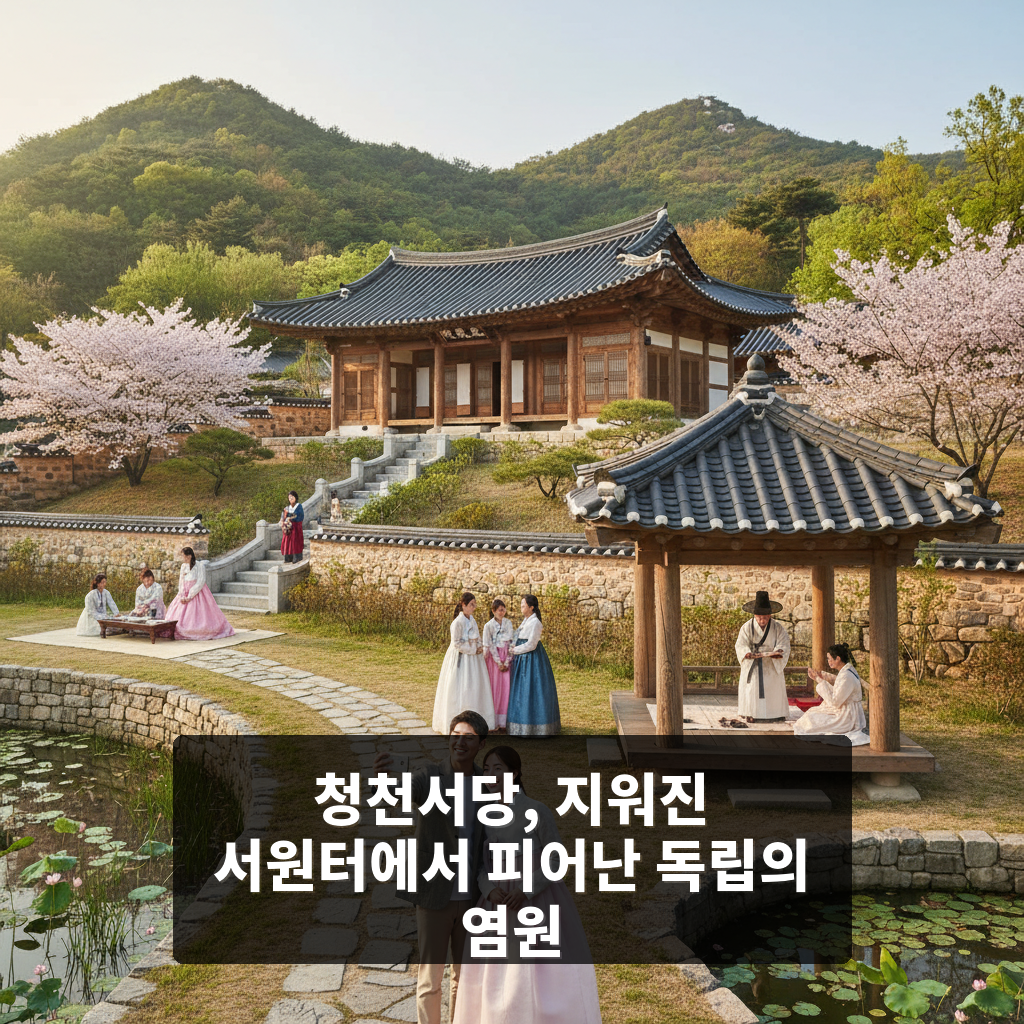
Cheongcheonseodang, the aspiration for independence that emerged from the vanished site of a Confucian academy


How many stories are hidden behind forgotten names in history? There is a special place that began as a hall of learning in the 18th-century Yeongjo period, and during the Japanese colonial period, it nurtured the seeds of independence amidst a bleak reality. This is Cheongcheonseodang, located in Seongju, Gyeongsangbuk-do.
This is not just an old building. It transformed from a seowon (Confucian academy) that once honored the spirit of Confucian scholars into a cradle of the educational national salvation movement, and it is living history itself, preserving the pain and spirit of resistance of our people. It is a precious cultural heritage that must be protected and preserved, and a solid bridge connecting the past and the present.
Today, we will embark on a journey through time, following the deep and long story of Cheongcheonseodang, where the closure and revival of a seowon and the aspiration for independence are intertwined.
From a Lost Seowon to the Blooming Seeds of Independence
The history of Cheongcheonseodang dates back to 1729 (the 5th year of King Yeongjo). At that time, the Sarim (Confucian scholars) founded Cheongcheonseowon here to enshrine Master Donggang Kim U-ong. However, amidst the upheaval of the period, such as the Seowon Abolition Order during King Gojong’s reign, its legacy was temporarily severed, causing pain.
However, history did not stop. Master Kim Ho-rim, a descendant of Master Kim U-ong, rebuilt the Sarangchae (men’s quarters) of the head family house into Cheongcheonseodang, reviving its name. Then, in the spring of 1910 (the 4th year of King Sunjong), Master Simsan Kim Chang-suk, son of Master Kim Ho-rim and later a renowned independence activist, repaired this seodang, named it ‘Seongmyeong School,’ and used it as a school for nurturing future generations, thus opening another chapter in its history.
The Footprints of Donggang Kim U-ong, a Master of Scholarship
- Disciple of Toegye: His scholarship was outstanding, so much so that he was called ‘Yanggang (Two Peaks)’ along with Master Jeonggu in the Seongju region, and he inherited the academic lineage of Master Toegye Yi Hwang.
- Official Career: He served the nation in various official positions and was involved in the Gichuk Oksa (Gichuk Purge), which was at the center of political turmoil at the time.
- Center of Seongju Sarim: Along with Hoeyeonseowon, he served as a focal point for Sarim activities in the Seongju region and greatly contributed to the development of local scholarship.
In Bleak Times, Planting Hope Through Education
During the Japanese colonial period, a time when the nation’s future was bleak, Cheongcheonseodang was more than just an educational institution; it was a cradle of hope that awakened the national spirit. Master Simsan Kim Chang-suk fostered talent at Seongmyeong School here, leading the ‘educational national salvation movement,’ which later became the foundation for countless independence activists. Recognized for its educational and historical significance, Cheongcheonseodang was designated as a Gyeongsangbuk-do Tangible Cultural Heritage and remains with us to this day.
Walking Through Cheongcheonseodang, a Place Where History Breathes
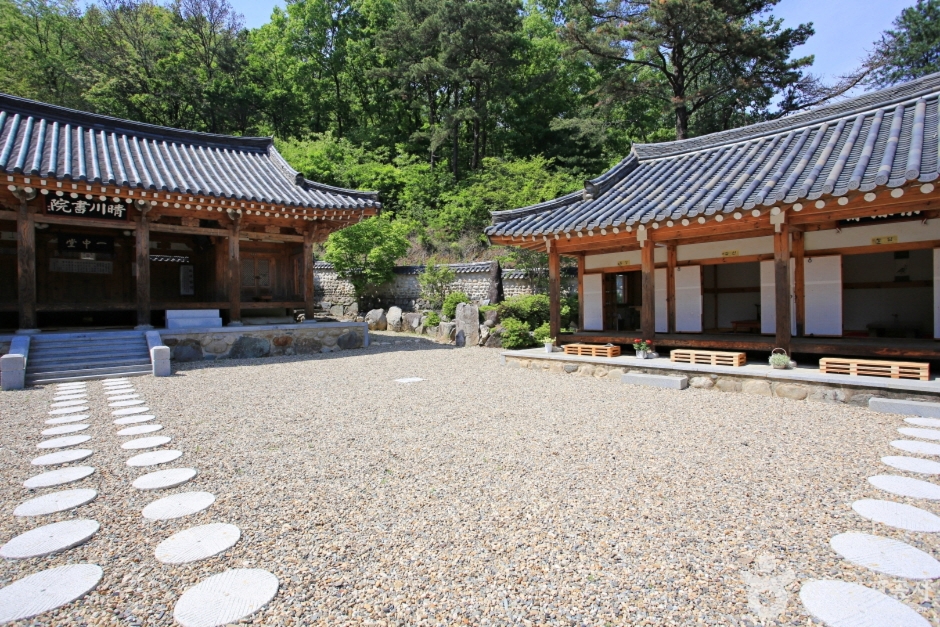

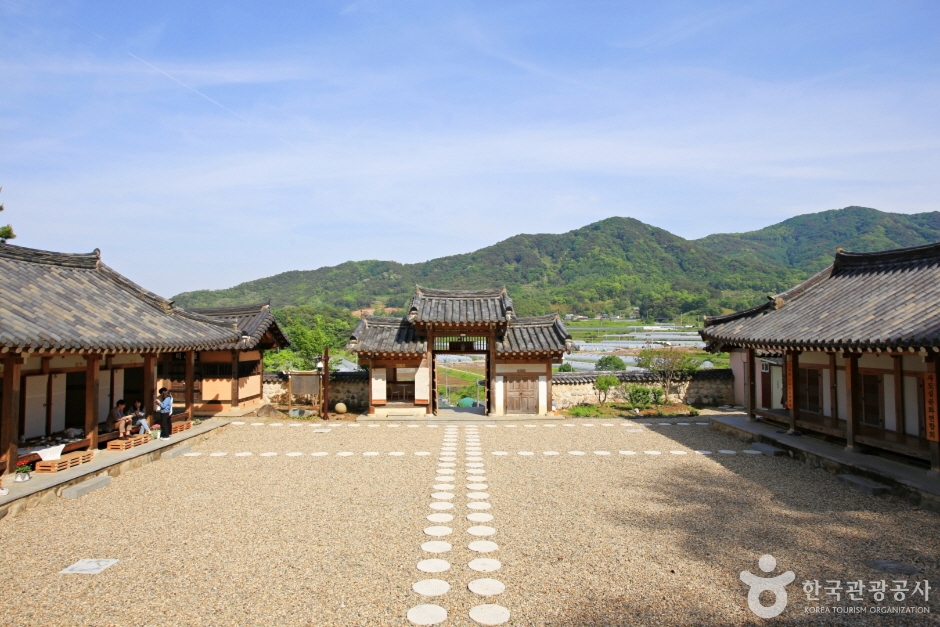
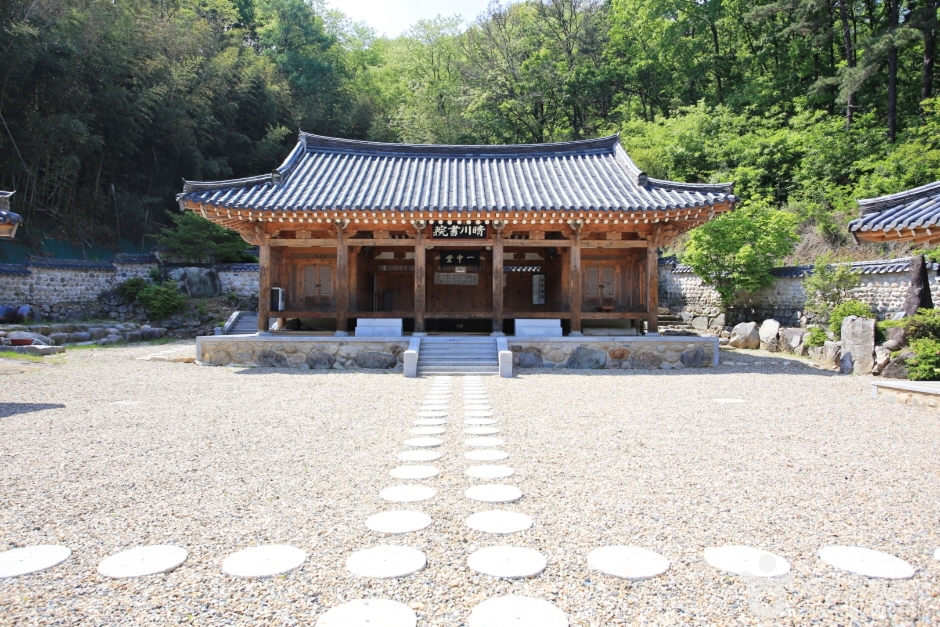
Now it’s time to see Cheongcheonseodang as it stands today. Tranquil Hanok buildings and trees that have withstood the test of time blend together to create a peaceful atmosphere for visitors. As you walk through here, you will likely feel the spirit imbued with Master Kim U-ong’s passion for scholarship and Master Kim Chang-suk’s spirit of independence.
Directions to Cheongcheonseodang: Discovering a Piece of Seongju
Cheongcheonseodang, located at 33 Donggang-gil, Suryun-myeon, Seongju-gun, Gyeongsangbuk-do, is conveniently reached by taking a branch bus or taxi after arriving at Seongju County Office via public transportation. If you use a private car, you can easily find it by searching with navigation. The surroundings are quiet, making it ideal for a leisurely stroll.
Nearby Places to Explore Together
- Hoeyeonseowon: Another representative seowon of the Seongju region, where prominent scholars like Master Ryu Seong-ryong are enshrined. By visiting it along with Cheongcheonseodang, you can understand the flow of Seongju Confucianism.
- Seongjuseongbak Forest: A beautiful forest designated as a natural monument, it is excellent for a healing walk. It is perfect for resting in nature after a historical journey at Cheongcheonseodang.
- Gayasan History and Mythology Park: A place where you can enjoy the natural scenery of Gayasan and Gaya culture together, it is also good for visiting with children.
Cheongcheonseodang, In Search of Meaning Beyond
Over time, Cheongcheonseodang‘s form and role have transformed. Initially, it was a seowon honoring the spirit of scholarship, then a seodang (village school) teaching local talent, and in bleak times, it became a school awakening the national spirit. Understanding these changes is the key to discovering Cheongcheonseodang‘s true value.
The Many Faces of Cheongcheonseodang
| Period | Name | Main Role |
|---|---|---|
| 1729 (5th year of King Yeongjo) | Cheongcheonseowon | Enshrining Donggang Kim U-ong and Academic Research |
| Gojong period | Abolition | Temporarily closed due to Seowon Abolition Order |
| Unknown period | Cheongcheonseodang | Rebuilt by Kim Ho-rim, a descendant of Kim U-ong; educated local talent |
| 1910 (4th year of King Sunjong) | Seongmyeong School | Led by Simsan Kim Chang-suk; cradle of the educational national salvation movement |
Tips for Visitors
- Learn the Historical Background: If you look up information about Masters Kim U-ong and Kim Chang-suk before visiting, you can have a much deeper experience.
- Be Quiet and Reverent: Please participate in the protection of cultural heritage and observe quietly, showing consideration for other visitors.
- Seasonal Charm: In spring, green sprouts, and in autumn, autumn leaves add to the tranquility of the seodang. You will be able to experience different beauty no matter which season you visit.
- Explore the Surrounding Village: It is also good to walk along the old village paths around the seodang and feel the atmosphere of the past.
Frequently Asked Questions
Q1. Wasn’t Cheongcheonseodang its original name?
Yes, that’s correct. It was first founded in 1729 as Cheongcheonseowon to enshrine Master Kim U-ong, but after being abolished by the Seowon Abolition Order, it was rebuilt as Cheongcheonseodang and later also used as Seongmyeong School.
Q2. Which historical figures are most closely associated with Cheongcheonseodang?
It began as a place to enshrine Master Donggang Kim U-ong, and later became a historical site where independence activist Master Simsan Kim Chang-suk operated Seongmyeong School and carried out the educational national salvation movement.
Q3. Are there any special precautions to take when visiting Cheongcheonseodang?
As an important historical site designated as Gyeongsangbuk-do Tangible Cultural Heritage, it is recommended that you view it quietly and reverently, without damaging the building or its surroundings.
Q4. What historical value does Cheongcheonseodang hold?
It was a center for Sarim activities in the Seongju region, and during the Japanese colonial period, it was a cradle of education where Master Kim Chang-suk nurtured future generations and laid the foundation for the independence movement, giving it great educational and historical significance.
Q5. What are Cheongcheonseodang’s operating hours and admission fees?
Like most seowons and cultural heritage sites, it is generally open year-round, and there is no separate admission fee. However, it is advisable to check the operating status before your visit.