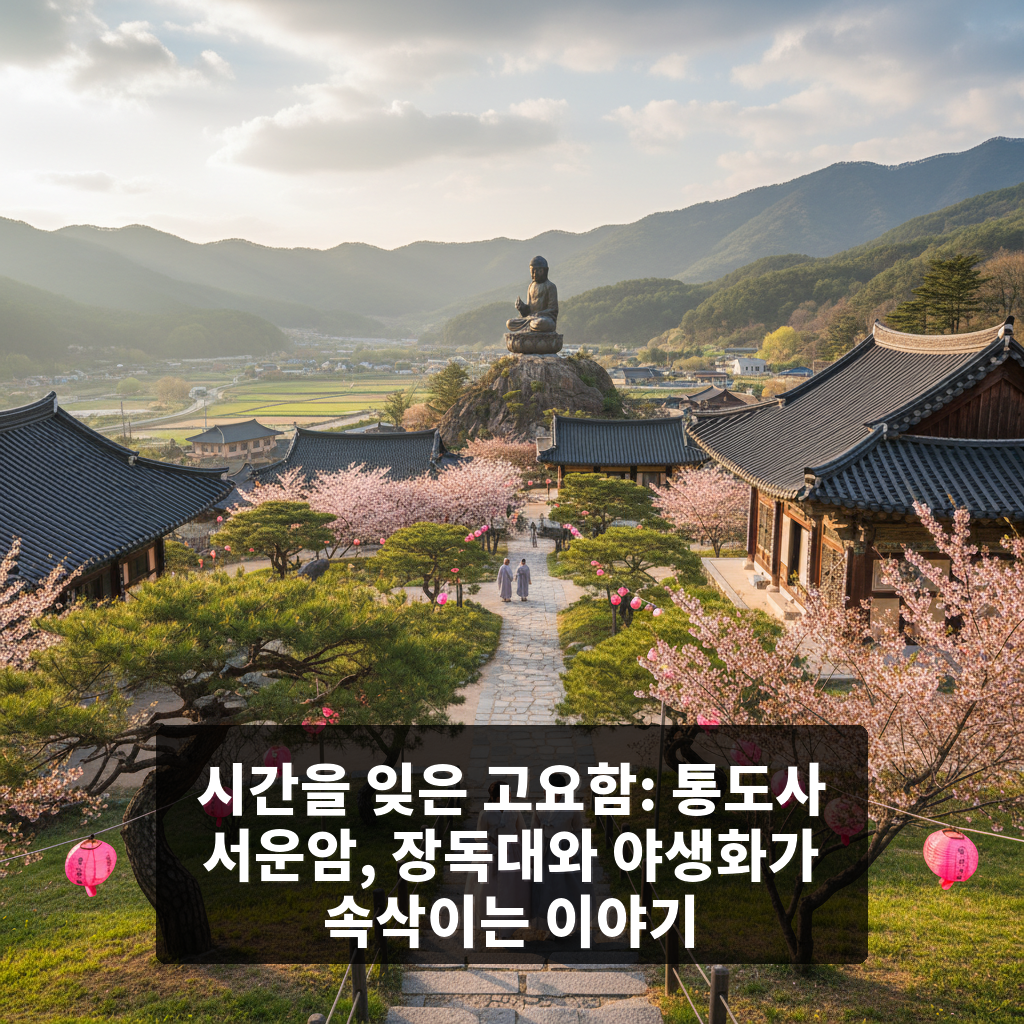
Timeless tranquility: Tongdosa Seounam, where Jangdokdae and wildflowers whisper stories


When you want to put down the complexities of modern life for a moment, where do you go? If you’re looking for a peaceful sanctuary that makes you forget the passage of time, away from the bustling city, we recommend a visit to Seounam at Tongdosa, nestled deep in the embrace of Yeongchuksan Mountain. This is more than just a hermitage; it’s a special place where the breath of nature and history comes alive.
Among the nearly twenty hermitages located within the Tongdosa precincts, Seounam is a place that uniquely attracts many visitors. It embraces the serene ambiance of a mountain temple along with stories we never knew, offering deep comfort and time for contemplation to those weary from busy daily lives.
From now on, we will introduce in detail the hidden wonders that Seounam preserves, the meanings embedded within them, and ways to enjoy this place more fully.
The Breath of Life in Silence: The Harmony of Jangdokdae and Wildflowers
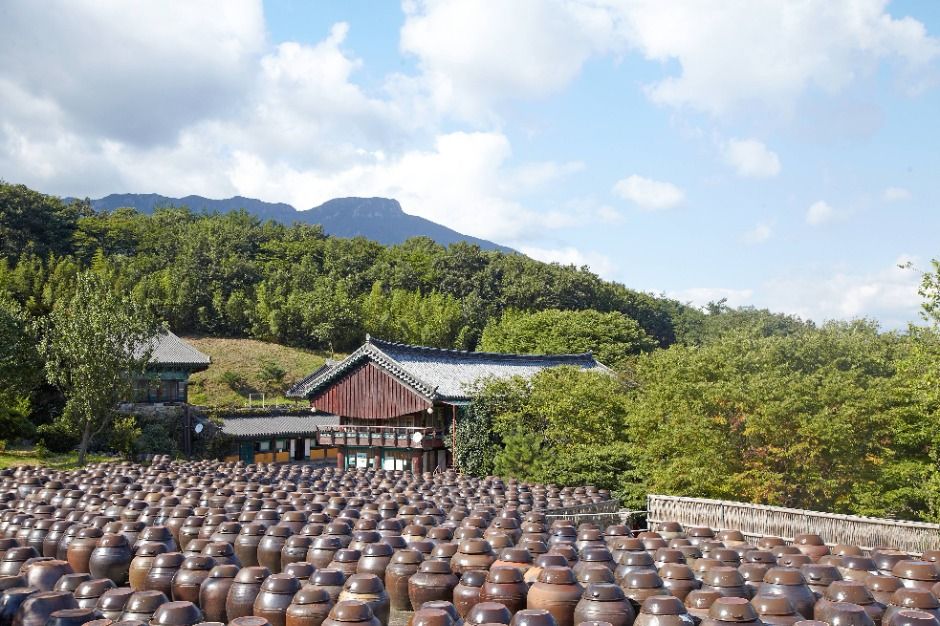
At the entrance path to Seounam, the first thing that catches your eye are the numerous jangdokdae (traditional Korean sauce jars). The sight of hundreds of these jars lined up is like a living work of art, or it might remind you of a cozy countryside home’s yard. These jangdokdae contain traditional fermented pastes like yak-doenjang (medicinal soybean paste), mak-jang (coarse soybean paste), and gochujang (chili paste), which monks have been making themselves for a long time, creating Seounam’s unique aroma and taste.
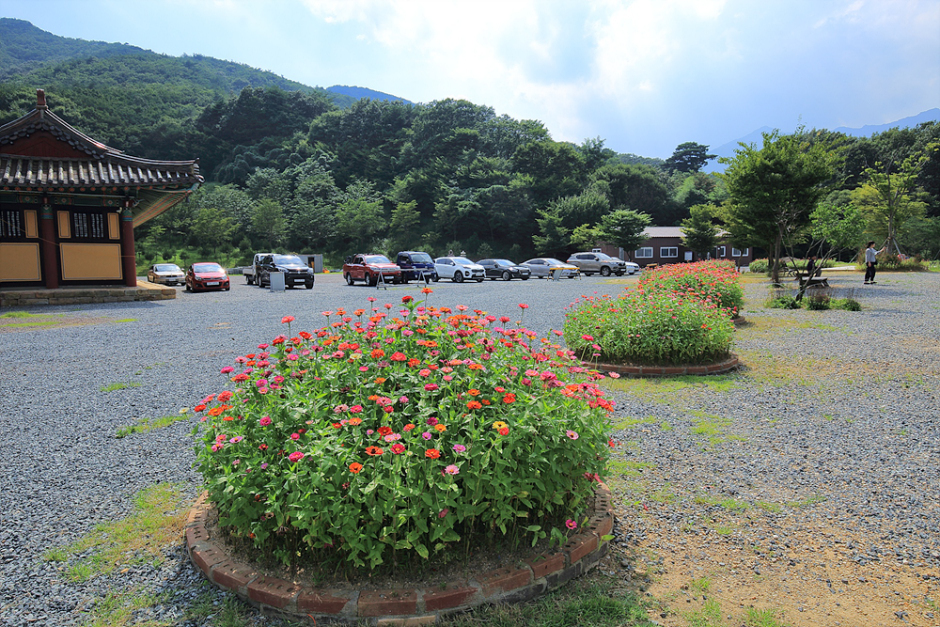
Especially when spring arrives, Seounam transforms into a veritable paradise on earth. This is because over 100 species of wildflowers, including bleeding hearts, bloom around the hermitage, creating a colorful embroidery. The feast of tiny lives blossoming in the quiet mountain temple offers deep comfort and hope to those weary from challenging lives. The wildflowers reach their peak in April, and if you visit Seounam then, you will be able to enjoy unforgettable natural beauty.
- Explore the Jangdokdae: Appreciate the landscape imbued with the beauty and devotion of Korean tradition, and savor the aroma of fermented pastes ripening under the sun.
- Admire the wildflowers: In spring, over 100 species of wildflowers bloom, making it especially enjoyable to look for bleeding hearts. Immerse yourself in the delicate beauty of the flowers.
Wisdom Carved in Time: The Sublime Preservation of the 160,000 Ceramic Tripitaka
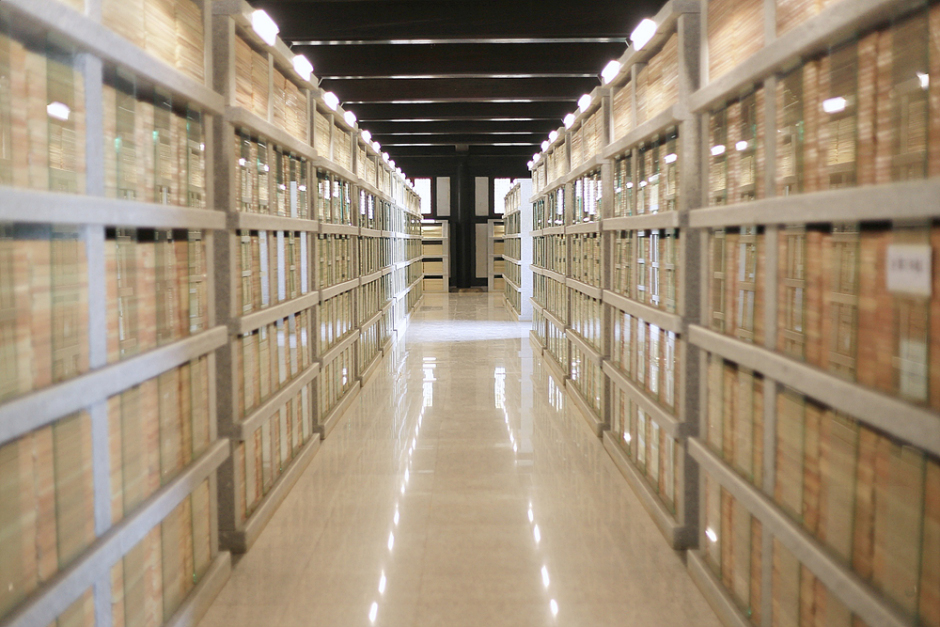
Another astonishing treasure preserved by Seounam is the ‘160,000 Ceramic Tripitaka.’ If you walk a little further up the mountain path, you will reach the Janggyeonggak (Tripitaka Storage Hall), where 160,000 ceramic plates, including the Heart Sutra and other Buddhist scriptures carved into them, are perfectly preserved. It is a place where you can feel the immortal wisdom contained within the sturdiness of ceramic, distinct from the wooden Tripitaka that has endured for a thousand years.
The Message the Ceramic Tripitaka Conveys to Us
The 160,000 Ceramic Tripitaka is more than just a record of scriptures; it is the culmination of Buddhist faith, art, and perseverance. The process of molding clay, carving letters, and enduring high temperatures to bestow permanence was likely a part of ascetic practice itself. Here, we can glimpse the sublime human spirit that seeks enduring values, along with wise teachings for the world.
- With a reverent heart: Please maintain a respectful demeanor and observe quietly in the Janggyeonggak where the Ceramic Tripitaka is preserved.
- Explore historical significance: You can feel even deeper emotion if you observe the Ceramic Tripitaka while contemplating its historical background and contemporary meaning.
- Appreciate the delicate characters: Examine closely the delicate Buddhist scripture characters carved on each ceramic plate and feel the devotion of the ancient sages.
The Path to Seounam, at the Foot of Yeongchuksan: A Serene Journey
Klook.com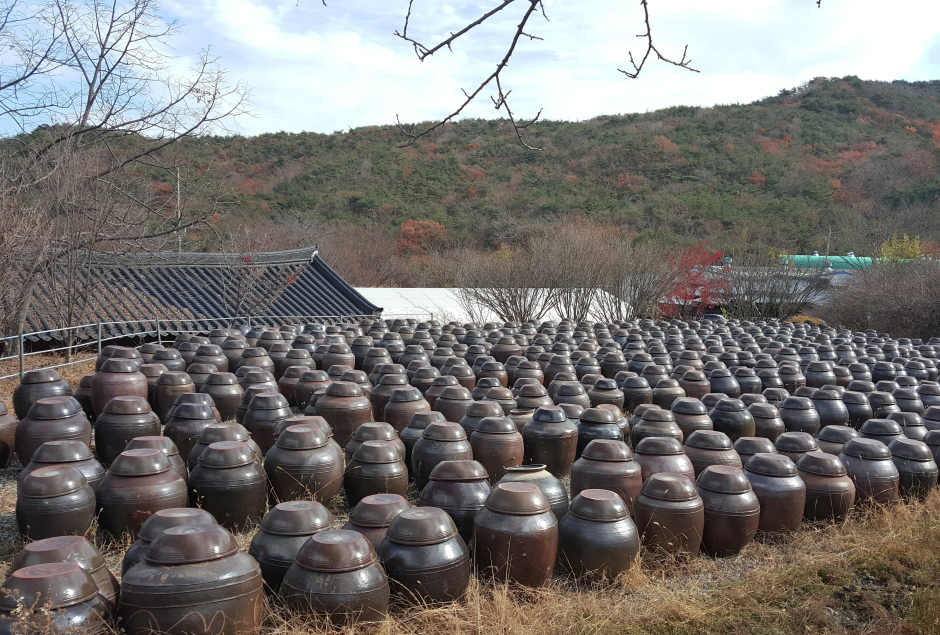
Seounam can be reached by walking about 1.5 km further up the mountain path from Tongdosa’s Daeungjeon (Main Hall). While Tongdosa as a whole is embraced by Yeongchuksan Mountain, Seounam is located a bit deeper within it, offering an even more secluded atmosphere. This path is not just a route; it’s a special journey where you can clear your cluttered mind and immerse yourself in contemplation.
Seounam Location Information and Directions
Starting from the Tongdosa entrance, passing the Daeungjeon, and following the ‘Seounam’ signpost, you will soon find yourself walking on a path filled only with the sounds of nature. While there is an access road for vehicles, we recommend enjoying nature by walking through the beautiful forest path. It’s a good idea to prepare comfortable shoes.
The address for Seounam is as follows:
Beyond Seounam, Discovering History in the Embrace of Tongdosa
If you have visited Seounam, it is also recommended to explore Tongdosa, its foundational temple. Tongdosa is a historic temple founded by National Preceptor Jajang in the 15th year of Queen Seondeok of Silla (646 CE), and it is known as a Buddha-relic temple among the Three Jewel Temples (Buddha, Dharma, Sangha) for enshrining the Buddha’s sarira. It holds even more special significance because the Geumganggyedan (Diamond Altar) behind the Daeungjeon enshrines the Buddha’s true sarira instead of a statue.
Tongdosa and hermitages, what’s the difference?
Several hermitages belong within the large temple of Tongdosa, and Seounam is one of them. While Tongdosa itself has a grandeur and dignity, along with a lively atmosphere with many Buddhists coming and going, hermitages are operated on a smaller scale and are places where one can feel the deep stillness and quietude of practice in a mountain temple. Each possesses different charms, offering a richer experience if explored together.
| Category | Features | Recommended Visitors |
|---|---|---|
| Tongdosa Main Temple | Grand scale, dignity of a Buddha-relic temple, various halls and relics, many worshipers | Those who wish to deeply experience the history and culture of Korean Buddhism |
| Seounam | Quiet and peaceful atmosphere, beautiful scenery of jangdokdae and wildflowers, unique Ceramic Tripitaka | Those who seek contemplation and relaxation in nature |
After experiencing the magnificent history and the essence of Buddhist culture at Tongdosa’s main temple, the course of ascending to Seounam and spending time in quiet nature as if meditating will offer visitors unforgettable peace and inspiration.
Fully Experiencing Seounam: Advice for Visitors
Seounam is an ideal place to escape the hustle and bustle, reflect on oneself, and connect with nature. To fully experience its serene atmosphere, it’s good to know a few tips.
- Comfortable shoes are a must: You will need to walk about 1.5 km along a mountain path from Tongdosa’s Daeungjeon to Seounam. There may be steep or uneven sections, so wearing comfortable shoes is important.
- Quiet observation manner: As it is a hermitage where practitioners reside, please refrain from making loud noises or running around, and it is best to observe with a quiet and reverent attitude.
- Seasonal charm: Seounam is beautiful throughout all four seasons, with wildflowers in spring, lush green forests in summer, autumn foliage, and snowscapes in winter. We especially recommend visiting in April if you wish to see the wildflowers.
- Sun protection: When walking on mountain paths or spending time outdoors, it’s advisable to bring a hat, sunglasses, or sunscreen.
- Take your trash with you: For nature conservation, please be sure to take any trash you brought with you back or dispose of it in designated areas.
Why should you visit Seounam?
Seounam is not merely a place to enjoy the scenery. It is a space for healing where you can forget time and find inner peace, a place where you can reflect on the small meanings of life amidst the natural beauty offered by countless jangdokdae and wildflowers. Furthermore, the whispers of wisdom from the 160,000 Ceramic Tripitaka will enrich our hearts even more. This weekend, why not experience a special day at Seounam, where tranquility, history, and nature harmoniously blend?
Frequently Asked Questions
Q1. When is Seounam most beautiful?
Seounam is especially beautiful in spring (April). Over 100 species of wildflowers, including bleeding hearts, bloom around the hermitage, creating a splendid landscape, and many visitors come to admire the wildflowers. Of course, it possesses a serene charm throughout all four seasons.
Q2. What is the significance of Seounam’s ‘jangdokdae’?
The numerous jangdokdae at the entrance of Seounam store traditional fermented pastes such as medicinal soybean paste (yak-doenjang), coarse soybean paste (mak-jang), and chili paste (gochujang), all handmade by the monks. This symbolizes the hermitage’s spirit of self-sufficiency and the preservation of traditional Korean food culture, offering visitors a special sight.
Q3. How can I see the 160,000 Ceramic Tripitaka?
If you walk a little further up the mountain path from Seounam, you will find the 160,000 Ceramic Tripitaka preserved in a building called ‘Janggyeonggak.’ You can personally see the 160,000 ceramic plates, including the Heart Sutra and other Buddhist scriptures carved into them, and feel their sublime meaning.
Q4. Is the path to Seounam difficult?
You need to walk about 1.5 km along a mountain path from Tongdosa’s Daeungjeon to Seounam. There are some steep or uneven sections, so comfortable shoes are recommended, but the serene journey itself, walking along the beautiful forest path, is healing.
Q5. What should I be aware of when visiting Seounam?
Seounam is a place of practice, so it is important to maintain a quiet and reverent attitude. Please observe basic visitor etiquette, such as wearing comfortable shoes, protecting nature including wildflowers, and always taking any trash you brought with you back.
 Love Korea? Promote it & Earn.