A place where time stands still underwater: Encountering the breath of history at the National Research Institute of Maritime Cultural Heritage


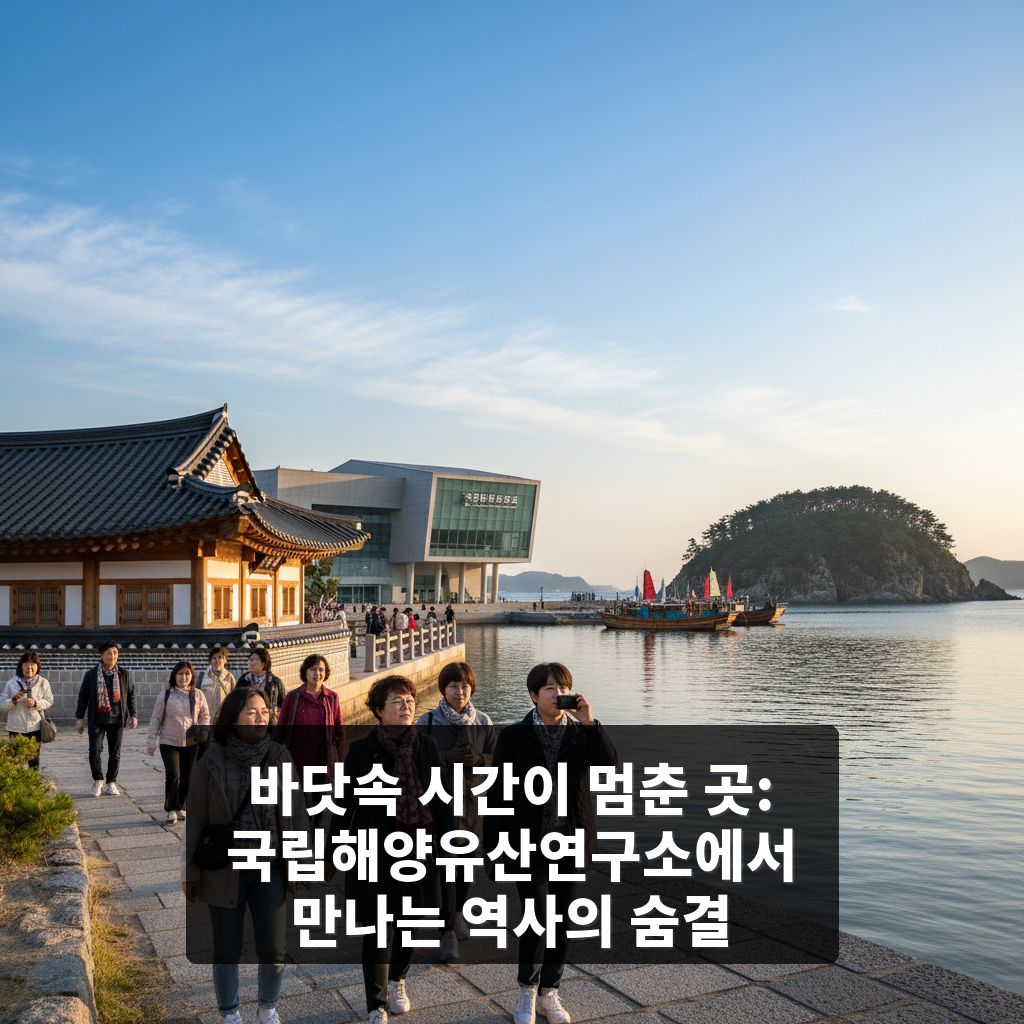
Have you ever imagined? A ship that sailed the vast ocean hundreds of years ago sinking amidst rough waves, and the countless stories it carried lying intact beneath the sea. This story, which sounds like a mere legend, began to unfold before our eyes as reality with the accidental discovery by a fisherman in 1975. The place that explores and restores the secrets of this amazing maritime heritage, and once again tells us the brilliant history, is the National Research Institute of Maritime Cultural Heritage.
Located on Mokpo Gatbawi Cultural Street, this place goes beyond being a simple exhibition hall, playing a crucial role in awakening the silent times beneath the sea and resurrecting them as our cultural heritage. Are you ready to encounter the most special stories told by the sea, through artifacts that vividly contain the lives, technologies, and artistic sensibilities of our forgotten ancestors?
Into that deep, blue history, where the sound of waves seems audible, let’s embark together now.
Time submerged in water, the prelude to a great discovery
The National Research Institute of Maritime Cultural Heritage, an affiliated institution of the Cultural Heritage Administration, is dedicated, as its name suggests, to discovering and promoting our precious maritime cultural heritage. Its beginning was like a drama. In 1975, ceramics accidentally discovered in the West Sea drew widespread attention to Korea’s underwater cultural heritage, subsequently leading to active exhibitions and international symposiums not only in East Asia but worldwide.
Since then, numerous historical shipwrecks and underwater cultural heritage sites have continued to be discovered, and our maritime cultural heritage, hidden deep in the sea, began to be revealed to the world. In 1994, with state support, the National Research Institute of Maritime Cultural Heritage opened its doors to professionally protect, excavate, and research maritime cultural heritage, which became the root of today’s National Research Institute of Maritime Cultural Heritage. Here, through ancient ships and the trade goods they carried, visitors can vividly experience the glorious past that unfolded along the sea routes.
Two core roles of the Institute
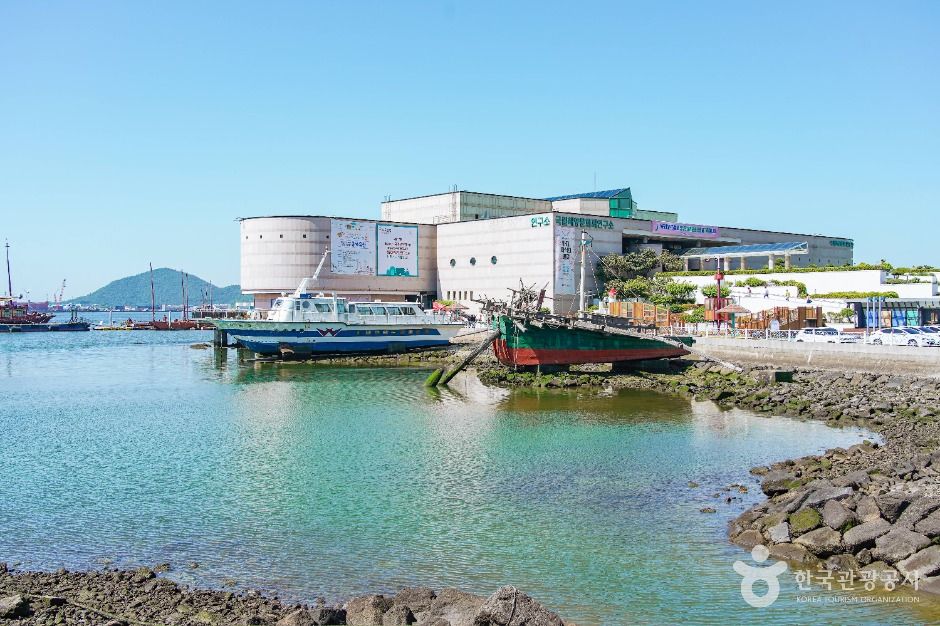
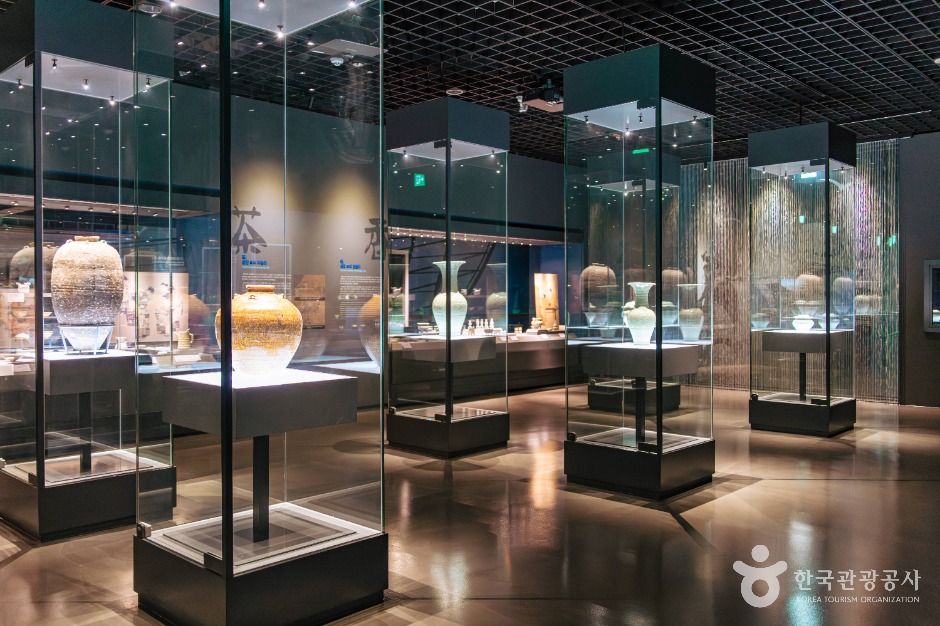
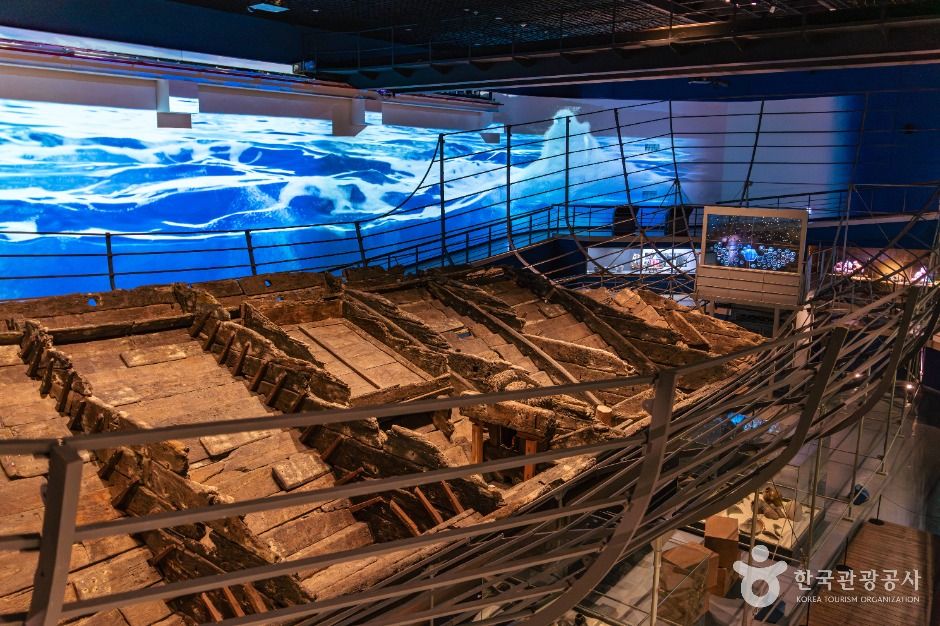
- Excavation and Preservation of Maritime Cultural Heritage It carries out the delicate process of finding artifacts submerged beneath the sea and performing conservation treatment to prevent damage in the underwater environment.
- Research and Exhibition It researches the historical value of excavated artifacts and plans exhibitions to inform the public about the importance and beauty of maritime cultural heritage.
An Underwater Museum, the Special Collection of the National Research Institute of Maritime Cultural Heritage
The National Research Institute of Maritime Cultural Heritage goes beyond a simple display of artifacts, offering an immersive viewing experience as if exploring the underwater world. From full-scale reproductions of ancient ships to exquisite ceramics like Goryeo celadon, and various artifacts that offer a glimpse into the daily lives of people from that era, each tells its own story.
Must-see viewing points
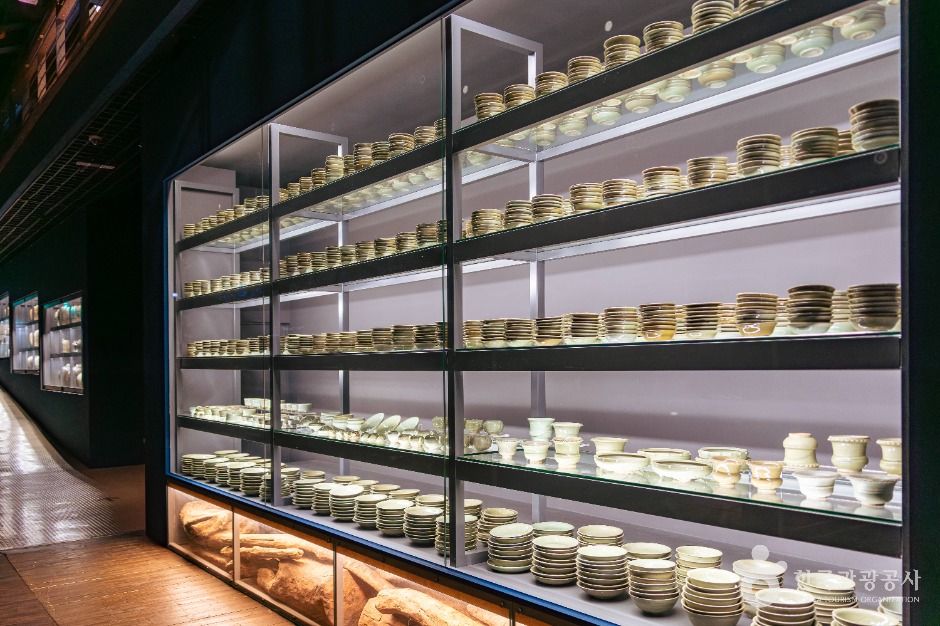
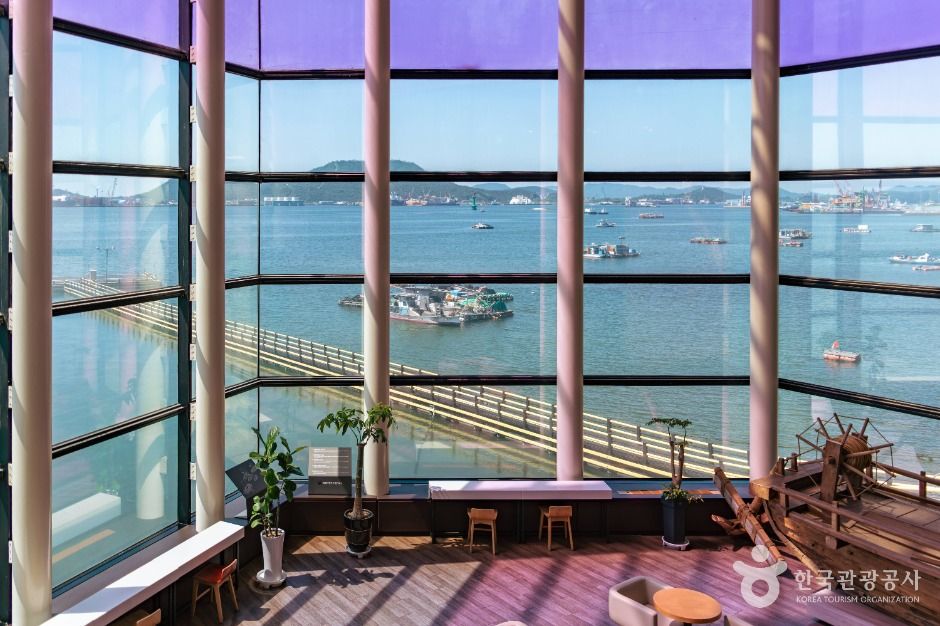
- Sinan Ship Hall Through actual artifacts and a restored model of a 14th-century sunken Chinese trading ship, visitors can infer the immense scale of maritime trade in East Asia at that time.
- Ancient Ship History Hall Visitors can deeply understand the types and structures of various excavated ancient ships, allowing them to fully immerse themselves in the charm of maritime archaeology.
- Underwater Excavation Experience Zone An even more enjoyable space for children! Through an experience of directly excavating model artifacts, children can cultivate their dream of becoming a maritime archaeologist. (Operation status and hours need to be confirmed)
- Digital Exhibition Interactive exhibitions utilizing advanced technology help visitors understand the artifacts and provide an immersive experience.
The exhibition space is well-organized by period and type of artifact, ensuring a natural viewing flow, and detailed explanations for each artifact aid in a deeper understanding of maritime cultural heritage. It offers a sensory experience, as if becoming a time traveler glimpsing the lives of those who sailed the seas hundreds of years ago.
Treasury of the South Coast, Maritime Heritage encountered on Mokpo Gatbawi Cultural Street
The National Research Institute of Maritime Cultural Heritage is located on Mokpo’s beautiful Gatbawi Cultural Street, offering excellent accessibility and making it easy to plan a fulfilling outing in conjunction with the rich cultural infrastructure nearby.
Directions & Nearby Attractions
Around the institute, various cultural facilities such as the Mokpo Literature and Arts History Museum, Mokpo Literary Museum, Mokpo Natural History Museum, Mokpo Living Ceramic Museum, and Namnong Memorial Hall are closely situated, boasting an excellent environment for visiting with children. A major advantage is that multiple museums are gathered in one place, allowing for a diverse experience throughout the day.
Comparison of major nearby facilities
| Facility Name | Main Exhibition/Theme | Target Visitors |
|---|---|---|
| Mokpo Literature and Arts History Museum | Mokpo’s literary and artistic history and figures | Those interested in history/literature |
| Mokpo Literary Museum | Lives and works of Korean modern literary masters | Literature enthusiasts |
| Mokpo Natural History Museum | Natural history of the Korean Peninsula, dinosaur fossils | Families with children |
| Mokpo Living Ceramic Museum | Traditional living ceramics and modern pottery | Craft/art enthusiasts |
| Namnong Memorial Hall | Works of Namnong Heo Geon, master of Korean Southern School painting | Art admirers |
Guide to a richer maritime heritage exploration
Knowing a few tips when visiting the National Research Institute of Maritime Cultural Heritage can make your time even more rewarding. Fully experience the sensory exhibitions and savor the depth of maritime history.
Must-remember visit checklist
- Acquire advance information It is best to check the institute’s website for information on special exhibitions or educational programs before your visit. Especially if you are with children, confirm the availability of experiential programs in advance.
- Utilize audio guides If you wish to understand the exhibits more deeply, actively use the audio guide. You can listen to interesting stories embedded in each artifact.
- Plan ample time You will be impressed by the vaster-than-expected materials and exhibits. To explore thoroughly, it is recommended to allow at least 2 hours or more for your visit.
- Connect with surrounding cultural facilities Broaden your Mokpo cultural exploration by visiting other museums on Gatbawi Cultural Street as well. There might be benefits like integrated admission tickets. (Advance confirmation required)
- Find photo opportunities Take commemorative photos in front of magnificent ancient ship replicas or outdoor sculptures against the sea. It will create special memories.
Facilities for visitor convenience are also well-equipped, allowing everyone, regardless of age or gender, to enjoy a comfortable visit. Free parking is also available, making it convenient for those traveling by car.
Mokpo, where the sea and history blend, proposing a perfect cultural course
A visit to the National Research Institute of Maritime Cultural Heritage can be both the starting point and highlight of your Mokpo trip. We suggest a one-day course to explore the repository of maritime cultural heritage in Mokpo, the city of the sea, and enjoy art and history at various nearby cultural facilities.
Recommended Mokpo Cultural Exploration Course
- Morning: National Research Institute of Maritime Cultural Heritage Spend an interesting time encountering the history sleeping beneath the sea. Especially with children, it is recommended to focus on experiential programs.
- Lunch: Restaurants on Gatbawi Cultural Street There are many delicious restaurants near the institute. Enjoy Mokpo’s fresh seafood dishes or local specialty foods.
- Afternoon: Mokpo Natural History Museum & Mokpo Living Ceramic Museum Visit the two museums located right next to the institute to explore the world of natural history, dinosaurs, and beautiful ceramic art. You can also substitute with other museums depending on your preference.
- Late Afternoon: Gatbawi Marine Walkway & Gatbawi Rock Around sunset, walk along the Gatbawi Marine Walkway and admire the mysterious scenery of Gatbawi Rock, a strange rock formation shaped by nature. You can have a special experience as if walking on the sea.
- Evening: Peace Square or Yudalsan Mountain Conclude your beautiful evening in Mokpo by watching the Dancing Sea Fountain Show (seasonal operation) at Peace Square, or enjoying the sunset from Yudalsan Mountain.
By enjoying Mokpo’s rich cultural heritage centered around the National Research Institute of Maritime Cultural Heritage in this way, you can create a deep, memorable experience that goes beyond a simple trip. Listen to the great stories held by the sea.
Frequently Asked Questions
Q1. What kind of place is the National Research Institute of Maritime Cultural Heritage?
It is an affiliated institution of the Cultural Heritage Administration, where maritime cultural heritage sleeping beneath the sea is excavated, preserved, researched, and exhibited. Through ancient ships and the artifacts they carried, visitors can glimpse the lives and culture of past ancestors.
Q2. Is admission free or paid?
General permanent exhibitions can be viewed for free. However, special exhibitions, educational programs, and experiential activities may be charged, so it is advisable to check the website before your visit.
Q3. Is it good to visit with children?
Yes, it is very good. Especially in conjunction with the underwater excavation experience zone, various ancient ship models, and nearby Mokpo Natural History Museum, it provides rich learning and enjoyment for family visitors.
Q4. Are there any other places nearby worth visiting?
Gatbawi Cultural Street, where the institute is located, has various cultural facilities concentrated there, such as the Mokpo Literary Museum, Mokpo Natural History Museum, Mokpo Living Ceramic Museum, and Namnong Memorial Hall, making them good to explore together. The Gatbawi Marine Walkway is also nearby.
Q5. How long does a visit usually take?
If you want to fully explore the exhibition content and consider experiential activities, it is recommended to allow at least 2 to 3 hours for your visit. More time may be needed, especially if you read detailed explanations while viewing.