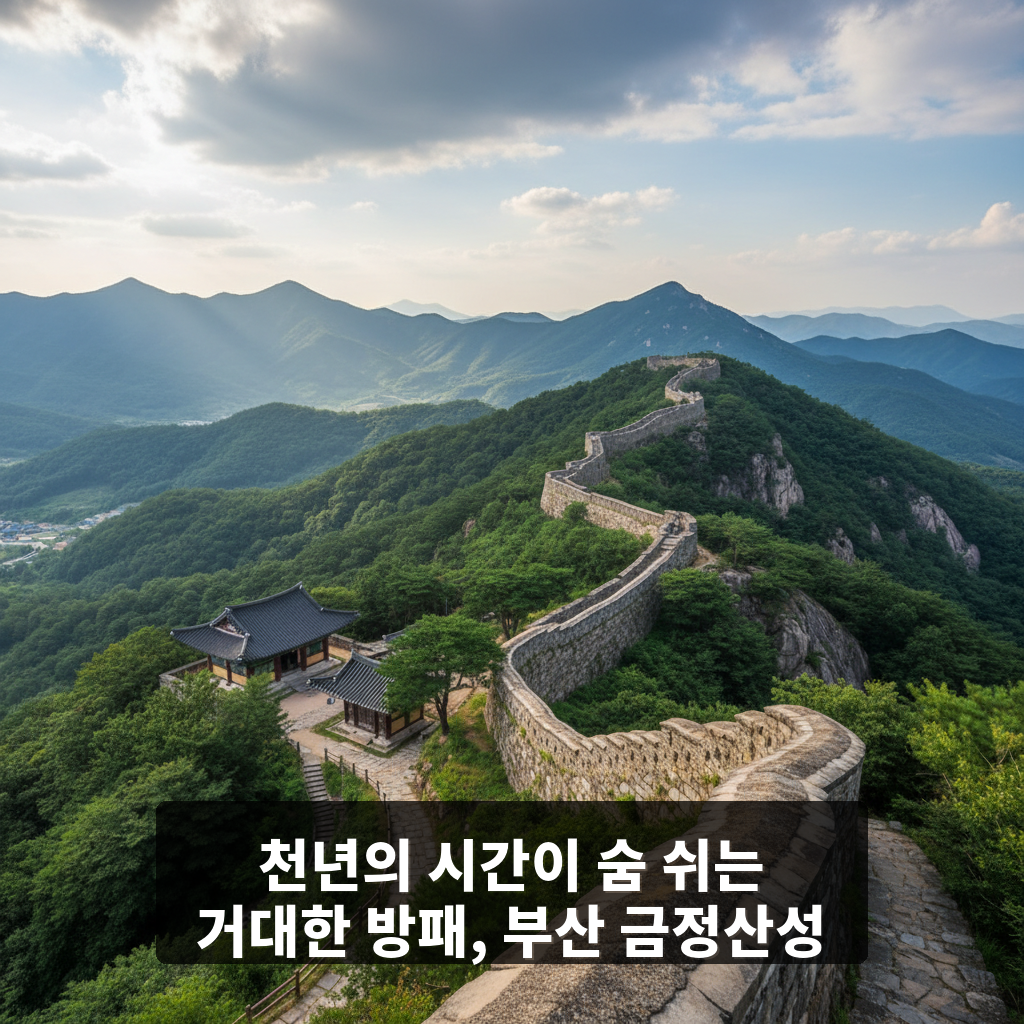
A colossal shield breathing a millennium of time, Busan Geumjeongsanseong


On a dark night, the wind blowing from afar seems to whisper ancient tales as it wraps around the stone walls of the fortress. Located in the heart of Busan, Geumjeongsanseong is more than just a historical site; it’s like a colossal history textbook where the lives and aspirations of common people during tumultuous times are deeply etched. What tragic stories and steadfast spirits are truly embedded here?
In the late Joseon Dynasty, while the scars of the Imjin War had not yet fully healed, the people built a massive fortress wall along the rugged ridge of Geumjeongsan to prevent the recurrence of such tragedy. This fortress, the largest in Korea, stretching an astonishing 17km, Geumjeongsanseong was more than just a defensive structure; it was a refuge and a stronghold for resistance.
Now, we step into this mysterious space where the forest’s green breath and traces of the past intertwine, to uncover fragments of forgotten history and delve deeply into the charm of the fortress village that thrives today.
A Grand Shield Forged by Time: The Story of Geumjeongsanseong


Geumjeongsanseong stretches long along the magnificent ridge and deep valleys of Geumjeongsan. Its origin dates back to after the Imjin War, when it was built with the blood and sweat of the people of Dongnae-bu as a refuge and resistance fortress, in preparation for another potential war. This massive wall, which fully embodies the desperate circumstances of the time and the fervent hopes of the people, is a living history in itself.
Traces of Layered Time


Under the judgment that the fortress was too large and inefficient for defense, an inner fortress, divided into northern and southern sections, was additionally constructed in 1707 under the leadership of Dongnae magistrate Han Bae-ha. Along with this, key facilities such as observation posts and armories were reinforced, transforming Geumjeongsanseong into an even more robust stronghold. Subsequently, in 1806, Dongnae magistrate O Han-won carried out extensive renovations, including repairing the fortress and newly constructing the East Gate, and adding gate towers to the West, South, and North Gates, along with deploying defense troops, further enhancing its grandeur.
- Construction Background A refuge and resistance fortress built after the Imjin War to prepare for renewed invasion.
- Scale Known as the largest mountain fortress in Korea.
- Major Repair Periods 1707 (Inner fortress construction, facility reinforcement), 1806 (Fortress repair, new East Gate construction, gate tower installation).
The Charm of the Fortress Village Where Past and Present Harmonize


Within the embrace of Geumjeongsanseong lies a fortress village where the lives of people have been woven for centuries. This is not merely a village below the fortress walls, but a special place with its own unique culture and atmosphere. It also serves as a warm resting place for visitors weary from walking along the fortress walls.
A Place Where Taste and Charm Coexist


The fortress village is particularly famous for ‘Sanseong Makgeolli’. As one of Korea’s traditional makgeolli, it is loved by many for its unique savory taste and refreshing crispness. This makgeolli, traditionally brewed below Geumjeongsanseong, has become a local specialty with historical value. Savoring local dishes around the fortress with a glass of makgeolli will be an unforgettable experience.
Things to Enjoy in the Fortress Village
- Sanseong Makgeolli As a traditional Korean liquor, you can taste makgeolli boasting excellent flavor and history.
- Various Restaurants There are many restaurants specializing in local dishes made with ingredients found around the fortress, such as Pajeon and goat meat.
- Charming Cafes Cafes where you can enjoy a leisurely cup of coffee amidst nature are located throughout the area.
Directions to Geumjeongsanseong and Enjoyable Visit Tips
The way to meet the magnificent Geumjeongsanseong is easier than you might think. You can visit comfortably by car or by using public transportation, and a drive or bus journey combined with the surrounding natural scenery also offers enjoyment.
Geumjeongsanseong Location Information
You can check the exact location on the map below.
How to Get There?
| Transportation Method | Key Features | Recommended For |
|---|---|---|
| Car | Convenient travel to Geumjeongsanseong village, parking facilities available | Family visitors, those with a lot of luggage |
| Public Bus | Use stops near Geumjeongsanseong East Gate/North Gate, connected to hiking trails | Prefer public transport, planning to hike Geumjeongsan |
Tips for Visitors
- Comfortable Shoes There are many sections walking along the fortress walls, so it is recommended to wear comfortable walking shoes.
- Seasonal Essentials Prepare a hat and sunscreen for summer, and warm clothing and winter gear for winter.
- Drinking Water and Snacks Convenience facilities may be limited outside the fortress village, so it is wise to prepare in advance.
- Cultural Heritage Protection Please observe viewing etiquette with a mind to cherish and protect Geumjeongsanseong, a precious historical heritage site.
Geumjeongsanseong offers different charms throughout all four seasons. In spring, you can enjoy flowers blooming with light green sprouts; in summer, cool breezes amidst lush greenery; in autumn, a feast of colorful foliage; and in winter, serene snowy landscapes. No matter which season you visit, you will be able to create unforgettable memories.
Geumjeongsanseong: A Value Beyond Just Fortress Walls
Geumjeongsanseong is a historical legacy imbued with the pain and wisdom of the past, and a precious space for modern people to reflect and relax in nature. As we walk along the massive fortress walls, we transcend past times and live in the present, feeling the breath of countless individuals who left their footprints on this land.
How about creating your own special story here at Geumjeongsanseong, where Busan’s history and nature harmonize? We hope you gain new inspiration by walking along the footsteps of history and enjoy peaceful moments amidst the beautiful scenery.
Frequently Asked Questions
Q1. What historical significance does Geumjeongsanseong hold?
Geumjeongsanseong is the largest fortress in Korea, built by the people of Dongnae-bu after the Imjin War to prepare for foreign invasion. It served simultaneously as a refuge and a stronghold for resistance, and was an important part of the military defense system in the late Joseon Dynasty. It is a precious historical heritage site containing the will to survive and wisdom of the common people.
Q2. What are some enjoyable foods to try at Geumjeongsanseong?
Geumjeongsanseong village is particularly famous for ‘Sanseong Makgeolli’. Along with traditional makgeolli, which boasts its unique taste and aroma, there are many restaurants where you can taste various local dishes that showcase regional characteristics, such as goat bulgogi and Pajeon. Enjoy a hearty meal with makgeolli.
Q3. Are there any good places to visit near Geumjeongsanseong?
While Geumjeongsanseong itself is vast, there are nearby attractions such as hiking trails on Geumjeongsan and Beomeosa Temple. You can relax at various cafes and restaurants within the fortress village, or enjoy trekking while taking in the beautiful natural scenery of nearby Geumjeongsan.
Q4. Are there any particular precautions to take when visiting Geumjeongsanseong?
It is important to wear comfortable shoes as there are many courses walking along the fortress walls. Also, since it is a large area, it’s advisable to prepare seasonal clothing and sufficient drinking water. To protect the cultural heritage, please stick to designated paths and show civic consciousness by taking your trash with you.
Q5. Is entry to Geumjeongsanseong free?
Yes, Geumjeongsanseong itself can be explored freely without a separate entrance fee. However, parking fees may apply when using parking facilities within the fortress village, and you will need to pay the fees for each establishment when using restaurants or cafes.