
A journey through time: Encountering history with all five senses at the National Museum of Korea


Have you ever dreamed of a special experience where past and present intersect, in a quiet yet magnificent place, when you wish to pause amidst the noise of a bustling city? If you are tired of the same old daily routine, why not venture to a place where every step becomes history and the doors of perception swing wide open?
The National Museum of Korea, located in Yongsan, is more than just an exhibition of artifacts; it’s like a giant time machine that transports us into the role of time travelers. Since its opening in 2005, it has been beloved by countless people, serving as both a healing space in the city and a vibrant educational venue.
Today, we will embark on a journey to explore the diverse stories unfolding here and discover your “personal history” within them.
The first step through the gate of time: The scale of the National Museum of Korea
The National Museum of Korea welcomes visitors with its overwhelming scale and depth. There are as many as 7 permanent exhibition halls, and artifacts meticulously classified by period and theme present a vivid flow of history, as if alive. A total of 9,884 artifacts captivate us, sometimes grandly, sometimes delicately. The exhibits, which are periodically rotated according to preservation needs and external exhibition schedules, allow for new discoveries with every visit.
Why the National Museum of Korea?
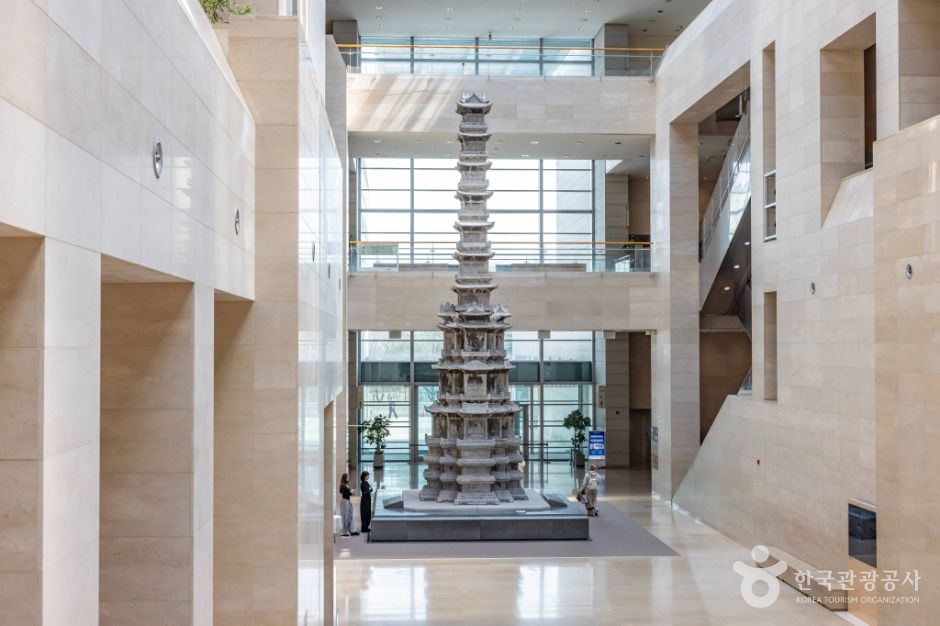

- Vast collection You can encounter a wide range of artifacts, from prehistoric times to modern and contemporary history, all in one place.
- Professional preservation and research Continuous efforts are made to protect the value of artifacts and uncover new facts.
- Changing exhibitions Periodic artifact rotations allow you to listen to new stories every time you visit.
This is not merely a place where traces of the past are collected. It is a living repository of knowledge that constantly strives to enhance its perfection in various fields, including the collection and preservation of artifacts, and academic research, continuously exploring the depth and breadth of our history.
How to encounter history with all five senses: Experiences not to be missed
The National Museum of Korea is not just a museum to see with your eyes. Various programs and spaces are designed for you to feel and learn history through all your senses. From children to adults, everyone can “experience” history in their own way.
Planning your personalized history tour
Klook.com

| Visit Type | Recommended Spaces and Programs | Features |
|---|---|---|
| In-depth history explorers | Permanent exhibition halls, special exhibition halls, docent programs | Expanding knowledge through in-depth understanding of artifacts by period and expert commentary |
| Family visitors | Children’s Museum, diverse educational programs | Experience-oriented, engaging children’s interest through five senses learning |
| Seekers of new experiences | Immersive content utilizing advanced technology | Immersion into history recreated with latest technologies like Virtual Reality (VR) |
| Quiet and leisurely relaxation | Museum garden, outdoor spaces | Contemplation and relaxation in a garden with beautiful seasonal flowers |
In particular, immersive content utilizing advanced technology acts as a bridge connecting the past and present, helping to experience history more vividly and immersively. The Children’s Museum is the best place for children to naturally learn history by touching and feeling it themselves.
An urban healing oasis: Museum, a harmony of nature and art
In our rapidly changing modern society, we need a space to pause and catch our breath. The National Museum of Korea serves precisely this role as an urban healing space. Stepping outside the museum building, a beautiful garden unfolds, adorned with diverse flowers blooming according to the seasons.
The charm of a garden stroll
- Seasonal changes You can enjoy different scenery in all four seasons: cherry blossoms in spring, lush trees in summer, autumn foliage, and snowscapes in winter.
- Leisurely strolls You can find peace of mind by comfortably walking in the spacious and well-maintained garden.
- Harmony of culture and nature There’s also the small pleasure of discovering stone pagodas or stone relics placed throughout the tranquil garden.
You can spend a relaxed and enjoyable time with family, friends, loved ones, or by yourself, strolling through the serene garden. This is a place where the humanities depth of the museum and the beauty of nature are perfectly harmonized.
National Museum of Korea, a practical guide for a comfortable visit
To fully enjoy an excellent cultural space, advance preparation is essential, right? The National Museum of Korea boasts excellent accessibility, but knowing a few tips will make your visit even more convenient and enjoyable.
How to get there?
You can easily access it by public transport from Yongsan Station or Ichon Station. The subway stations are connected to the museum, allowing for comfortable travel regardless of the weather.
Checklist of tips for a fulfilling visit
- Check information in advance Before your visit, check the official website for special exhibition schedules and docent tour times.
- Plan ample time Even just touring the permanent exhibitions takes considerable time, so it’s advisable to schedule ample time. (Minimum 3-4 hours recommended)
- Children’s Museum reservation The Children’s Museum is especially popular on weekends and holidays, so advance reservation is essential. (Free)
- Wear comfortable shoes You’ll be walking a lot in a large space, so it’s good to wear comfortable shoes.
- Utilize audio guides You can listen to in-depth explanations of each artifact through paid/free audio guides.
Beyond mere viewing: Inspiration offered by the National Museum of Korea
The National Museum of Korea offers us not just the transmission of knowledge, but deep insight and inspiration for life. It makes us ask ourselves about the value of artifacts within the flow of time, and what meaning they hold for our current lives.
The museum as a cultural space opening to the future
A place to look back at the past, understand the present, and imagine the future—that is perhaps the role of a museum. In line with these contemporary demands, the National Museum of Korea provides diverse educational programs and experiential opportunities, fostering a cultural foundation where all generations can grow together.
Special values provided by the museum
- Humanistic insights Through artifacts, one can glimpse the lives and wisdom of ancestors and ponder profound questions about human existence.
- Cultural connection Encountering artifacts from various civilizations and eras broadens one’s worldview and serves as an opportunity to understand the uniqueness of our culture.
- Continuous learning venue Provides opportunities for lifelong learning through constantly new exhibitions and programs.
Leave the complexities of the world behind for a moment, and embark on a journey through time at your own pace at the National Museum of Korea. There, you will discover forgotten curiosity and new inspiration.
Frequently Asked Questions
Q1. Is admission to the National Museum of Korea’s permanent exhibition halls free?
No, admission to the permanent exhibition halls of the National Museum of Korea is free. Special exhibitions may incur a separate admission fee, so it’s advisable to check before your visit.
Q2. Is advance reservation essential for using the Children’s Museum?
Yes, the Children’s Museum is particularly popular on weekends and public holidays, so advance reservations are recommended for a smooth visit. Reservations can be made through the official website, and on-site registration is also possible, but waiting times may occur.
Q3. Are there places to eat within the museum?
Yes, there are cafes and restaurants within the National Museum of Korea where you can enjoy simple drinks or meals. There is also a space in the outdoor garden where you can relax and eat a packed lunch.
Q4. How can I participate in the museum’s docent programs?
Docent programs operate at set times. If you wish to participate, simply go to the designated location before the scheduled time. Foreign language interpretations are also available, so please check the museum’s website for detailed schedules.
Q5. Is photography allowed?
Yes, general photography without flash is permitted in the permanent exhibition halls. However, photography may be restricted in special exhibition rooms or for specific artifacts, so please follow the on-site guidance.
 Love Korea? Promote it & Earn.