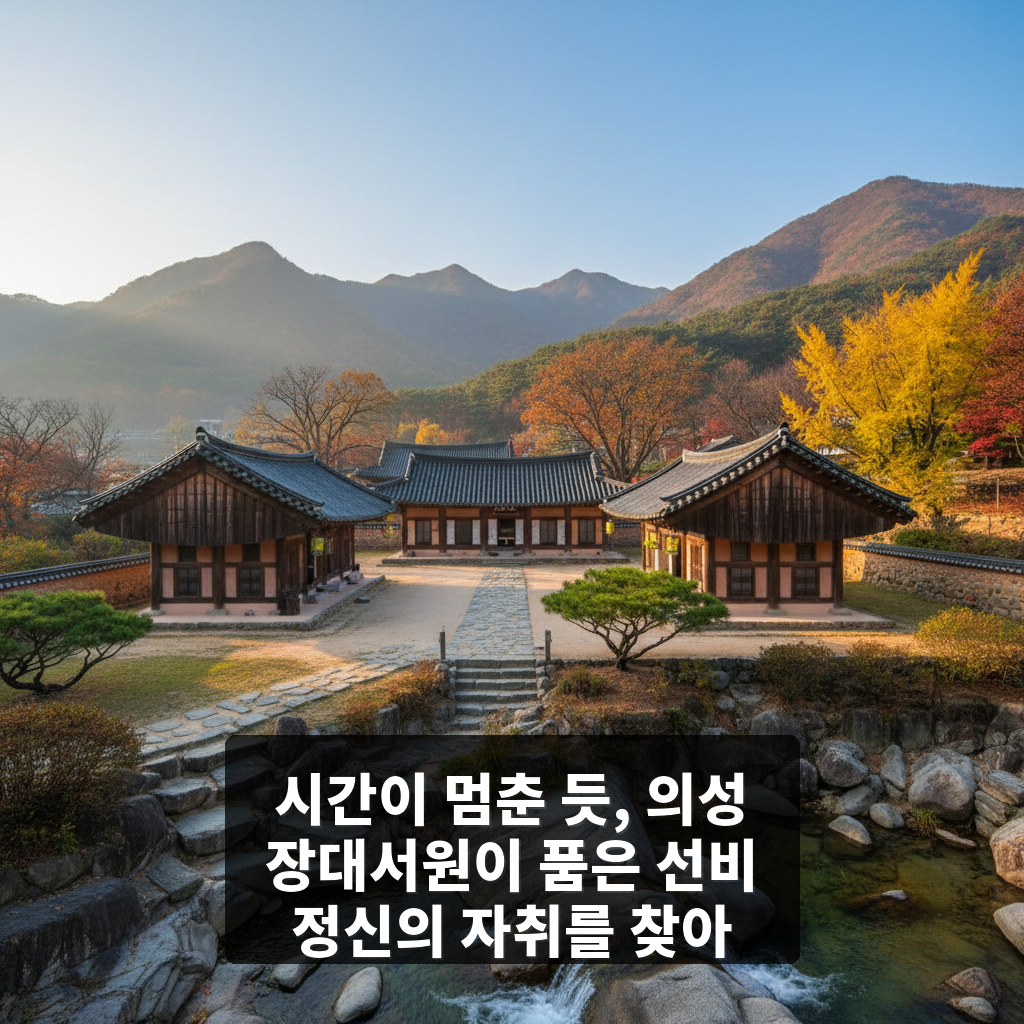
As if time has stopped, seeking the traces of the seonbi spirit held within Uiseong Jangdaeseowon


Did you know that there is a space that disappeared in the winding path of history and was reborn? It is not just an old building, but a place where the scholarship and spirit of the literati (seonbi) who dominated an era are fully preserved. Jangdaeseowon, located in Uiseong, is a special place that holds such a story.
This seowon, which began as a lecture hall established by a scholar (seonbi) who returned to his hometown during King Gwanghaegun’s reign to nurture future generations, was destroyed in the turmoil of history and later regained its meaning in modern times, posing many questions to us. Indeed, what deep meaning and stories are hidden here?
From now on, we will embark on a journey through time, tracing the unique value and spiritual legacy preserved by Jangdaeseowon. How about we walk together, if only for a moment, along the forgotten path of the literati (seonbi) in this place where past and present coexist?
A Hall of Timeless Wisdom: The Birth and Growth of Jangdaeseowon
The history of Jangdaeseowon dates back to 1610 (the 2nd year of King Gwanghaegun). At that time, it began as a lecture hall established by Master Shin Jije after returning to his hometown to teach future generations. This place, where an individual’s academic passion blossomed, gradually raised its status and established itself as a central hub for regional Confucian scholars (yurim).
What is the deep meaning behind the name?
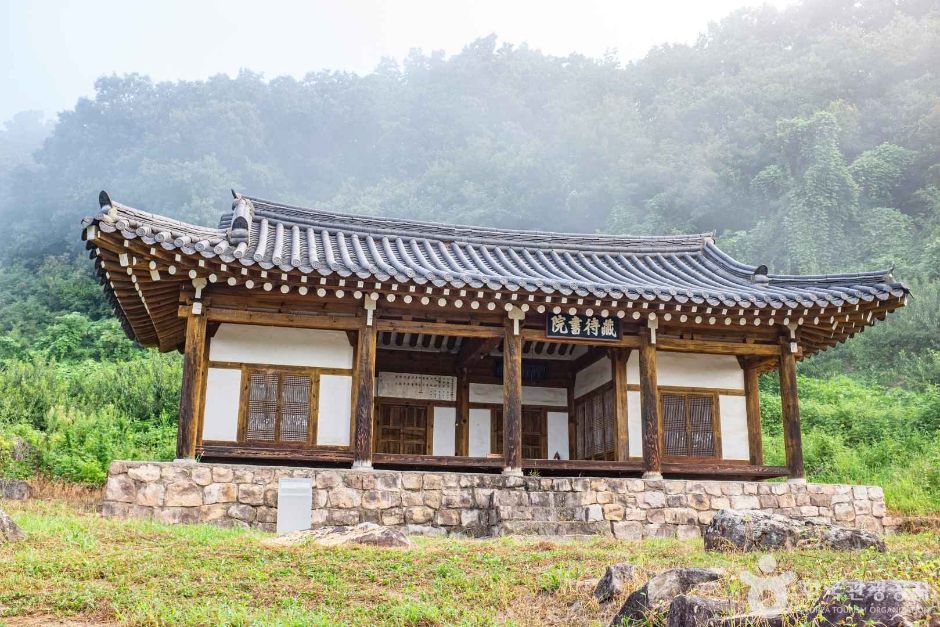
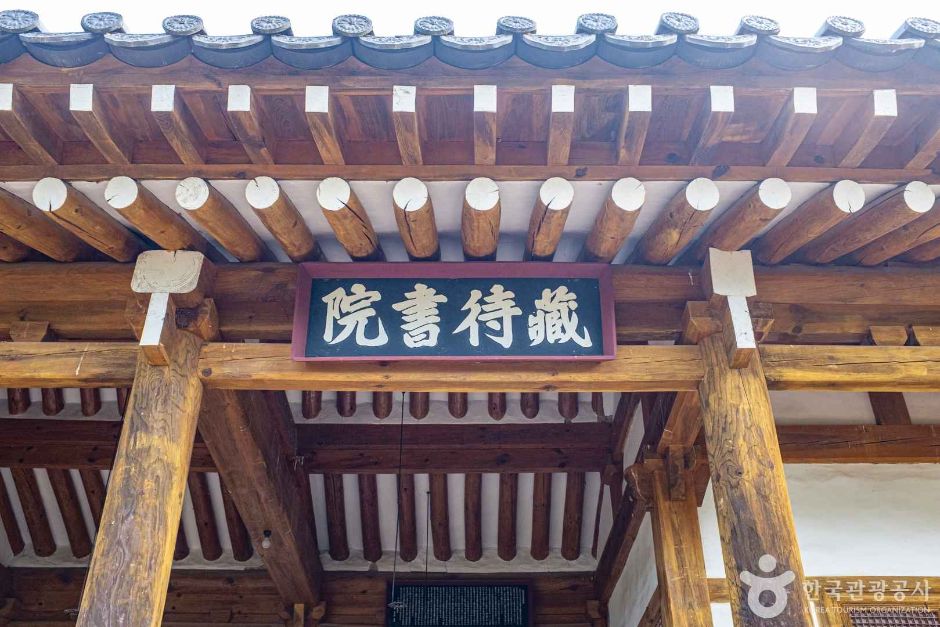
It is said that the name ‘Jangdae (藏待)’ was given by Jang Hyeon-gwang, who was the Uiseong county magistrate at the time. This name contains profound wisdom from a passage in the ‘Gyesahajeon’ of the ‘I Ching’ (Zhouyi), which states, “A noble person (junja) should conceal their talents and magnanimity within themselves and wait for the right time to act.” This symbolizes the patience and deep insight of a scholar (seonbi) who waits for the right moment rather than pursuing radical change, offering a glimpse into the academic aspirations of Jangdaeseowon.
- Establishment Period 2nd year of King Gwanghaegun (1610), Master Shin Jije nurtured future generations
- Seowon Promotion 28th year of King Sukjong (1702), academic status recognized
- Origin of Name County Magistrate Jang Hyeon-gwang quoted from the ‘I Ching’ (Zhouyi)
The Will to Reconstruct Blossomed Amidst the Whirlwind of History
As time passed, Jangdaeseowon transcended its role as a mere lecture hall and also served as a shrine commemorating past sages. In 1671 (the 2nd year of King Hyeonjong), Gyeonghyeonsa (景賢祠) was established next to the lecture hall, and the veneration of Master Shin Jije, along with Masters Yi Min-seong, Kim Gwang-su, and Shin Won-rok, began. However, not all glory could last forever.
Chronicle of Ordeals and Resurrection
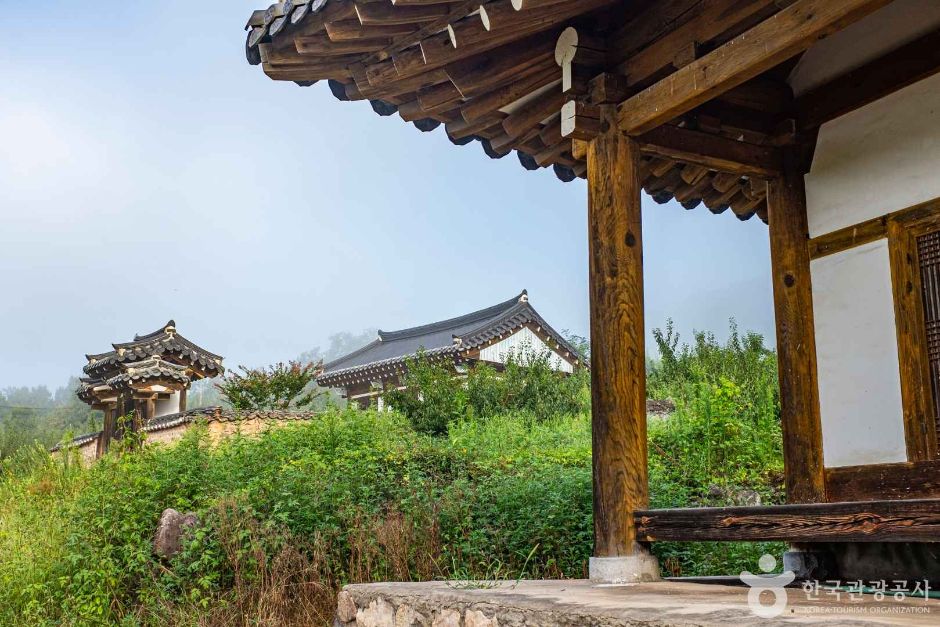
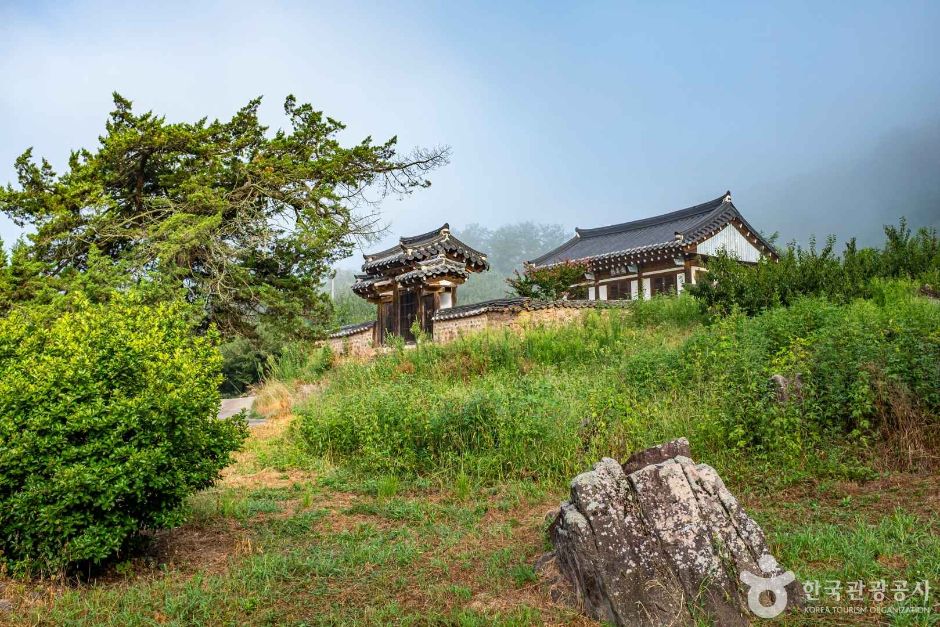
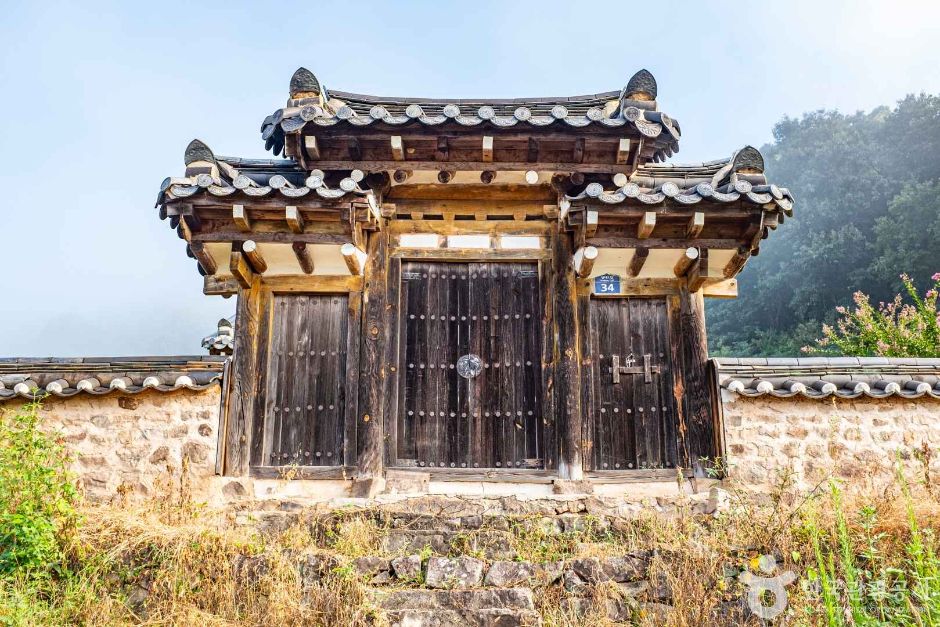
In 1868 (the 4th year of King Gojong), due to Heungseon Daewongun’s order to abolish seowon, Jangdaeseowon also met the tragic fate of being destroyed. It was the pain of seeing the cradle of the literati (seonbi) spirit disappear overnight. However, that spirit did not completely perish. After a long time, with the wishes and efforts of local residents, Jangdaeseowon once again saw the light of day.
| Period | Major Event |
|---|---|
| 1610 (2nd year of King Gwanghaegun) | Master Shin Jije established a lecture hall to nurture future generations |
| 1671 (2nd year of King Hyeonjong) | Gyeonghyeonsa established, Shin Jije and Yi Min-seong enshrined (later Kim Gwang-su, Shin Won-rok additionally enshrined) |
| 1702 (28th year of King Sukjong) | Promoted to Jangdaeseowon |
| 1868 (4th year of King Gojong) | Destroyed by the seowon abolition order |
| 1988 | Reconstruction of Gyeonghyeonsa (memorial shrine) |
| 1996 | Reconstruction of the lecture hall |
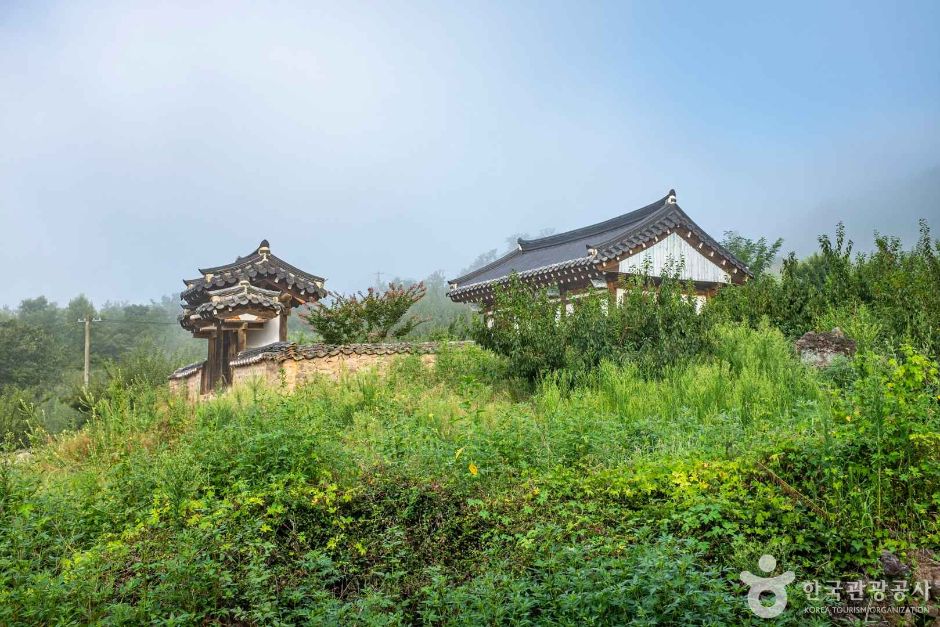
Thus, despite numerous trials, Jangdaeseowon has preserved its spirit to this day, and currently, Gyeonghyeonsa, Jangdae Seowon, and commemorative plaques detailing its reconstruction remain on the premises. Every year, in the latter part of the second lunar month, a memorial rite ceremony is held to honor the past sages, preserving their legacy.
Jangdaeseowon: Reasons to Visit and Exploring the Surroundings
A Guide for Travelers Walking Through Time
Beyond its historical value, Jangdaeseowon possesses a tranquil beauty that offers peaceful respite to visitors. The neatly maintained appearance of the seowon has the power to make busy modern people pause and contemplate the past.
Tips for Visitors
- Quiet Contemplation Stroll slowly through the seowon and feel the spirit of past literati (seonbi). It is an excellent place for quiet meditation.
- Historical Interpretation Learning about the historical background of Jangdaeseowon before your visit will allow for a more in-depth experience.
- Hyangsa Period The hyangsa (ancestral ritual) held annually in the latter part of the second lunar month can be a special opportunity to directly witness the traditions and culture of the seowon.
Directions to Jangdaeseowon
Jangdaeseowon is located in Dain-myeon, Uiseong-gun. It is a place with even more charm, harmonizing with the tranquil surrounding scenery. You can easily find it by using a navigation system.
Nearby Places to Visit Together
Around Jangdaeseowon, there are various attractions that blend with Uiseong’s natural scenery. Uiseong is especially famous for garlic, so visiting nearby local specialty markets or restaurants to experience the charm of Uiseong with all five senses is a good idea. Additionally, visiting historical and cultural facilities such as the Uiseong Chomunguk Museum can help in understanding the historical flow of the region.
Encountering the Spirit of the Literati (Seonbi) at Jangdaeseowon, Returning with Its Lingering Impression
Uiseong Jangdaeseowon is more than just a building; it is a living history textbook, concentrated with the spirit and wisdom of the literati (seonbi) who lived through an era. This space, which has remained with us to this day after undergoing processes of prosperity, decline, and rebirth, quietly reminds us of the values we should not forget in a rapidly changing world.
In the tranquility you find here, take meaningful time to look within yourself and discover direction in life through the wisdom of our ancestors. Visiting Jangdaeseowon will be a journey into the past and, simultaneously, a time for reflection for the present and future.
Frequently Asked Questions
Q1. Who established Jangdaeseowon and when?
Jangdaeseowon began in the 2nd year of King Gwanghaegun (1610) when Master Shin Jije established a lecture hall after returning to his hometown to nurture future generations. It was promoted to a seowon in the 28th year of King Sukjong (1702).
Q2. What does the name Jangdaeseowon mean?
The name ‘Jangdae (藏待)’ was given by Jang Hyeon-gwang, the Uiseong county magistrate at the time, and originates from a passage in the ‘I Ching’ (Zhouyi) that states, ‘A noble person (junja) should conceal their talents and magnanimity and wait for the right time to act.’
Q3. Has Jangdaeseowon ever been destroyed?
Yes, it was destroyed in the 4th year of King Gojong (1868) due to Heungseon Daewongun’s order to abolish seowon. Afterwards, the memorial shrine was rebuilt in 1988 and the lecture hall in 1996, forming its current appearance.
Q4. Which historical figures are enshrined at Jangdaeseowon?
In 1671, Gyeonghyeonsa was established, and the veneration of Master Shin Jije began. Later, Masters Yi Min-seong, Kim Gwang-su, and Shin Won-rok were also enshrined together.
Q5. Is there anything special to know when visiting Jangdaeseowon?
It is important to maintain a quiet and tranquil atmosphere within the seowon. Every year, a hyangsa (ancestral ritual) is held in the latter part of the second lunar month, so visiting at this time can offer a more special experience. We recommend exploring other tourist attractions nearby, such as the Uiseong Chomunguk Museum.