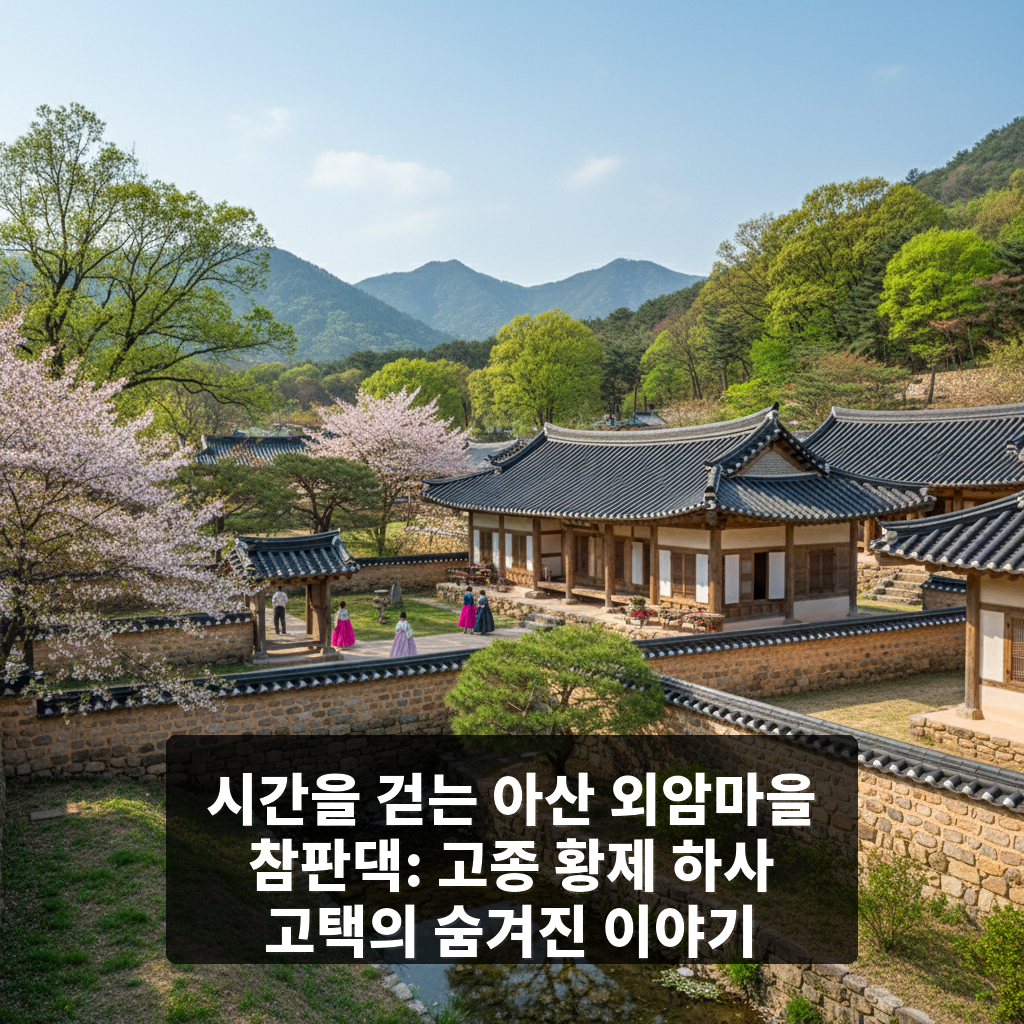
Asan Oeam Village Vice Minister’s Residence, Walking Through Time: Hidden Story of the Historic House Bestowed by Emperor Gojong


Have you ever opened the grand gate of a serene old house and felt as if you were transported hundreds of years back in time? Spaces where the breath of the past still lives always convey a special resonance to us.
Nestled deeply within Asan, Chungcheongnam-do, Asan Oeam Village Champandaek is precisely such a place. This house, built after Lee Jeong-ryeol, who served as a Jikhaksa and Champan of Gyujanggak during the late Joseon Dynasty, received it directly as a gift from Emperor Gojong, is not just a mere structure but a living heritage imbued with the history of an era and the lives of our ancestors.
Today, shall we walk together to discover the stories passed down within its sturdy stone walls, and the hidden beauty throughout the old house? A special journey begins to encounter a brilliant piece of our history, seemingly forgotten yet still radiant.
The King’s Gift, The Breath of History in Champandaek
Asan Oeam Village Champandaek is presumed to have been built in the late 19th century, and it holds a special story from its very beginning. The story goes that Lee Jeong-ryeol, who was a Jikhaksa and Champan of Gyujanggak, where the most brilliant intellectuals of Joseon gathered at the time, received the house directly as a gift from Emperor Gojong. This proves that Champandaek is more than just a typical noble’s house; it is a meaningful space imbued with the historical context of its era and the spirit of historical figures.
Ancestors’ Wisdom Seen Through Architectural Aesthetics
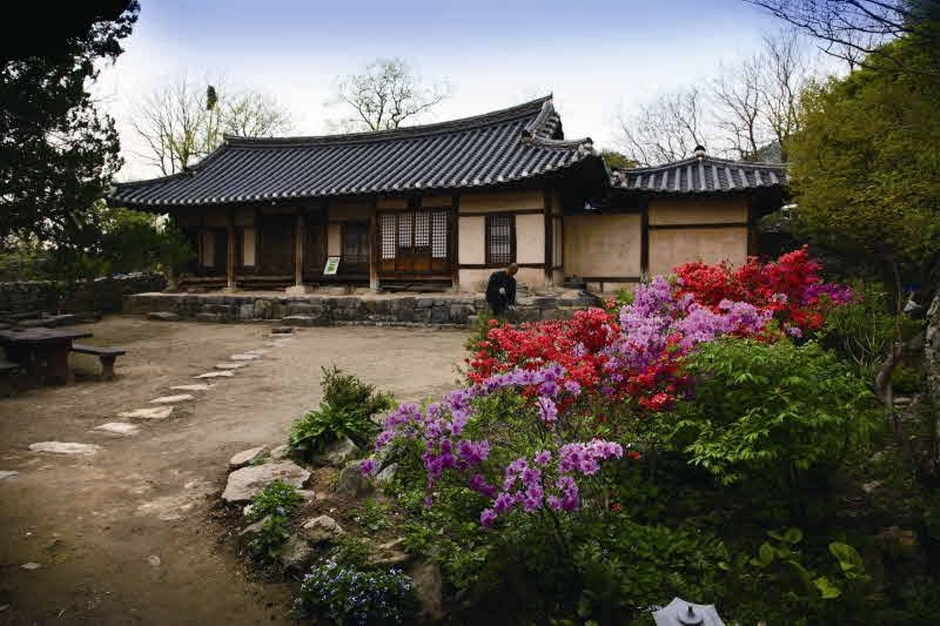
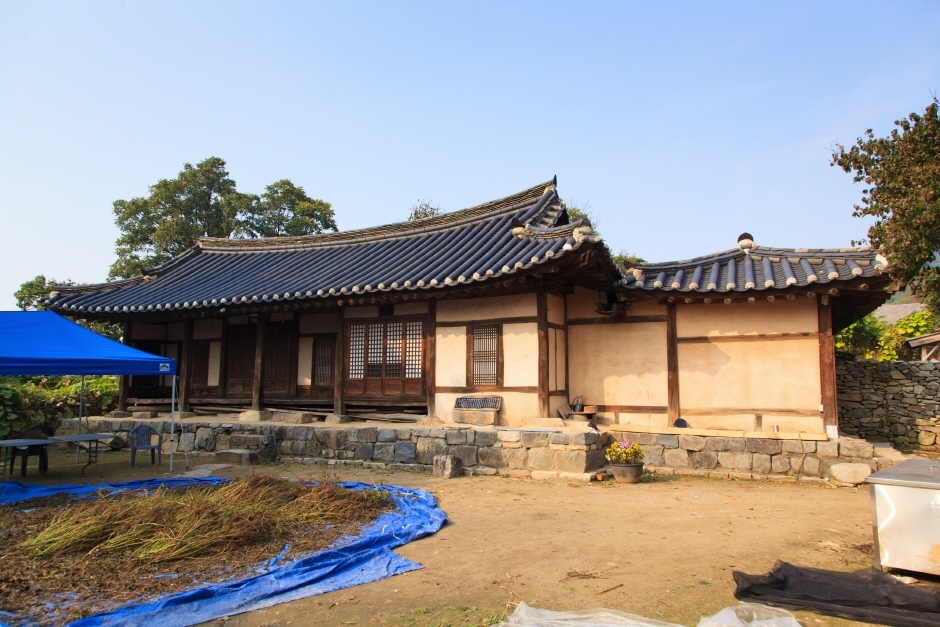
Champandaek consists of two groups of buildings: the main house (keun-jip) and the smaller house (jageun-jip). These two houses are uniquely arranged in a ‘Me’ (므) character shape, adding visual interest for visitors. The floor plan generally follows the central region’s architectural style, where ‘daecheong (main hall) is offset from the anbang (inner room) ondol (heated floor),’ but the sarangchae (men’s quarters) of the smaller house incorporates the charm of the southern style with its daecheong placed to one side, harmoniously blending regional characteristics.
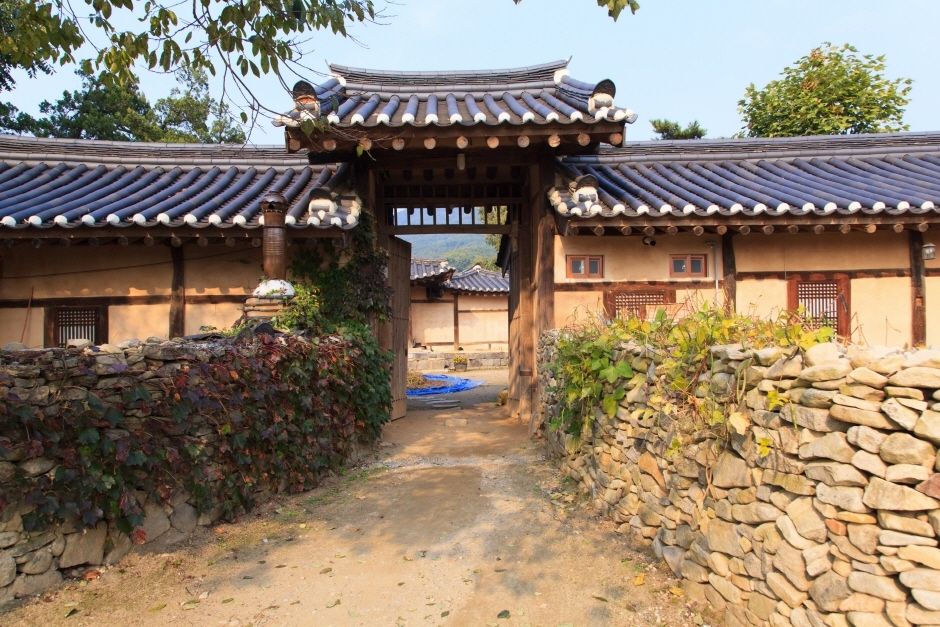
- The Charm of the Main House (Keun-jip) The stone wall encircling the entire house beautifully divides the space, and the stone wall extending in front of the main gate offers a sense of depth to the entrance of the house. The cozy courtyard in front of the jungmungan (middle gate) and the low stone wall around the jangdokdae (earthenware jar platform) create a continuous flow of relaxed and beautiful spaces.
- The Wisdom of the Smaller House (Jageun-jip) On the front porch of the sarangbang (guest room) of the smaller house, a gobang (storage room) was placed and equipped with folding doors, allowing for multi-purpose use—a unique structure not commonly seen. This section reveals deep consideration for practicality in daily life and space utilization at the time.
The household items meticulously preserved within the house, especially the furniture arrangement in the main house’s sarangchae, vividly convey the lifestyle and elegance of our ancestors. It offers a special experience where history can be felt with all five senses, different from artifacts seen in museums, through the traces of real life.
Asan Oeam Folk Village: The Way to Champandaek
Located within the serene Oeam Folk Village, Asan Oeam Village Champandaek also boasts excellent accessibility. The journey itself to this place, where nature and history beautifully harmonize, becomes a healing experience.
How to Visit?
- By Car Ample parking space is available at the entrance of Oeam Folk Village, making it convenient to use. Please note that parking fees may apply.
- By Public Transport You can conveniently reach the Oeam Folk Village bus stop by taking a city bus from Asan Station or Onyangoncheon Station. From the bus stop, you can walk to the village entrance.
For those who wish to escape the hustle and bustle City and take a short break, this place will be an unparalleled choice.
100 Ways to Enjoy Oeam Folk Village with Champandaek
A visit to Asan Oeam Village Champandaek is the beginning of a journey to experience the entire Oeam Folk Village. After fully enjoying the quaint beauty of Champandaek, why not immerse yourself in the charm preserved throughout the village?
Discovering Hidden Treasures in the Village
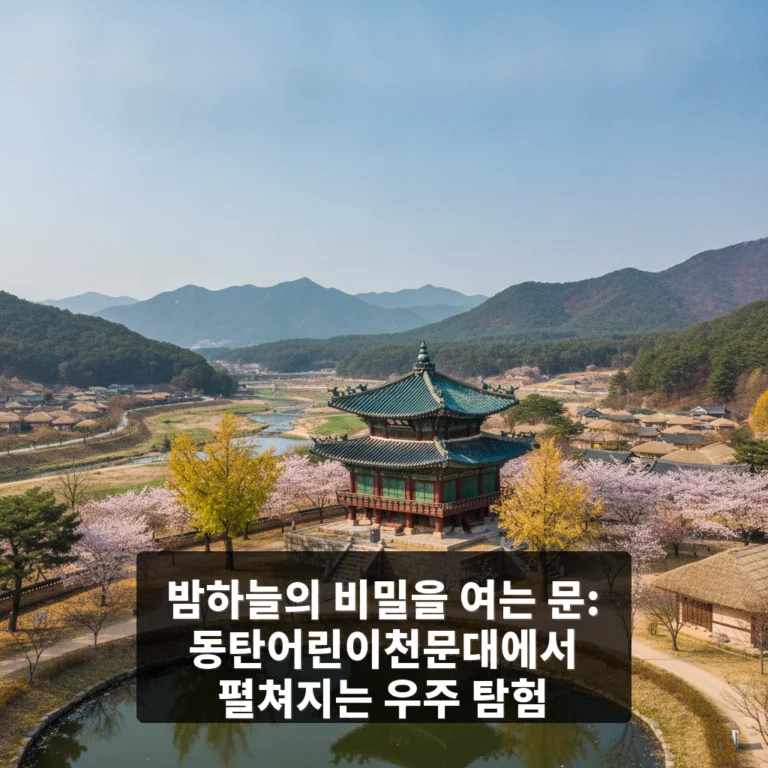
- Oeam Folk Village Boasting a history of approximately 500 years, this place offers a picturesque landscape where stone walls, thatched-roof houses (초가집), and tiled-roof houses (기와집) beautifully harmonize. Various traditional experience programs are also operated, allowing for a richer experience.
- Jeojatgeori (Market Street) At Jeojatgeori (Market Street) within the village, you can taste traditional foods made with Asan’s local specialties and purchase charming souvenirs. Take a moment to relax and feel the ambiance of an old marketplace.
- Asan Ginkgo Tree Road If you visit in autumn, don’t miss Asan Ginkgo Tree Road located near the village. The tunnel of golden ginkgo leaves is a perfect spot for capturing memorable photos.
Small Tips for Champandaek Visitors
- Check Information Before Visiting It is recommended to check the operating hours, entrance fees (village entrance fee applies), etc., for Oeam Folk Village and Champandaek before your visit.
- Comfortable Attire As there are many stone paths and dirt roads, wearing comfortable shoes is recommended. Enjoy the ambiance of the old house as you leisurely stroll through the village.
- Utilize Cultural Commentary If possible, explore while listening to the explanations of a cultural commentator. It greatly helps to understand the hidden stories and historical background within the old house more deeply.
- Photography Etiquette As it is an old architectural site, please observe carefully and respectfully, and take photos discreetly so as not to disturb other visitors or residents for privacy protection.
To Us Living Today: The Message Champandaek Offers
Asan Oeam Village Champandaek is not just an old house. It is a living history textbook that fully embodies the architectural techniques and way of life of the era, and a home for our ancestors who lived through the tumultuous period of the late Joseon Dynasty. Each sturdy stone wall, elegant roof tile, and quaint household item seems to speak to us across time.
In your busy daily life, take a moment to pause and reflect on the beauty and value of our traditions, which you may have forgotten amidst the tranquility of the old house. Asan Oeam Village Champandaek will be a special place where you can encounter the wisdom of the past in the present, and find true rest and deep inspiration.
Frequently Asked Questions
Q1. What kind of place is Asan Oeam Village Champandaek?
Asan Oeam Village Champandaek is an old house presumed to have been built in the late 19th century, gifted by Emperor Gojong to Lee Jeong-ryeol, who served as a Jikhaksa and Champan of Gyujanggak during the late Joseon Dynasty. It is an important historical space where one can glimpse the lifestyle and architectural style of that period.
Q2. What are the architectural characteristics of Champandaek?
Champandaek features two groups of buildings, the main house (keun-jip) and the smaller house (jageun-jip), arranged in a ‘Me’ (므) character shape, exhibiting a unique floor plan that blends the central region’s architectural style with a southern touch. Particularly impressive are the stone walls surrounding the main house and the gobang (storage room) arrangement in front of the sarangbang (guest room) of the smaller house.
Q3. Are there other places of interest to visit around Champandaek?
Yes, Champandaek is located within Oeam Folk Village, allowing you to explore the entire village and appreciate traditional houses such as stone-walled paths, thatched-roof houses (초가집), and tiled-roof houses (기와집). You can enjoy traditional foods at Jeojatgeori (Market Street) or, in autumn, it’s also great to visit Asan Ginkgo Tree Road.
Q4. Is there an entrance fee for Oeam Folk Village Champandaek?
While there is no separate entrance fee for Champandaek itself, an entrance fee applies to Oeam Folk Village where Champandaek is located. It is advisable to check the official website of Oeam Folk Village for accurate entrance fee information before your visit.
Q5. Are there any special precautions to take when visiting Champandaek?
As it is an old house, it is important to treat the facilities with care and observe respectfully. As there are many stone paths and dirt roads, wearing comfortable shoes is recommended, and if possible, exploring with a cultural commentator can make your time more informative.