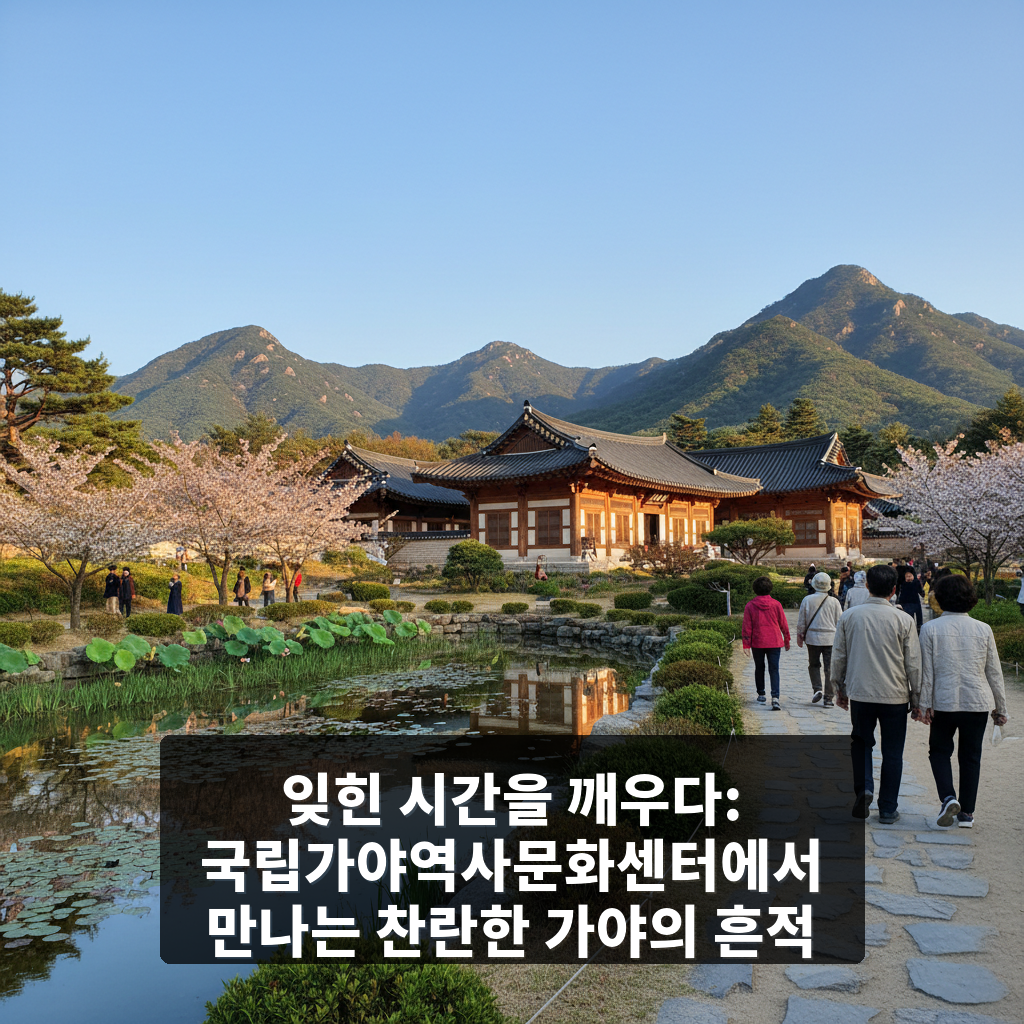
Awakening Forgotten Time: Encountering the Brilliant Traces of Gaya at the National Gaya History and Culture Center


The ancient kingdom of Gaya, which seemed to have been momentarily forgotten in our history. Beyond the faintness that its name evokes, there is a place where you can vividly encounter their actual lives and culture. It is the National Gaya History and Culture Center, which archives and reinterprets everything about Gaya.
This place, which makes us remember Gaya not as a page in history but as a living story, is a special space where artifacts that have long been dormant underground meet modern sensibility and are breathed new life into. Shall we embark on a delicate journey following the traces of Gaya, as if we have become ancient time travelers?
Indeed, how much do we truly know about Gaya? Here, you will be able to directly experience how Gaya’s great civilization and unique beauty approach us today.
Where Gaya’s Heart Beats Again: Steps Towards Reconstructing Memory


The National Gaya History and Culture Center is a special space established to showcase diverse ways of remembering Gaya. It systematically archives all materials related to Gaya, including excavated data, records, and books, playing a crucial role in translating past heritage into contemporary language. Beyond simply listing artifacts, it encourages exploration of what Gaya’s story means to our lives.
World Heritage, The Secrets Held by the Gaya Tumuli
- 7 World Heritage Gaya Tumuli: It deeply illuminates the historical value and significance of the 7 Gaya Tumuli inscribed as UNESCO World Heritage. Through the unique stories of each tumulus complex, one can glimpse the rise and fall of Gaya.
- Restored Horse Armor: The horse armor of the Gaya heavy cavalry, whose grandeur was finally revealed after long research, brings to life Gaya’s excellent ironware civilization and military power. It is an overwhelming exhibit that showcases the pinnacle of technology at that time.
Interaction Beyond Time: Stories Whispered by Artifacts and Records


The Gaya pottery, which had been stored at the National Gaya Cultural Heritage Research Institute for over 30 years, is finally coming out into the world at the National Gaya History and Culture Center to meet visitors. From each piece of pottery, which is both rough and delicately curved, you can have a special Experience of feeling the daily lives and artistic sensibilities of the Gaya people up close.
Feeling the Breath of Gaya Pottery with Your Fingertips
In a special space within the exhibition hall, Gaya pottery is arranged to allow visitors to observe it more closely and imagine its texture, not just through glass. Sensuously experience the story of earth that has endured thousands of years.
Treasure Trove of Gaya Research, Book Reading Area


- Donated Books by Researchers: Valuable books donated by Gaya-related researchers are gathered in one place. If you wish to deepen your academic knowledge, don’t miss this place.
- Books Published by the National Heritage Administration: Various Gaya-related books published by the National Heritage Administration are also available, allowing for a wide range of knowledge exploration from the general public to professional researchers.
- Collection of Gaya Stories: This is a key space for retrieving the long-dormant records of Gaya, reinterpreting them with a new perspective, and bringing them back into memory.
The Way to the National Gaya History and Culture Center: Geographical Advantages and Accessibility
On a journey following Gaya’s dynamic breath, the National Gaya History and Culture Center is located in Haman-gun, Gyeongsangnam-do. Its good accessibility allows for convenient visits, and it offers an even richer cultural experience, harmonizing with the surrounding natural scenery.
Convenient Public Transportation Guide
- When using a personal car: You can conveniently arrive by entering the address ‘153-23 Gobun-gil, Gaya-eup, Haman-gun, Gyeongsangnam-do’ into your navigation system. Ample parking space is provided.
- When using public transportation: After getting off at Haman Station or Haman Intercity Bus Terminal, you can easily reach the center by using a local bus or taxi. It is advisable to check the detailed routes before your visit.
Practical Tips for a Deeper Gaya Exploration
Knowing a few tips before your visit will make your experience at the National Gaya History and Culture Center even richer. Planning your viewing route in advance and exploring nearby connected tourist attractions together is also a good idea.
Checklist for a Satisfying Visit
- Time Planning: To comfortably explore the exhibition halls and book reading area, it is recommended to allocate at least 2 hours. If there are special exhibitions, it is better to set aside even more time.
- Utilize Audio Guides: Using the information materials or audio guides provided by the center can enhance your understanding of the exhibits and reveal hidden stories.
- Comfortable Attire: Since you will be walking through a large area, it is advisable to wear comfortable shoes and clothing.
- Check Opening Hours: Before visiting, be sure to check the opening hours and closing days on the center’s official website to avoid a wasted trip.
Nearby Attractions Touched by Gaya’s Breath
After visiting the National Gaya History and Culture Center, you can explore nearby Gaya historical sites to experience the historical traces of Gaya more deeply. In particular, the Haman Marisan Tumuli, inscribed as a World Heritage site, is an essential course that can culminate your Gaya historical journey along with the center. The Daeseong-dong Tumuli in Gimhae, where you can glimpse Gaya’s ironware culture, can also be a good connected tourist attraction.
Frequently Asked Questions
Q1. What is the main role of the National Gaya History and Culture Center?
The center systematically archives all materials related to Gaya, including excavated data, records, and books, and plays a role in informing the public about Gaya’s historical value through exhibitions and research. Furthermore, it contributes to remembering Gaya from our perspective by newly structuring Gaya’s records.
Q2. Please tell me more about the exhibition of the Gaya Tumuli inscribed as a World Heritage site.
The exhibition hall deeply covers the historical value and significance of the 7 Gaya Tumuli inscribed as UNESCO World Heritage. In particular, the horse armor of the Gaya heavy cavalry, restored after long research, is an important exhibit where you can directly witness Gaya’s outstanding ironware civilization and military power.
Q3. What are the characteristics of the special exhibition of Gaya pottery?
A special exhibition space is provided where you can observe and feel the Gaya pottery, which had been stored at the National Gaya Cultural Heritage Research Institute for over 30 years, up close. You can vividly experience the delicate beauty of the pottery and the lives of the Gaya people contained within it.
Q4. What materials can be found in the center’s book reading area?
A variety of books are available, ranging from those donated by Gaya-related researchers to specialized books published by the National Heritage Administration, allowing for in-depth exploration of Gaya’s history. Both academic materials and books for the general public are accessible.
Q5. What attractions are there around the National Gaya History and Culture Center?
The Haman Marisan Tumuli, a World Heritage site adjacent to the center, is a representative connected tourist attraction where you can directly experience Gaya’s history. Furthermore, you can enjoy an even richer historical journey by visiting various Gaya-related historical sites and museums, such as the Daeseong-dong Tumuli in Gimhae.