Gunwi Haksodae: Nature’s masterpiece spread out like a folding screen, a place imbued with the legend of cranes


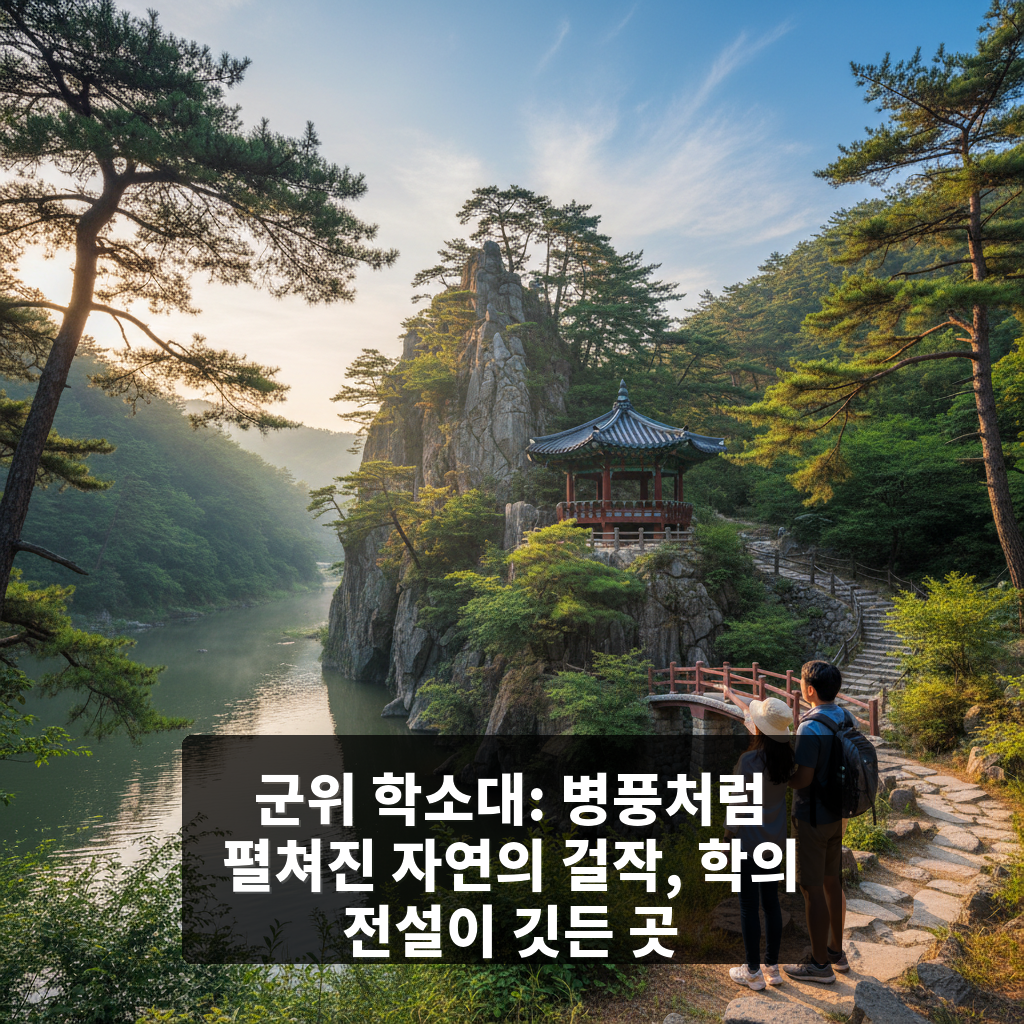
Imagine. A landscape where clear river water flows gracefully beneath giant rock cliffs carved by water over a long time, surrounded by a lush pine forest like a folding screen. This place, where a magnificent aura is felt even in the tranquility, is none other than **Hakso-dae** in Gunwi, Gyeongsangbuk-do. As its name suggests, this place, where the legend of ancient cranes nesting and living is passed down, presents visitors with nature’s most beautiful Art masterpiece.
In particular, this hidden gem located directly opposite Ingaksa Temple, beyond a simple landscape, makes you feel the mystery of nature and the traces of time simultaneously. The clear stream of the Wicheon River, winding around the rock cliffs, boasts different charms throughout the four seasons and is said to have captivated the footsteps of numerous poets and artists since ancient times. Today, shall we embark together into its mysterious charm?
A Scenic Masterpiece Forged by Nature, Feeling the Breath of Hakso-dae
Hakso-dae, which you encounter on the road connecting Hwabuk-ri to Seoksan-ri in Goro-myeon, Gunwi, truly boasts a picturesque landscape. The rock cliffs through which the Wicheon River flows are as majestic as a colossal folding screen, and the clear, deep water flowing beneath them seems to purify the hearts of those who behold it. Like the origin of its name, which suggests cranes once nested and lived here, this place is filled with a noble and mysterious atmosphere.
Hakso-dae, What Charms Does It Hold?


- Screen-like Rock Cliffs In harmony with the Wicheon River, they create a majestic and mysterious landscape.
- Clear and Deep Wicheon River The clear water flowing below Hakso-dae offers coolness in summer and enchantment with its reflections in autumn.
- Pine-covered Rocky Mountain Lush green pine trees grow abundantly to the left and right of Hakso-dae, adding to the profound beauty of nature.
- Traces of Poets and Artists Since ancient times, many artists have enjoyed nature and refined leisure here, singing of its beauty.
In particular, Hakso-dae in autumn, with its red-tinged foliage harmonizing with the blue water, evokes a watercolor painting. In winter, the snow-covered scenery in the tranquility offers another kind of beauty, making Hakso-dae a place worth visiting throughout all four seasons.
Historical Exploration with Hakso-dae: Ingaksa Temple and Amisan Mountain
The beauty of Hakso-dae is sufficient in itself, but it creates an even richer travel experience when combined with the historical sites located nearby. Directly in front of Hakso-dae is Ingaksa Temple, a historic temple named for its location ‘corresponding to the horn of Hwasan, which resembles a giraffe.’ This place is also famous as where the author of Samguk Yusa, Master Iryeon, resided.
Must-Visit Places Around Hakso-dae


| Attraction | Feature | Relationship with Hakso-dae |
|---|---|---|
| Ingaksa Temple | A historic temple where Master Iryeon, the author of Samguk Yusa, resided | Located directly opposite Hakso-dae, good for visiting together |
| Amisan Mountain | A beautiful mountain connecting Ingaksa Temple and Hakso-dae | Can enjoy the surrounding scenery through light hiking |
| Wicheon River | Clear and deep water flowing below Hakso-dae | Good for walking along the riverside or enjoying fishing |
Thus, the area around Hakso-dae is a special place where the wonder of nature and historical depth coexist. Taking a break in nature and walking in the footsteps of ancient ancestors will become an unforgettable memory.
Tips for Visiting Hakso-dae: A Guide for a More Enriching Trip
Here are some tips to make your visit to Hakso-dae even more enjoyable. This place preserves its natural state, so keeping a few considerations in mind during your visit will ensure a more satisfying experience.
Hakso-dae, When Is the Best Time to Visit?
- Spring The season when fresh green sprouts emerge; you can feel the vibrant energy of nature.
- Summer The clear waters of Wicheon offer coolness, and the lush green scenery is particularly beautiful.
- Autumn The season when autumn foliage peaks; the colorful scenery, harmonizing with the screen-like rocks, is an unmissable sight.
- Winter Snow-covered Hakso-dae in tranquility exudes a mysterious charm, as if viewing a black-and-white ink painting.
Checklist for a More In-Depth Trip to Hakso-dae
- Wear Comfortable Shoes Prepare comfortable shoes suitable for walking around Hakso-dae and to Ingaksa Temple.
- Bring a Camera Capture the beauty of Hakso-dae, which boasts different charms throughout the four seasons.
- Visit Ingaksa Temple Together Hakso-dae and Ingaksa Temple are very close, making it good to explore both and experience history and nature simultaneously.
- Protect the Environment To preserve the beautiful nature for a long time, take your trash with you and protect the flora and fauna.
- Dress for the Season Since it’s next to the Wicheon River, there might be temperature changes, so it’s good to prepare clothing appropriate for the season.
Frequently Asked Questions
Q1. Where is Hakso-dae located?
Hakso-dae is located in the Hwabuk-ri area of Goro-myeon, Gunwi-gun, Gyeongsangbuk-do, and is particularly good to visit along with Ingaksa Temple, which is situated directly opposite it. It is an impressive place with rock cliffs through which the Wicheon River flows.
Q2. How did Hakso-dae get its name?
The name Hakso-dae was given because cranes reportedly nested and lived there in the past. You can imagine a scene of cranes resting on the beautiful, screen-like rock cliffs.
Q3. Where are some good places to visit around Hakso-dae?
Directly in front of Hakso-dae is Ingaksa Temple, where Master Iryeon, the author of Samguk Yusa, resided. Also, behind Hakso-dae, the beautiful Amisan Mountain rises, where you can enjoy light walks or hiking.
Q4. Is there an admission fee to visit Hakso-dae?
Hakso-dae itself is a natural landscape, so there is no separate admission fee. However, please note that there might be a small cultural heritage admission fee when visiting Ingaksa Temple.
Q5. When is the most beautiful season to see Hakso-dae?
Hakso-dae has different charms throughout the four seasons, but especially during the autumn foliage season, the harmony of the red-tinged mountains and the clear Wicheon River creates a spectacular view. Summer, with its lush green foliage, also offers cool and beautiful scenery.