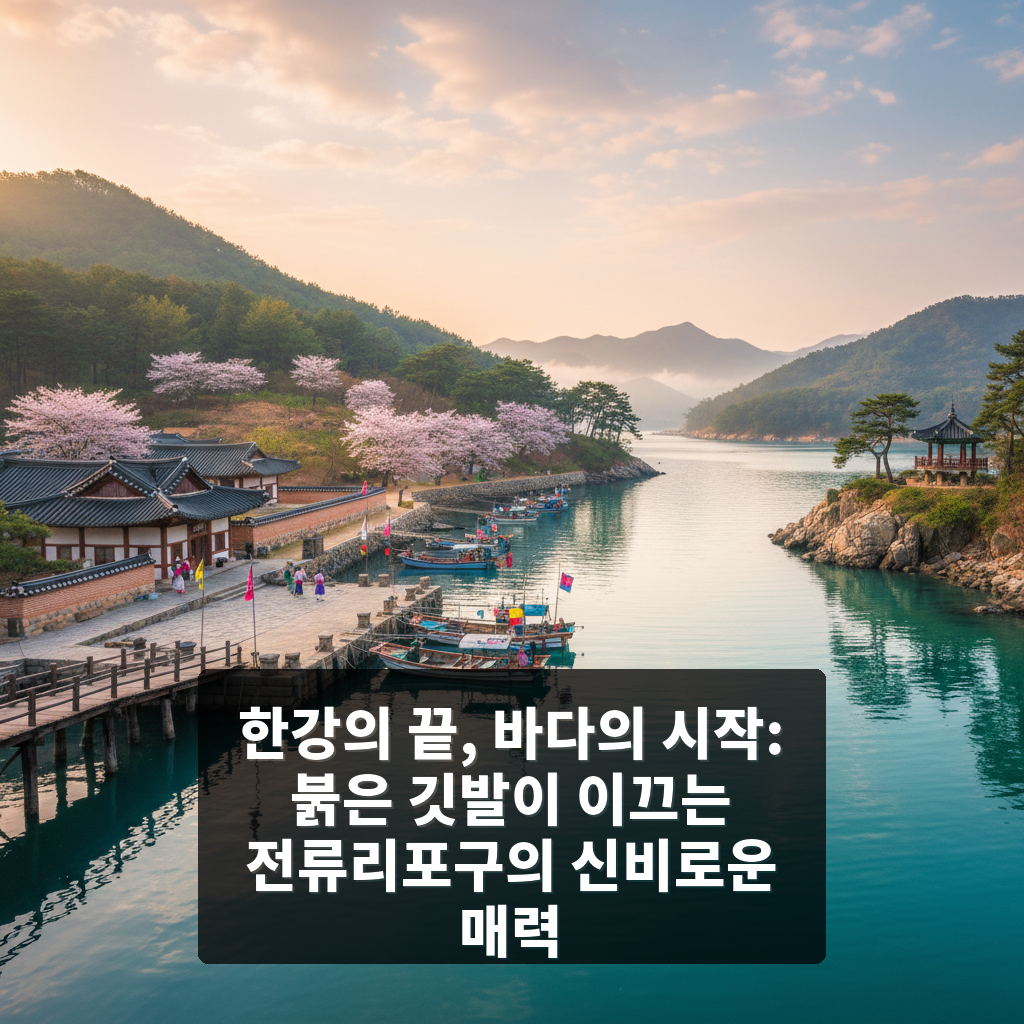
Han River’s end, sea’s beginning: The mysterious charm of Jeollyuripo-gu led by a red flag


Somewhere, there is a special fishing port where freshwater and seawater mix twice a day, and small boats flying red flags can only depart after reporting their departure to the military unit. This place, which seems so peaceful as if time itself has stopped, is actually the front line facing North Korea beyond the Han River and also a treasury of a wondrous ecosystem created by nature.
What secrets does it hold? Today, we unveil the story of that mysterious place, Jeollyuri Fishing Port.
Life Blossoming on the Borderline: The Unique Landscape of Jeollyuri Port
Though seemingly a quiet fishing village, Jeollyuri Port is situated in one of South Korea’s most unique geographical locations. Located at the northernmost point of the Han River, within the Civilian Control Zone (CCZ), it offers a strikingly different scenery from ordinary fishing ports. The fact that it faces Kaepung County, North Korea, with just one river separating them, adds to its uniqueness.
Under the Red Flags, The Unique Daily Lives of Fishermen


- Civilian Control Zone (CCZ) This is an area where access is restricted without prior permission. It is important to always be aware that this is a militarily sensitive area.
- Meaning of the Red Flags Approximately 20 boats with fishing permits engage in fishing with red flags visible from a distance. This is a symbol indicating that it is a militarily important area.
- Strict Procedures Before going out to fish each time, they must report their departure to the military sentry, undergoing a strict procedure.
Grand Chorus of Freshwater and Sea: The Rich Ecosystem of Jeollyuri Port
Jeollyuri Port holds an interesting secret hidden within its very name. It is called ‘Jeollyuri Port’ because the Han River and the West Sea meet here, causing the water to reverse its flow. As one of the regions with the largest tidal range in Korea, a special phenomenon occurs where freshwater and seawater cross and mix twice a day. This geographical characteristic has created a treasury of life where various fish species thrive.
Four Seasons, Precious Gifts from the Sea


| Season | Main Fish Species |
|---|---|
| Spring | Mullet, Gizzard Shad, Yellow Pufferfish |
| Summer | Sea Bass, Eel |
| Autumn | Shrimp, Mitten Crab |
| Winter | Mullet |
Thanks to such abundant seafood, Jeollyuri Port is an attractive place for gourmets as well. The taste of freshly caught seafood offers a special experience that can only be enjoyed here.
Directions to Jeollyuri Port, and Nearby Peaceful Attractions
To visit this special fishing port, an understanding of access methods is required. Due to its location within the Civilian Control Zone, there may be some restrictions on entry, so it is advisable to check relevant information in advance.
Directions
- Address Jeollyuri, Haseong-myeon, Gimpo-si, Gyeonggi-do (Due to the nature of a military protection zone, it may differ from general navigation searches, so please check nearby major landmarks.)
- Public Transportation Using a private car may be more convenient. You can also take a bus from Gimpo city center, but the service interval is long.
- Map
Recommended Nearby Places to Visit
- Aegibong Peace Eco Park Located at the northernmost point of Gimpo, alongside Jeollyuri Port, it is a meaningful place where you can reflect on the meaning of peace while overlooking North Korea.
- Gimpo Marine Park It is a unique park utilizing retired naval vessels, where you can learn about maritime culture and history through actual ship experiences.
Checklist for a Fruitful Visit to Jeollyuri Port
To enjoy the extraordinary Jeollyuri Port more fully and safely, here are a few tips.
- Check Civilian Control Zone (CCZ) Entry Regulations It is wise to check entry regulations and control status through relevant authorities such as Gimpo City Hall before visiting.
- Carry ID Card As it is near a military zone, it is recommended to always carry your ID card in case of any unforeseen circumstances.
- Consider Local Residents Respect the characteristics of a quiet fishing village; refrain from loud noises or reckless behavior, and be careful not to cause inconvenience to residents.
- Environmental Protection To preserve the beautiful natural environment, please be sure to take your trash with you or dispose of it in designated areas.
Where the Han River and the sea meet to dance life, and the peaceful daily life of a fishing village unfolds on a tense border line. Jeollyuri Port is more than just a fishing port; it is a special place where the wonder of nature and historical significance coexist. We hope you experience the unique atmosphere and the taste of seasonal seafood that can only be felt here, along with the pain of the Korean Peninsula’s division and the yearning for peace.
Frequently Asked Questions
Q1. What kind of place is Jeollyuri Port?
It is a fishing port located at the northernmost point of the Han River, with a unique topography where freshwater and seawater mix. Being within the Civilian Control Zone, which is a military area, you can experience a different atmosphere from typical fishing ports.
Q2. It’s said to be in the Civilian Control Zone, can I visit freely?
Access may be restricted without prior permission. It is advisable to check entry regulations or control status through relevant authorities such as Gimpo City Hall before visiting.
Q3. What seasonal seafood can I taste at Jeollyuri Port?
Various fish species are abundant throughout the four seasons, such as mullet, gizzard shad, and yellow pufferfish in spring; sea bass and eel in summer; shrimp and mitten crab in autumn; and mullet again in winter.
Q4. Are there any nearby places worth visiting?
Aegibong Peace Eco Park, where you can overlook North Korea, and Gimpo Marine Park, which utilizes retired naval vessels, are nearby, making them good places to visit together.
Q5. Are there any special precautions to take when visiting?
It is important to carry your ID card, respect the characteristics of a military zone and the quiet atmosphere of the fishing village, and observe local etiquette, such as taking your trash with you.