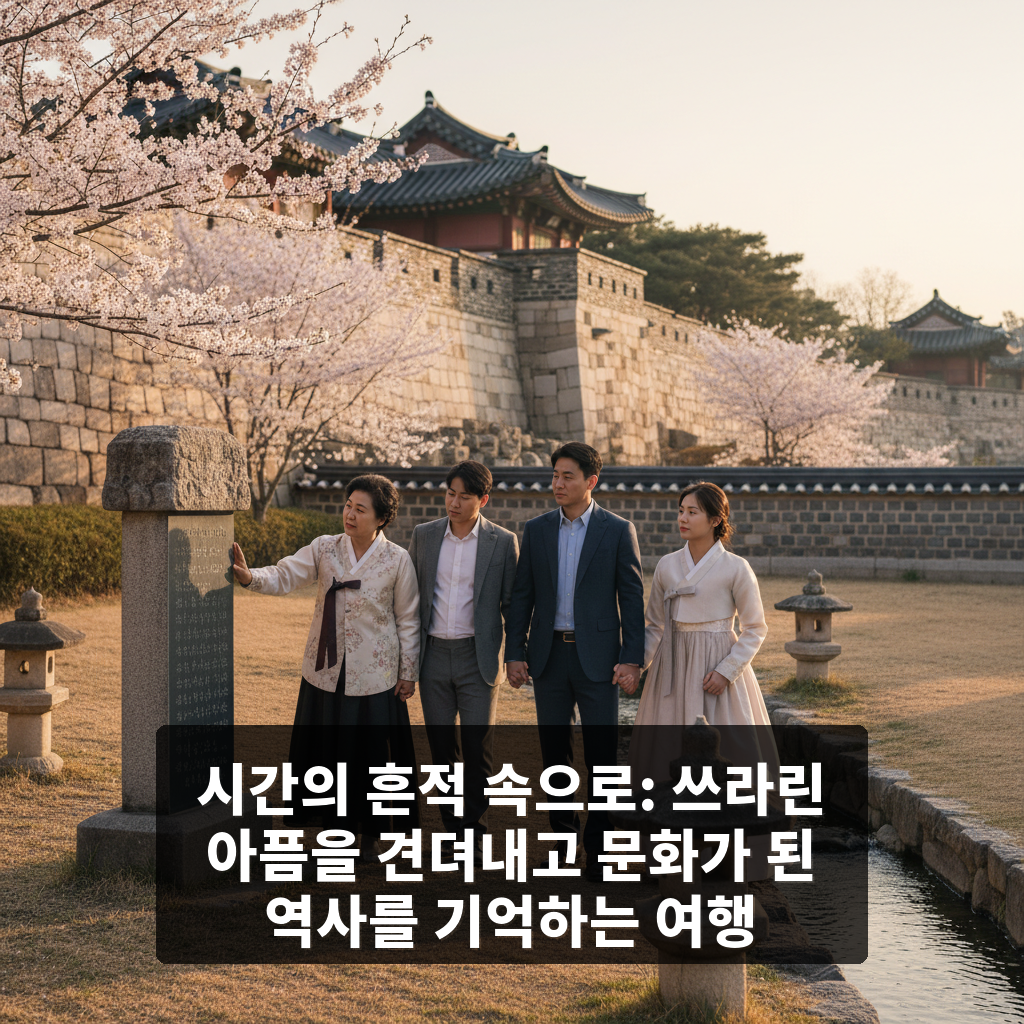
Into the Traces of Time: A Journey to Remember History That Endured Bitter Pain and Became Culture


Have you ever listened to the hidden stories beneath the paths we walk? The moment you realize that the currents of history flow even on ordinary roads, you will experience a deep resonance. The course we introduce today is precisely a journey to remember history that endured bitter pain and became culture.
From the vibrancy of Incheon Open Port to Ganghwa’s steadfast aspiration for peace, past and present will intersect with every step, whispering stories. Just as the ground hardens after rain, shall we follow the traces of our history, deepened through trials?
The Beginning of the Journey, a Path Where Painful History Became Culture
This journey, starting from Incheon Open Port Street, is like exploring the layers of history. This place, once a gateway for the influx of modern civilization and a site of upheaval, has now transformed into diverse cultural spaces, writing new stories upon its pain. This course will be a meaningful experience, remembering our history that has solidified like the ground after rain, and praying for peace.
To ensure an efficient trip, it’s important to understand the travel route in advance. Use the map below to grasp your itinerary at a glance and plan your schedule.
The Breath of Modern Culture, Open Port and Daeryong Market
Incheon Open Port Street is a place that holds the turbulent modern history since its opening in 1883. The exotic scenery of Chinatown blends with modern architecture, offering a journey through time. This place becomes the first gateway for a journey to remember history that endured bitter pain and became culture.
Past and Present Meet at Open Port
- Chinatown Jjajangmyeon Museum, Samgukji (Romance of the Three Kingdoms) mural street, and more to see and taste.
- Modern Architecture Feel history amidst a unique landscape where Japanese and Western-style buildings are mixed.
Daeryong Market, not far from the Open Port, retains the charming old market scenery of Ganghwa. Formed as refugees settled here after the Korean War, it is a symbolic place that shows the resilience of our people who carved out a livelihood even amidst pain.
The Deep Resonance of History, Ganghwa War Museum
Klook.comLeaving behind the charm of Daeryong Market and heading to Ganghwado Island, we arrive at the Ganghwa War Museum, where we can gain a deeper understanding of our painful history. This place vividly exhibits records of numerous wars and struggles surrounding Ganghwado Island, from the Goryeo Dynasty to the Joseon Dynasty, and into the modern era.
Our History at the War Museum
- Goryeo Anti-Mongol Struggle Reflect on the historical significance of the Sambyeolcho Rebellion and the relocation of the capital to Ganghwa.
- Foreign Invasions in the Joseon Dynasty Encounter the fierce history, such as the Byeongjahoran (Qing Invasion of Joseon) and the Shinmiyangyo (American Expedition to Korea), set on Ganghwado Island.
- Artifact Exhibition Imagine the vivid scenes of the time through weapons and clothing used then.
As we tour the museum, we will empathize with the anguish and sacrifices of our ancestors, going beyond mere exhibits. It is a precious time to realize that the wounds of the past became the foundation for peace today, as a core part of a journey to remember history that endured bitter pain and became culture.
A Gaze for Peace: Ganghwa Peace Observatory and its Surroundings
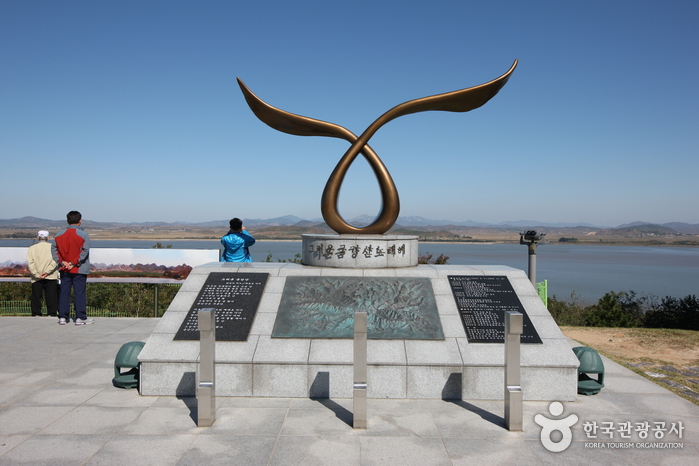
The path continuing from the Ganghwa War Museum leads us to the Ganghwa Peace Observatory, where we confront the reality of our nation’s division and yearn for peace. From here, gazing at the distant land of North Korea, we can imprint the traces of the bitter Korean War, following the Japanese colonial period, in our hearts. It is a moment where peace becomes even more earnest.
The Reality and Hope of Division
- Telescope Experience Observe Gaepung-gun in North Korea and feel the reality of division.
- Peace Education Exhibition A space to understand the history of the Korean War and the division of Korea, and to reflect on the importance of peace.
Nearby Attractions on Ganghwado Island
| Attractions | Key Features | Recommended Activities |
|---|---|---|
| Ganghwa Seokmodo Island | Beautiful sunset and mineral hot springs. | Drive on Seokmodo Bridge, hot spring bath. |
| Bomunsa Temple | Historic temple founded during the Silla Dynasty, Maae Gwaneumbosal-sang (Rock-cut Seated Avalokiteshvara Bodhisattva). | Quiet contemplation, beautiful scenery. |
| Ganghwa Goryeo Gungji (Goryeo Palace Site) | Palace site where Goryeo established a temporary capital to resist Mongol invasions. | Historical exploration, linked surrounding tourism. |
A Journey of Remembrance, Advice for a Fruitful Time
Thus, a journey to remember history that endured bitter pain and became culture offers deep contemplation and enlightenment. We have prepared some tips for a fruitful time.
Checklist for a Regret-Free History Tour
- Check Transportation It is advisable to consider a private car or rental car for travel from Open Port to Ganghwado Island.
- Comfortable Attire Essential Comfortable clothing and shoes are a must due to the extensive walking.
- Check Opening Hours Museums and observatories may have closing days and limited operating hours, so check in advance.
- Acquire Background Knowledge Knowing the history of each place in advance will allow for a deeper emotional experience.
Just as the ground hardens after rain, our history has taken deep root amidst countless pains and blossomed into brilliant culture. We hope you fully feel its profound meaning through this journey. This special journey to remember history that endured bitter pain and became culture will remain in your heart for a long time.
Frequently Asked Questions
Q1. Approximately how much time does it take to complete this history course?
This course extends from Incheon Open Port to the Ganghwa Peace Observatory, and to fully experience each location, it is recommended to allow at least 6-8 hours. It’s good to plan it as a day trip, considering travel and viewing time.
Q2. Can this course be traveled by public transport?
It is possible by public transport, but travel within Ganghwado Island can be somewhat inconvenient. Incheon Open Port has good public transport accessibility, but for major tourist attractions on Ganghwado Island, bus intervals are long, so using a private car or rental car is much more convenient and efficient.
Q3. Is this course suitable for visiting with children?
Yes, it provides a beneficial history education opportunity for children. Incheon Open Port and Daeryong Market offer many interesting sights, the Ganghwa War Museum is educational, and the Peace Observatory is great for experiential learning. However, for young children, the walking distance may be long, so it is advisable to bring a stroller or similar.
Q4. Are there places to eat or enjoy snacks in the middle of the course?
Yes, there are many diverse restaurants in Chinatown around Incheon Open Port, and you can taste local specialty snacks at Daeryong Market. There are also places selling simple food and drinks near the War Museum and Peace Observatory on Ganghwado Island, so you don’t have to worry.
Q5. When is the best time to visit this travel course?
Spring and autumn are the best. Thanks to the pleasant weather, there are many outdoor activities and walking, so you can travel comfortably while enjoying the beautiful scenery. Especially in autumn, you can also enjoy the rich natural landscape of Ganghwado Island.
 Love Korea? Promote it & Earn.