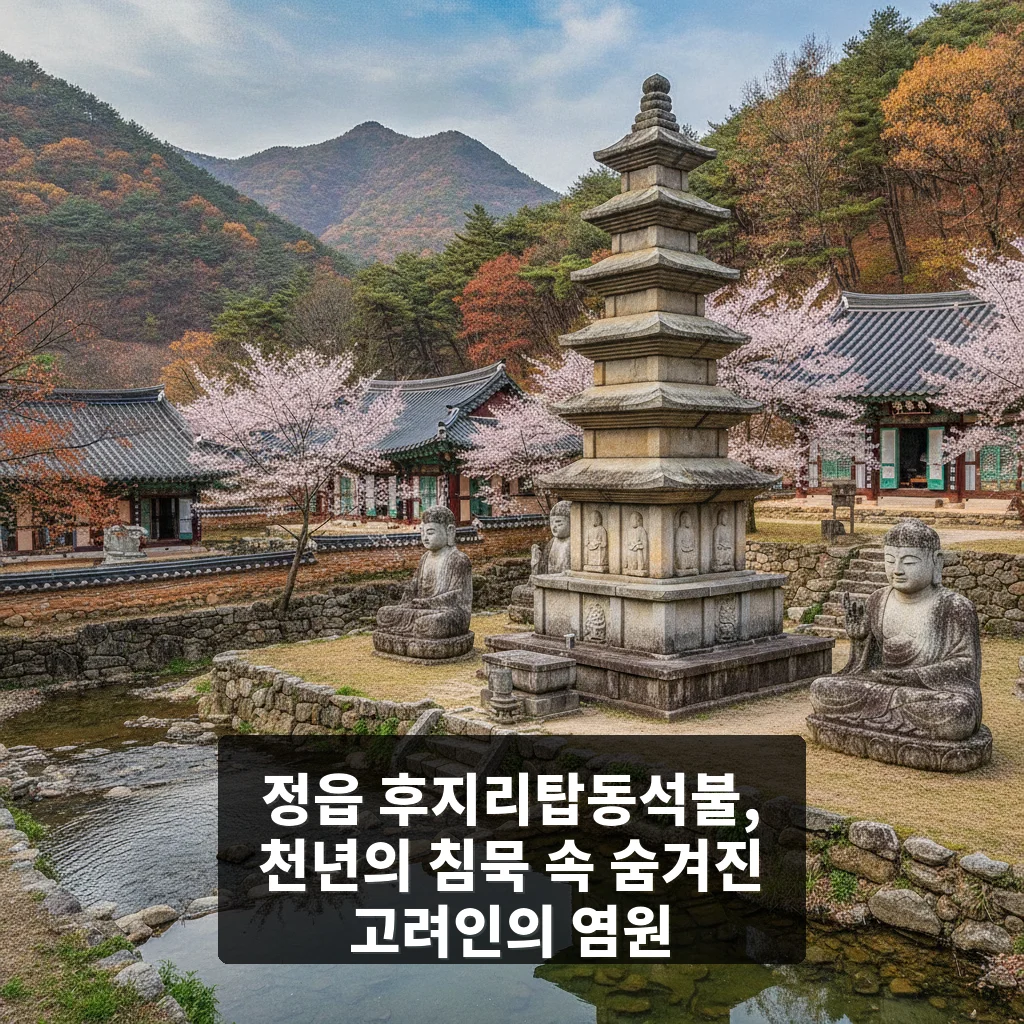
Jeongeup Hujiri Tapdong Stone Buddha Statue, the aspiration of the Goryeo people hidden within a thousand years of silence


As if time has stopped, there is a stone Buddha quietly located in a forgotten temple site. It is not just a stone Buddha, but a legacy condensed with the earnest wishes and outstanding artistic spirit of the Goryeo people. What story would this seated statue, which has endured long years of weathering without a head, want to tell us? It is the story of the Hujiritapdong Stone Buddha.
When you arrive at Tapdong Village, located at the deep foot of the mountains of Jeongeup, a village so unfamiliar even in name, you finally encounter its true essence. As if it has absorbed the traces of time with its whole body, this stone Buddha silently guarding its place emanates a mysterious aura that humbles the hearts of those who see it.
Today, we will explore together the historical value, hidden stories, and ways to fully experience the tranquil charm of the mysterious and poignant Hujiritapdong Stone Buddha.
The Lost Head, The Remaining Wishes — The Depth of Hujiritapdong Stone Buddha
Located at the foot of the southern mountain slope of Haejeongsa Temple site in Yeongwon-myeon, Jeongeup-si, Tapdong Village, the Hujiritapdong Stone Buddha is a seated statue with a height of 96cm. Although its head is now missing and it has been weathered over a long time, making it difficult to find detailed expressions, its appearance alone conveys deep emotion.
What are the Characteristics of the Stone Buddha Shaped by Time?
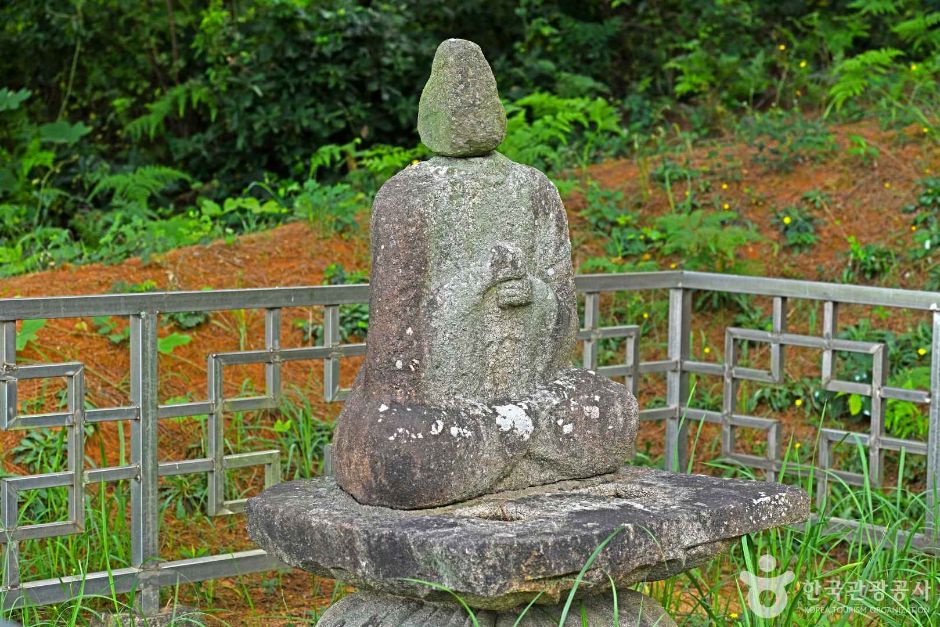
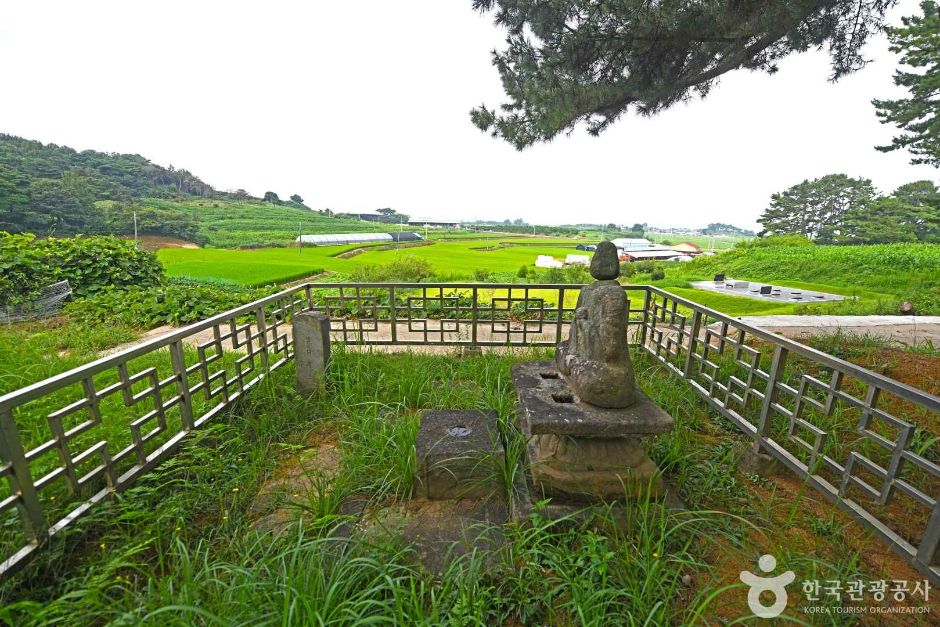
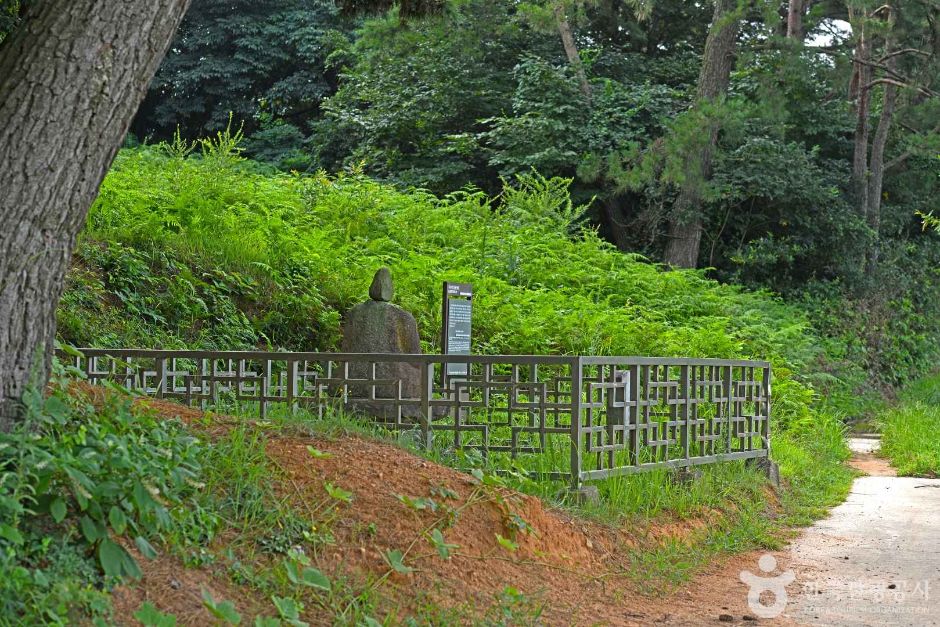
- Location Tapdong Village, at the foot of the southern mountain slope of Haejeongsa Temple site, Yeongwon-myeon, Jeongeup-si, Jeonbuk Special Self-Governing Province
- Form A seated statue with a height of 96cm, currently missing its head.
- Drapery The folds of clothing draped over both shoulders suggest the delicate sculptural techniques of that era.
- Mudra Judging by the posture of the hands gathered at the chest, it is presumed to represent Vairocana Buddha, symbolizing the universe and truth.
- Pedestal Lotus flowers are carved on the top and bottom of the square pedestal, providing a glimpse into the style of stone Buddhas from the early Goryeo period.
As such, the Hujiritapdong Stone Buddha, though not in its complete form, fully preserves the Buddhist art and the aspirations of the common people from the Goryeo period. The faint traces remaining on its weathered surface rather stimulate imagination and make us reflect on the faith and lives of the people who lived in that era.
Where the Breath of the Early Goryeo Period Lives and Breathes
The early Goryeo period, when the Hujiritapdong Stone Buddha was created, was a time when Buddhism was the central ideology of the nation. This stone Buddha is considered an important cultural heritage that transcends a simple sculpture, reflecting the spiritual world of the people of that era. This stone Buddha, located at the temple site known as Haejeongsa, is also evidence that Buddhism deeply permeated the lives of the people.
The Lost Haejeongsa and the Stone Buddha’s Connection
Klook.com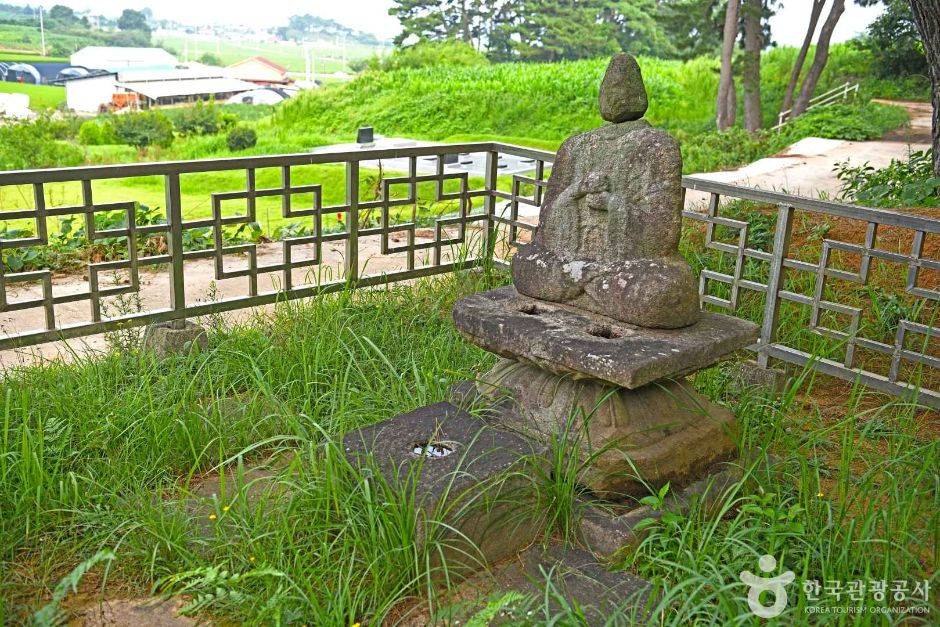
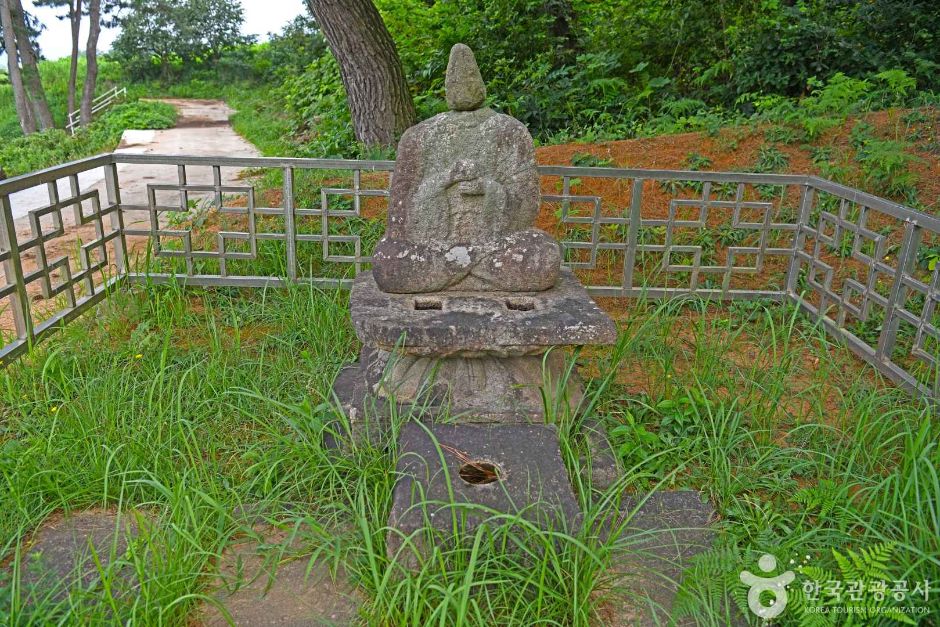
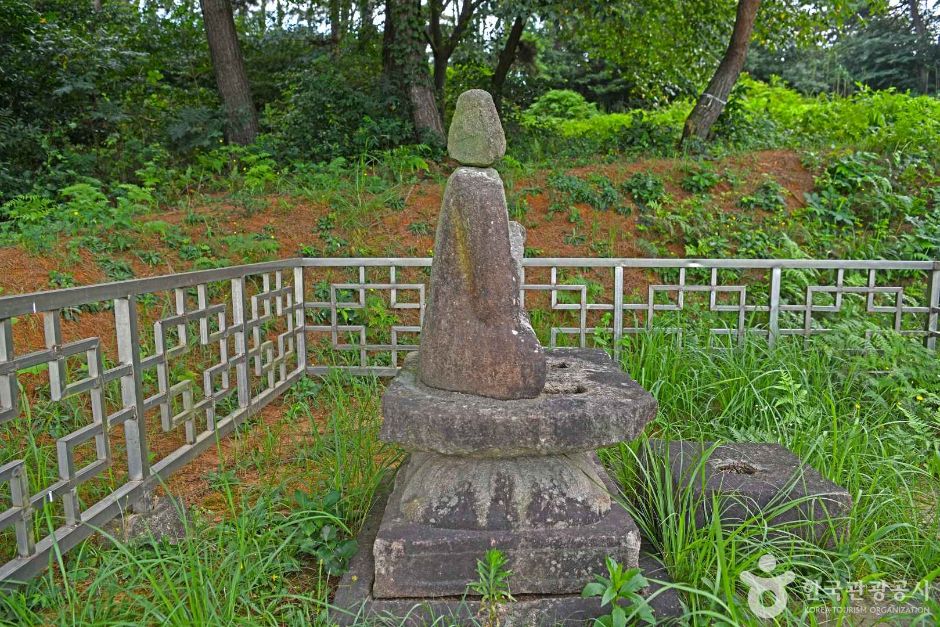
Although only the site of Haejeongsa remains now, the Hujiritapdong Stone Buddha allows us to infer the scale and status of the temple that once existed here. The stone Buddha, likely consecrated in a prosperous temple with the earnest wishes of countless people, transcends a thousand years and conveys a piece of history to us.
A Tranquil Journey to Find the Hujiritapdong Stone Buddha
The Hujiritapdong Stone Buddha, located in the quiet Tapdong Village of Jeongeup, may be somewhat inconvenient to reach by public transportation, but precisely because of that, it offers an even more special travel experience. The journey along the tranquil country road itself will bring peace to your mind.
The Way to Tapdong Village, Where the Stone Buddha is Located
If traveling by car, you can search for ‘Jeonbuk Special Self-Governing Province Jeongeup-si Yeongwon-myeon Tapdong-gil’ in your navigation system. For public transportation, take a city bus or taxi towards Yeongwon-myeon from Jeongeup Station or Jeongeup Intercity Bus Terminal, then walk a short distance into the village. The road may be narrow and guidance insufficient, so it is advisable to check a map beforehand.
Hidden Gems of Jeongeup Found Around the Stone Buddha
While visiting the Hujiritapdong Stone Buddha, why not also explore other historical sites or natural landscapes of Jeongeup? They will add depth to your trip with a charm different from the tranquility offered by the stone Buddha.
Recommended Nearby Tourist Attractions
- Naejangsan National Park Boasts outstanding natural scenery not only in autumn with its beautiful fall foliage but throughout all four seasons. After visiting the stone Buddha, spend some healing time in nature.
- Donghak Peasant Revolution Memorial Hall A place commemorating the spirit of the Donghak Peasant Revolution, a significant turning point in our history. You can feel the pain of another era that the stone Buddha witnessed.
- Museongseowon Confucian Academy A Joseon-era Confucian academy designated as a UNESCO World Heritage site, a place commemorating the scholarship and virtues of ancient sages. You can feel the breath of history in its tranquil atmosphere.
Tips for Listening to a Thousand Years of Whispers
The Hujiritapdong Stone Buddha is a place that offers a quiet and deep lingering impression rather than extravagance. Here are a few tips to fully experience this place.
Preparations for a Meaningful Encounter with the Stone Buddha
- Comfortable Shoes The area around the temple site may not be well maintained, so it is advisable to wear comfortable shoes for walking.
- Simple Drinks and Snacks Convenience facilities are scarce in the vicinity, so it is convenient to prepare them in advance.
- Camera or Mobile Phone Capturing the tranquil appearance of the stone Buddha and the surrounding scenery will make for good memories.
- Ample Time Rather than rushing through, it is recommended to take your time to meditate briefly in front of the stone Buddha or reflect on its meaning.
During your visit, please maintain a quiet and respectful attitude to show reverence for the historical site. Although it is open to the public and can be visited anytime, it is important to be careful not to Damage cause inconvenience to the village residents.
Frequently Asked Questions
Q1. Where exactly is the Hujiritapdong Stone Buddha located?
It is situated in Tapdong Village, at the foot of the southern mountain slope of Haejeongsa Temple site, Yeongwon-myeon, Jeongeup-si, Jeonbuk Special Self-Governing Province. You can search for ‘Jeongeup Hujiritapdong Seokbul’ or ‘Jeongeup-si Yeongwon-myeon Tapdong-gil’ in your navigation system.
Q2. Why is the head of the stone Buddha missing?
It is presumed that the head of the stone Buddha was lost due to long-term weathering, as well as theft and damage. Its current appearance can be said to be a trace of having endured a thousand years of history with its whole body.
Q3. From what period is the Hujiritapdong Stone Buddha presumed to be?
Judging from the form of the pedestal and the delicate lotus patterns, it is presumed to be a work from the early Goryeo period, when Buddhist culture flourished. It is a valuable heritage that offers a glimpse into the artistry and religious aspirations of that time.
Q4. Are there any dining places or convenience facilities nearby?
The area around Tapdong Village is a quiet rural village, so there are not many convenience facilities or restaurants. It is advisable to eat in advance in downtown Jeongeup or Yeongwon-myeon, or to prepare snacks.
Q5. When is the best time to visit the Hujiritapdong Stone Buddha?
You can experience a quiet and peaceful atmosphere regardless of the season, but it is advisable to avoid overly hot or cold weather. Especially in spring and autumn, it offers even more beautiful scenery in harmony with the surrounding natural landscape.
 Love Korea? Promote it & Earn.