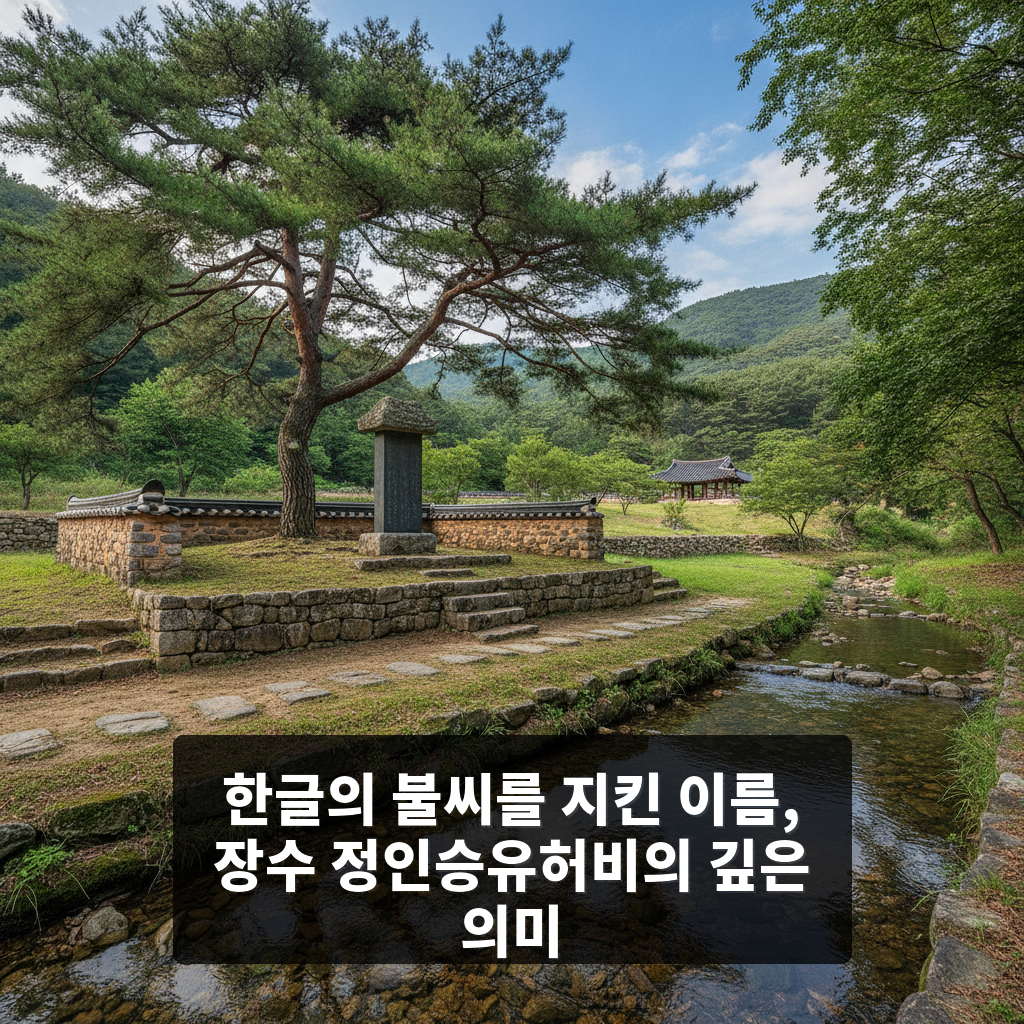
The name that preserved the spark of Hangeul, the deep meaning of the Jangsu Jeong In-seung Historic Site Monument


During the Japanese colonial period, there were those who steadfastly protected Hangul amidst oppression that sought to eradicate the national spirit. Thanks to their dedication, we can freely write and read our language today. In Gyebuk-myeon, Jangsu-gun, Jeonbuk Province, the Jeong In-seung Memorial Stele stands quietly, commemorating that noble spirit.
This stele goes beyond merely commemorating the footsteps of one individual; it entirely encapsulates the pain our language and writing endured and the fervent history of struggle to protect them. How about taking some time to deeply examine a page of our history through the Jeong In-seung Memorial Stele, a precious legacy that must not be forgotten?
Master Geonjae Jeong In-seung, who was at the center of Hangul research, becoming a light in the darkness of that time. We will follow his life and achievements, and the message the memorial stele conveys to us.
Guardian of Hangul’s Independence, Footsteps of Master Geonjae Jeong In-seung
Master Geonjae Jeong In-seung was from the Dongnae Jeong clan, and his pen name was Geonjae (健齋). He was born in Yangak, Gyebuk-myeon, in 1897. From 1925 to 1935, he walked the path of an educator, teaching Korean and English at Gochang Gobo. During a period when Japan’s policy of cultural annihilation was at its peak, Master Jeong chose ‘Hangul research’ as a way to protect our unique culture.
Deeply influenced by Master Widang Jeong In-bo at Yonhi Professional School, he embarked on full-fledged Hangul research, and after graduation, he was actively involved with the Joseon Language Society. He oversaw the publication of ‘Hangulji’ and led key research efforts such as the ‘Unified Hangul Orthography’ and ‘Unified Foreign Word Transliteration System,’ which later became the foundation of our language. His life, dedicated to protecting Hangul amidst Japanese oppression, led to suffering, including imprisonment from October 1942 until liberation.
After Liberation, Endless Love for Hangul
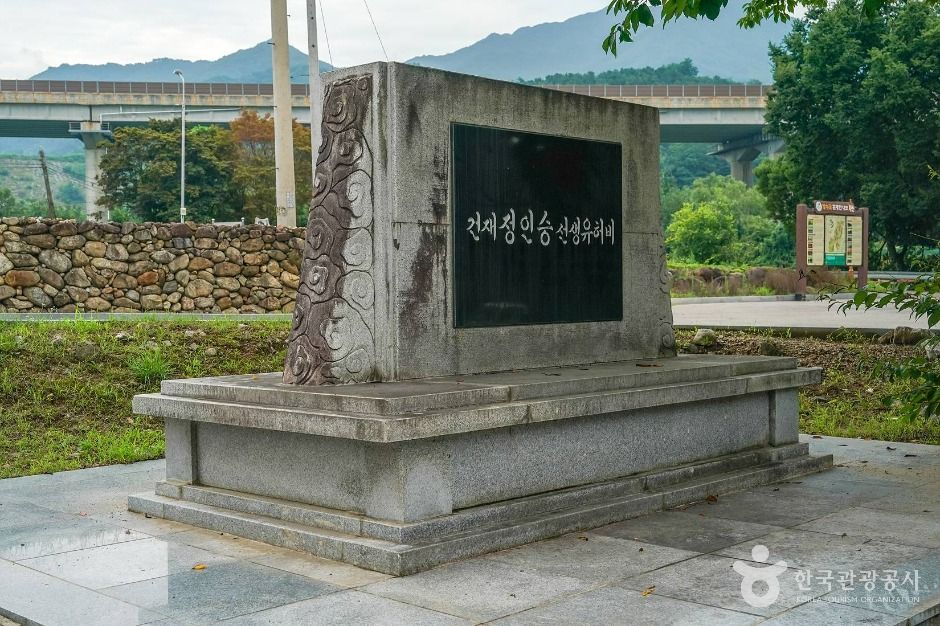
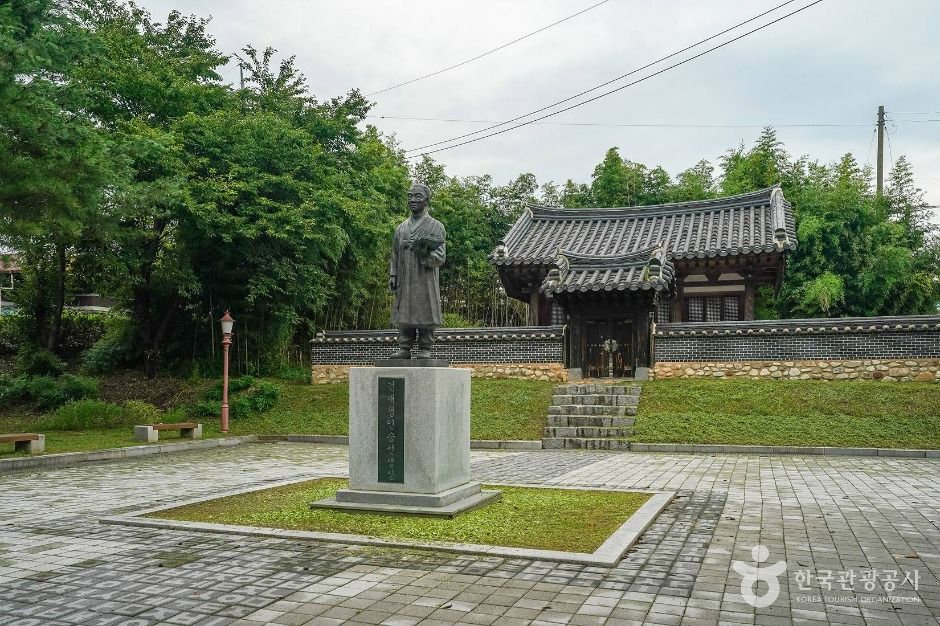
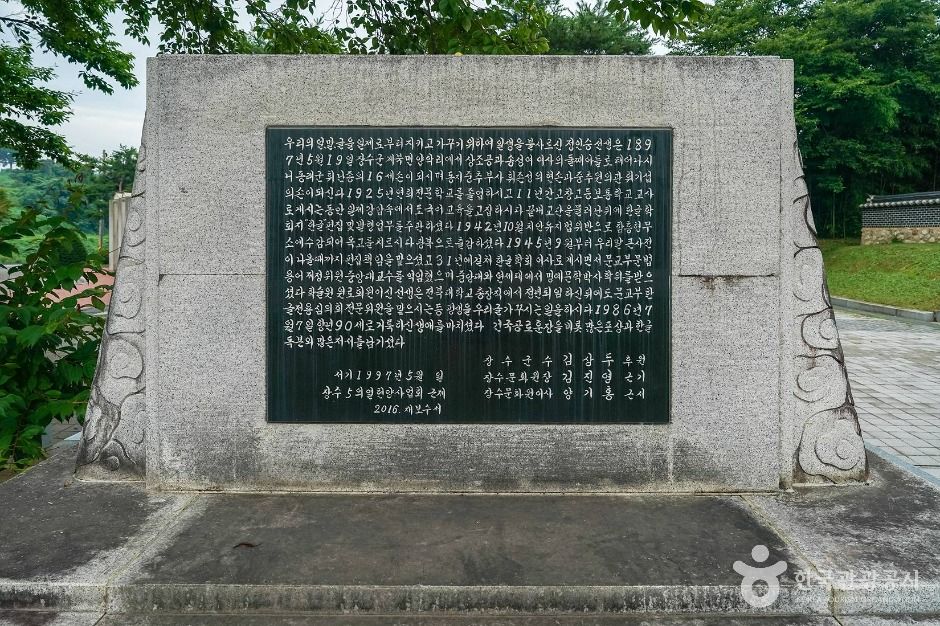
- After Liberation He served as a university professor, dedicating himself to nurturing future scholars.
- Compilation of the Great Dictionary He made a significant contribution to completing the compilation of the ‘Great Dictionary’ of our language, which had been interrupted by Japanese interference.
- National Commendation His contributions were recognized with the Order of Merit for National Foundation, Independence Medal in 1962, and the Order of Civil Merit, Mugunghwa Medal in 1970.
A Space Where History Breathes, The Story Told by the Jeong In-seung Memorial Stele
The Jeong In-seung Memorial Stele, erected in Gyebuk-myeon, Jangsu-gun, Jeong In-seung’s hometown, was built in 1997 to commemorate his noble life and achievements and to be remembered forever by future generations. A ‘yuheobi’ is a stele erected to commemorate the historical site of a wise person, and this memorial stele is a testament to the arduous struggle to protect our language and a symbolic place that revives the national spirit.
The area around the memorial stele is quiet and secluded, an ideal environment for honoring the Master’s spirit and contemplation. It is a meaningful space where one can pause from a busy daily life and reflect on the preciousness of Hangul and the depth of our history.
Directions, The Starting Point of History
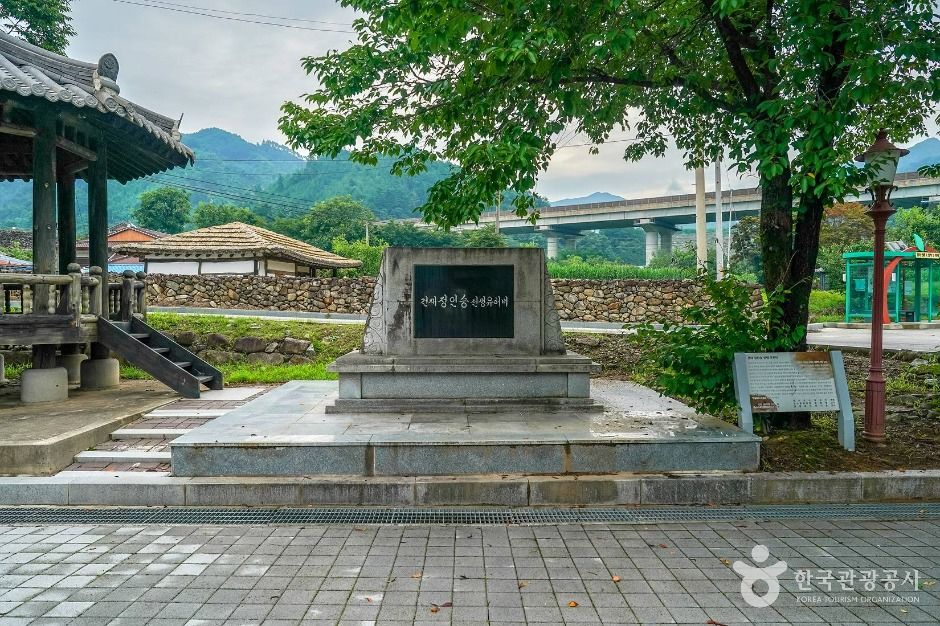
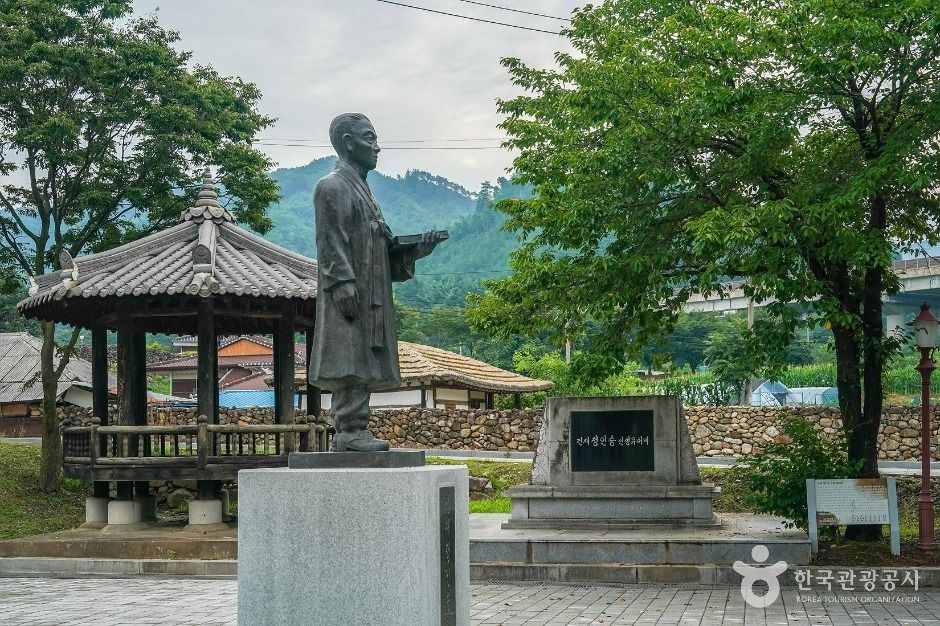
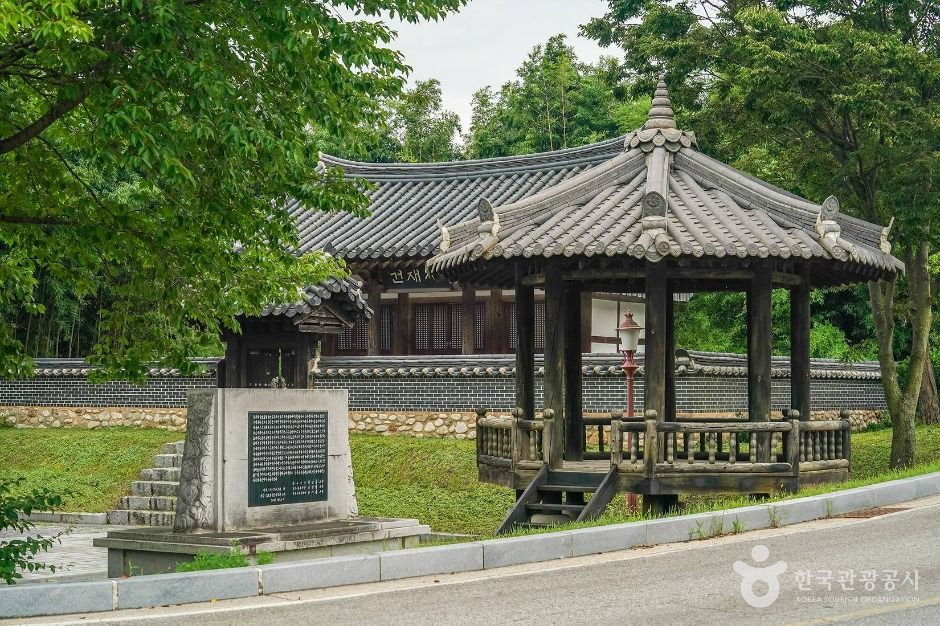
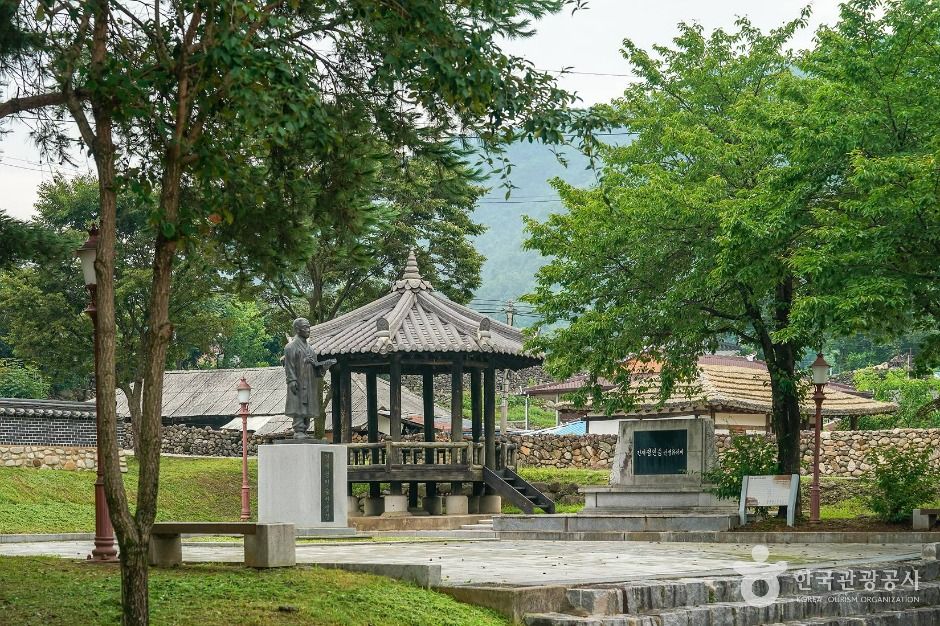
The Jeong In-seung Memorial Stele is located at 119 Yangak-gil, Gyebuk-myeon, Jangsu-gun, Jeollabuk-do. It is not far from the Gyebuk-myeon Office in Jangsu-gun, making it easy to find, and it is most convenient to use a private car. Following the quiet country roads, you can feel your mind at ease.
What are some nearby places to visit together?
- Jangsu Uiam Ju Non-gae Shrine This place commemorates the spirit of Non-gae, who embraced and died with a Japanese general during the Imjin War, and is excellent for historical education.
- Jangsu Hyanggyo As an educational institution from the Joseon Dynasty, it offers a glimpse into Confucian culture and the beauty of traditional architecture.
- Jangsu Horse Riding Experience Center Family visitors can create unique memories through horse riding experiences.
Insights Gained in Quiet Moments, Tips for Visiting the Jeong In-seung Memorial Stele
The Jeong In-seung Memorial Stele is a place to discover deep meaning rather than spectacular sights. If you learn about the Master’s life and achievements beforehand, you can experience a much richer visit.
Before Your Visit, Be Sure to Check!
- A Calm Mind As the memorial stele is a commemorative site, it is advisable to visit with a reverent and calm mind.
- Seasonal Choice In spring, you can encounter the memorial stele amidst the beautiful scenery of lush nature, and in autumn, surrounded by colorful fall foliage.
- Check Transportation As public transport accessibility is somewhat limited, it is recommended to use a private car, and a navigation system will be convenient.
- Explore the Surroundings There might be walking paths around the memorial stele, so take your time to explore the area and soak in the historical atmosphere.
Especially Recommended for These People!
- History Education Parents who wish to teach their children the preciousness of our language and the spirit of the independence movement.
- Cultural Heritage Exploration Those who wish to reflect on the deep meaning of our cultural heritage in a quiet place.
- Time for Contemplation Those who want to escape from busy daily life and take a moment to pause and think.
Frequently Asked Questions
Q1. What figure does the Jeong In-seung Memorial Stele commemorate?
The Jeong In-seung Memorial Stele is a monument erected to commemorate the noble achievements of Master Geonjae Jeong In-seung, who dedicated his life to Hangul research and dissemination during the Japanese colonial period. He greatly contributed to the systematization of our language through his activities with the Joseon Language Society.
Q2. Where exactly is the Memorial Stele located?
The Jeong In-seung Memorial Stele is located at 119 Yangak-gil, Gyebuk-myeon, Jangsu-gun, Jeollabuk-do. It holds deeper meaning as it is in the Master’s hometown, and it is located near the Gyebuk-myeon Office.
Q3. Is there anything special to prepare when visiting the Jeong In-seung Memorial Stele?
No special preparations are needed, but if you research the Master’s life and achievements beforehand, you can experience a deeper meaning in your visit. It is advisable to visit with a quiet and calm mind.
Q4. Are there any other attractions to visit around the Memorial Stele?
Yes, nearby there are historically significant places such as Uiam Ju Non-gae Shrine and Jangsu Hyanggyo. Additionally, there is the Jangsu Horse Riding Experience Center for family visitors, so it’s good to explore them together.
Q5. When is the best time to visit the Jeong In-seung Memorial Stele?
The Memorial Stele is good to visit throughout all four seasons, but especially in spring when green sprouts emerge and in autumn when the leaves turn a beautiful color, you can reflect on its historical significance in an even more peaceful atmosphere.