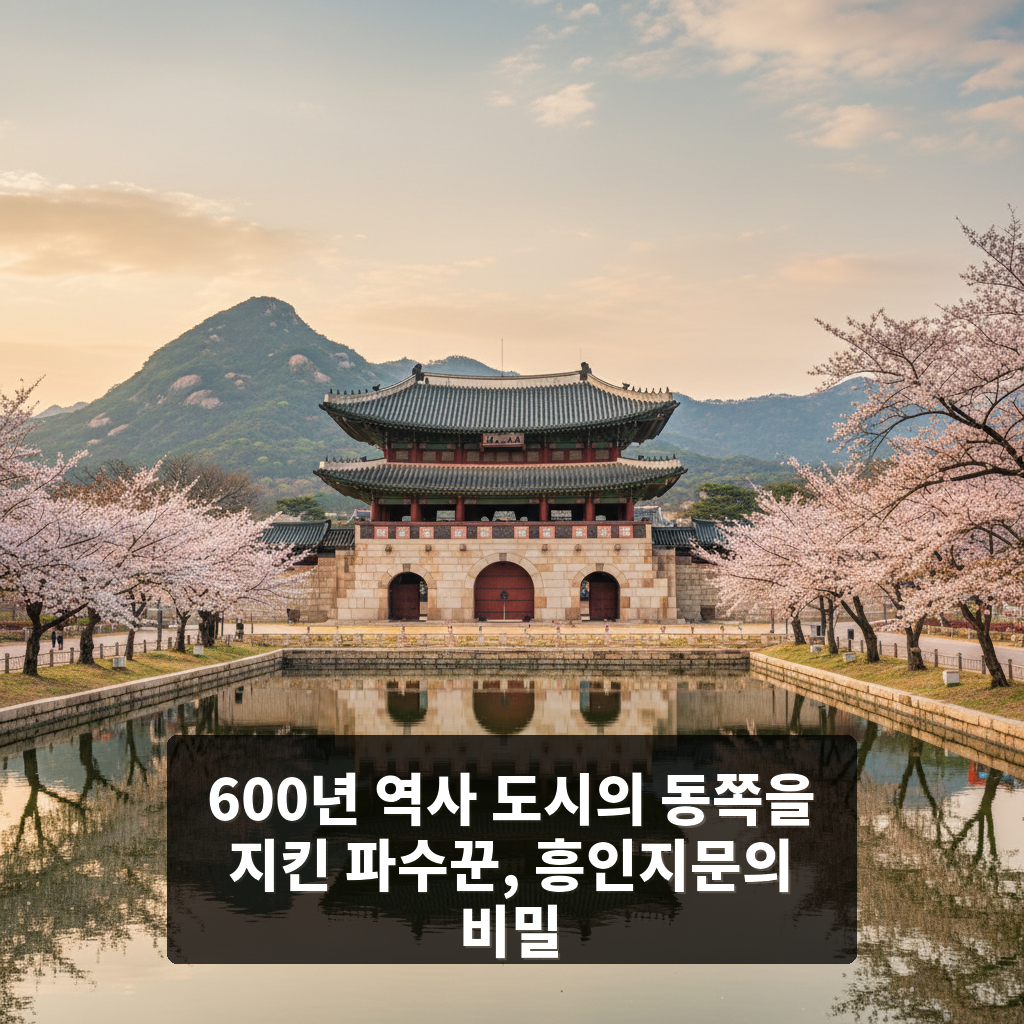
The secret of Heunginjimun, the sentinel that guarded the east of the 600-year-old historic city


Have you ever, on a bright day, been walking in the middle of downtown Seoul and suddenly encountered a massive ancient structure? A magnificent gate, towering amidst countless cars and a forest of buildings, as if it has traveled through time. This is the story of **Heunginjimun**, which has steadfastly guarded the east of Seoul. What secrets does this gate, which is not just a passing ‘Dongdaemun’ but fully embraces 600 years of Joseon history, hold?
After King Taejo Yi Seong-gye of Joseon moved the capital to Hanyang, this gate, representing the east among the eight gates of the Hanyangdoseong Fortress built for capital defense, was not merely a thoroughfare. It is a vital national facility protecting Hanyangbu, and living history itself, having steadfastly maintained its place amidst the continuously changing currents of time. If you have ever paused in your busy daily life and felt the steadfast presence of this gate, you might already be captivated by the story **Heunginjimun** tells.
Today, we will delve deep into the fascinating history and architectural aesthetics that this colossal gate, which we often pass by unknowingly, holds, as well as the hidden charms around it. Shall we explore the true value of Heunginjimun, the heart of Seoul and a witness to history?
Dongdaemun: The Deep Story of Heunginjimun Entwined with Its Name

This gate, which many people call Dongdaemun, has the official name **Heunginjimun**. It gained the nickname ‘Dongdaemun’ because it is located in the east among the eight gates of the Seoul City Wall, but its name contains the Confucian ideal of ‘promoting benevolence (仁)’. The Seoul City Wall, the old name for Seoul Hanyangdoseong, was a defense system built in the past to protect Hanyangbu, where important national facilities were located. This gate was more than just a passage; it was a symbolic entity in which Joseon’s founding ideology and philosophy were embedded.
Heunginjimun: Evidence Enduring the Passage of Time
- First Construction It was first built in the 5th year of King Taejo of Joseon (1396) during the construction of the city wall.
- First Reconstruction It was repaired once in the 1st year of King Danjong (1453).
- Current Appearance The **Heunginjimun** we see today was newly built in the 6th year of King Gojong (1869) and has endured for over 150 years.
Heunginjimun, which has steadfastly held its ground amidst frequent wars and the ravages of time, has taken on its current appearance through several repairs. Despite being rebuilt during King Gojong’s reign, its significance is deeper as it fully preserves the delicate architectural techniques and artistry of that era.
The Flower of Late Joseon Architecture: Aesthetic Characteristics of Heunginjimun


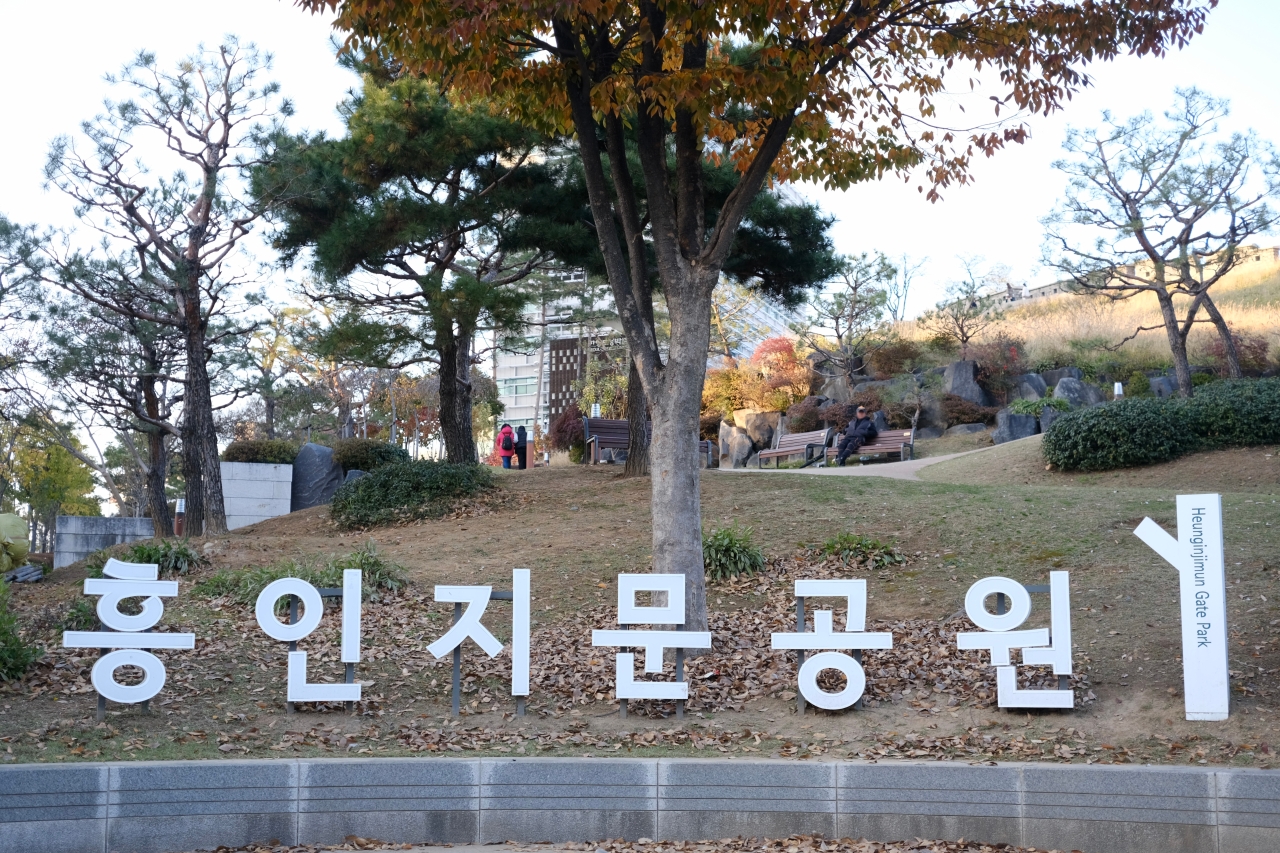
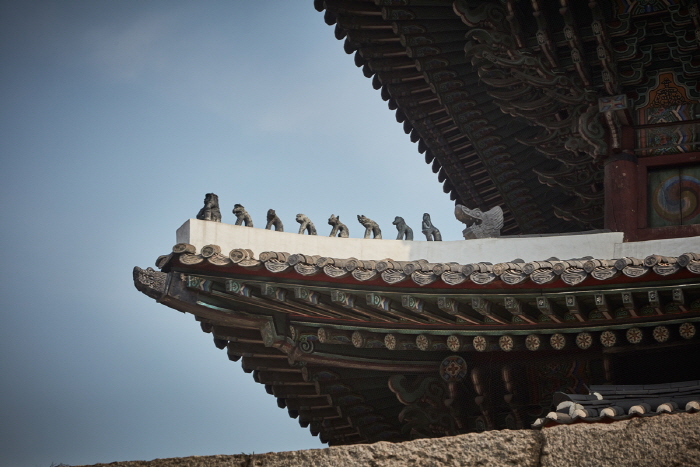
**Heunginjimun** is an important cultural heritage site where one can glimpse the unique aesthetics of late Joseon architecture in its scale and architectural style. It is a magnificent two-story building, 5 bays wide on the front and 2 bays deep on the side, boasting a grandeur that catches the eye even from afar. In particular, the shape of its roof and the style of its *gongpo* (decorative structures supporting the eaves) clearly demonstrate the architectural trends of the time.
Anatomy of Heunginjimun’s Architectural Style
Klook.com| Category | Features | Significance |
|---|---|---|
| Scale | 5 bays wide on the front, 2 bays deep on the side, 2-story building | Shows the majesty of an important gate during the Joseon Dynasty |
| Roof | Hip-and-gable roof | Trapezoidal shape giving a stable and magnificent feel |
| Gongpo Style | Dapo Style (gongpo not only on columns but also between columns) | Reflects the delicate and decorative trend of late Joseon architecture |
| Stylistic Characteristics | Slender, delicate, and rich in decorative elements | Emphasis on aesthetic elements and expression of authority rather than function |
| Ongseong | Semicircular outer defensive wall of the gate | Unique defensive facility, the only one among the 8 city gates to have it |
In particular, the *ongseong* of **Heunginjimun** is a rationally planned facility for attacking enemies, a unique defensive system not found in other city gates. It can be called a product of wise architecture, designed to embrace the gate in a semicircular shape, preventing direct enemy attacks, and allowing for multi-directional defense from atop the city wall. These characteristics combined make Heunginjimun a great representation of late Joseon architectural style.
How to Fully Enjoy Heunginjimun and Nearby Attractions


Located in the heart of Seoul, **Heunginjimun** boasts excellent accessibility, making it convenient to visit. During the day, you can feel its magnificent architectural beauty and historical depth, while at night, under the brilliant lights, it creates a mystical atmosphere, offering a different charm. Stroll around the gate and admire the Seoul landscape where past and present coexist.
Things to Enjoy Nearby
- Dongdaemun Design Plaza (DDP) A futuristic architectural landmark located right next to Heunginjimun, hosting various cultural events such as exhibitions, fashion shows, and concerts. The harmony of the tranquil city gate and the ultra-modern DDP offers a unique sight.
- Dongdaemun Market A large-scale market that has everything from clothing, miscellaneous goods, and accessories. You can feel Seoul’s dynamic energy in its vibrant atmosphere, lively until late at night. It’s a great place to enjoy shopping and food after visiting Heunginjimun.
- Naksan Park A park accessible by walking along the city wall trail from Heunginjimun, it is a wonderful spot for night views overlooking the entire city of Seoul. You can encounter a fantastic landscape, especially if you visit at sunset.
- Seoul City Wall Trail Walking along the city wall trail in the Dongdaemun section, starting from Heunginjimun, will offer a special memory as you stroll along historical traces amidst a serene atmosphere.
How to Get to Heunginjimun
Located at Jongno 266, Jongno-gu, Seoul, **Heunginjimun** is very easily accessible by public transport. You can reach it directly by getting off at Dongdaemun Station on Subway Line 1 or 4 and walking.
Tips for Visitors!
- Utilize Interpretation Programs By using interpretation programs operated by the Seoul Metropolitan Government, you can hear the history and hidden stories of Heunginjimun more vividly. These may be offered for a fee or for free, so please check in advance.
- Charm by Time of Day You can admire its magnificent architectural beauty during the day and the beautiful night view illuminated by lights at night, so visiting twice at different times is a good idea.
- Utilize Nearby Commercial Areas Planning a day’s itinerary in conjunction with nearby attractions such as Dongdaemun Market and DDP will allow you to enjoy a richer trip.
- Comfortable Shoes If you plan to walk along the city wall trail or explore the surroundings, it is advisable to wear comfortable shoes.
Reasons Why We Must Remember Heunginjimun
**Heunginjimun** is not merely a historic site. For over 600 years, it has silently observed the changes in Seoul, serving as a living historical educational site that simultaneously offers us the wisdom of the past and the vitality of the present, as well as a precious sanctuary in the city center. Why not pause for a moment before this quiet yet magnificent gate, where countless stories are layered, and feel that time?
Heunginjimun offers an experience where history and modernity beautifully blend in the heart of Seoul. Make this gate the starting point of your next Seoul trip. It will surely be a special journey that remains in your memory for a long time.
Frequently Asked Questions
Q1. Why is Heunginjimun also called ‘Dongdaemun’?
Heunginjimun was nicknamed ‘Dongdaemun’ because it is located in the east among the eight gates of the Seoul Hanyangdoseong Fortress. Its official name contains the Confucian meaning of ‘promoting benevolence (仁)’.
Q2. When was Heunginjimun first built, and when did it take on its current appearance?
Heunginjimun was first constructed in the 5th year of King Taejo of Joseon (1396) and was repaired once in the 1st year of King Danjong (1453). The gate we see today was rebuilt in the 6th year of King Gojong (1869) and preserves over 150 years of history.
Q3. What are the particularly noteworthy architectural features of Heunginjimun?
Heunginjimun’s most significant features include its *dapo* style *gongpo*, which well represents late Joseon architectural style, and the fact that it is the only one among the eight city gates to have a semicircular ‘ongseong’ to protect the gate. This was a wise design for effectively defending against enemy attacks.
Q4. Are there any places worth visiting around Heunginjimun?
Yes, right next to Heunginjimun is Dongdaemun Design Plaza (DDP), and the large commercial district of Dongdaemun Market is nearby. You can also walk along the Seoul City Wall Trail up to Naksan Park to enjoy magnificent night views. There are abundant diverse sights and attractions.
Q5. What should I keep in mind when visiting Heunginjimun?
Heunginjimun itself can be visited freely, and caution is needed when moving around due to heavy traffic in the vicinity. The atmosphere differs between day and night, so it’s a good idea to visit at different times if possible. Considering using an interpretation program will also help deepen your understanding of its history.
 Love Korea? Promote it & Earn.