The secret sleeping in the soil, the poignant story of the Gunpo Joseon white porcelain kiln site


Imagine a moment in Joseon when earth, fire, and the breath of artisans met to be reborn as dazzling white porcelain. Where did those white porcelains, which shone behind splendid palaces or on the tables of anonymous commoners’ homes, truly come from? Today, we will embark on a journey through time to discover a secret place hidden deep in the foothills of Surisan in Gunpo, Gyeonggi Province: the Gunpo Joseon White Porcelain Kiln Site.
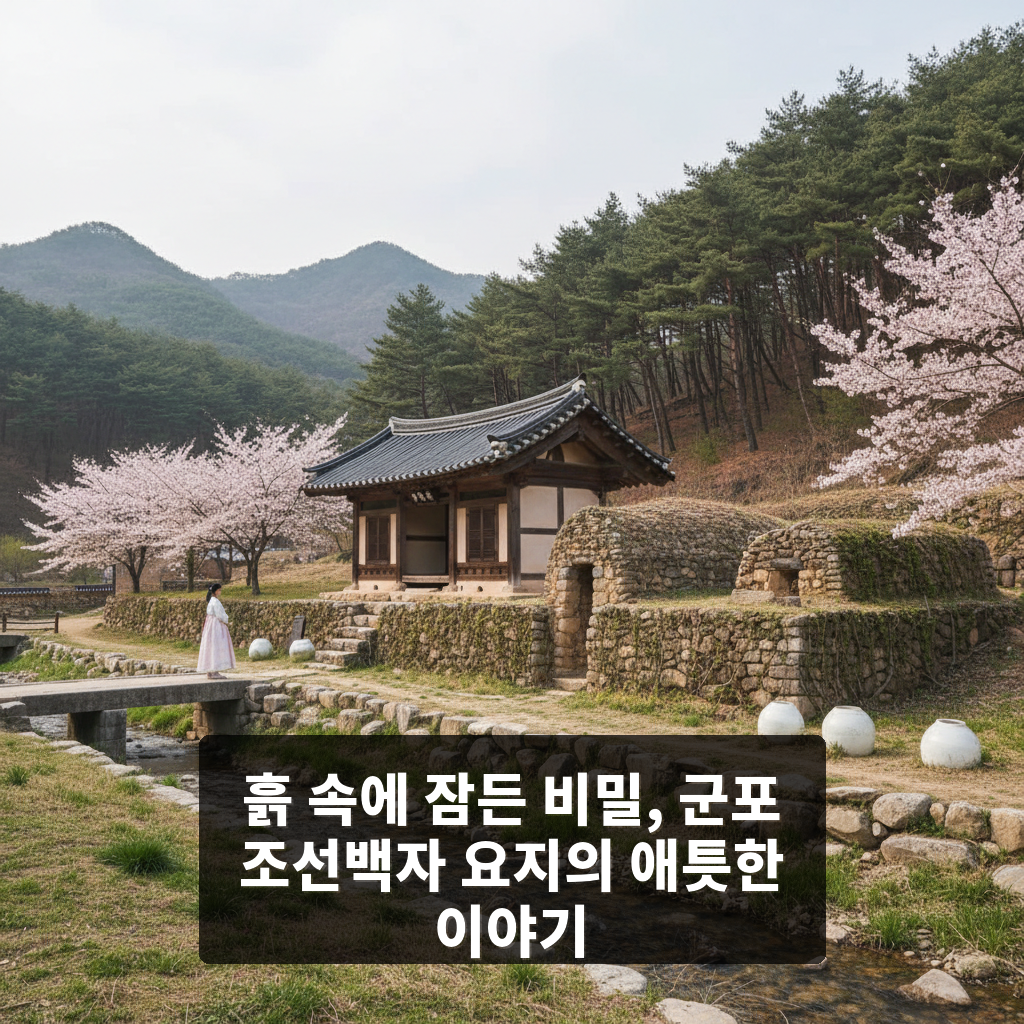
Beneath the seemingly ordinary ground on a low hill, the fervent site where white porcelains embodying the joys and sorrows of countless lives were fired during the late Joseon Dynasty lies buried intact. This is not just a kiln site. It is a special place where we can read the lives of potters who shone their own light in the shadow of royal kilns, and the messages of their era contained within the ceramics they crafted.
Though it now sits quietly beside a serene forest path, it was once a dynamic production site where flames fiercely blazed and dust filled the air. What stories unfolded here? Shall we follow their traces together?
The Aesthetics of Joseon Crafted by Earth and Fire: In Search of Its Traces
The Gunpo Joseon White Porcelain Kiln Site is located on a gentle hill southeast of Surisan, at an altitude of 91-98m above sea level. This was a place where ceramics were fired during the Joseon Dynasty, and it is intriguing that the kilns were built on relatively steep bedrock. While no other significant remains have been found around the kiln site, it holds a complete history of production in itself.
Specialness Hidden in the Ordinary: The Secret of the Kiln


The excavated kiln is a total of 7 chambers, showing the typical structure of a Joseon white porcelain kiln with a narrow firebox and a wide chimney section. However, a closer look reveals that the structure of the firebox has a unique characteristic different from other kilns, suggesting that a distinct production Method existed here. This place, where countless ceramics were born amidst fierce flames, must have been a site where the potters’ technology and know-how were concentrated.
The Dignity of White Porcelain Blossomed at the Border of Royalty and Commoners
Mainly bowls and plates were discovered at this kiln site, along with various types of ceramics such as jar fragments and lidded containers. Particularly noteworthy is the discovery of numerous fragments of blue-and-white porcelain, and the presence of characters like ‘Bok (福)’ or ‘Je (祭)’ written on the bowls. This suggests that the Gunpo Joseon White Porcelain Kiln Site did not only produce everyday utensils but also special-purpose vessels that would have been used for ancestral rites or other specific ceremonies.
Similar types of ceramics and kiln structures were also found at the Geumsari Kiln Site, a state-managed kiln site located in Gwangju, Gyeonggi Province, indicating that this kiln site was active around the first half of the 18th century. Furthermore, it serves as an important clue showing how official kilns (gwan-yo) and common kiln sites coexisted and interacted, allowing us to glimpse the complex aspects of Joseon Dynasty ceramics culture in the late Joseon period.
Following the Serene Forest Path, Steps Towards the Kiln Site


The Gunpo Joseon White Porcelain Kiln Site, located in the foothills of Surisan, is a peaceful place where nature and history blend. If you wish to escape the bustling city, take a moment to breathe, and feel the spirit of the past, heading here would be an excellent choice.
Directions: The Starting Point of a Journey Through Time
The kiln site is located on a hill southeast of Surisan, so a short walk may be necessary after using public transport.
You can check the approximate location on the following map.
Discovering Gunpo’s Charms Nearby
- Surisan Provincial Park Along with the kiln site, you can enjoy the beautiful nature of Surisan and have a healing time.
- Gunpo City Museum A place where you can see Gunpo’s history and culture at a glance; after visiting the kiln site, you can connect it to deepen your understanding of Joseon Dynasty white porcelain.
- Sanbon Rodeo Street If you want to feel the vibrancy of a modern city, taking a break at Rodeo Street with its various shops and eateries is also a good option.
Connection Across Time: Wisdom Linking Past and Present
Before Your Visit, Be Sure to Remember These!
- Know the Historical Background in Advance: By learning a little about the historical context and discovered artifacts of the Gunpo Joseon White Porcelain Kiln Site before your visit, you can understand and appreciate the site more deeply.
- Wear Comfortable Attire: As it is located on a hill and you can take a light walk around the area, comfortable shoes and clothing are recommended.
- Combine with Nearby Attractions: Instead of just visiting the kiln site, planning your itinerary to include nearby places like Surisan or Gunpo City Museum will make for a richer trip.
- Practice Cultural Heritage Protection: As it is a historically valuable site, please adhere to basic cultural heritage protection rules, such as using designated trails and not littering, to prevent damage.
What we discover at the Gunpo Joseon White Porcelain Kiln Site is not merely fragments of earthenware. It is historical evidence, entirely imbued with the sweat and passion of Joseon Dynasty potters, and the culture and life of that era. As you wander here, listen to the brilliant stories of Joseon white porcelain that were once thought lost. It will be a special experience where past and present meet.
Frequently Asked Questions
Q1. What kind of place is the Gunpo Joseon White Porcelain Kiln Site?
The Gunpo Joseon White Porcelain Kiln Site is a Joseon Dynasty ceramics kiln site located on a hill southeast of Surisan in Gunpo City, Gyeonggi Province. It was a place where various white porcelains, such as bowls, plates, and jars, were fired, and fragments of special-purpose white porcelain engraved with characters like ‘Bok (福)’ and ‘Je (祭)’ were also discovered.
Q2. Are there any special artifacts found at the kiln site?
Numerous fragments of blue-and-white porcelain were found at this kiln site, and a distinctive feature is the presence of characters like ‘Bok (福)’ and ‘Je (祭)’ engraved on the bowls. This is important evidence showing that not only daily use items but also special-purpose vessels, such as those for ancestral rites, were produced.
Q3. When was the Gunpo Joseon White Porcelain Kiln Site established?
Showing similar types of ceramics and kiln structures to the Geumsari Official Kiln Site in Gwangju, Gyeonggi Province, it is presumed to have been active in the first half of the 18th century. It is a valuable historical site that offers a glimpse into the relationship between official kilns and private kiln sites during the late Joseon Dynasty.
Q4. Are there any precautions to take when visiting?
As the kiln site is located on a hill, it is advisable to wear comfortable shoes. Furthermore, as it is a historical site, visitors should follow designated trails and take care not to damage the cultural heritage.
Q5. Are there any places worth visiting around the kiln site?
Yes, you can enjoy nature at the adjacent Surisan Provincial Park or spend time at the Gunpo City Museum to gain a deeper understanding of Gunpo’s history and culture. If you’re looking for urban vibrancy, a visit to Sanbon Rodeo Street is also a good option.