Traces of time in the city center, a serene history encountered at Naewonjeongsa on Guduksan (Busan)


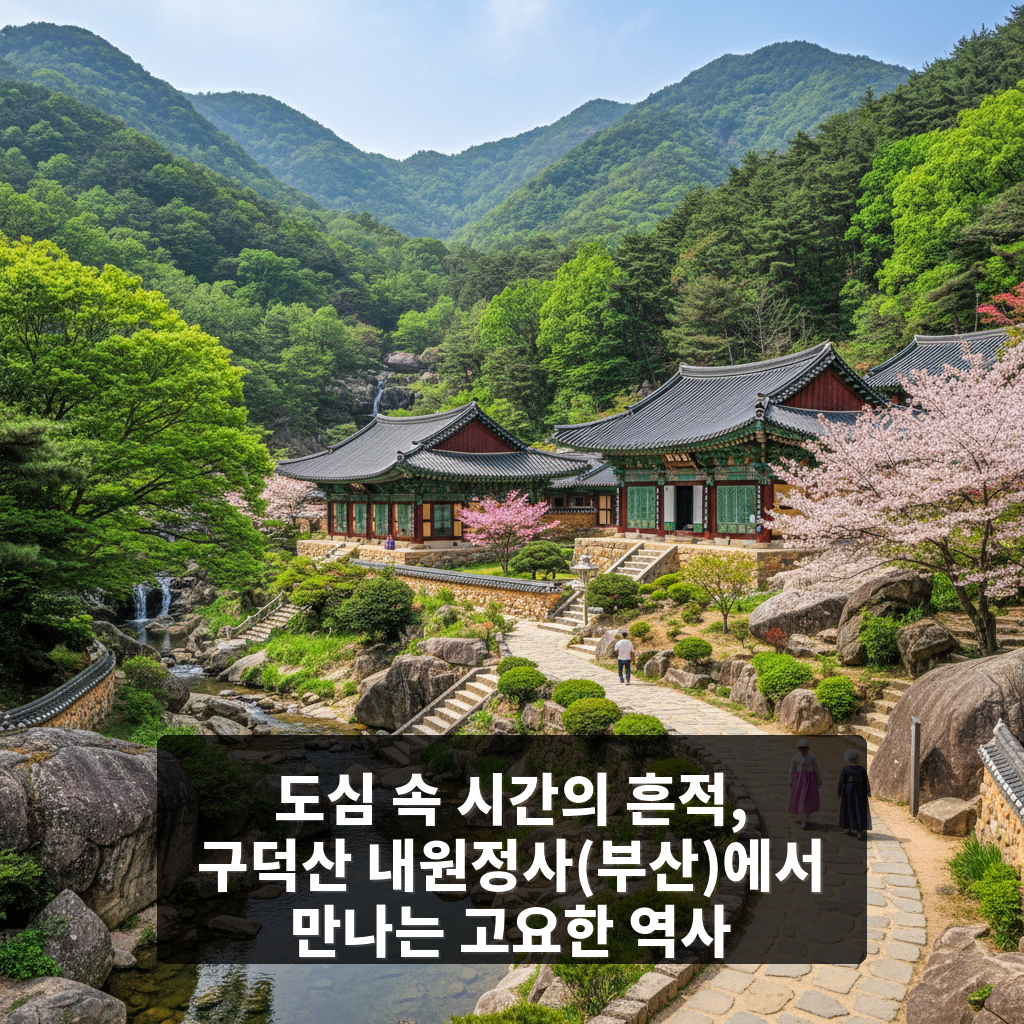
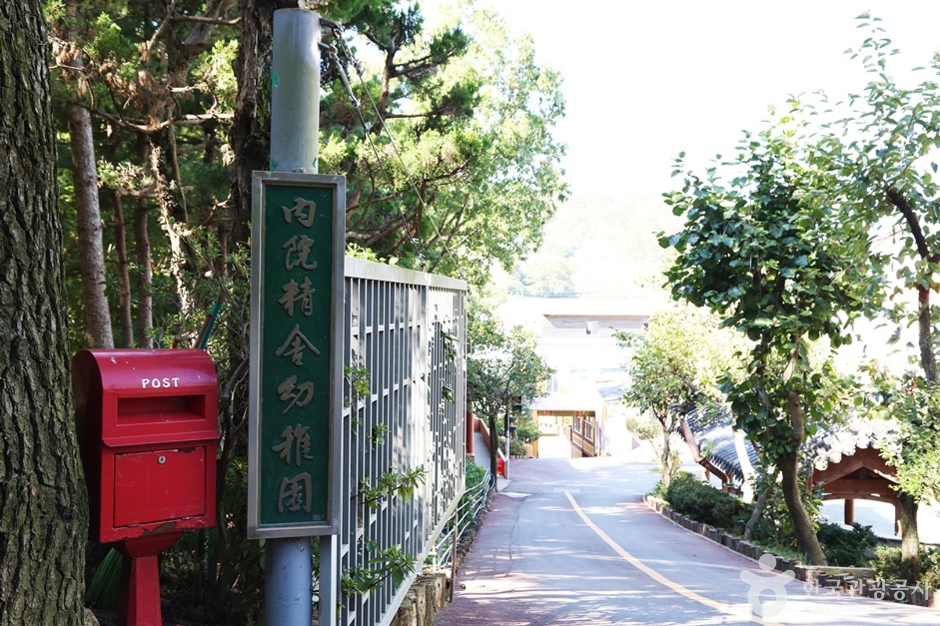
Amidst the rapidly changing urban landscape, there is a place that stands quietly, as if transcending the flow of time. It’s a place where a world completely different from the bustling everyday unfolds, as if you’ve opened a secret door and stepped in. This is the special experience offered by NaewonjeongsaNaewonjeongsa (Busan), located at the foot of Gudeoksan.
More than just a temple, this is a sacred ground that fully embraces Busan’s history and spirit. The Buddhist devotion and architectural beauty accumulated over long years, and the stories embedded within, convey a deep resonance to visitors. Today, we will together knock on the door of this mysterious space.
Indeed, what message does Naewonjeongsa (Busan) convey to us? Join us on a time travel journey to discover its hidden stories.
A Tranquil Sacred Ground Forged by Time: The Footprints of Naewonjeongsa
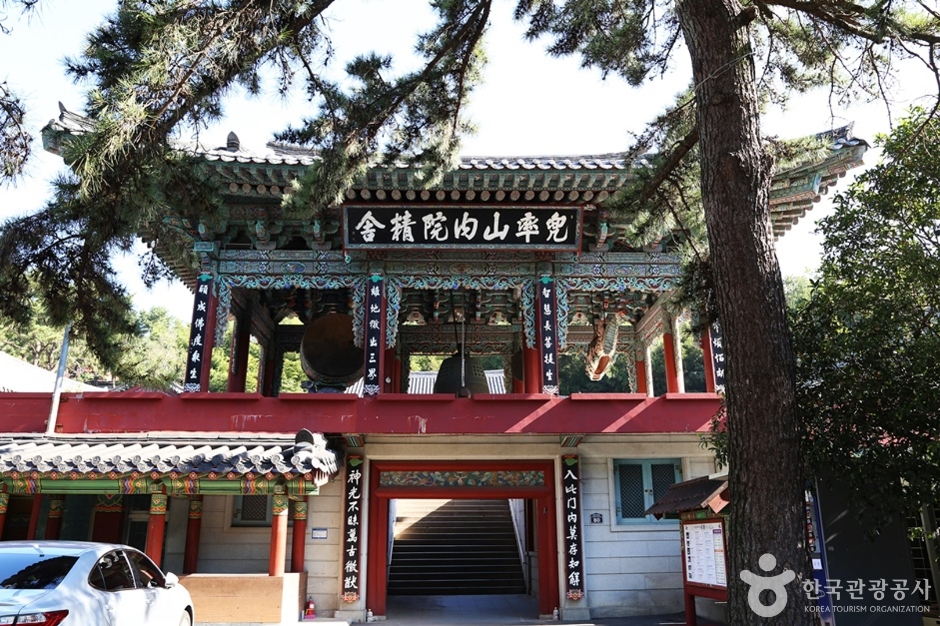

Naewonjeongsa (Busan), embraced by Gudeoksan, reveals its special presence as a temple in the city. Designated as a traditional temple of Busan Metropolitan City, it has steadily continued its temple construction projects since its founding, adding to its value. Like a drama, the first phase of construction spanning over 10 years heralded the grand overture of Naewonjeongsa.
Three Phases of Temple Construction, Architectural Beauty Embracing Time
- 1st Phase of Construction (until 1983) A total of 12 temple buildings, including the Daeungjeon, Gwaneumjeon, Yosachae, and Jongnu in traditional wooden architectural style, were established, completing the basic features of the temple. These spaces breathe the aesthetics of Korean architecture, as if each tree was built with Buddhist devotion.
- 2nd Phase of Construction (1985) By establishing a Buddhist kindergarten, a place of education was prepared to communicate with the local community and convey Buddhist devotion to future generations. This shows how the role of religion extends beyond mere rituals to encompass society as a whole.
- 3rd Phase of Construction (1990) To accommodate the growing number of devotees and establish a modern temple operating system, the Manbuljeon was constructed. As a venue for Buddhist ceremonies and a modern monks’ living quarters, one can glimpse the progressive aspect of Naewonjeongsa (Busan), where tradition and modernity harmonize.
Thus, Naewonjeongsa (Busan), cultivated with long time and devotion, has established itself as a precious cultural heritage that embodies our nation’s architectural technology and religious aspirations, going beyond a mere Buddhist facility. In particular, the ‘Naewonjeongsa Sujang Myobeop Yeonhwagyeong (妙法蓮華經)’ stored in the temple is one of the treasures that adds to its historical value.
Aesthetics Embraced by Gudeoksan: The Spaces of Naewonjeongsa
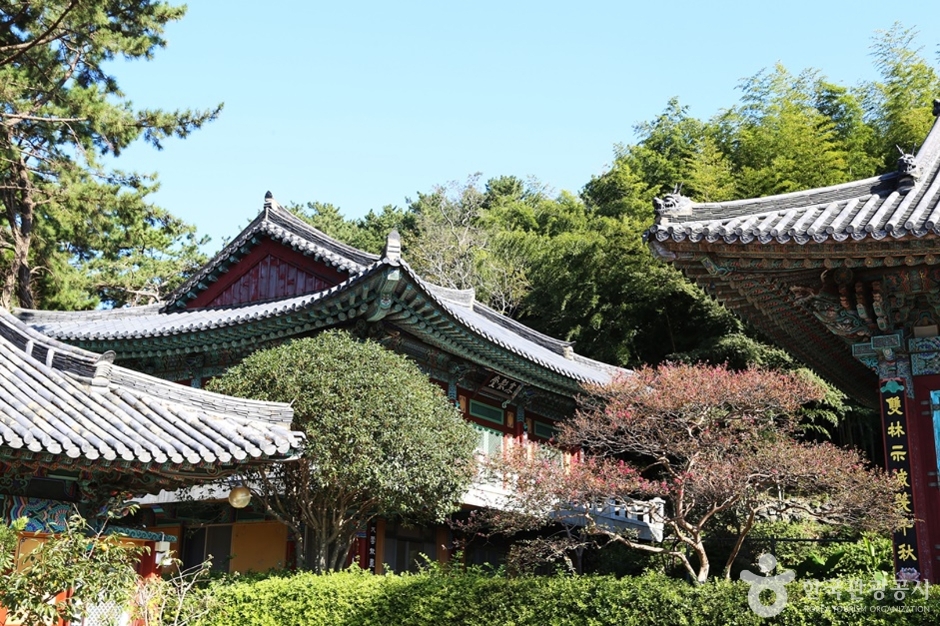

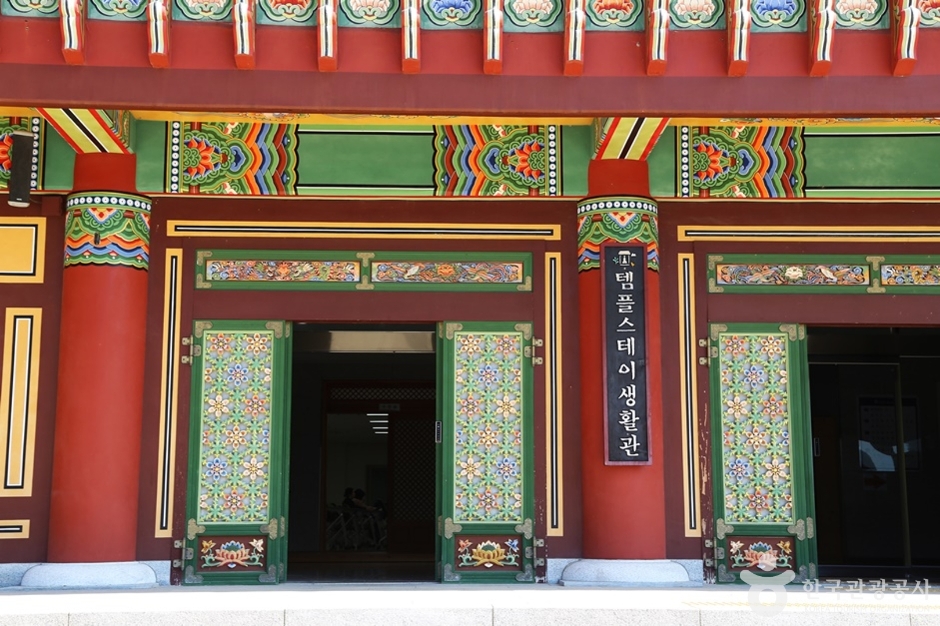
Naewonjeongsa, located under the auspicious energy of Gudeoksan, has its own story embedded in each of its buildings. From the serene Daeungjeon to the Manbuljeon, which stands out with its modern sensibilities, it is recommended to carefully examine the charm of each space.
Buildings Not to Miss
- Daeungjeon It is the central hall that best showcases the beauty of traditional wooden architecture. The aesthetic of Korean lines felt at the eaves brings peace to visitors’ hearts.
- Gwaneumjeon It is a place enshrining Gwanseeumbosal (Avalokiteshvara), the Bodhisattva of compassion, where devotees constantly come to pray. One can find deep comfort in its tranquility.
- Manbuljeon As a modern hall constructed in 1990, it boasts a spacious area capable of hosting large-scale Buddhist ceremonies. It is a building symbolizing the harmonious coexistence of modern systems and traditional Buddhism.
- Yosachae & Jongnu The Yosachae, which serves as the monks’ living quarters, and the Jongnu, where the bell chimes to herald the dawn, also add to the traditional temple atmosphere. The neat beauty felt amidst its simplicity is impressive.
Cultural Heritage in Tranquility: Myobeop Yeonhwagyeong
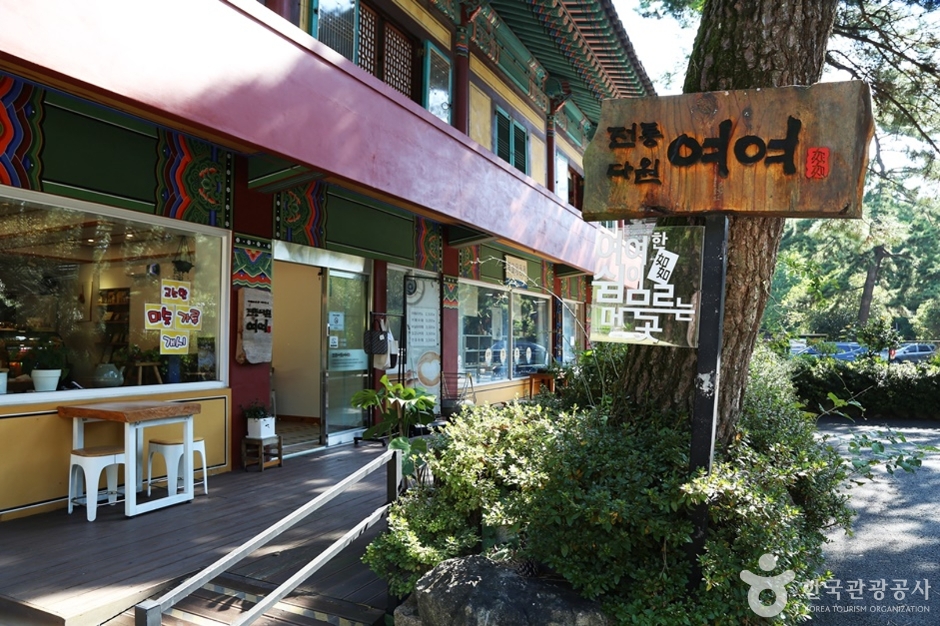

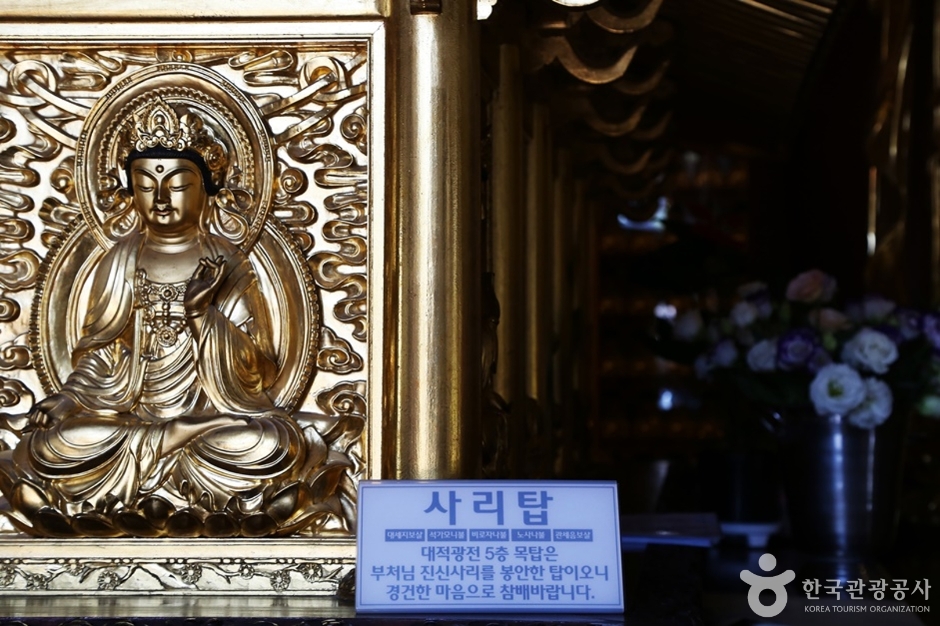
The ‘Naewonjeongsa Sujang Myobeop Yeonhwagyeong’ housed at Naewonjeongsa is a valuable cultural heritage that once again reminds us of the importance of Buddhist scriptures. This scripture is not merely a book with characters written in it, but historical evidence imbued with the spirit and artistry of its era, elevating the prestige of Naewonjeongsa (Busan). Unfortunately, it is not always on permanent display, but its mere existence allows one to feel the historical depth of Naewonjeongsa.
How to Find a Hidden Treasure in the City: How to Get to Naewonjeongsa & Nearby Attractions
Naewonjeongsa (Busan), located at the foot of Gudeoksan with good accessibility to the city center, is the perfect place to briefly escape daily life and find tranquility. It is even more attractive because it can be easily visited by public transportation.
Tips for a Relaxed Visit
- Use Public Transportation It is convenient to get off at a nearby bus stop and walk. Located at the entrance of the Gudeoksan hiking trail, you can enjoy the feeling of stepping into nature.
- Maintain Silence As a temple is a place of spiritual practice, it is advisable to refrain from making loud noises or running around the premises when visiting. Please quietly look around and respect the peaceful atmosphere.
- Dress Code Neat and comfortable attire is recommended. Especially when entering halls like the Daeungjeon, it is good to show respect by removing hats and shoes.
- Photography It is advisable not to use flash inside the halls and to be careful not to disturb devotees when taking photos. During important ceremonies, it is considerate to refrain from photography.
- Surrounding Walk The Gudeoksan hiking trails around Naewonjeongsa are well maintained. Enjoying a short walk while breathing fresh air after visiting the temple will also be a good memory.
Things to Enjoy Around Naewonjeongsa
- Gudeoksan Hiking Naewonjeongsa (Busan) is part of the Gudeoksan hiking course, allowing you to enjoy trekking and fully appreciate the beautiful nature of Gudeoksan after visiting the temple.
- Dong-A University Bumin Campus Museum At the nearby museum, you can broaden your knowledge by viewing Busan’s history and cultural artifacts.
- Bumindong Mural Village While not as grand as Gamcheon Culture Village, it is also good to stroll through the humble and charming mural alleyways and feel a sense of nostalgia for the past.
Finding Your Own Meaning at Naewonjeongsa
Naewonjeongsa (Busan) is a special place that offers a rare tranquility and peace in the heart of Busan. It’s a place where you can escape the complicated daily routine, pause to reflect on yourself, and feel the beauty of ancient architecture and its religious significance.
Naewonjeongsa, where past and present coexist, constantly creating new stories. Time spent here will transcend a simple trip, leaving a subtle resonance and moments of deep reflection in our hearts. If you visit Busan, knock on the door of Naewonjeongsa (Busan) on Gudeoksan. You will surely gain peace and inspiration beyond your expectations.
Frequently Asked Questions
Q1. What kind of temple is Naewonjeongsa (Busan)?
Naewonjeongsa is a city temple located at the foot of Gudeoksan, designated as a traditional temple of Busan Metropolitan City. It is a historic place that has grown since its founding in 1983, establishing traditional wooden buildings such as Daeungjeon and Gwaneumjeon, and constructing a Buddhist kindergarten and Manbuljeon.
Q2. Are there any special cultural heritage items to see at Naewonjeongsa (Busan)?
Yes, Naewonjeongsa houses an important designated cultural heritage item called ‘Naewonjeongsa Sujang Myobeop Yeonhwagyeong (妙法蓮華經)’. This scripture is a precious treasure that adds to the historical depth and value of the temple.
Q3. What kind of place is Manbuljeon?
Manbuljeon is a hall constructed in 1990 during the third phase of temple construction, serving as a venue for Buddhist ceremonies to accommodate the increasing number of devotees. It also serves as a modern Yosachae equipped with contemporary systems for the modernization and rationalization of temple operations.
Q4. Are there any precautions when visiting Naewonjeongsa (Busan)?
As a temple is a place of spiritual practice, one must maintain a quiet and reverent attitude. It is advisable to refrain from using flash inside the halls and to visit in respectful attire. Please be considerate not to disturb the devotees’ ceremonies.
Q5. Are there any places worth visiting near Naewonjeongsa (Busan)?
Yes, the Gudeoksan hiking trail is nearby, making it good for hiking or taking a walk. Additionally, Dong-A University Bumin Campus Museum and Bumindong Mural Village are also nearby, allowing you to visit them together and experience Busan’s history and culture.