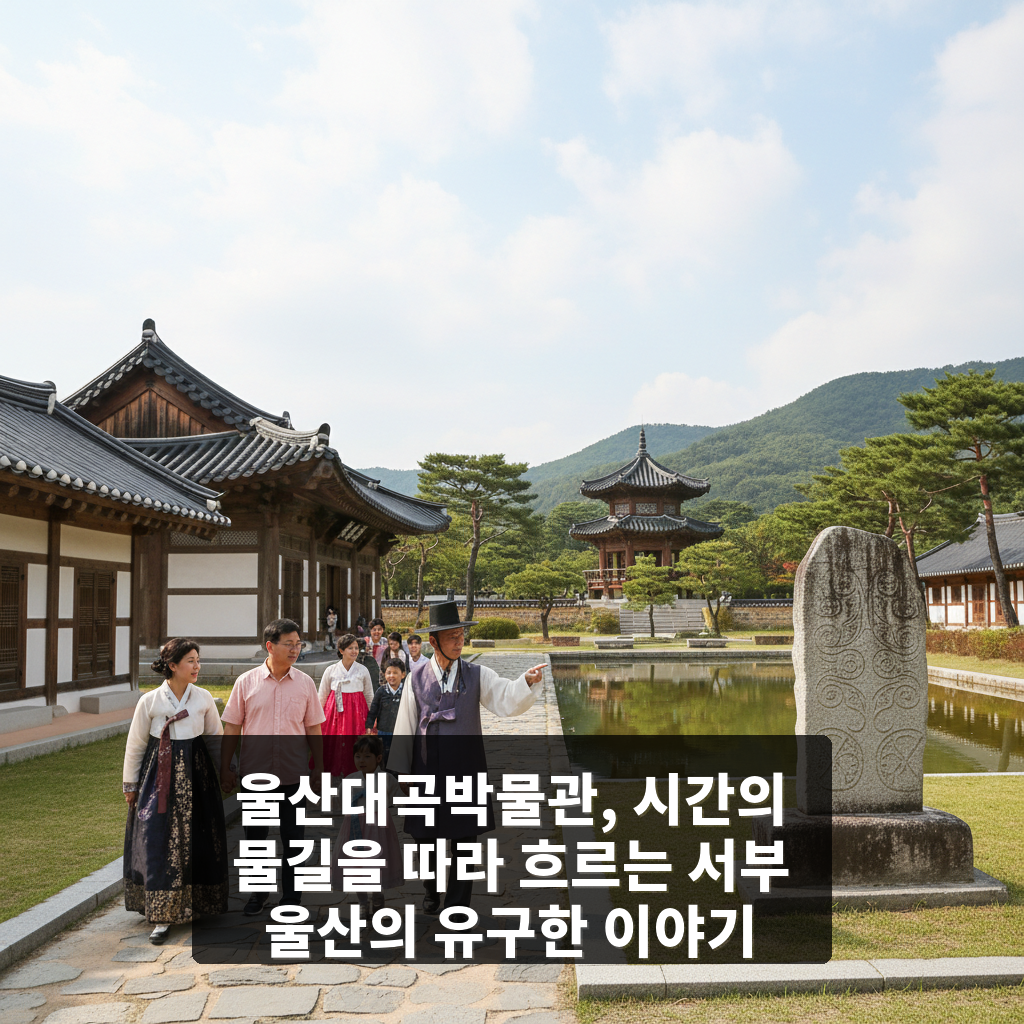
Ulsan Daegok Museum, the enduring story of Western Ulsan flowing along the waterway of time


Do you know that at the quiet western edge of Ulsan, seemingly forgotten, next to Daegokcheon, an upstream tributary of the Taehwagang River, there is a treasure trove that holds thousands of years of history? This is more than just an exhibition space; it is a repository of miraculous relics created by waterways and a place that completely embodies Ulsan’s hidden history: the Ulsandaegok Museum.
From prehistoric dwelling sites, discovered like an unexpected gift amidst the massive wave of development that was dam construction, to Three Kingdoms Period tombs and Joseon Dynasty production sites, each artifact here bears traces of life and anguish, as well as the beauty created by time. Today, we invite you on a sensory journey through time to the Ulsandaegok Museum.
Relics Embraced by Daegokcheon’s Deep Waters: The Birth of the Museum
The Ulsandaegok Museum is the protagonist of a special story that began during the construction of the Daegok Dam in Cheonjeon-ri, Dudong-myeon, Ulju-gun, Ulsan Metropolitan City. As the dam was built upstream of Daegokcheon, a large-scale excavation survey was conducted on the incorporated land, revealing astonishing relics beyond imagination. The importance of this excavation became the foundation for the birth of the museum.
Illuminating Layers of Time: Achievements of the Daegokcheon Excavation


- Bronze Age Dwelling Sites: Valuable resources that offer a glimpse into human settlement and agricultural life.
- Three Kingdoms Period Tombs: Numerous precious artifacts discovered, hinting at the society and burial culture of the time.
- Joseon Dynasty Production Sites: Relics that show a cross-section of our ancestors’ way of life and economic activities.
In this way, a vast number of artifacts, totaling over 13,000, were excavated from the incorporated land of the Daegok Dam area alone. To preserve and exhibit these valuable artifacts, the Ulsandaegok Museum opened on June 24, 2009. As Ulsan’s first public museum and a branch of the Ulsan Museum since its opening in 2011, it firmly holds its place as a cornerstone of Ulsan’s history.
Western Ulsan: In Search of its Special Historical Identity
The western Ulsan region has a historical flow quite different from the Ulsan city center we commonly know. The area where the museum is located once belonged to Gyeongju or Eonyang-hyeon, and thus possesses its own unique cultural identity.
Why Should We Listen to the Story of Western Ulsan?
Klook.com

Understanding the Historical Context of Each Region
- Dudong-myeon and Duseo-myeon: Regions that originally belonged to Gyeongju and had active cultural exchanges with Gyeongju.
- Eonyang-eup, Sangbuk, Samdong, Samnam-myeon: Former centers of Eonyang-hyeon, with a history as independent administrative districts.
Understanding this background is essential for a more three-dimensional comprehension of the history and culture of Ulsan Metropolitan City as a whole. The Ulsandaegok Museum serves as a focal point for systematically illuminating the unique and rich historical narrative of this western Ulsan region.
A Sensory Journey Unfolding Amidst Artifacts: Recommended Exhibition Route
The Ulsandaegok Museum, though modest in size, stands out for its exhibition density and engaging composition. We suggest a route that allows you to best experience the history of this place.
Must-See Exhibition Highlights
- 1. From the Panoramic View of Daegokcheon and the Excavation Story: At the entrance of the museum, carefully examine the introductory section that presents the beautiful scenery of Daegokcheon, the dam construction, and the beginning of the excavation survey. This is the starting point for understanding why this place was a site of significant discoveries.
- 2. Feeling the Breath of Prehistoric Times: Imagine the wisdom of life and artistic sense of our ancestors from long ago through artifacts from the Paleolithic, Neolithic, and Bronze Ages. The story contained within each piece of pottery and stone tool will be astonishing.
- 3. The Robustness of the Three Kingdoms Period and the Abundance of the Joseon Dynasty: Compare the elaborate artifacts excavated from Three Kingdoms Period tombs with the Joseon Dynasty relics that reveal the wisdom of daily life, and feel the cultural changes of each era. In particular, the re-creation of the production sites from that time provides a vivid sense of having traveled back to that period.
- 4. The Lives of Western Ulsan Residents, a Panorama: The final section focuses on the lives and culture of the local residents of western Ulsan. Experience the aesthetic emotion provided by familiar yet unfamiliar landscapes, not so different from our lives today.
Beyond the Museum: Relaxation Amidst Surrounding Nature
After visiting the Ulsandaegok Museum, you can enjoy leisure amidst the beautiful natural scenery surrounding the museum. The landscape unfolding along Daegokcheon offers tranquility and peace, allowing you to temporarily forget the hustle and bustle of the city.
The Perfect End to a Museum Outing
- Daegokcheon Walking Path: As you walk along the path where clear waters and green nature harmonize, your mind will naturally find peace. It offers different charms in each of the four seasons, so you can expect new scenery depending on your visit time.
- Bangudae Petroglyphs (Nearby): The national treasure ‘Bangudae Petroglyphs’, located within driving distance, is another historical site where you can see vivid traces of prehistoric whale hunting. Visiting it in conjunction with the Ulsandaegok Museum will make for an even richer historical exploration.
Smart Guide for a Fulfilling Visit: Pre-Visit Checklist
It is advisable to check some information in advance for a successful historical journey. In particular, the Ulsandaegok Museum may have somewhat limited public transport accessibility, so prior planning is important.
What to Prepare for a Comfortable Visit
- Check Transportation Options: There are city bus routes from Ulsan city center to Daegok Museum, but the service interval may be long. It is convenient to use a personal car, and parking is provided free of charge. If using public transportation, it is essential to check the bus timetable in advance.
- Operating Hours and Closing Days: Before your visit, check the latest operating hours and closing days on the museum’s official website to avoid a wasted trip. It is especially good to check for changes during public holidays.
- Meal Planning: There are not many restaurants or convenience facilities around the museum, so it is recommended to eat beforehand or prepare simple snacks. You can find various restaurants by heading towards Eonyang-eupseong.
- Utilize Map: It is located in Cheonjeon-ri, Dudong-myeon, Ulju-gun, Ulsan Metropolitan City, and you can ascertain the exact location by referring to the map below.
Frequently Asked Questions
Q1. When did the Ulsandaegok Museum open?
The Ulsandaegok Museum opened on June 24, 2009. It was established to preserve and exhibit artifacts excavated due to the construction of the Daegok Dam.
Q2. What is the admission fee for the Ulsandaegok Museum?
The Ulsandaegok Museum is a public museum operated by Ulsan Metropolitan City and generally offers free admission. Special exhibitions may be charged, so it is advisable to check before your visit.
Q3. Are there other places to visit nearby?
Yes, near the museum, there is a beautiful Daegokcheon walking path, and within driving distance, there are prehistoric sites such as the national treasure Bangudae Petroglyphs and Cheonjeon-ri Gakseok. Visiting them together will make for an even richer historical exploration.
Q4. What types of artifacts does the Ulsandaegok Museum primarily exhibit?
It primarily exhibits artifacts excavated due to the construction of the Daegok Dam. It houses over 13,000 artifacts, including Bronze Age dwelling site relics, artifacts excavated from Three Kingdoms Period tombs, and Joseon Dynasty production sites, showcasing the long history of the western Ulsan region.
Q5. How can I get to the Ulsandaegok Museum by public transportation?
City bus routes operate from Ulsan city center to Daegok Museum. However, as the service interval can be long, it is convenient to check the bus timetable in advance or consider using a personal car.
 Love Korea? Promote it & Earn.