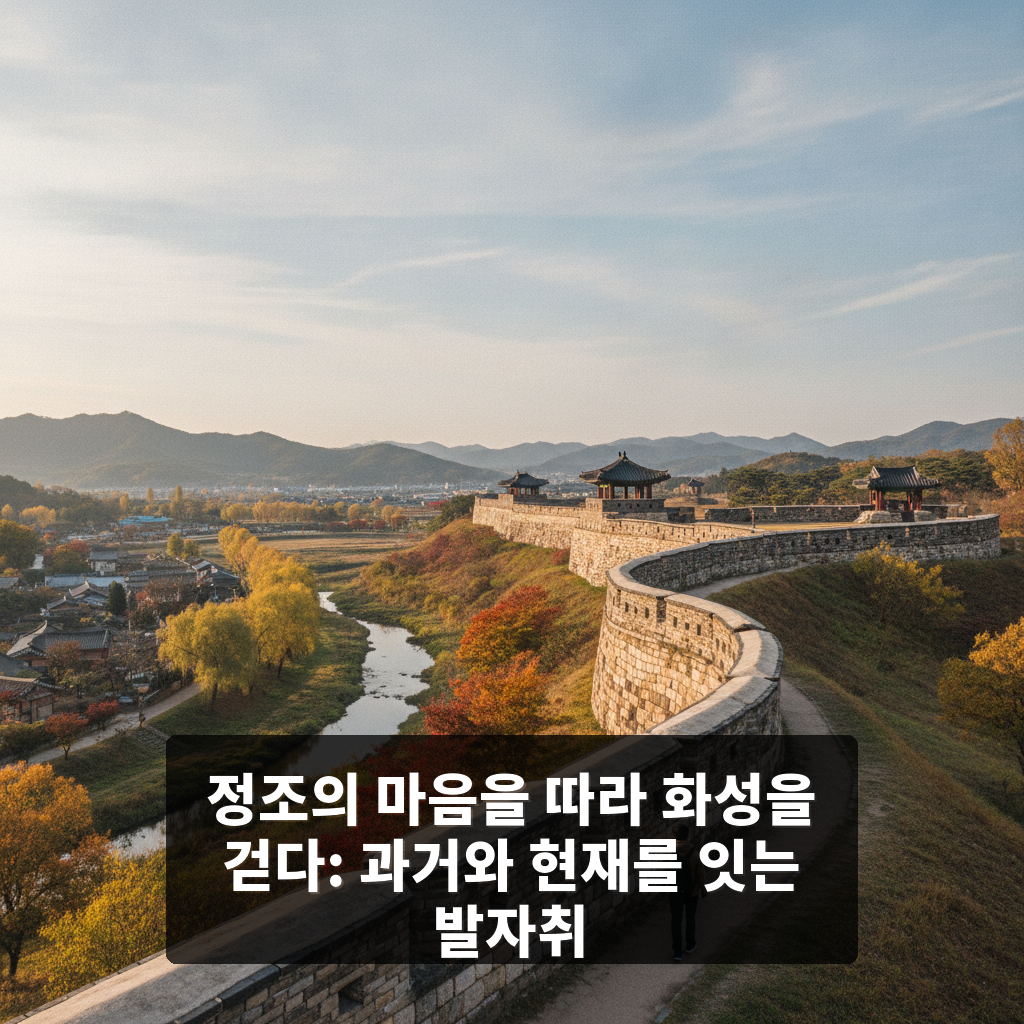
Walking Hwaseong, following Jeongjo’s spirit: Footsteps connecting the past and present


What if you could catch a glimpse of King Jeongjo’s dreams over his shoulder? Witnessing with your own eyes the plans filled with his profound care for his people and nation, and walking along his path, will surely become an unforgettable special memory.
You can begin that moving journey right at Suwon Hwaseong Fortress, a UNESCO World Heritage site. Following Jeongjo’s Heart and Walking Hwaseong Fortress, this journey will go beyond mere sightseeing, becoming a profound time to communicate with history.
The fortress wall path imbued with King Jeongjo’s aspirations, what makes it special?
The fortress wall path of Suwon Hwaseong Fortress offers travelers the inspiration of walking through a grand history. It’s not merely an old structure, but a living site where King Jeongjo’s spirit of loving his people and his will for reform are imbued everywhere. As you walk, remembering his dreams, you will discover messages conveyed to us today.
Hwaseong Fortress’s historical value and technological prowess
- UNESCO World Heritage Site: A cultural heritage site where 18th-century Eastern and Western architectural technologies are concentrated. It embodies more than just defensive facilities and new city construction.
- The Fruit of Practical Learning (Silhak) Spirit: The full mobilization of cutting-edge science and technology of the time, including the Geojeungi (pulley system) and Nokro (winch). King Jeongjo’s consideration, aimed at minimizing the people’s labor, stands out.
A Journey Through Time: Recommended Hwaseong Fortress Wall Path Courses
Suwon Hwaseong Fortress boasts a fortress wall path of approximately 5.7km, so choosing a course that suits you is important. It is recommended to first explore the Suwon Hwaseong Museum, where you can see everything about Hwaseong Fortress, a UNESCO World Heritage site, and Hwaseong Haenggung before embarking on the main walk. As you walk following King Jeongjo’s heart in Hwaseong Fortress, a new story unfolds at each point.
Hwaseong Fortress Tour Plan Tailored for You
| Course Type | Duration | Key Sections and Attractions |
|---|---|---|
| Core Course | 2~3 hours | Hwaseong Museum, Hwaseong Haenggung Palace, Paldalmun Gate, Seojangdae Command Post (Focus on History and Architectural Beauty) |
| Full Fortress Wall Circuit | 4~5 hours | Haenggung Palace, Seojangdae Command Post, Hwaseomun Gate, Janganmun Gate, Banghwasuryujeong Pavilion, Changnyongmun Gate (Overall View of the Fortress Wall) |
- Attire: Comfortable shoes and clothing are essential. The fortress wall path has some steep sections.
- Hydration: Regardless of the season, prepare a water bottle and replenish fluids regularly.
Highlights of the Hwaseong Fortress Journey: Must-Visit Attractions
As you walk the fortress wall path, you will encounter numerous gates, pavilions (gakru), and gun emplacements (poru). These structures, each serving a different purpose, offer a glimpse into King Jeongjo’s meticulous plans.
Special Stories at Each Major Point
Starting Points of History and Emotion
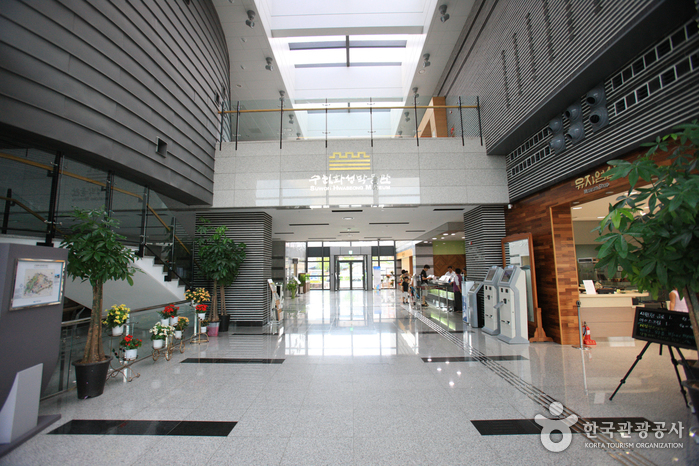
- Suwon Hwaseong Museum: A place where you can see the construction process of Hwaseong Fortress and the culture of King Jeongjo’s era at a glance. It’s an essential course before a full exploration.
- Hwaseong Haenggung Palace: A temporary palace where King Jeongjo stayed when visiting Hyeollyungwon. You can feel the essence of late Joseon dynasty architecture here.
Landmarks of the Fortress Wall Path
- Paldalmun Gate & Janganmun Gate: The south and north gates of Hwaseong Fortress. They boast a magnificent scale, and Janganmun Gate, in particular, is larger than Seoul’s Sungnyemun Gate.
- Seojangdae Command Post: A command post located at the peak of Paldalsan Mountain. It offers the best panoramic view of Suwon city.
- Banghwasuryujeong Pavilion & Yongyeon Pond: One of the most beautiful scenic spots in Suwon Hwaseong Fortress. The pavilion blended with the pond captivates visitors throughout all four seasons.
Suwon Hwaseong Fortress: How to Get There? And Nearby Attractions
Suwon Hwaseong Fortress is easily accessible, allowing convenient visits even by public transport. If using a private car, you can utilize the surrounding parking lots. For a relaxed trip, it is recommended to allocate ample time to the Following Jeongjo’s Heart and Walking Hwaseong Fortress course.
Convenient Transportation Guide and Location
The address of Suwon Hwaseong Fortress is 825 Jeongjo-ro, Paldal-gu, Suwon-si, Gyeonggi-do (Namchang-dong) area. Refer to the map below to plan your visit.
- Public Transportation: Get off at Suwon Station (Line 1) and transfer to a bus (many routes towards Hwaseong Haenggung Palace, Paldalmun Gate). Direct/intercity buses to Suwon are available from major points in Seoul.
- Parking: Paid parking facilities such as Hwaseong Haenggung Palace Parking Lot and Yeonmudae Parking Lot are available.
Cuisine and Culture Found Nearby
- Jidong Market & Motgol Market: Traditional markets located near Paldalmun Gate. You can experience delicious street food and a friendly market atmosphere.
- Haengnidan-gil Street: A charming street of cafes and workshops created near Hwaseong Haenggung Palace. It’s great for enjoying trendy vibes.
- Suwon Chicken Street: A must-try food when in Suwon! End your day with crispy and savory fried chicken.
The Culmination of the Journey: Walking in the Footsteps of King Jeongjo’s Dream
Suwon Hwaseong Fortress is more than just a cultural heritage site; it is a space that fully embodies the philosophy of a leader and his love for his people. As you walk following King Jeongjo’s heart in Hwaseong Fortress, you will have a special experience where the wisdom of the past and the beauty of the present coexist. It offers different charms each season, so it is recommended to visit again at a time that suits you.
Frequently Asked Questions
Q1. How long does it take to walk the entire Suwon Hwaseong Fortress wall path?
The fortress wall path is approximately 5.7km, and on average, it takes about 3 hours 30 minutes to 4 hours. This may vary depending on individual fitness and viewing pace.
Q2. Are there any paid sections?
Some facilities, such as Hwaseong Haenggung Palace and Suwon Hwaseong Museum, have admission fees. The fortress wall path itself can be used for free.
Q3. Which courses are good for visiting with children?
Short, experience-oriented courses are recommended, such as using the Hwaseong Train or trying archery near Dongjangdae (Yeonmudae). Hwaseong Haenggung Palace is also a place that children might find interesting.
Q4. Is there also night opening?
Yes, night opening is held during specific periods, allowing you to enjoy the beautiful night scenery. It is recommended to check the Suwon Cultural Foundation website for detailed schedules.
Q5. Can I hear explanations from a guide?
Regular guided tour programs with a cultural tourism guide are operated at scheduled times. Foreign language explanations are also available, so please inquire at the information desk.