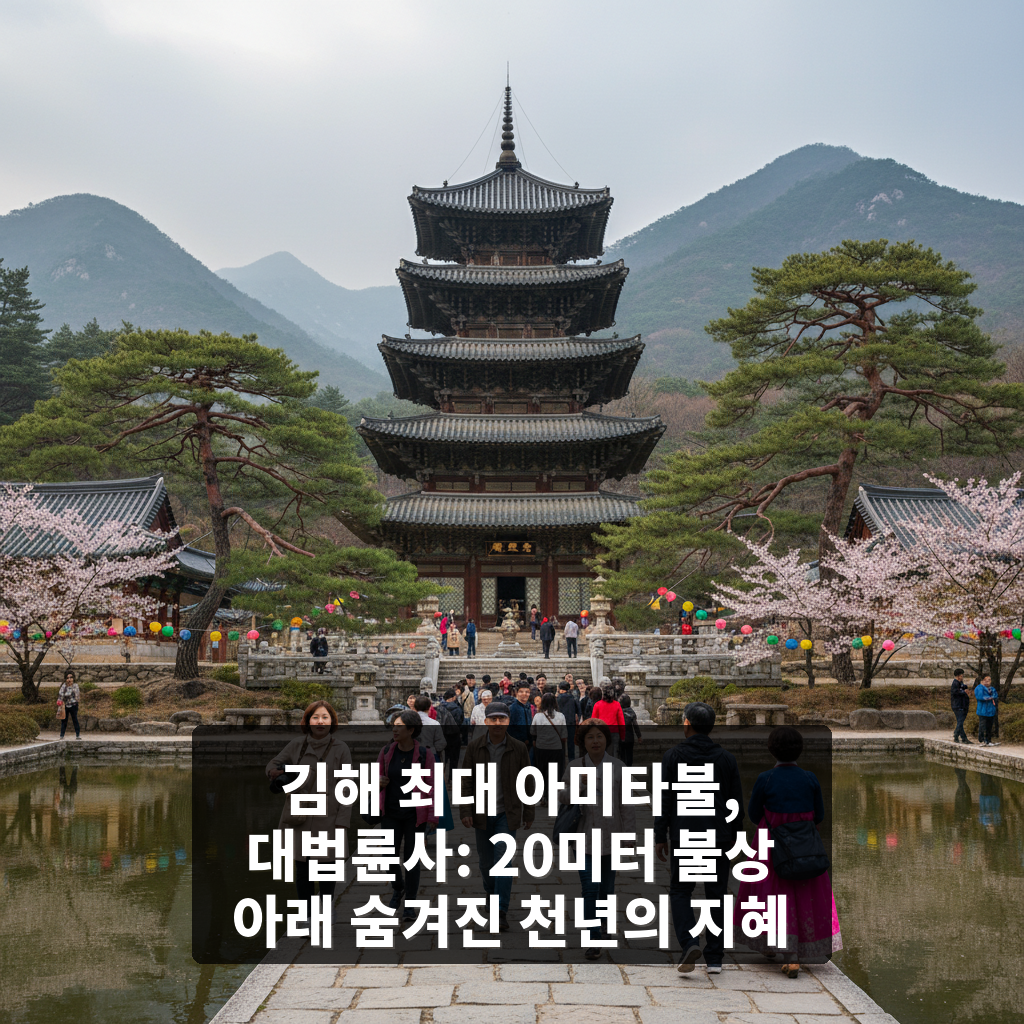
Gimhae’s largest Amitabha Buddha, Daebeopryunsa: A thousand years of wisdom hidden beneath a 20-meter Buddha statue


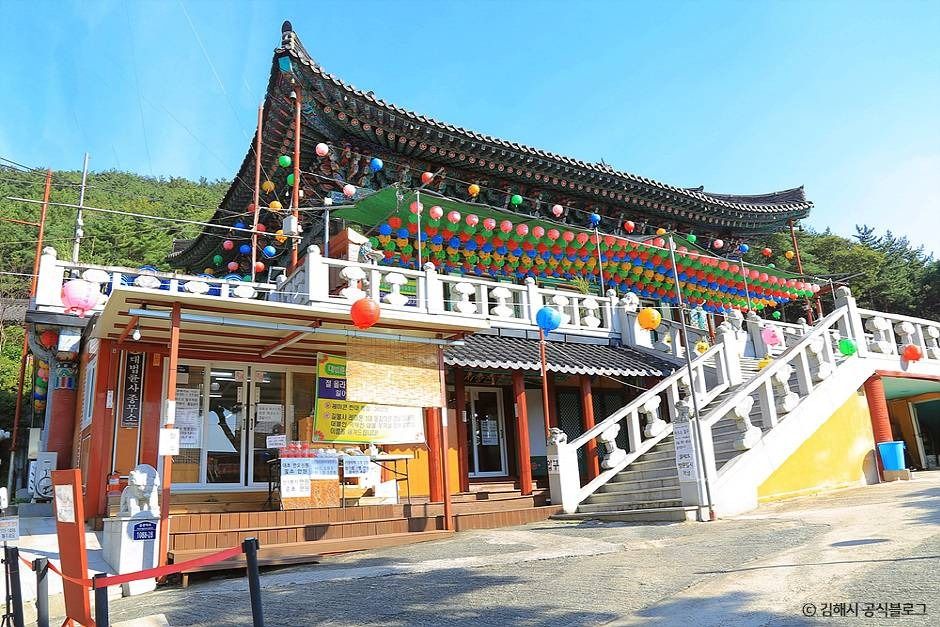
Imagine a moment when all worries disappear before a breathtakingly immense presence. Daebeopryunsa, quietly nestled on the slopes of Hamaksan Mountain in Gimhae, is more than just a temple; it’s a mysterious space imbued with wisdom and aspirations that transcend time. Here, a colossal 20-meter-tall Amitabha Buddha greets us, and within its grandeur breathes a profound Buddhist philosophy encompassing life and death.
Daebeopryunsa will come to us as a special place that transcends a mere tourist attraction, posing questions we had forgotten. Here, stories from the past offer a deep resonance to us in the present.
The overwhelming majesty of the 20-meter Buddha statue: Daebeopryunsa’s symbol
The first impression Daebeopryunsa offers visitors is undoubtedly the magnificent Amitabha Buddha. Boasting the largest scale in Gimhae, this statue stands an impressive 20 meters tall, its colossal presence alone overwhelming anyone who sees it. Amitabha Buddha is the Buddha of the Western Pure Land, who made a benevolent vow to save all sentient beings. This Buddha statue at Daebeopryunsa vividly demonstrates the steadfastness of that vow.
Why was such a colossal Buddha statue erected?
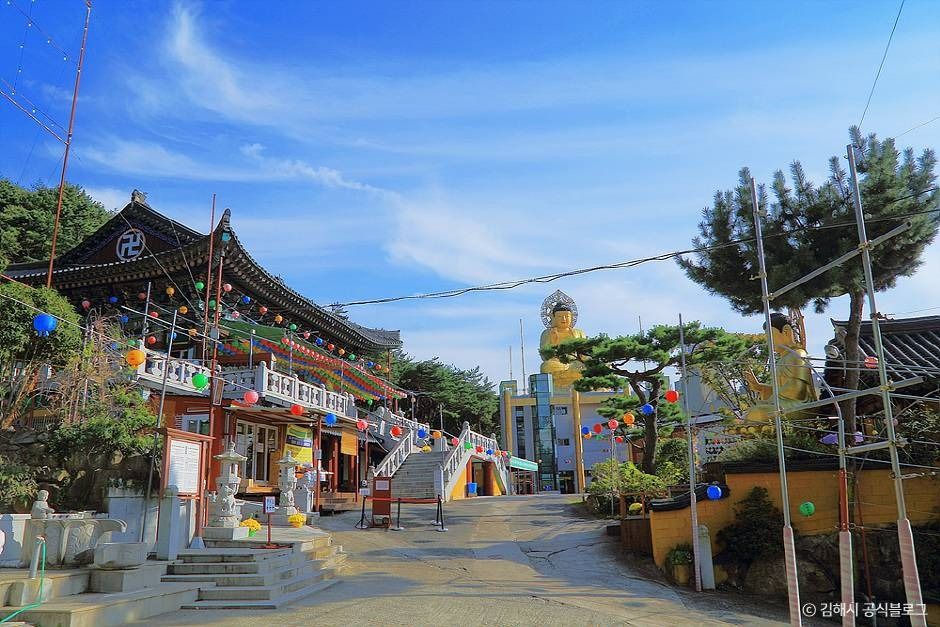
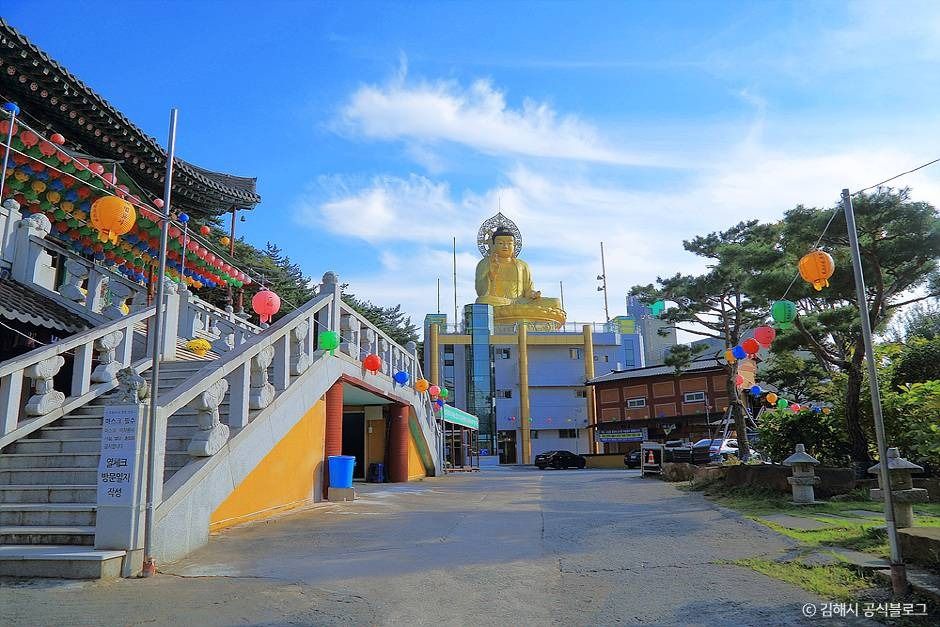
Behind the creation of this giant Buddha statue lies a deep faith that goes beyond a mere display of scale. In Buddhism, creating the image of the Buddha was considered an act of accumulating merit, and Amitabha Buddha, in particular, was an important symbol for praying for the rebirth of the deceased in the Pure Land. It likely contained the aspiration to convey powerful comfort and hope to those who visit this place.
Preaching wisdom beyond death: Stories contained in cultural heritage
Daebeopryunsa is not merely famous for its large Buddha statue. This place has been designated as a Gyeongsangnam-do cultural heritage material for two scriptures recognized as very important resources for Buddhist scripture research. These are ‘Bulsalyesusiwangsangchilgyeong’ and ‘Suryukmuchapyeongdeungjaeuichwalyo’. These two scriptures contain profound Buddhist teachings for the present and the afterlife, and for suffering sentient beings.
Teachings that transcend the boundaries of life and death
Klook.com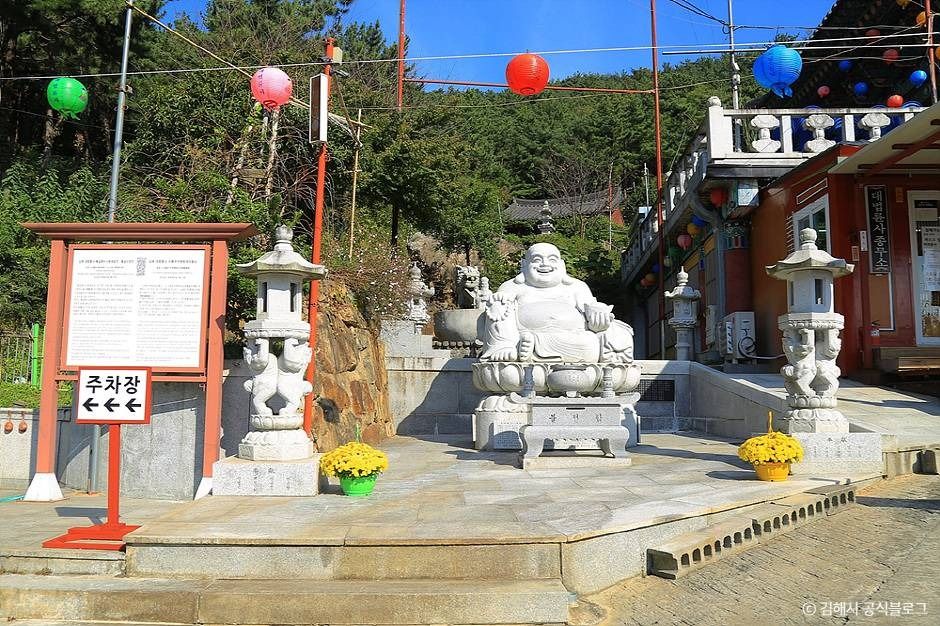
Important cultural heritage materials of Daebeopryunsa
- Bulsalyesusiwangsangchilgyeong is a scripture that preaches the merit of ‘Yesusiwangsangchiljae’, stating that through good deeds in life, one can escape the judgment of the ten kings of the underworld after death and be reborn in the Pure Land. It emphasizes the impact of present life on the afterlife.
- Suryukmuchapyeongdeungjaeuichwalyo is a Buddhist ritual text containing the rituals of ‘Suryukjae’, which aims to save all suffering beings on water and land without discrimination. It is an important document that demonstrates compassion for all life.
These scriptures show that Daebeopryunsa plays an important role not just as a place of worship, but also in exploring the depths of Buddhist thought and preserving historical value.
The tranquil slopes of Hamaksan Mountain, the path to Daebeopryunsa
Daebeopryunsa is located approximately 20 minutes from Gimhae International Airport, making it highly accessible. Situated on the gentle slopes of Hamaksan Mountain, visitors can enjoy a tranquil and peaceful atmosphere.
Convenient access and parking space
When traveling by car, ample parking space is available for convenient visits. It is also relatively easy to access from Gimhae city center by public transportation.
Connecting with inner peace: Tips for visitors
Daebeopryunsa is a place that offers quiet rest and inner peace to those tired from daily life. Checking a few tips before your visit can help you have a more meaningful time.
Experiencing Daebeopryunsa more deeply
- Reverent mindset As a temple is a religious facility, it is advisable to be mindful of your attire and maintain a quiet demeanor.
- Photography etiquette When photographing Buddha statues or inside temple buildings, please follow the temple’s rules and be careful not to disturb other worshippers.
- Exploring the surrounding nature Since it is located on the slopes of Hamaksan Mountain, it is also good to take a light stroll through the natural scenery around the temple and breathe in the fresh air.
- Appreciating cultural heritage materials Look for explanations about the cultural heritage materials within the temple and reflect on their historical and religious significance.
A walk through time in Gimhae: Exploring around Daebeopryunsa
After visiting Daebeopryunsa, how about exploring other attractive places in Gimhae? Gimhae, where history and culture breathe, is rich in sights to see.
Gimhae attractions to enjoy with Daebeopryunsa
| Category | Recommended Attractions | Features |
|---|---|---|
| Historical Sites | King Suro’s Royal Tomb | The tomb of King Suro, the founder of the Gaya Kingdom, offering a glimpse into Gaya’s history. |
| Museum | Gimhae National Museum | An important exhibition space where you can gain a deeper understanding of Gaya culture. |
| Traditional Market | Gimhae Dongsang Market | You can experience Gimhae’s lively atmosphere and taste local specialties. |
| Relaxation Space | Yeonji Park | It offers a beautiful lake, fountain shows, and walking trails, providing comfortable relaxation. |
In this way, you can experience the diverse charms of Gimhae, centered around Daebeopryunsa.
Frequently Asked Questions
Q1. What is the most impressive thing at Daebeopryunsa?
It is the colossal 20-meter-tall Amitabha Buddha. As the largest Buddha statue in Gimhae, you can feel a peaceful energy along with its grandeur. This statue holds a profound meaning, wishing for the rebirth of sentient beings in the Pure Land.
Q2. What cultural heritage value does Daebeopryunsa possess?
It has been designated as a Gyeongsangnam-do cultural heritage material because it houses important Buddhist scriptures, ‘Bulsalyesusiwangsangchilgyeong’ and ‘Suryukmuchapyeongdeungjaeuichwalyo’. These are valued as precious resources for Buddhist studies.
Q3. What are the transportation options when visiting Daebeopryunsa?
It is highly accessible, located 20 minutes from Gimhae International Airport. Ample parking space is provided for convenient car use, and it can also be reached relatively easily by public transportation.
Q4. Are there any manners to observe when visiting the temple?
Yes, as a temple is a religious facility, it is advisable to visit quietly with a reverent mind. Please be mindful of your attire, follow the temple’s guidelines when photographing Buddha statues or inside temple buildings, and be careful not to disturb other worshippers.
Q5. Are there any places worth visiting around Daebeopryunsa?
Gimhae offers various attractions where you can enjoy history, culture, and nature, such as King Suro’s Royal Tomb, Gimhae National Museum, Gimhae Dongsang Market, and Yeonji Park. Enjoy the charm of Gimhae along with Daebeopryunsa.
 Love Korea? Promote it & Earn.