
A space where time stands still, encountering the breath of Joseon at Gimje Dongheon


There is a place where stories accumulated over a long time are steeped in every brick, a space where you can glimpse the Joseon Dynasty with its quiet breath. It is Gimje Dongheon, located in Gyodong, Gimje-si, Jeollabuk-do. Beyond being a mere structure, it silently testifies to the dignity of the local government office that was once the center of local administration and the lives of the people of that time, speaking to us today.
Did you know that this building, which was almost lost to the pages of history, has regained its original appearance after a long restoration process? Outwardly, it is a tranquil hanok, but within it, countless stories are layered, from its construction in the 8th year of King Hyeonjong’s reign (1667) to its repair in the 25th year of King Sukjong’s reign (1699). The moment we step inside, we embark on a special journey back in time.
The Whispers of Gimje Dongheon, Holding Tranquil Time
Gimje Dongheon is a Joseon Dynasty government office designated as a Tangible Cultural Heritage of Jeollabuk-do Special Self-Governing Province. A government office was a building that handled local administration, and among them, the dongheon was the central building where the magistrate performed his duties. The Gimje Dongheon we see is presumed to be the inner quarters attached to the dongheon, and it has been restored close to its original form through several repairs and renovations. Originally, there were other buildings besides the inner quarters, such as the inner auxiliary quarters and inner side quarters, but now only the inner quarters have been restored, allowing us to infer its past appearance.
Architectural Aesthetics Embracing the Breath of the Dynasty
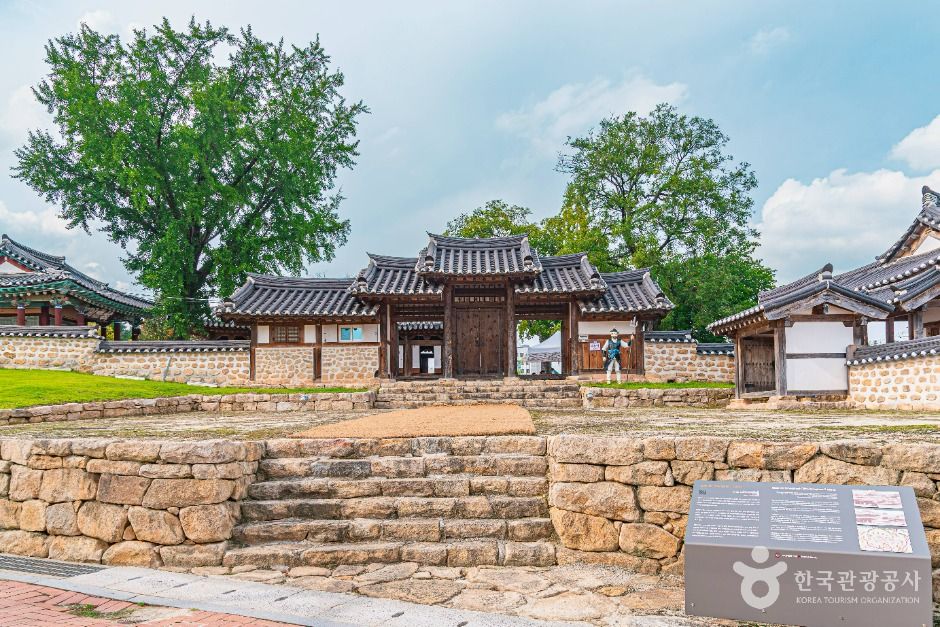


This place has a ‘ㄷ’-shaped floor plan, which is not significantly different from the residential architecture of the middle and upper classes during the Joseon Dynasty. However, the use of thick round pillars on the daecheongmaru clearly shows the characteristics of a more formal government office building than ordinary private homes. It was built with natural stone cornerstones placed on a single low stylobate, mixing square and round pillars, and boasts a simple yet elegant exterior as a single-eave building with decorative brackets. It features two latticed doors in almost every bay, adding delicate beauty. While it boasts grandeur with a size of 7 bays in front and 4 bays on the side, overall, it stands out for its understated elegance.
| Category | Key Features |
|---|---|
| Floor Plan | ‘ㄷ’-shaped, similar to middle and upper-class Joseon Dynasty houses |
| Pillar Style | Use of thick round pillars on daecheongmaru (distinction from ordinary private homes) |
| Architectural Style | Single low stylobate, natural stone cornerstones, mix of square and round pillars, single-eave building with decorative brackets |
| Door Style | Two latticed doors in almost every bay |
| Restoration Status | Originally multiple buildings, but currently only the inner quarters restored |
Contemporary Value Found in a Space Where History Flows
Gimje Dongheon is not simply an old building. As one of the rare surviving relics of dongheon’s inner quarters nationwide, its value as research material for Joseon Dynasty government office architecture is extremely high. Immediately to the south in front is the outer quarters, allowing us to infer the overall layout and function of the government office at that time. It is also a living educational site where one can pause in busy modern society and reflect on the wisdom and beauty of the past.
Special Experiences Offered by Gimje Dongheon


- A Place for Historical Education: Provides a deep understanding of the Joseon Dynasty’s local administration system and government office architecture.
- Time for Quiet Contemplation: Escape the bustling city center and enjoy peaceful contemplation in a tranquil hanok space.
- Architectural Beauty Exploration: Witness firsthand the beauty of Joseon Dynasty architectural style, which is both simple and formal.
- Preservation of Cultural Heritage: Realize the importance of cultural heritage preservation by seeing the results of efforts to protect disappearing traditional buildings.
Steps Towards Gimje Dongheon: Location and Nearby Exploration
Gimje Dongheon is located in Gyodong, Gimje-si, Jeollabuk-do Special Self-Governing Province, offering good accessibility. When using public transportation, you can conveniently arrive by taking a city bus from Gimje Station or Gimje Intercity Bus Terminal. If you are using a private car, parking spaces are available nearby. Situated amidst tranquil rural scenery, it is ideal for a leisurely stroll and visit.
Another Charm to Discover in Gimje City
- Byeokgolje: The oldest reservoir relic in Korea, with beautiful scenery harmonizing with the vast plains.
- Gimje Hyanggyo: A Joseon Dynasty educational institution where you can feel the traces of Confucian culture.
- Arirang Literary Village: The setting for author Jo Jung-rae’s novel ‘Arirang’, where you can glimpse the pains of modern and contemporary history and the lives of common people.
Things to Know Before Visiting Gimje Dongheon
- Operating Hours: Gimje Dongheon is generally open year-round, but it is advisable to inquire with the Gimje City Culture and Tourism Department in advance to check for specific events or changes.
- Admission Fee: It is usually free to visit.
- Guided Tour Service: Cultural tourism interpreters may be stationed on-site, so if you wish to hear an in-depth explanation, please inquire there.
- Connecting with Nearby Tourist Attractions: Planning your itinerary with other historical sites in Gimje City, such as Byeokgolje and Gimje Hyanggyo, can make for a richer and more meaningful day.
- Photography: While it is good to capture the beautiful buildings and scenery, it is advisable to refrain from using flash or setting up tripods to protect the cultural heritage.
Frequently Asked Questions
Q1. What kind of place is Gimje Dongheon?
Gimje Dongheon is one of the Joseon Dynasty government offices located in Gyodong, Gimje-si, Jeollabuk-do, and it is the inner quarters building attached to the dongheon where the magistrate performed his official duties. It is designated as a Tangible Cultural Heritage of Jeollabuk-do Special Self-Governing Province.
Q2. What is the historical significance of Gimje Dongheon?
It is presumed to have been built in the 8th year of King Hyeonjong’s reign (1667), with records of repair remaining from the 25th year of King Sukjong’s reign (1699). It is a valuable relic that shows the appearance of a government office, which was the center of local administration during the Joseon Dynasty, and its architectural historical value is high, especially since there are not many remaining examples of dongheon’s inner quarters buildings.
Q3. What are the notable architectural features of Gimje Dongheon?
It has a ‘ㄷ’-shaped floor plan, and notably, the use of thick round pillars on the daecheongmaru showcases the characteristics of a more formal government office building compared to ordinary private homes. You can glimpse the beauty of Joseon Dynasty residential architecture, including its simple exterior and latticed doors.
Q4. Are there any places worth visiting near Gimje Dongheon?
Yes, in Gimje, besides Gimje Dongheon, there are various historical and cultural tourist attractions such as Byeokgolje, the oldest reservoir relic in Korea, Gimje Hyanggyo, a Joseon Dynasty educational institution, and Arirang Literary Village, the setting for the novel ‘Arirang’.
Q5. Are there any precautions when visiting Gimje Dongheon?
Most of the time, it is open free of charge, but it is advisable to inquire with the Gimje City Culture and Tourism Department before visiting to check for changes in operating hours. Please observe visitor etiquette, such as refraining from using flash photography or damaging interior facilities, to protect cultural heritage.