The royal dignity that bloomed amidst the pain of Byeongjahoran: The Tomb and Stele of Inpyeongdaegun, searching for its majestic traces.


In an era shrouded in darkness, there was a figure who firmly held his place amidst the tragedy of the royal family. As we turn the pages of history, we encounter individuals whose names are familiar but whose lives’ depths we never fully understood. The place we will visit today is one such story, quietly sleeping as if forgotten: the **Inpyeongdaegunmyo-mit-Sindobi** (Tomb and Stele of Grand Prince Inpyeong).
He endured the turbulent period of Joseon with his entire being, leaving behind a timeless legacy sometimes as a younger brother, sometimes as an artist Inpyeong Daegun. His eternal resting place remains not merely a tomb, but a living history textbook and a space showcasing the essence of royal culture of that era.
What deep stories are hidden here? As we walk through the quiet tomb area, we will explore his breath from centuries ago and what resonance it holds for us today.
The Royal Garden Where Time Stands Still: The Grandeur of Inpyeongdaegunmyo-mit-Sindobi
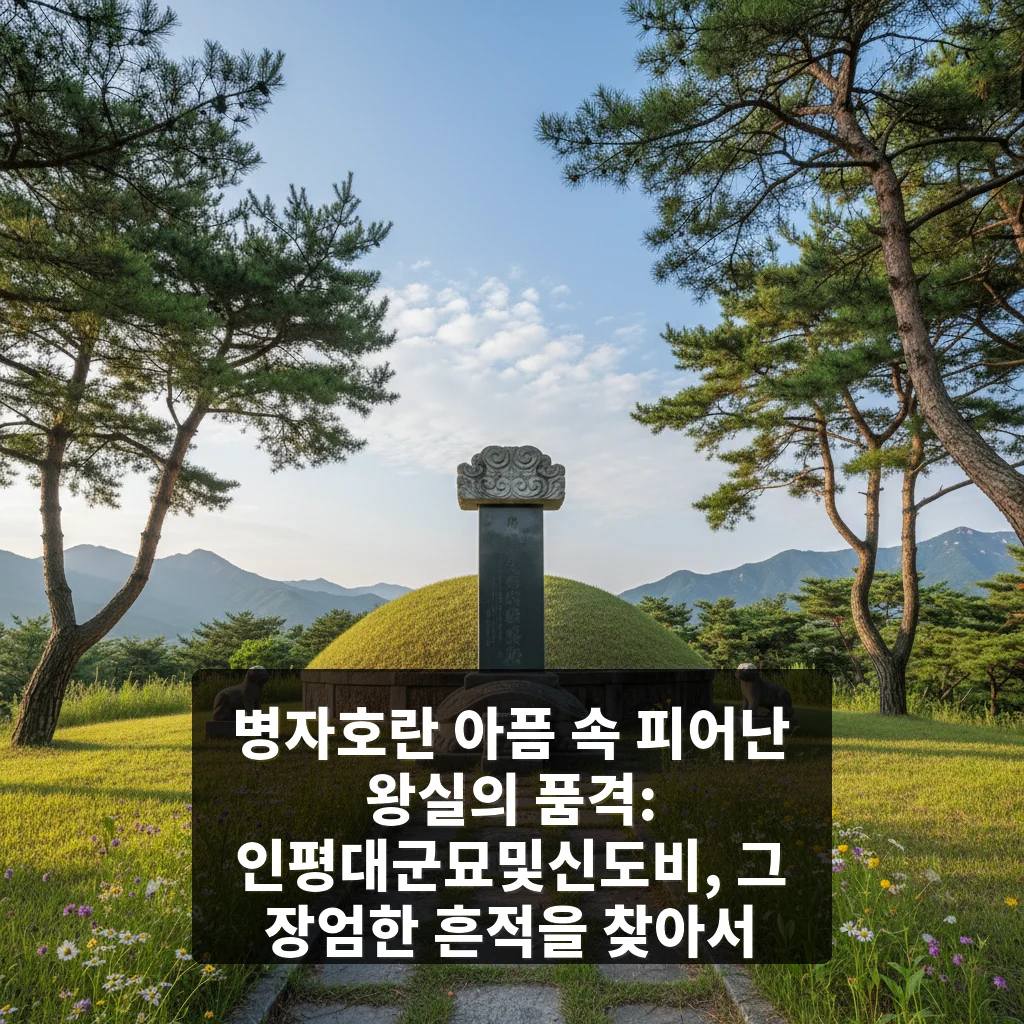
Preserving the solemnity and dignity of a royal tomb complex, the **Inpyeongdaegunmyo-mit-Sindobi** offers profound emotion to visitors. The vast tomb area, spanning approximately 1,800 pyeong, is encircled by a curved wall, and its sheer scale suggests the majesty of the Joseon royal family. As you walk along the tranquil forest path, the magnificent scenery unfolding before your eyes naturally fills you with reverence.
Inside the tomb area, there is 1 tombstone for Grand Prince Inpyeong, 1 altar stone, and on either side, firmly standing are 4 civilian official stone statues, 1 incense burner stone, 2 pillar stones, and 1 stone lantern, arranged in a regular pattern. Particularly noteworthy is the presence of a tortoise-shaped pedestal (龜趺) without a stele on the left side of the burial mound. This suggests the existence of another stele, adding to the historical depth entwined with this place.
The Aesthetics of Joseon Royal Sculpture: Explanation of Tomb Area Facilities


The tombstone bears the inscription ‘Yumyeong Joseonguk Inpyeongdaegun’ along with a construction date of Musul Guwol Chosam-il (戊戌九月初三日), allowing inference about the Grand Prince’s life and historical background. The drum-shaped stone (鼓石), which serves as the base for the altar stone, features lion figures carved in relief on its four sides, offering a glimpse into the finest stonemasonry techniques of the era. The fact that the civilian official stone statues and the stone lantern are made of marble also highlights the luxury and rarity of the royal tomb complex.
- Curved Wall: Gently encircles the entire tomb area, clearly defining its boundary from the outside.
- Stone-lined Tomb Entrance: Adds to the refined beauty of the tomb area and demonstrates the formality of a royal tomb complex.
- Stone Lantern: Delicately adorned with ‘ansangmun’ (眼像文) and ‘dangchomun’ (唐草文), allowing one to appreciate the essence of late Joseon sculptural art.
Above all, the special uniqueness of **Inpyeongdaegunmyo-mit-Sindobi** lies in the ‘Eoje Eopil Chijemunbi’ (Stele with Imperial Eulogy Written by Kings) located at the lower part of the tomb complex. This stele is inscribed with eulogies personally bestowed by the greatest kings of the era, including Hyojong, Sukjong, Yeongjo, and Jeongjo, praising Grand Prince Inpyeong’s achievements, serving as vivid evidence of his significant role in the royal family and history. The presence of both the tomb and the stele here further enhances its value.
The King’s Shadow, Embracing an Artistic Soul: The Life of Grand Prince Inpyeong and His Historical Background
Grand Prince Inpyeong was the third son of King Injo and the younger brother of King Hyojong, growing up amidst the tragic history of the Byeongjahoran (Qing Invasion of Joseon). The pain of his childhood, having to bid farewell to Crown Prince Sohyeon and Grand Prince Bongnim (later King Hyojong) who were taken hostage to Qing, deeply affected his life. However, he did not succumb to despair; instead, he devoted himself to scholarship and art, becoming renowned as one of the era’s greatest artists, proficient in poetry, calligraphy, and painting.
The Scars of the Byeongjahoran, and the Grand Prince’s Choice


Unlike his elder brother King Hyojong, who harbored thoughts of revenge against Qing and dreamed of a Northern Expedition, Grand Prince Inpyeong believed in pursuing national stability through pragmatic diplomacy and cultural exchange. While his ideas were somewhat distant from the mainstream thought of his time, they reveal his deep insight and broad vision. The magnificent construction of his tomb complex and the tributes paid by later kings were not merely due to his royal lineage, but also an acknowledgment of his exceptional character and achievements.
Visiting the **Inpyeongdaegunmyo-mit-Sindobi** will be an experience that transcends merely seeing an ancient tomb; it will be a profound encounter with the anguish a prince endured and the values he pursued during the turbulent Joseon Dynasty.
Following the Footprints of History: How to Get to Inpyeongdaegunmyo
Nestled within a tranquil forest path, **Inpyeongdaegunmyo-mit-Sindobi** is an excellent place for historical exploration near Seoul. It is accessible by public transportation and convenient to visit by car.
Location Information
The exact location is San 207-1, Gocheon-dong, Uiwang-si, Gyeonggi-do, creating an even more peaceful atmosphere amidst the beautiful surrounding natural scenery. The journey to get there will itself be the start of a modest historical trip.
Time for Quiet Contemplation: Tips for Visitors
**Inpyeongdaegunmyo-mit-Sindobi** is not merely a tourist attraction but a historical site of deep significance. Here are a few tips to make your time here more meaningful.
- Wear Comfortable Shoes: The tomb area is extensive, and you’ll be walking on natural paths, so it’s best to visit wearing comfortable shoes like sneakers.
- Enjoy Seasonal Charm: In spring, lush new sprouts emerge, and in autumn, the foliage is beautiful. If you prefer a quiet and contemplative atmosphere, a visit in late autumn or early spring is recommended.
- Pre-learn History: If you visit with prior knowledge of Grand Prince Inpyeong’s life and the Joseon Dynasty after the Byeongjahoran, you can more deeply understand the messages conveyed by the stone artifacts and steles throughout the tomb complex.
- Harmony with Surrounding Nature: The area around the tomb is surrounded by forest, making it ideal for a walk. Combine your historical exploration with healing in nature.
Nearby Attractions Worth Visiting
Around Inpyeongdaegunmyo, there are other historical sites and eco-friendly spaces in Uiwang-si. For example, you can visit nearby Baegun Lake or Wangsong Lake to enjoy the beautiful scenery and take a break. Planning a day-trip historical tour centered around **Inpyeongdaegunmyo-mit-Sindobi** in this way is also a good idea.
Frequently Asked Questions
Q1. Who was Grand Prince Inpyeong?
Grand Prince Inpyeong was the third son of King Injo of Joseon and the younger brother of King Hyojong, growing up through the pain of the Byeongjahoran. He was particularly known as one of the era’s greatest artists and scholars, proficient in poetry, calligraphy, and painting. He is also known for advocating pragmatic diplomacy.
Q2. Why is Inpyeongdaegunmyo-mit-Sindobi an important historical site?
Inpyeongdaegunmyo-mit-Sindobi is a place that well illustrates the tomb complex style and stone sculpture art characteristics of the Joseon royal family. Particularly, the ‘Eoje Eopil Chijemunbi’ (Stele with Imperial Eulogy Written by Kings), personally inscribed by four later kings—Hyojong, Sukjong, Yeongjo, and Jeongjo—commemorating Grand Prince Inpyeong’s achievements, remains here, making its historical value very high.
Q3. What is the scale of the tomb complex?
The Inpyeongdaegun tomb complex boasts a very vast scale, spanning approximately 1,800 pyeong. It is surrounded by a curved wall, and within it, various stone artifacts such as a tombstone, altar stone, civilian official stone statues, incense burner stone, pillar stones, and a stone lantern are arranged, allowing visitors to feel the majesty of a royal tomb complex.
Q4. Are there any special precautions to take when visiting?
Since Inpyeongdaegunmyo-mit-Sindobi is a historical site and the eternal resting place of Grand Prince Inpyeong, it is important to observe it with a quiet and respectful demeanor. To prevent damage to the tomb area, please stay on designated paths and refrain from consuming food or littering.
Q5. Are there other places nearby worth visiting?
Yes, around Inpyeongdaegunmyo-mit-Sindobi, there are several attractions where you can enjoy the beautiful nature of Uiwang-si, such as Baegun Lake or Wangsong Lake. You can plan a historical exploration combined with relaxation in nature.