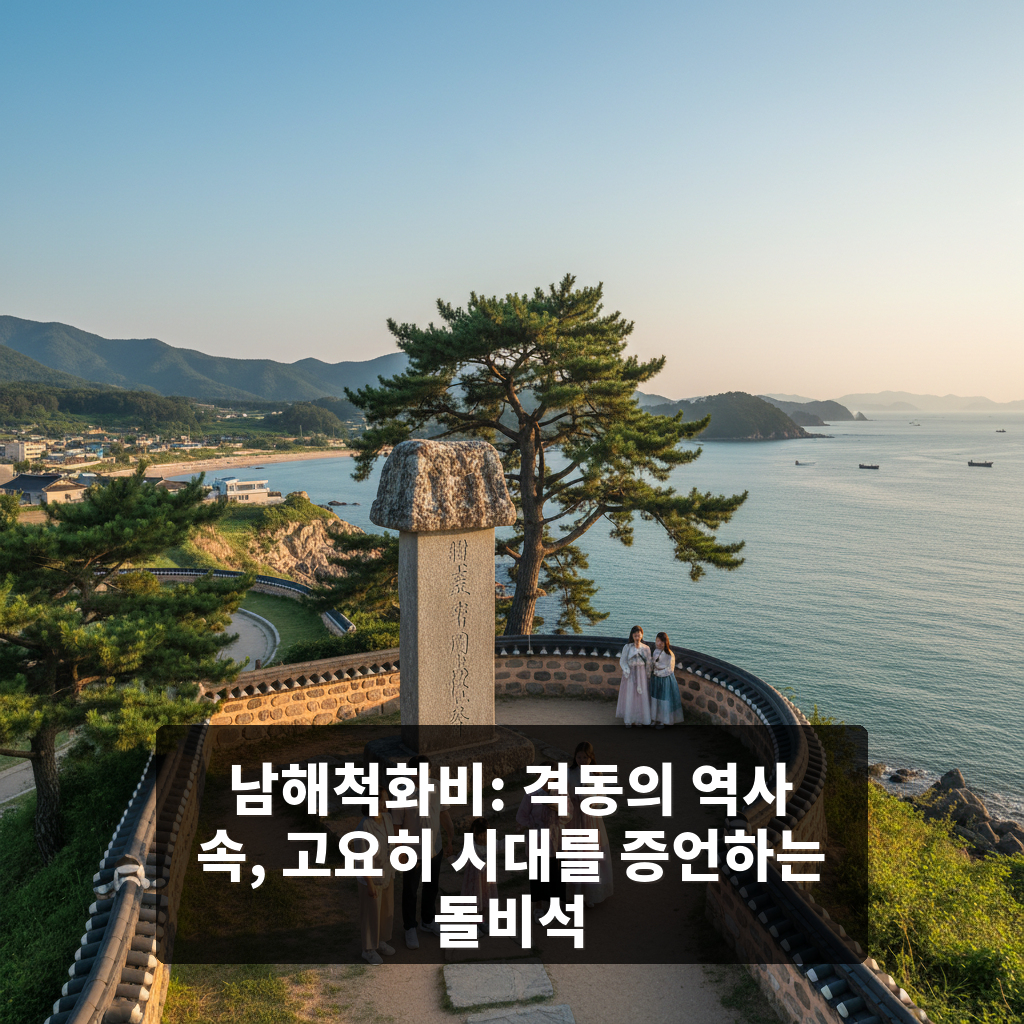
Namhaechokhwabi: A stone stele silently testifying to an era amidst a turbulent history.


A single stone stele standing embraced by Namhae’s blue sea. It may simply look like a trace of long years, but in this one stone, the cry of an era—an era that tried to protect the nation against the fierce waves of Western powers—is fully contained. What story, indeed, does this silent stele tell us?
In the late Joseon period, amidst a turbulent international situation, Heungseon Daewongun firmly closed the nation’s doors. One of the many Cheokhwabi steles engraved with his strong will is this Namhaechokhwabi. Imbued with the tension of the time and the self-reliant spirit of the nation, this stele is not merely an artifact but like a living history textbook.
Today, let’s take a time journey back to those days through Namhae’s hidden treasure, the Namhaechokhwabi.
An Era of Turmoil, a Firm Will Engraved on the Namhaechokhwabi
Having experienced the Byeonginyangyo and Shinmiyangyo, Heungseon Daewongun solidified his strong will to repel Western forces. He warned the people of the dangers of Western invasion and, to repel foreign forces, issued an order to erect Cheokhwabi steles across the country. The Namhaechokhwabi is also a historical piece of evidence, erected in the 8th year of Gojong (1871) within that background.
Why Was the Cheokhwabi Needed?


- National Defense: A strong warning message against frequent invasions by Western powers.
- Fostering National Consciousness: To awaken the people to the importance of repelling foreign forces and achieving self-reliance.
- Daewongun’s Policy: A symbolic expression of the isolationist policy, reflecting the political situation of the time.
- Cultural Pride: Vigilance against Western civilization and the will to protect Joseon’s identity.
Each of these steles contains the powerful message: ‘If Western barbarians invade and we do not fight, it is to make peace; to advocate for peace is to sell out the country.’ This, along with the sense of crisis Joseon faced at the time, shows the firm spirit to protect the nation without any compromise.
Different from Other Cheokhwabi Steles, the Uniqueness of Namhaechokhwabi
Most of the Cheokhwabi steles erected across the country generally share a similar form, but the Namhaechokhwabi, however, stands out with its unique appearance, drawing the attention of visitors. With its body erected on a low square pedestal and a roof stone placed on top, it presents a distinct difference from other Cheokhwabi steles.
What Makes It Special?
Klook.com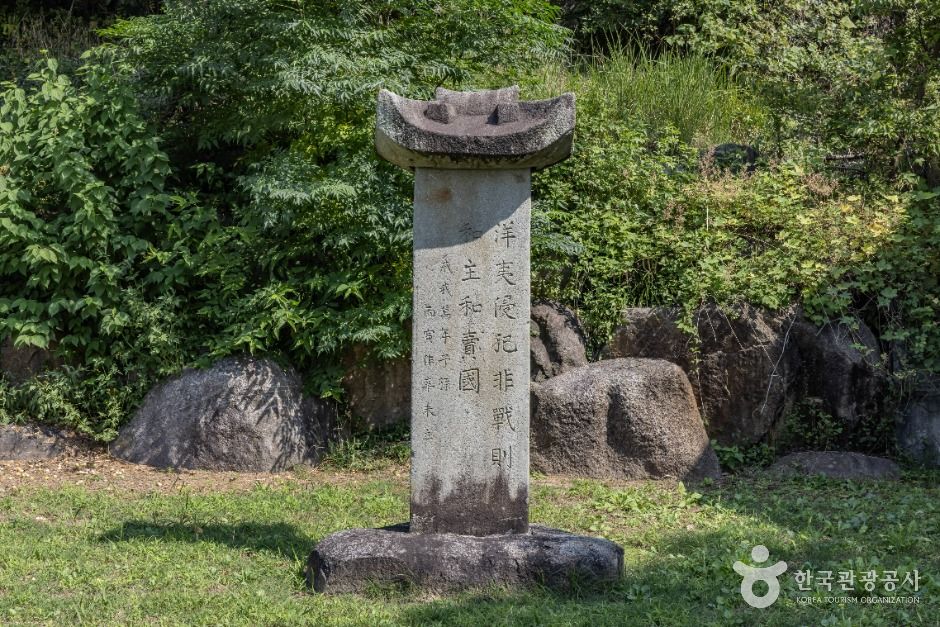

- Unique Style: Unlike typical Cheokhwabi steles, it features a roof stone, making it look like a small stele pavilion.
- Regional Characteristics: It is presumed that the local Namhae government office at the time created it independently upon Daewongun’s order, thus incorporating local interpretation and the artisan’s individuality.
- Preservation State: Although there are traces of time, it remains in a relatively intact state, allowing a vivid glimpse into its appearance at the time.
This unique style is an interesting aspect that shows how each region’s autonomy and creativity were manifested even amidst uniform commands. In Namhae’s historical context, we can reflect on what meaning this stele holds.
Where is the Namhaechokhwabi?
The Namhaechokhwabi, located in Namhae-gun, can be easily found using the map below. Standing tall amidst Namhae’s peaceful scenery, this stele serves as a stepping stone connecting the past and the present.
Beyond the Waves of History, the Message of the Stele Remaining Until Today
As Heungseon Daewongun was abducted to the Russian legation and Joseon gradually began to interact with various countries around the world, most Cheokhwabi steles were dismantled. This was due to the changing times, when the isolationist policy could no longer be maintained. However, like the Namhaechokhwabi, some steles steadfastly held their ground even amidst the turmoil of history, conveying the meaning contained within them to this day.
Why Weren’t Some Cheokhwabi Steles Dismantled?
- Forgotten Existence: Although dismantling work was carried out nationwide, some steles located in remote areas may have remained undiscovered.
- Recognition of Historical Value: Even at the time of dismantling, there might have been instances where their historical significance was recognized and they were intentionally left intact.
- Accidental Preservation: As time passed, due to changes in surrounding topography, etc., there are also cases where they were naturally preserved.
- Local Residents’ Will to Preserve: It could also be the result of local residents recognizing them as part of history and preserving them.
The Cheokhwabi steles that remained, not disappearing like this, are not mere stones. They are a precious heritage that reminds us of the lessons we must not forget from a turbulent modern history and the efforts of our ancestors who tried to protect the safety of their nation.
A Historical Exploration of Namhae with Namhaechokhwabi
After exploring the Namhaechokhwabi, you can experience the charm of Namhae even more deeply by visiting its beautiful surrounding nature and other historical sites. Namhae is not only home to the Cheokhwabi but also a place with a rich history and diverse scenery.
Places Worth Visiting Together in Namhae
- Yi Sun-sin Martyrs’ Park: This is a commemorative space for the Gwaneumpo area, where the last naval battle of the Imjin War took place, allowing you to feel the last breath of Chungmugong (Yi Sun-sin).
- Namhae Exile Literature Museum: This is a place where you can encounter the history and literature of Namhae, which was the birthplace of exile literature during the Joseon Dynasty.
- Geumsan Boriam Temple: This is a temple situated in a divinely blessed spot where you can take in Namhae’s breathtaking scenery at a glance, embracing a history that stretches back to the Three Kingdoms period.
- German Village & Garden Art Village: A modern tourist attraction where you can fully enjoy Namhae’s beauty in an exotic atmosphere.
From Cheokhwabi steles with historical significance to peaceful coastlines and modern villages, Namhae offers diverse attractions. Refer to this when planning your trip and create your own special Namhae journey.
| Exploration Courses | Features |
|---|---|
| History-Focused Course | Namhaechokhwabi → Yi Sun-sin Martyrs’ Park → Namhae Exile Literature Museum (In-depth exploration following the flow of history) |
| Nature & History Course | Namhaechokhwabi → Geumsan Boriam Temple → Daraengimaeul (Harmony of history and Namhae’s beautiful natural scenery) |
| Culture & Relaxation Course | Namhaechokhwabi → German Village & Garden Art Village → Beach Cafe (Relax in an exotic atmosphere after reflecting on historical significance) |
A Journey Defying Time, Tips for Visiting Namhaechokhwabi
The Namhaechokhwabi is located in a quiet and secluded place, making it a good spot to calmly appreciate history. If you prepare a few things before your visit, you will be able to have an even more meaningful time.
- Acquire Prior Knowledge: If you learn the historical background related to Cheokhwabi (Heungseon Daewongun, Byeonginyangyo, Shinmiyangyo) in advance, you can understand the stele’s message more deeply.
- Read Information Boards Thoroughly: If you carefully read the information boards installed at the site, it will help you grasp the characteristics and historical significance of the stele.
- Plan Surrounding Exploration: Plan an itinerary to visit other historical sites or tourist attractions around the Cheokhwabi. Namhae is a place rich in attractions.
- Photo Documentation: Photos capturing a piece of history can later be revisited and will be a good memory to recall the emotions of that day.
- Quiet Observation Manner: As it is a historical site, it is important to observe with a reverent and quiet demeanor.
Amidst Namhae’s serene scenery, the Namhaechokhwabi stands silently, conveying lessons from the past and awakening wisdom for the future. We hope you will pause in your busy daily life and have the special experience of feeling the breath of history.
Frequently Asked Questions
Q1. Why does the Namhaechokhwabi look different from other Cheokhwabi steles?
Unlike other Cheokhwabi steles, the Namhaechokhwabi has a unique style with its body erected on a low square pedestal and a roof stone placed on top. It is presumed that the local Namhae government office at the time, upon Daewongun’s order, created it independently, reflecting regional characteristics and thus differing in style.
Q2. Why were Cheokhwabi steles erected across the country?
After Heungseon Daewongun experienced the Byeonginyangyo and Shinmiyangyo, Cheokhwabi steles were erected to warn against Western powers’ invasion and to inform the public of the will to repel foreign forces. They symbolize the isolationist policy and embody the will for self-reliant defense.
Q3. Most Cheokhwabi steles were dismantled, so why does the Namhaechokhwabi remain?
As Daewongun was abducted and Joseon opened up, most Cheokhwabi steles were dismantled. However, some steles like the Namhaechokhwabi remained either by accidental undiscovery, due to the will of local residents to preserve them, or for other specific reasons. Today, they are valued as precious historical artifacts.
Q4. What are some places worth visiting around Namhaechokhwabi?
Around Namhaechokhwabi, there are many historical sites such as Yi Sun-sin Martyrs’ Park and Namhae Exile Literature Museum. In addition, there are various tourist attractions such as Geumsan Boriam Temple, German Village, and Garden Art Village, where you can enjoy beautiful natural scenery and exotic culture.
Q5. What is the meaning of the inscription on the Cheokhwabi?
The Cheokhwabi bears the inscription: ‘If Western barbarians invade and we do not fight, it is to make peace; to advocate for peace is to sell out the country.’ This, along with a strong warning against foreign invasion, demonstrates Joseon’s resolute will at the time to protect its sovereign nation.
 Love Korea? Promote it & Earn.