
The secret in Jirisan where even clouds rest: Walking the thousand-year traces of the Three-Story Stone Pagoda of Beopgyesa Temple in Sancheong


On the eastern slopes of Jirisan’s Cheonwangbong Peak, where even the clouds are said to pause, there is a place that steps back from the world’s hustle and bustle, quietly holding its own time. It is Beopgyesa Temple, which has steadfastly continued its legacy even through the pain of the Korean War, and within it, a precious treasure from the Goryeo Dynasty, the Three-Story Stone Pagoda of Beopgyesa Temple in Sancheong. This pagoda, soaring skyward using a rock as its foundation, is not merely a pile of stones but a witness to history, embodying countless stories and the wisdom of ages.
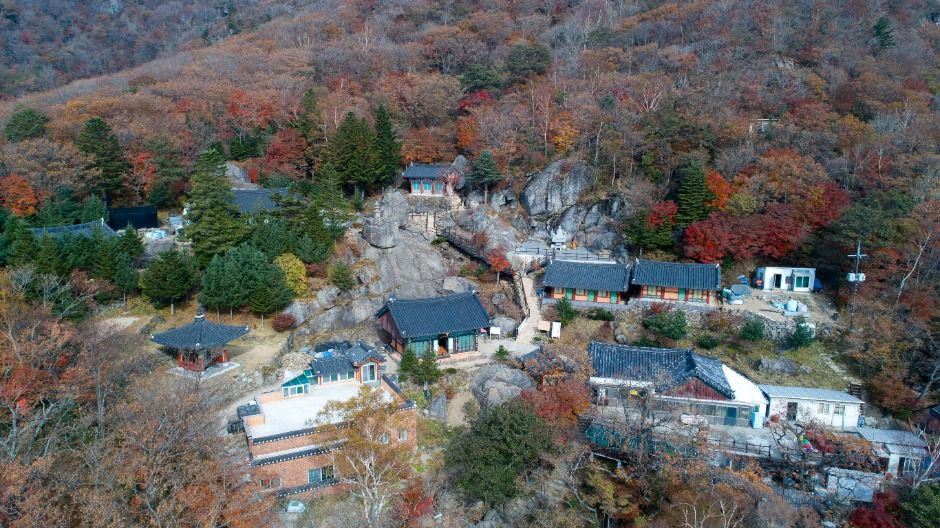
Beopgyesa Temple, said to have been founded by Master Yeon’gi in 544, once barely maintained its existence as a mere earthen cave, but has now regained its original monastic appearance with beautiful temple halls. What message might the Three-Story Stone Pagoda, which has silently held its place through such historical ups and downs, want to convey to us? Today, we begin a journey to discover this mysterious pagoda, imbued with the spirit of Jirisan and the breath of a thousand years.
A thousand years of tranquility embraced by Jirisan: Discovering the Three-Story Stone Pagoda of Beopgyesa Temple
Deep within the embrace of Jirisan, where all worldly worries are forgotten, Beopgyesa Temple, situated at an altitude of over 1,400m, is a wonder in itself. Upon arriving here, one cannot help but exclaim in awe at the sea of clouds and the majestic mountain landscape unfolding below. Although it boasts a long history, said to have been founded by Master Yeon’gi in 544, it carries the pain of having many parts destroyed during the Korean War, leaving only an earthen cave. However, with the recent rebuilding of its main hall, the temple has fully restored its appearance, and at its heart stands firmly the Three-Story Stone Pagoda of Beopgyesa Temple in Sancheong, presumed to be from the Goryeo Dynasty.
Why does a thousand-year-old pagoda stand here?
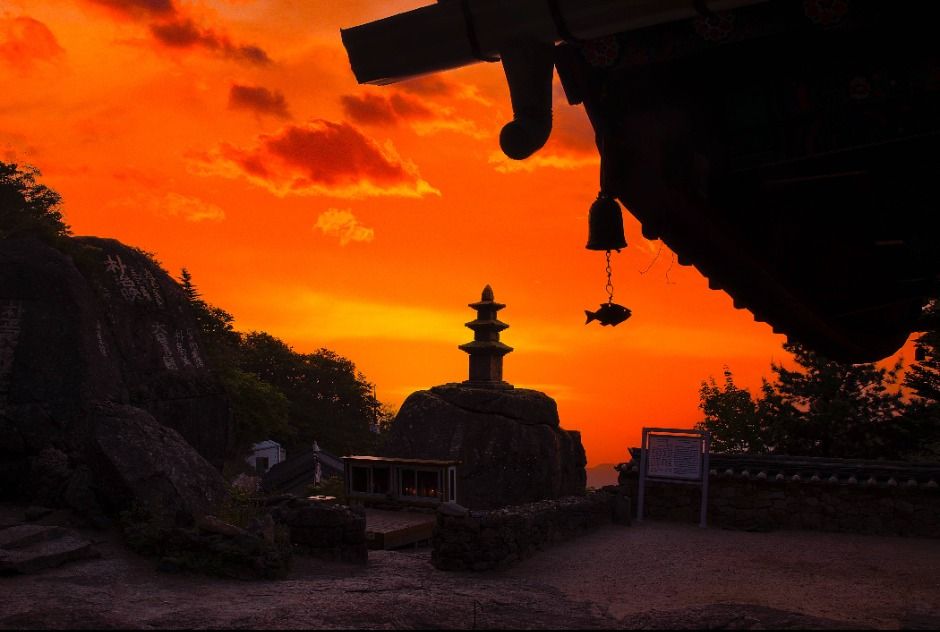
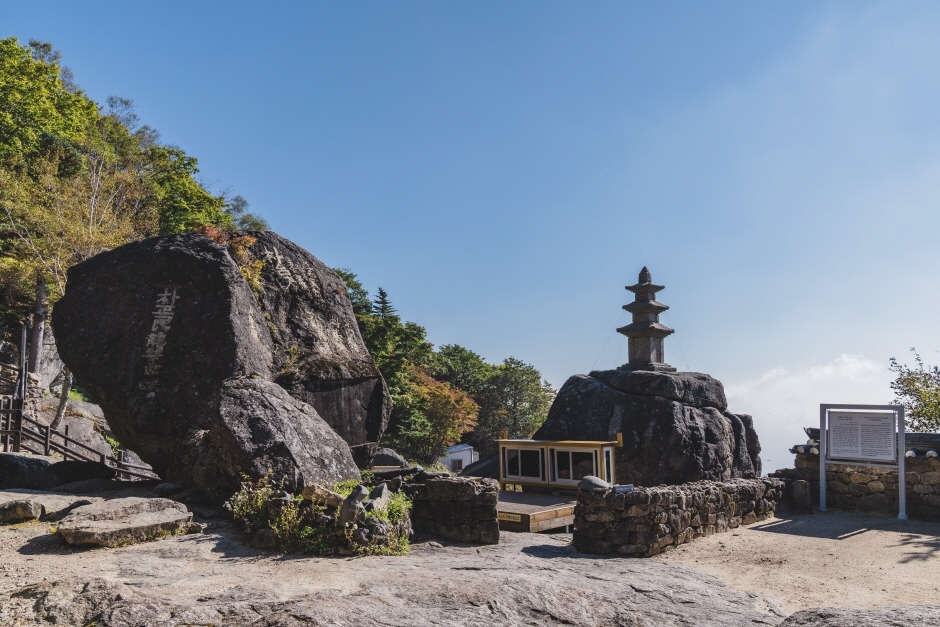
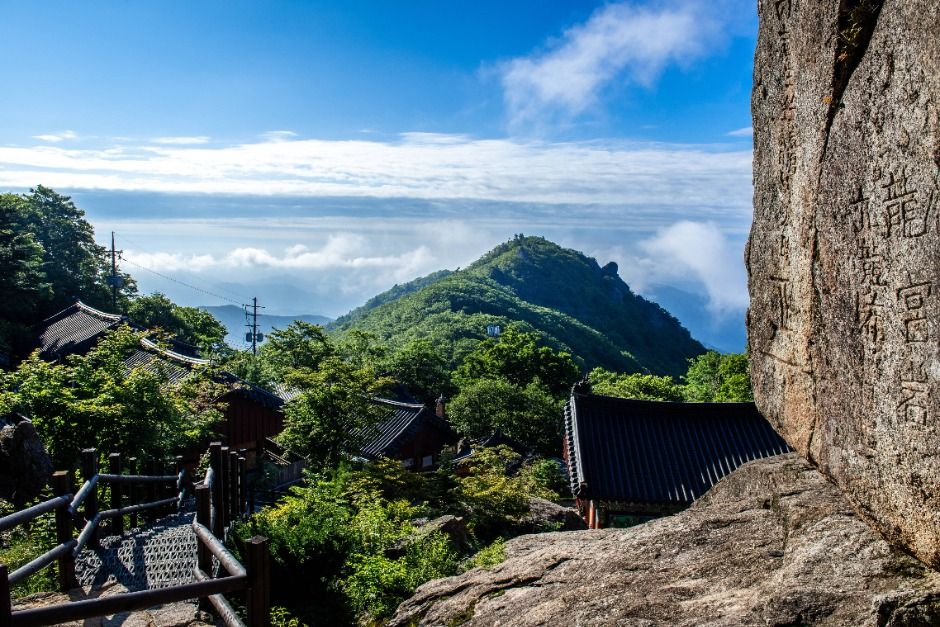
- Meaning of its Founding Master Yeon’gi likely established the temple here to realize the profound energy and sacredness of Jirisan and to propagate the Dharma. Since the name Beopgyesa itself means ‘World of Truth,’ its religious and spiritual significance is truly immense.
- Symbol of History Like the history of Beopgyesa Temple, which tenaciously survived the ravages of the Korean War, the Three-Story Stone Pagoda has also endured countless trials of time, telling us stories of the past today. Its rustic yet solid appearance offers a glimpse into the resilient spirit of our Goryeo Dynasty ancestors.
Traces of time bloomed on rock: The hidden story of the Three-Story Stone Pagoda
The Three-Story Stone Pagoda of Beopgyesa Temple stands majestically to the left of the main hall, as if rooted in the natural bedrock. While it appears to have a simple structure, a closer look reveals a unique Goryeo Dynasty aesthetic, distinct from Silla Dynasty stone pagoda styles. In particular, the use of natural rock as its foundation makes this pagoda even more special. Although pagodas using rocks as foundations became popular after the Silla period, cases where the lower stylobate (foundation) is handled so simply are very rare.
Pagoda’s structure and aesthetics, what should you look for?
Klook.com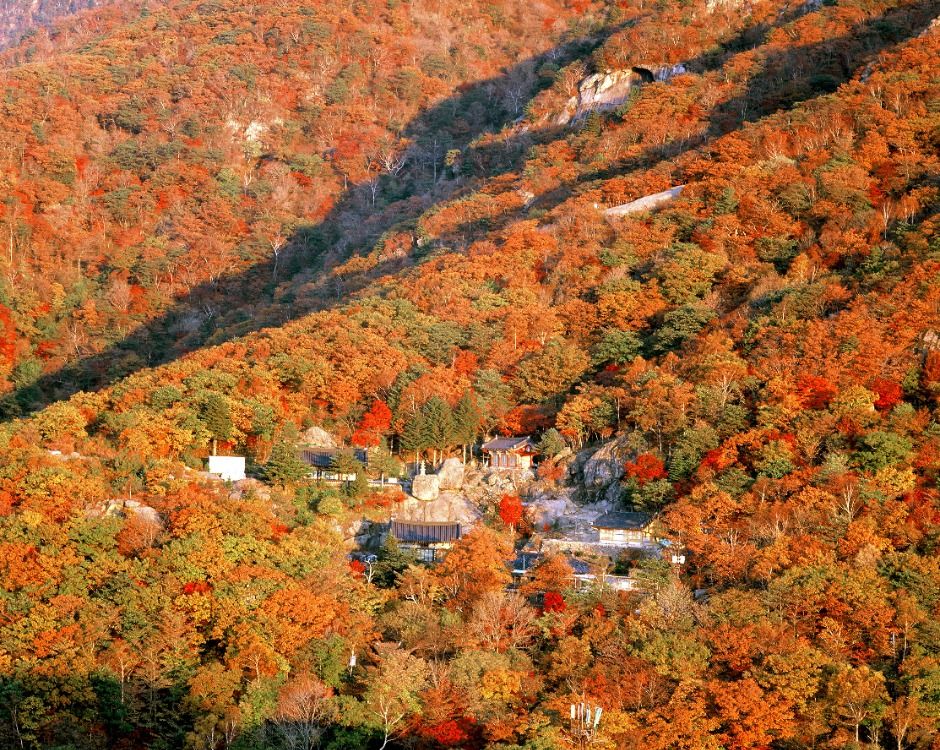
- Natural Bedrock Foundation The most significant feature is the use of surrounding rocks as the pagoda’s foundation. One can feel a unique harmony blending nature and artificial creation.
- Three-Story Stupa Body and Body Stones The stupa body consists of three stories, and each body stone and roof stone is crafted from a single piece of rock, boasting robustness. Broad pillars are carved into each corner of the body stones, creating a simple yet strong impression.
- Characteristics of the Roof Stones The roof stones of each story are somewhat thick, and their undersides clearly show three distinct steps. This provides a sense of stability while exuding a weighty presence.
- Secret of the Finial At the very top of the pagoda, there is a shell-shaped stone, which is presumed to have been added later. This small detail seems to tell another part of the pagoda’s history.
Reasons for its presumed Goryeo Dynasty origin
- Simplified Style Unlike the delicate and refined style of typical Silla stone pagodas, it presents a generally simplified and rustic impression. This aligns with the characteristics of stone pagoda styles that emerged in the Goryeo Dynasty after the Unified Silla period.
- Rock Foundation Treatment The simplified treatment of the lower foundation serves as an important clue, illustrating a change in style popular during the Goryeo Dynasty. It offers a glimpse into the architectural aesthetic of the time, which actively sought to utilize natural bedrock.
Beopgyesa Temple, a temple above the clouds: How to get there?
Located at an altitude of 1,400m, Beopgyesa Temple is the highest temple in Jirisan, and its accessibility is not easy. However, the sense of awe upon arrival is indescribable. When using public transportation, you can take a taxi or bus from the nearby Sancheong Terminal, but vehicle access to the entrance of Beopgyesa Temple is restricted, so hiking via the Jangteomok or Jungsanri courses is essential. The journey to encounter the Three-Story Stone Pagoda of Beopgyesa Temple in Sancheong is a magnificent hike in itself.
How to ascend along Jirisan’s hiking trails
- Jungsanri Course This is the most common route to visit Beopgyesa Temple, starting from the Jungsanri Exploration Center and ascending via Kalbawi and Sunduryu to Beopgyesa Temple. It takes approximately 3-4 hours and, while some sections are steep, it is well-maintained.
- Jangteomok Course This is part of Jirisan’s ridge traverse course, descending to Beopgyesa Temple after heading towards Cheonwangbong Peak from Jangteomok Shelter. It is more challenging than the Jungsanri Course but offers the advantage of fully appreciating Jirisan’s spectacular scenery.
- Using the Shuttle Bus (to Sunduryu) During specific periods, a shuttle bus operating from Jungsanri to Sunduryu is available. Utilizing this can reduce physical strain, allowing you to reach Beopgyesa Temple with approximately a 1.5-hour hike.
Below Cheonwangbong Peak, trails worth walking together
If you have visited Beopgyesa Temple and the Three-Story Stone Pagoda of Beopgyesa Temple in Sancheong, don’t miss the various attractions along the beautiful foothills of Jirisan. Jirisan adorns itself in different attire each season, offering visitors diverse landscapes. Even if you cannot reach the summit, the surrounding small valleys or hiking trails alone are enough to feel the grandeur of nature.
| Nearby Attractions | Features | Recommended Season |
|---|---|---|
| Jirisan Cheonwangbong Peak | Highest peak in mainland South Korea, magnificent sunrise and sea of clouds | Autumn foliage, winter snowscape (for experienced hikers) |
| Jangteomok Shelter | Key point on Jirisan’s ridge traverse trail, offers lodging and rest | All seasons (hiking essential) |
| Jungsanri Valley | Located at the entrance to Beopgyesa Temple, clear valley water and cool scenery | Summer (valley trekking) |
| Cheonwangsa Temple | A historic temple located in Jirisan, along with Beopgyesa Temple | Spring (new shoots), Autumn (foliage) |
The diverse charms of Beopgyesa Temple through the four seasons
- Spring This is the season when new shoots emerge in Jirisan and wild flowers bloom. You can enjoy the tranquility of Beopgyesa Temple while walking along mountain paths full of life’s energy.
- Summer This is the season when green forests are lush and cool stream water flows. It’s a great time to escape the heat, ascend to Beopgyesa Temple, and meditate with the cool breeze.
- Autumn This is the optimal time to appreciate the spectacular scenery of Jirisan, adorned with colorful autumn leaves. The path to the Three-Story Stone Pagoda of Beopgyesa Temple in Sancheong, winding through red-hued mountain trails, is like a painting.
- Winter While it’s a season of beautiful snowy landscapes, thorough preparation is necessary due to slippery trails and low temperatures. Beopgyesa Temple and the Three-Story Stone Pagoda, covered in white snow, create a mysterious and serene atmosphere.
Tips for a mystical journey: Preparing for your visit to the Three-Story Stone Pagoda of Beopgyesa Temple
The journey to the Three-Story Stone Pagoda of Beopgyesa Temple in Sancheong offers deep contemplation and challenge beyond mere sightseeing. As it is located on a high mountain, thorough preparation is necessary, and a mindset of respecting nature is important. Here are some tips to make this special experience safer and more meaningful.
Checklist to confirm before you leave
- Check Weather Information The weather in Jirisan’s high-altitude areas can change frequently. Be sure to check the meteorological agency’s forecast before departure and prepare warm and waterproof clothing.
- Hiking Gear Sturdy hiking boots, trekking poles, and a backpack are essential. Don’t forget to pack snacks, ample water, and emergency medication. Crampons and gaiters are a must in winter.
- Familiarize Yourself with Trail Information You should check the Jirisan National Park website in advance for trail openness and difficulty levels for each section, and choose a course that matches your physical condition.
- Time Planning Allow ample time for your round-trip hike and plan to descend before sunset. Since there are no accommodation facilities around Beopgyesa Temple, it is advisable to book lodging in advance for after your descent.
- Nature Protection You should take your trash back with you, stay on designated trails, and adopt an eco-friendly attitude to protect flora and fauna. As Beopgyesa Temple is a Buddhist temple, maintaining silence is a matter of etiquette.
The Three-Story Stone Pagoda of Beopgyesa Temple in Sancheong is more than just a relic; it is a place where the spirit of Jirisan and the breath of people from the Goryeo Dynasty live on. Although it’s not an easy journey, the tranquil temple and the silently standing stone pagoda you encounter at the end will surely leave a deep impression on your heart. We hope you will step away from your busy daily life for a moment and embark on this special experience that transcends a thousand years.
Frequently Asked Questions
Q1. In what era is the Three-Story Stone Pagoda of Beopgyesa Temple in Sancheong presumed to have been built?
Based on its simplified and rustic style, unlike typical Silla stone pagodas, and the simple treatment of the rock as its foundation, it is presumed to have been constructed during the Goryeo Dynasty.
Q2. How is Beopgyesa Temple said to have been built?
Beopgyesa Temple is a historic temple said to have been founded by Master Yeon’gi in 544. It was destroyed during the Korean War, leaving only an earthen cave, but has recently regained its original appearance with the construction of a new main hall.
Q3. Do I have to hike to visit Beopgyesa Temple?
Yes, Beopgyesa Temple is located on the mid-slope of Jirisan’s Cheonwangbong Peak and is not accessible by vehicle. Visits are only possible by hiking via the Jungsanri or Jangteomok courses, and during specific periods, a shuttle bus can be used from Jungsanri to Sunduryu.
Q4. What is the best season to visit the Three-Story Stone Pagoda of Beopgyesa Temple in Sancheong?
While all four seasons have their own charm, summer, when you can fully enjoy the green energy, and autumn, with its beautiful foliage, are particularly recommended. Winter’s snowy landscape is also magnificent, but thorough hiking preparation is required.
Q5. I heard that the finial part of the pagoda is special. What are its characteristics?
A shell-shaped stone is placed on the finial part of the pagoda, which is believed to have been added later. This is an interesting detail that suggests the pagoda’s long history and preservation process.
 Love Korea? Promote it & Earn.