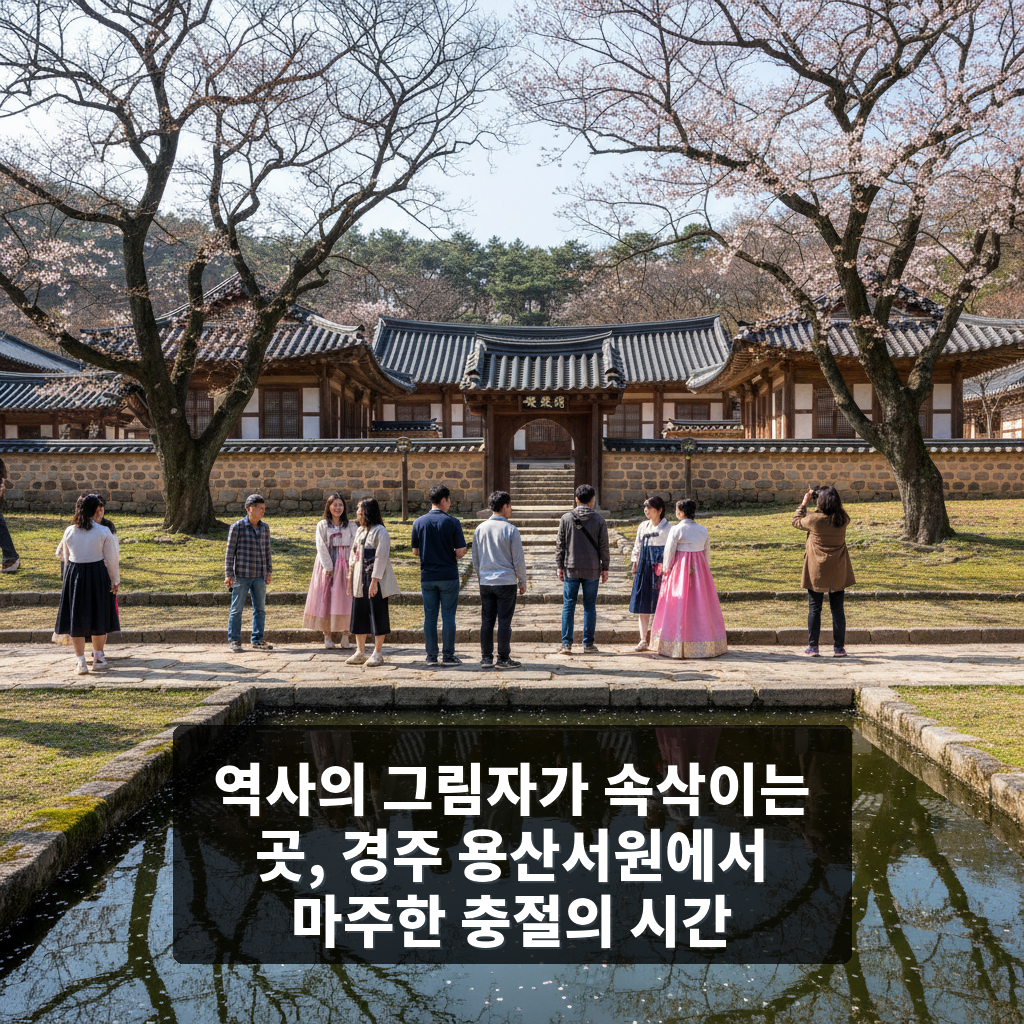
Where the shadows of history whisper, a time of loyalty encountered at Yongsan Seowon in Gyeongju


There is a place where the name of a forgotten hero is called out once again. It is Yongsan Seowon in Gyeongju, where the story of a figure who wholeheartedly navigated Joseon’s tumultuous period centuries ago still breathes. This is not just an old building, but a living educational site that awakens the unchanging values of loyalty and integrity amidst the waves of history.
Indeed, how many great figures from the past do we remember? General Jeongmugong Choi Jin-rip, a military official born in Hyeonkok-myeon, Gyeongju, who participated in three major wars—the Imjin War, the Jeongyujaeran, and the Byeongja Horan—and defended his country. Yongsan Seowon, built to honor his noble spirit, is as quiet as if time has stopped, but within it, stories of the general’s fervent blood and sweat continuously flow.
Shall we now embark on a journey into the deep history of Yongsan Seowon (Gyeongju) to discover messages that transcend time?
An Echo Beyond Time, the Story Preserved by Yongsan Seowon (Gyeongju)
Yongsan Seowon (Gyeongju) is a place dedicated to honoring Jeongmugong Choi Jin-rip, a military official of the mid-Joseon Dynasty. In the 25th year of Sukjong’s reign (1699), Gyeongju governor Lee Hyeong-sang gathered local scholars to establish it, beginning the veneration of the general’s noble spirit. Within the quiet walls of the seowon lies the fervent loyalty of a warrior who readily sacrificed himself in the face of national crisis. General Choi Jin-rip was born in what is now Hyeonkok-myeon, Gyeongju. During the Imjin War, he raised an righteous army with his younger brother Choi Gye-jong, and during the Jeongyujaeran, he achieved great merit alongside General Gwon Yul in the Battle of Seosaengpo in Ulsan. His bravery and loyalty serve as an enduring example that never fades with time.
Meet General Choi Jin-rip, an Icon of Loyalty
- Birthplace: A local hero born in Hyeonkok-myeon, Gyeongju.
- Imjin War: Raised an righteous army with his younger brother Choi Gye-jong to defend the nation.
- Jeongyujaeran: Achieved distinguished merit alongside General Gwon Yul in the Battle of Seosaengpo in Ulsan.
- Byeongja Horan: Fought and died a martyr’s death in Heomcheon, Yongin, dedicating himself to the nation until the very end.
- Posthumous Promotion: Posthumously promoted to Jahaendaebu Byeongjo Panseo (Minister of War) and recognized for his integrity, recorded as a ‘cheongbaekri’ (incorruptible official).
The general’s life was solely dedicated to the nation and its people, and this spirit is why Yongsan Seowon exists and an important message it conveys to us today.
From Sungnyeolsau to the Seowon Abolition Edict: Walking Through Turbulent Times
Yongsan Seowon did not have its current form from the beginning. In the 37th year of Sukjong’s reign (1711), it was granted the plaque ‘Sungnyeolsau’ by the king, achieving the status of a ‘sa-aek seowon’ (a private academy bestowed with a royal charter). This was a significant event where the state officially recognized General Choi Jin-rip’s loyalty and empowered the role of the seowon. Subsequently, it was promoted to a seowon, establishing itself as a center for local education and a place to honor virtuous scholars.
Seowon: The Ups and Downs of History Hidden Behind Its Name
- 25th year of Sukjong’s reign (1699): Established by Gyeongju governor Lee Hyeong-sang and local scholars to enshrine General Choi Jin-rip.
- 37th year of Sukjong’s reign (1711): Granted the plaque ‘Sungnyeolsau’ by the king and promoted to a seowon.
- 7th year of Gojong’s reign (1870): Sadly experienced the misfortune of being demolished due to Heungseon Daewongun’s Seowon Abolition Edict.
- 1924: Rebuilt through the efforts of local Confucian scholars and restored to its present form.
These historical twists and turns show how strong the will was to preserve the spirit of the virtuous ancestors, making Yongsan Seowon more than just a memorial space, even amidst turbulent times. The earnest desire to rise again from ruins is what made today’s Yongsan Seowon possible.
Yongsan Seowon (Gyeongju): How to Get There? Directions to a Place of History
Yongsan Seowon is peacefully situated amidst the beautiful nature of Gyeongju. The way to get there is not complicated, so prepare to embark on a historical journey with ease. It is not far from Gyeongju’s main tourist attractions, making it good to visit in conjunction with other famous spots. A short distance to the southwest of the seowon is General Choi Jin-rip’s sindobigak (stele pavilion), so you can visit both to gain a deeper understanding of the general’s life.
From Gyeongju City Center to Yongsan Seowon: The Start of Your Journey
If using a private car, it is convenient to search for ‘Gyeongju Yongsan Seowon’ on your navigation system. While there isn’t a large parking lot, there are spaces available for roadside parking nearby. When using public transportation, you should check Gyeongju city bus routes, alight at the nearest stop, and then walk. As it is located in a somewhat secluded area, it is advisable to check transportation options in advance of your visit.
Around Yongsan Seowon (Gyeongju): Gyeongju’s Unforgettable Hidden Charms
If you visit Yongsan Seowon (Gyeongju), we recommend exploring other nearby attractions to experience Gyeongju’s history and nature more deeply. While the seowon itself is a quiet and contemplative place, there are various historical sites in the vicinity, including General Choi Jin-rip’s sindobigak, which holds traces of his life.
Gyeongju Historical Sites Worth Visiting Together
- General Choi Jin-rip’s Sindobigak: Located a short distance southwest of Yongsan Seowon. You can trace his footsteps through the stele inscribed with his life story.
- Hyeonkok-myeon area, Gyeongju: General Choi Jin-rip’s hometown, where you can find small villages and feel the atmosphere that holds traces of the general.
- Dongnakdang: The old residence of the Gyeongju Choi family, descendants of General Choi Jin-rip, offering an opportunity to glimpse the history and culture of the Gyeongju Choi clan along with your seowon visit.
Comparison of Yongsan Seowon and Nearby Attractions
| Attraction | Key Features | Distance from Yongsan Seowon (Approx.) |
|---|---|---|
| Yongsan Seowon | General Choi Jin-rip Memorial and Educational Space | Reference Point |
| Sindobigak (Stele Pavilion) | Records of General Choi Jin-rip’s Life, southwest vicinity | Within 5 minutes walk |
| Dongnakdang | Old residence of the wealthy Choi family of Gyeongju, experience history and tradition | Approx. 10 minutes by car |
| Gyeongju Museum | Silla historical relics, in-depth history learning | Approx. 20 minutes by car |
As such, around Yongsan Seowon, there are many places not only imbued with the general’s spirit but also where you can experience Gyeongju’s deep history and culture, so plan your own relaxed itinerary.
Advice for Time Travelers: Tips for Visiting Yongsan Seowon (Gyeongju)
Yongsan Seowon (Gyeongju) is not a bustling tourist destination but a place where you can calmly appreciate the depth of history. Its biggest charm is probably the quiet and contemplative atmosphere, as it doesn’t attract many visitors. Here, take a moment to slow down from the modern pace and quietly reflect on the wisdom and loyalty of ancient sages.
Quiet Time for Contemplation: How to Enjoy Yongsan Seowon 100 Times More
- Check operating hours: There is no separate admission fee, but the gates might be closed, so it’s advisable to check the opening hours before your visit.
- Maintain silence: As it is a solemn memorial space, it is important to observe quietly and show respect.
- Photography: Capture the beauty of the architecture and the tranquil scenery, but be mindful not to disturb other visitors.
- Explore the surroundings: Visit connected attractions like the Sindobigak to gain a comprehensive understanding of General Choi Jin-rip’s life.
- Seasonal charm: The green vibrancy in spring and autumn foliage add depth to the seowon’s scenery, so it’s also good to experience the seasonal changes.
Gyeongju’s Yongsan Seowon is not merely a place to observe old buildings. It is a historical educational site where the spirit of loyalty and integrity of General Choi Jin-rip, who steadfastly defended the nation amidst the brutal realities of the Imjin War and the Byeongja Horan, still breathes. Feel the wisdom of the ancestors imbued in every quiet corner of the seowon, and take a meaningful moment to reflect once more on the preciousness of the peaceful daily life granted to us. Complete your own special Gyeongju trip in this place filled with the breath of history.
Frequently Asked Questions
Q1. Who is Yongsan Seowon (Gyeongju) dedicated to?
Yongsan Seowon is a place dedicated to Jeongmugong Choi Jin-rip, a military official of the mid-Joseon Dynasty. The general participated in three major wars, including the Imjin War, Jeongyujaeran, and Byeongja Horan, defending the nation before dying a martyr’s death.
Q2. What are the major historical events of Yongsan Seowon (Gyeongju)?
It was established in the 25th year of Sukjong’s reign (1699) and promoted to a seowon in the 37th year of Sukjong’s reign (1711) when it was granted the plaque ‘Sungnyeolsau’. It experienced a turbulent history, including its demolition in the 7th year of Gojong’s reign (1870) due to the Seowon Abolition Edict, and its reconstruction in 1924.
Q3. Are there other places worth visiting near Yongsan Seowon (Gyeongju)?
Yes, General Choi Jin-rip’s Sindobigak is located a short distance southwest of the seowon. It is also good to visit in conjunction with other historical sites, such as Dongnakdang, the old residence of the wealthy Choi family of Gyeongju, descendants of General Choi Jin-rip.
Q4. Is there an admission fee to visit Yongsan Seowon (Gyeongju)?
Yongsan Seowon (Gyeongju) does not charge a separate admission fee. You can visit for free, but it’s advisable to check the opening hours before your visit to avoid a wasted trip.
Q5. What achievements did General Choi Jin-rip make?
General Choi Jin-rip raised an righteous army during the Imjin War and achieved merit alongside General Gwon Yul in the Battle of Seosaengpo in Ulsan during the Jeongyujaeran. He died a martyr’s death fighting in Heomcheon, Yongin, during the Byeongja Horan, and was posthumously promoted to Byeongjo Panseo and recorded as an incorruptible official, embodying both loyalty and integrity.