
Ganghwa Stone Sluice Gate: A witness to Ganghwa’s history, carved into a 300-year waterway


Below Dongnakcheon Stream in Ganghwa-eup, there stands an old sluice gate that has silently endured the weight of over 300 years. This sturdy stone bridge is more than just a structure; it fully embraces the deep history of Ganghwa.
Today, we embark on a journey to discover the hidden story of Ganghwa Seoksumun, which has firmly held its ground even through the flowing tides of time. What secrets does this sluice gate hold?
Guardian of the Waterway that has Crossed Turbulent Times
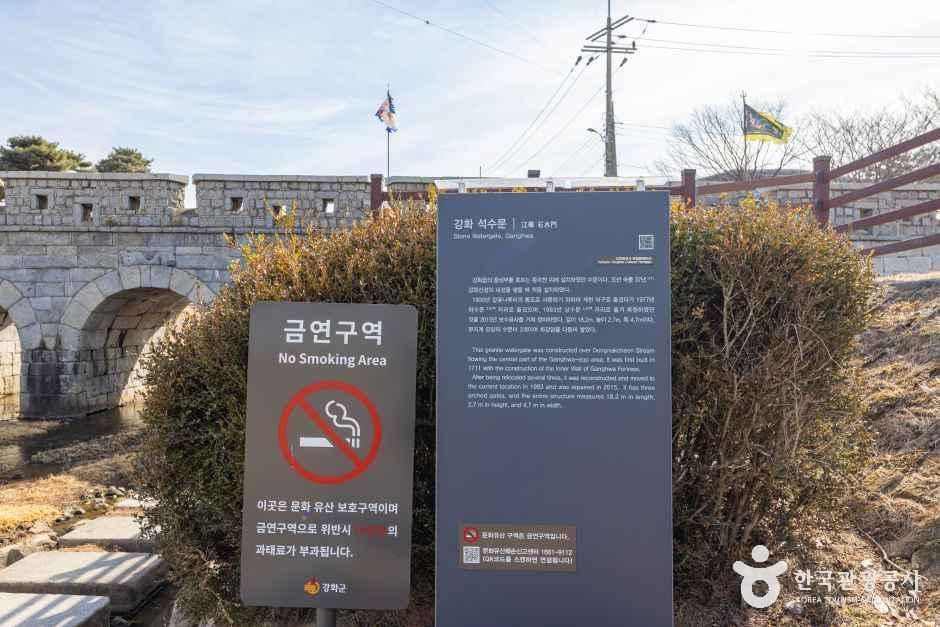
In 1711, the 37th year of King Sukjong of Joseon, this sluice gate, first installed at Dongnakcheon Stream during the construction of the inner fortress Ganghwasanseong, was an important facility in the defense system at the time. It served to control the waterway and complement the mountain fortress.
Since then, the sluice gate has undergone two relocations amidst turbulent times. It was moved to the Gapgot Ferry passageway in 1900, and then restored to its current location in 1977, silently representing Ganghwa’s history.
Solid Aesthetics Carved in Granite
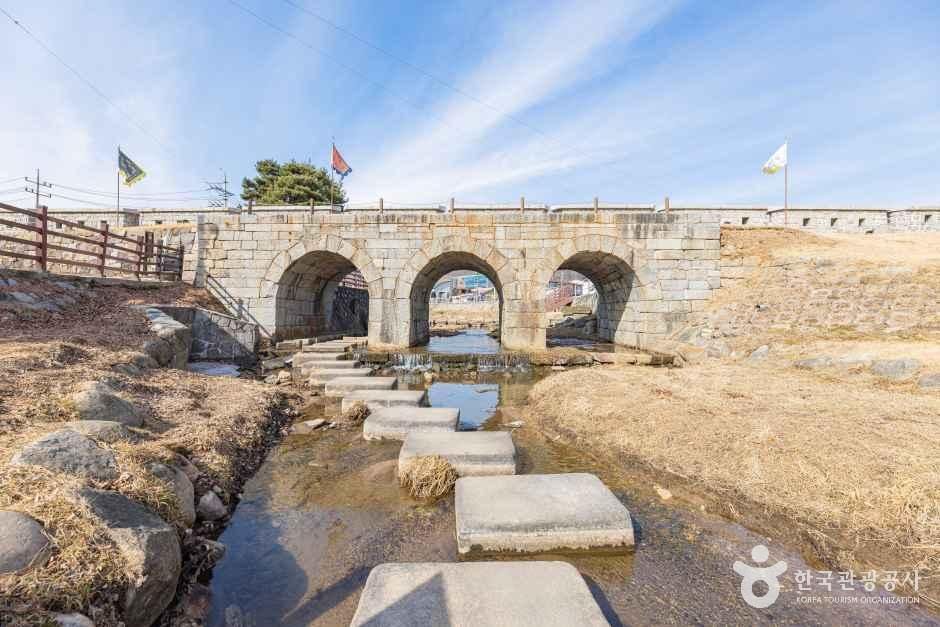
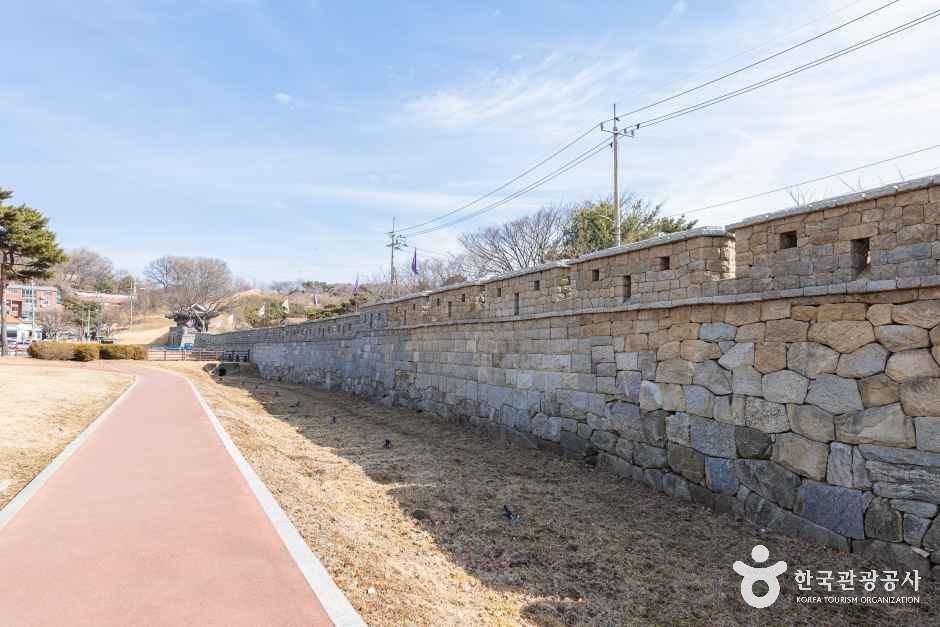
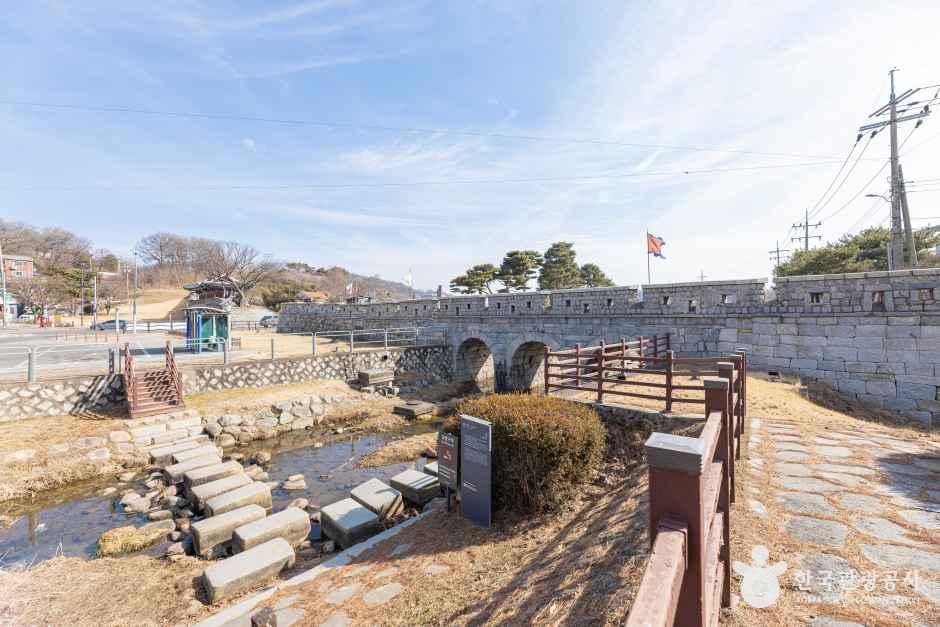
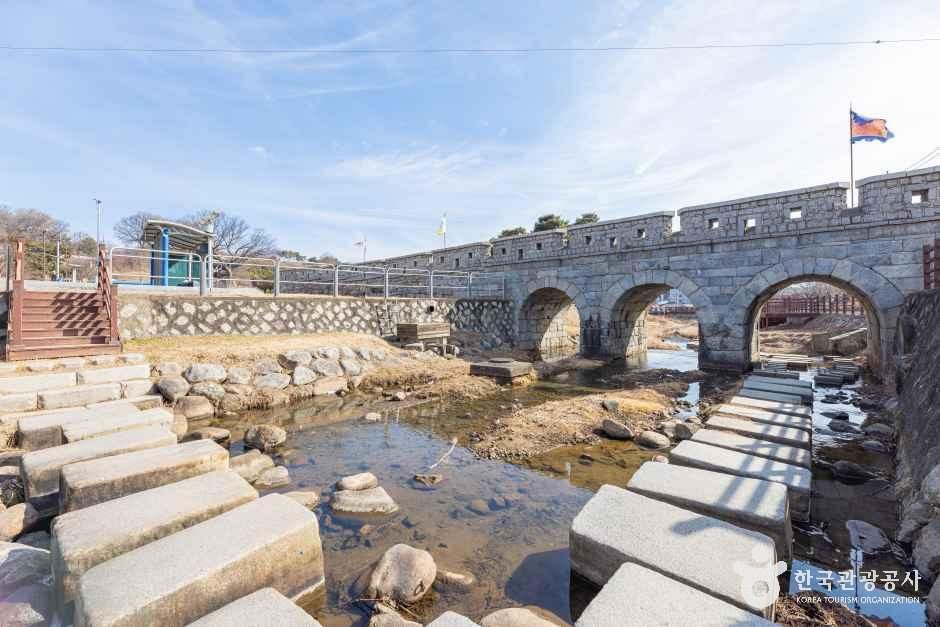
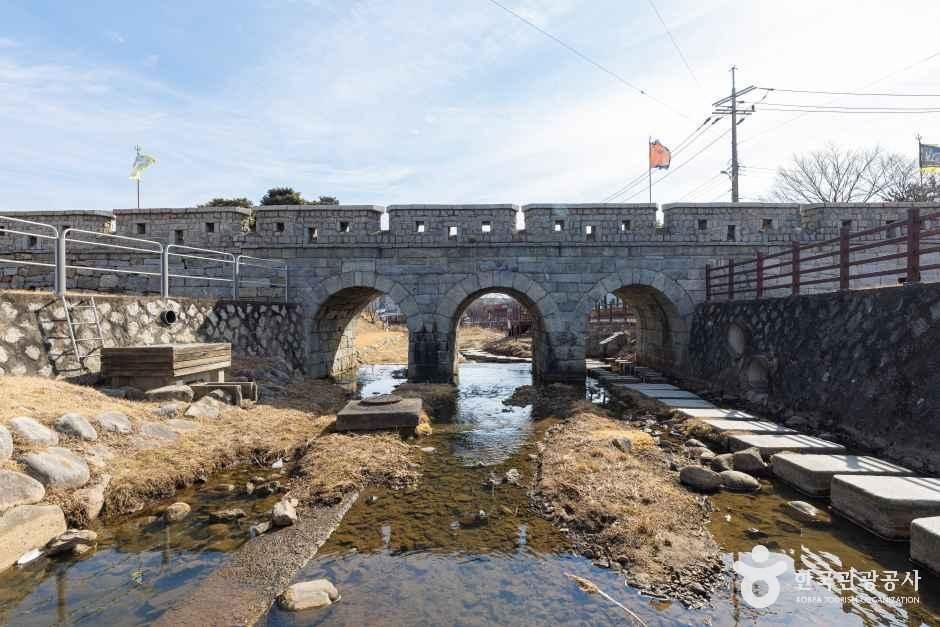
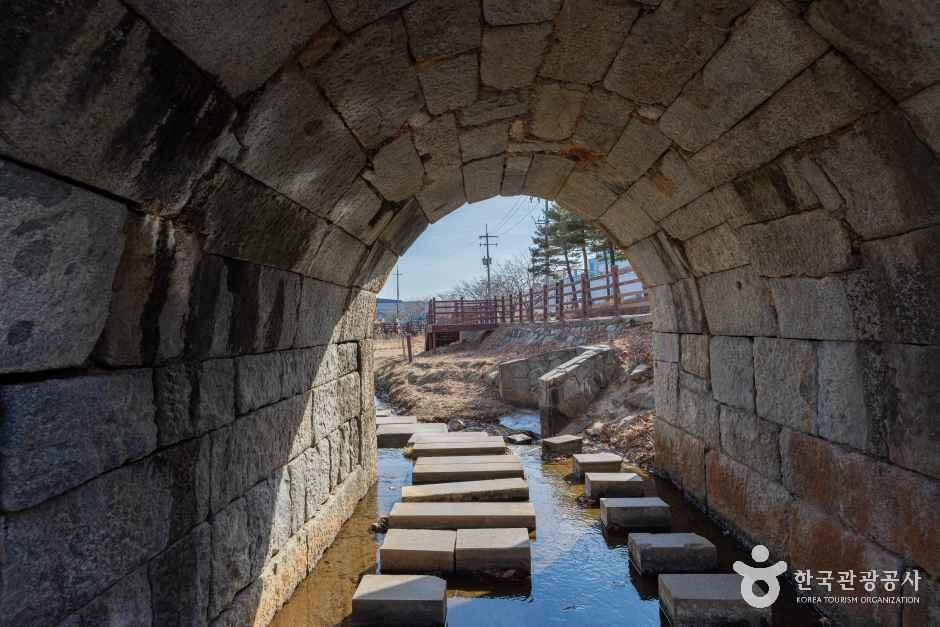
Ganghwa Seoksumun measures 18.2m in length, 2.7m in height, and 4.7m in width. It features three rainbow-shaped arched sluice gates, and from the precisely cut and stacked granite, one can glimpse the wisdom and engineering skills of our ancestors.
History Encountered in the Heart of Ganghwa-eup, A Journey to Find Seoksumun
Ganghwa Seoksumun, located above Dongnakcheon Stream in Ganghwa-eup, is situated in the heart of Ganghwa-eup, making it easily accessible for public transport users.
History at Every Step, Directions to Seoksumun
Ganghwa-eup has good accessibility as it is close to the bus terminal, and paid parking facilities are well-provided nearby. It is also recommended to enjoy the surrounding scenery while walking.
Where Past and Present Coexist, Seoksumun Interconnected Courses
Historical Attractions in Ganghwa-eup Worth Visiting Together
- Goryeogungji: The site of the Goryeo royal palace, which was the center of resistance against the Mongol invasion after the capital was moved to Ganghwa Island.
- Yongheunggung: The former residence where King Cheoljong of Joseon lived before ascending to the throne, where you can feel the simple yet beautiful aesthetics of Hanok.
- Ganghwa Cathedral: A unique and beautiful cathedral that combines Hanok architectural style with Western church building techniques.
Seoksumun, How to Enjoy the Value Beyond a Simple Stone Bridge
- Prepare Historical Background: If you learn about the sluice gate’s 300-year history before your visit, it will feel like a living history book, not just a simple facility.
- Enjoy a leisurely walk: Walk along the promenade built along Dongnakcheon Stream and feel the charm of Ganghwa-eup blended with the tranquil scenery.
- Appreciate Scenery at Different Times: The sight of the sunset glow falling upon the sluice gate is especially beautiful. If you want to capture special photos, this time is recommended.
Frequently Asked Questions
Q1. When was Ganghwa Seoksumun first built?
Ganghwa Seoksumun was first installed on Dongnakcheon Stream in 1711, the 37th year of King Sukjong of Joseon, during the construction of the inner fortress of Ganghwa Sanseong. It is a historic structure with over 300 years of history.
Q2. Is the current location of Ganghwa Seoksumun where it was first built?
No. After its initial installation at Dongnakcheon Stream, it was moved to Gapgot Ferry in 1900 and then restored to its current location in 1977. It has a history of being relocated several times.
Q3. What are the distinctive features of Ganghwa Seoksumun?
It measures 18.2m in length, 2.7m in height, and 4.7m in width, featuring three impressive rainbow-shaped arched sluice gates precisely carved and stacked from granite. It boasts both robustness and aesthetic beauty.
Q4. Is there an admission fee to visit Ganghwa Seoksumun?
Ganghwa Seoksumun is located in an open space and can be freely viewed without a separate admission fee. You can comfortably visit anytime to experience the history of Ganghwa.
Q5. What are some recommended attractions near Ganghwa Seoksumun to visit?
There are many historically significant attractions nearby, such as Goryeogungji, Yongheunggung, and Ganghwa Cathedral. They are all within walking distance, so visiting them together will make your trip even more fulfilling.