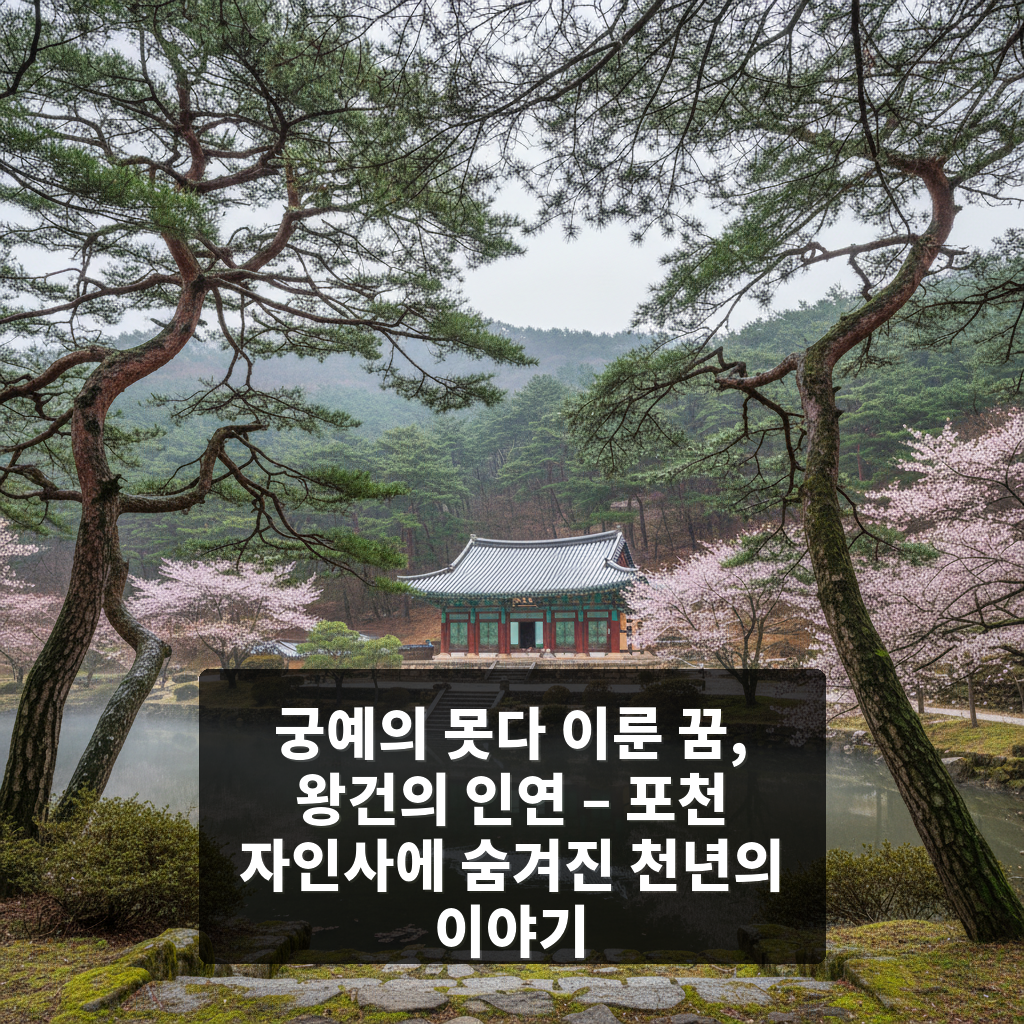
Gung Ye’s unfulfilled dream, Wang Geon’s destiny – a thousand-year story hidden in Pocheon Jain-sa


Would you believe that a page of history, a dramatic moment that shaped the fate of the Korean Peninsula, is carved in stone and wood? Deeply nestled in the foothills of Myeongseongsan in Pocheon, Gyeonggi Province, Jainsa (Pocheon) is more than just a temple; it is a mysterious place where the intertwined destinies of King Gung Ye of Taebong and King Wang Geon of Goryeo, and their unfulfilled wishes from a thousand years ago, are fully enshrined. The moment you step inside, time seems to stop, and the voices of the past echo in the tranquil mountain temple air.
Jainsa, whose very name holds a deep narrative, is said to have been born from the ‘Ja’ (慈) of the Maitreya world Gung Ye dreamed of, and the ‘In’ (仁) wishing for reconciliation with Wang Geon. Where in Jainsa are the Story of these two great figures hidden? Let’s follow their hidden stories now.
An Invitation into Legend: The Shadows of Gung Ye and Wang Geon Embodied in Jainsa (Pocheon)
The origins of Jainsa (Pocheon) trace back to its founding by Monk Kim Sang-su (Dharma name Haegong) in Myeongnyun-dong, Jongno, Seoul. Later, in 1964, it moved to its current location in Sanjeong-ri, Yeongbuk-myeon, Pocheon, Gyeonggi Province, beginning a new chapter in its history. Notably, it established itself as a renowned Buddhist sanctuary by creating a magnificent plaster Maitreya Buddha statue, approximately 5.4m (18 cheok) tall.
The name of this temple, ‘Jainsa’, holds an even deeper meaning. It is said to be a combination of ‘Ja’ (慈), symbolizing King Gung Ye’s Maitreya world, and ‘In’ (仁), wishing for reconciliation between Gung Ye and Wang Geon, even if only in the spiritual realm. Just the name itself vividly conveys the story of these two figures who experienced tragic fates a thousand years ago. Monk Jeong Yeong-do completed its current appearance by constructing the Geukrakbojeon Hall in 1993 and the Seated Maitreya Buddha in 1998.
Jaetteobawi Rock: Wang Geon’s Footprints Hidden There
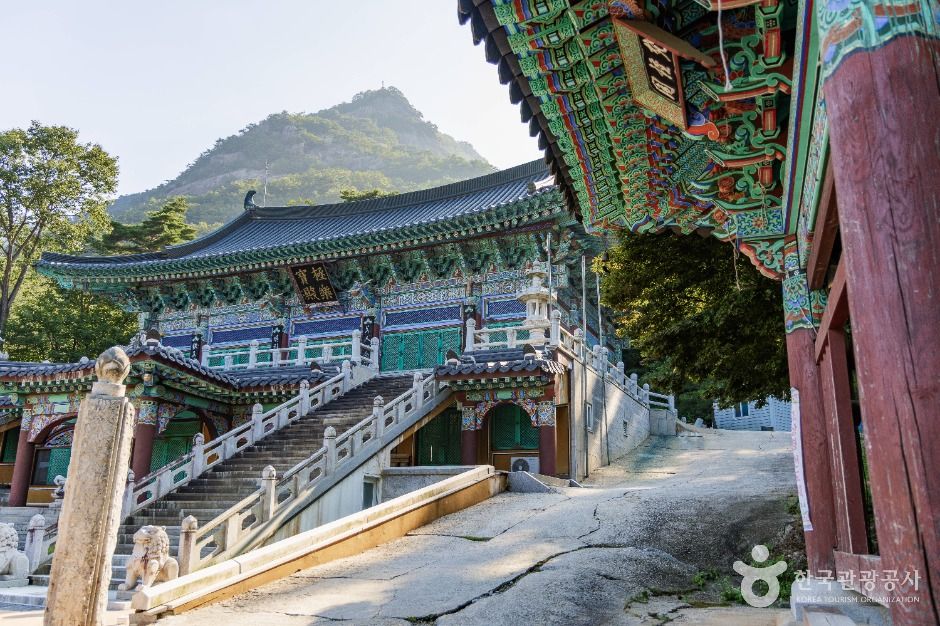
At the entrance to Jainsa’s temple grounds, there is a special rock called ‘Jaetteobawi Rock’. Legend has it that in 905 AD, when Wang Geon was a subordinate of King Gung Ye of Taebong, he performed a ritual here, offering incense and praying for victory before departing to attack Geumseong (present-day Naju) of Later Baekje at King Gung Ye’s command. It is as if the pivotal moment when the intertwined destinies of Gung Ye and Wang Geon began is etched right here, on Jaetteobawi Rock. This rock is also known as a symbol of good fortune, drawing a constant stream of visitors.
The Peaceful Scenery Embraced by Myeongseongsan and Sanjeonghosu Lake
Jainsa (Pocheon) is situated at the foot of Myeongseongsan, the mountain behind Sanjeonghosu Lake, boasting beautiful natural scenery throughout the four seasons. Passing through the Iljumun Gate and entering the temple grounds, visitors are greeted by a large monastic living quarter with a modern building, where they can feel the tranquility of the mountain temple in its serene atmosphere.
Chaekbawi Rock, a Marvelous Scenic View Forged by Nature
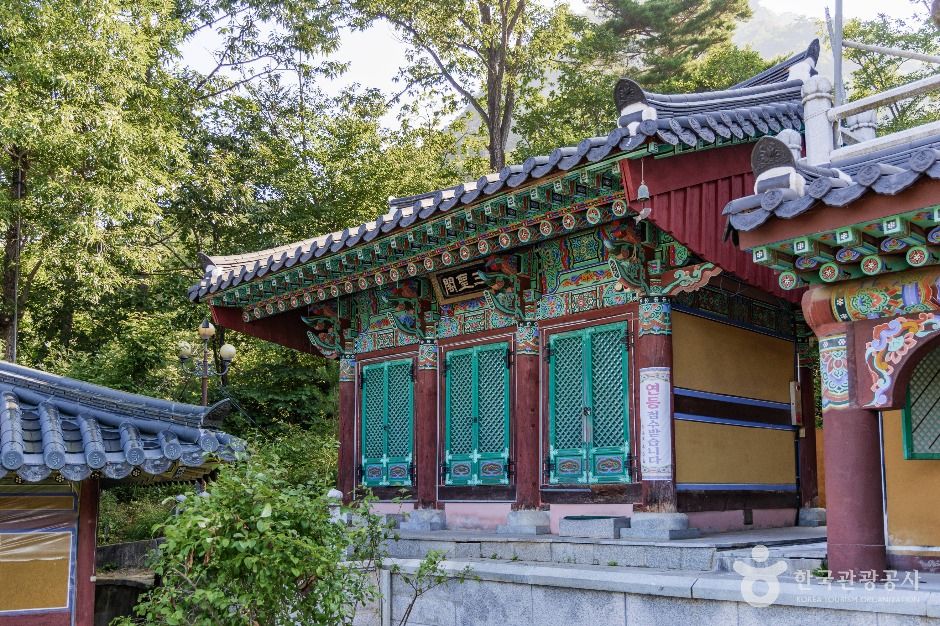
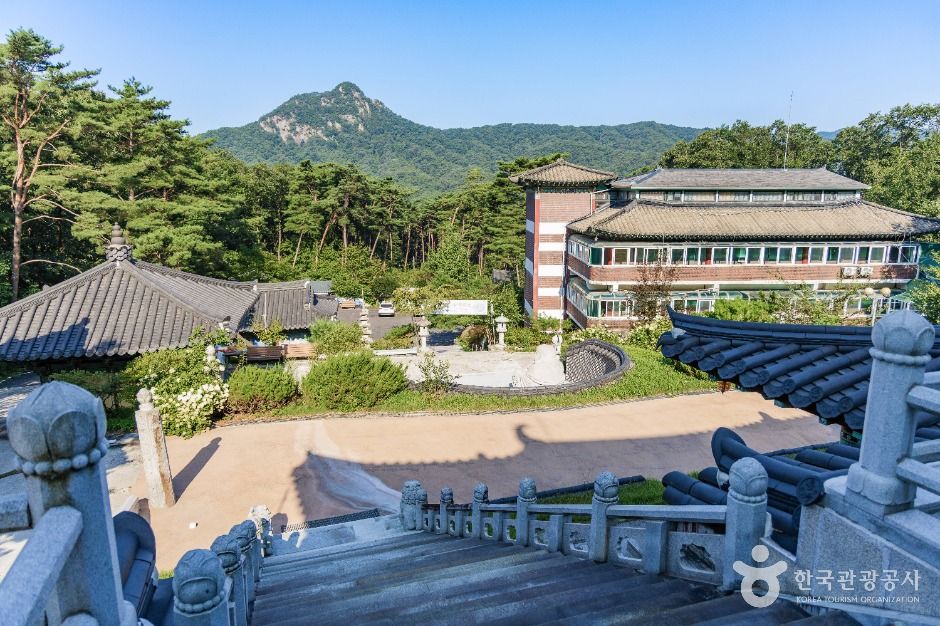
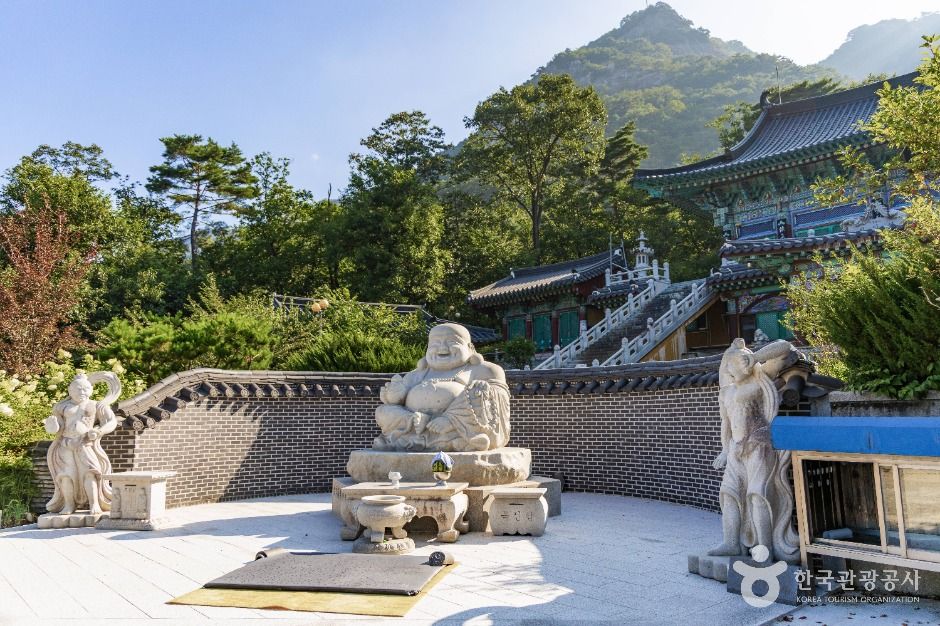
Especially behind the Geukrakbojeon Hall, ‘Chaekbawi Rock’ creates a magnificent sight, resembling a giant open book. This strangely shaped rock, forged by nature over hundreds of millions of years, is one of the important attractions that adds to the mystique of Jainsa (Pocheon). With Chaekbawi Rock in the background, the serene temple scenery evokes a landscape painting.
Halls that Bring Peace of Mind
- Geukrakbojeon Hall The central Dharma hall of Jainsa, enshrining Amitabha Buddha.
- Yaksajeon Hall A hall enshrining the Medicine Buddha, who saves sentient beings suffering from illness.
- Gwaneumjeon Hall Enshrining Avalokiteshvara Bodhisattva, who observes the suffering of sentient beings with a compassionate heart.
- Samseonggak Shrine A shrine dedicated to the three saints of indigenous beliefs: Sansin, Chilseong, and Dokseong.
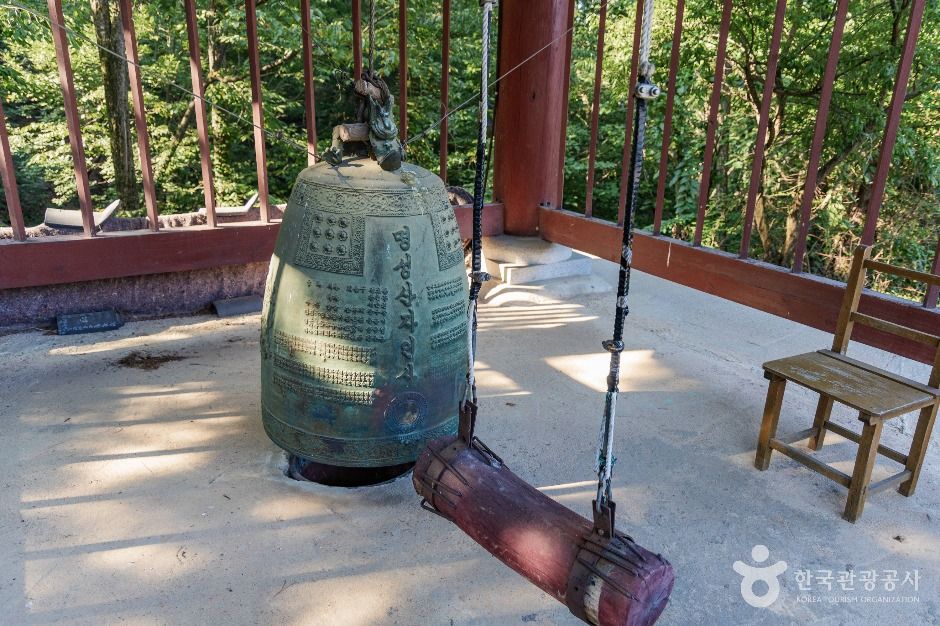
- Jonggak Pavilion Houses a Dharma drum and a temple bell, used in Buddhist ceremonies.
A Journey to Find Peace of Mind – Jainsa (Pocheon) Visitor Information
Jainsa (Pocheon), where you can simultaneously experience the serene atmosphere of a mountain temple and its historical significance, will be the perfect travel destination for those who wish to escape their busy daily lives and rest for a while.
Jainsa, located at 71 Sanjeong-ri, Yeongbuk-myeon, Pocheon, Gyeonggi Province, is most conveniently accessed by car, and you can enjoy a richer travel experience by visiting in conjunction with Sanjeonghosu Lake. When using public transportation, you can take a bus towards Sanjeonghosu Lake from Pocheon Intercity Bus Terminal, then walk or take a taxi.
Special Tips for Travelers
- Enjoy the Natural Scenery As it is located in the foothills of Myeongseongsan, you can enjoy different landscapes throughout the four seasons. It is especially beautiful during the autumn foliage season.
- Connect with Nearby Tourist Attractions Sanjeonghosu Lake is right below Jainsa, making it a great place to visit together. A walk along the Sanjeonghosu Lake trail is a must-do course.
- Enjoy the Tranquility The temple itself has a serene atmosphere, so take a quiet stroll and immerse yourself in contemplation. Reflecting on the meaning of each hall is also recommended.
- Photo Spot Chaekbawi Rock, the Maitreya Buddha, and the antique halls make excellent backdrops for photos. Capture beautiful moments with your camera.
- Consider Visiting Hours Temples are usually open from sunrise to sunset, but it’s best to check the exact operating hours before visiting. Admission is free.
Frequently Asked Questions
Q1. Which historical figures are associated with Jainsa (Pocheon)?
Jainsa is a place imbued with the legends of King Gung Ye of Taebong and King Wang Geon of Goryeo. The temple’s name is also said to embody the meaning of Gung Ye’s Maitreya world and a wish for reconciliation with Wang Geon. In particular, it is said that Jaetteobawi Rock within the temple grounds is where Wang Geon performed a ritual before departing for battle at Gung Ye’s command.
Q2. What are the main attractions at Jainsa?
The main attractions are the approximately 5.4m tall plaster Maitreya Buddha, Chaekbawi Rock behind Geukrakbojeon Hall which resembles an open book, and Jaetteobawi Rock. Various other halls such as Yaksajeon, Gwaneumjeon, Samseonggak, and Jonggak also possess their unique beauty.
Q3. Are there any nearby places worth visiting with Jainsa?
Yes, Jainsa is located in the foothills of Myeongseongsan, the mountain behind Sanjeonghosu Lake, making it a great place to visit along with Sanjeonghosu Lake. Linked tourism is convenient, such as walking along the Sanjeonghosu Lake trail or relaxing at nearby cafes.
Q4. What is the meaning of the name Jainsa?
The ‘Ja’ (慈) in Jainsa is said to represent the Maitreya world King Gung Ye dreamed of, and the ‘In’ (仁) is said to represent a wish for reconciliation between Gung Ye and Wang Geon, even if only in the spiritual realm. It is a name with deep historical significance.
Q5. Are there any specific precautions to take when visiting Jainsa?
As a temple is a space for prayer and spiritual practice, it is advisable to maintain silence and wear modest attire. To prevent damage to cultural assets, cooking or smoking outside designated areas is prohibited. Please cooperate with nature conservation, such as taking your personal trash with you.