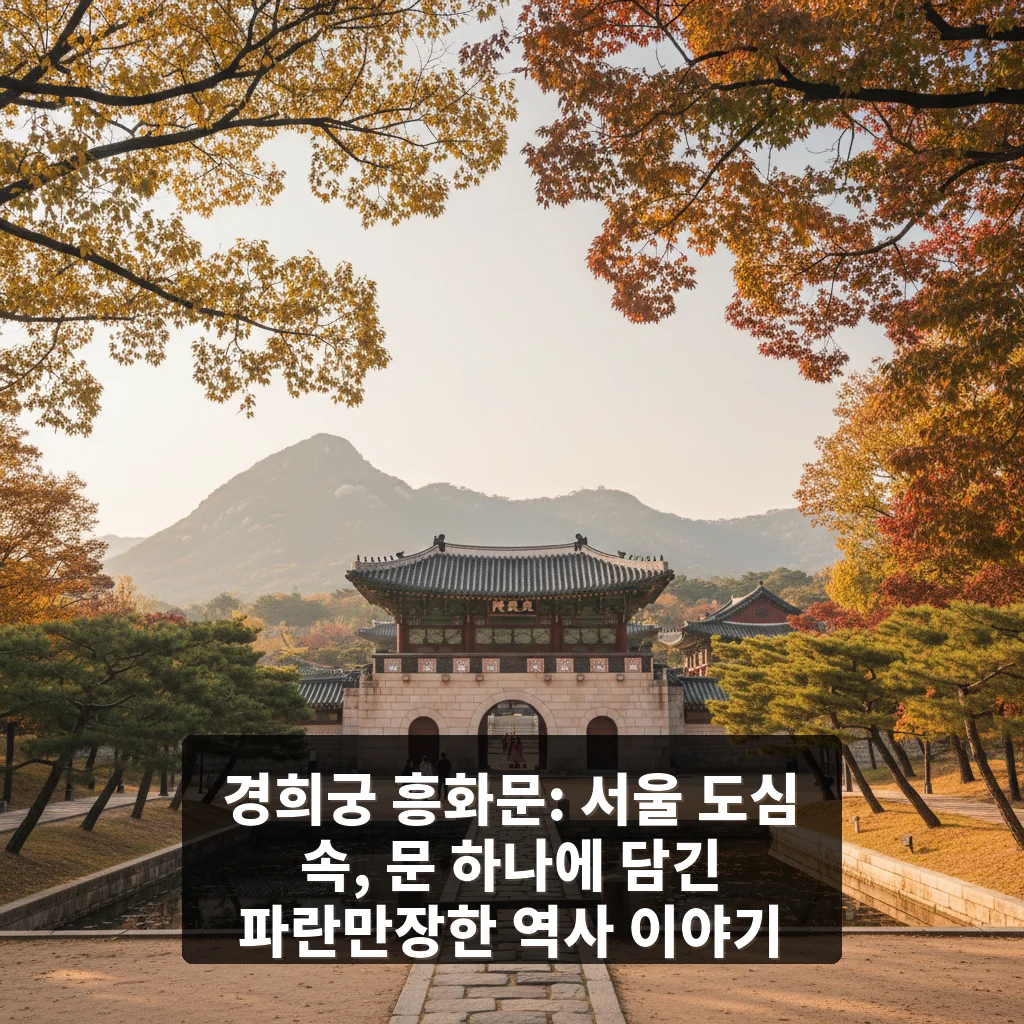
Gyeonghuigung Heunghwamun: In the Seoul city center, a tumultuous history story contained in one gate


Behind the grandeur of Gyeongbokgung and the tranquility of Changdeokgung, in the heart of downtown Seoul, stands a palace that quietly holds its own story, seemingly forgotten: Gyeonghuigung. And the main gate leading into Gyeonghuigung, Heunghwamun Gate of Gyeonghuigung, is not merely a building but a living history that has endured the turbulent modern and contemporary eras.
Once, this gate held a mysterious legend that it shone brightly even at night, illuminating the long, winding hill. However, with the flow of time, it lost its place, moved around, and sometimes became part of other buildings. What stories does Heunghwamun Gate of Gyeonghuigung truly hold, and what fragments of history can we glimpse through this gate today?
From now on, let’s trace the path this gate has walked and the interesting stories hidden within it. It will offer a special experience of traveling back in time within Seoul’s dynamic city center.
The Life of Heunghwamun Gate of Gyeonghuigung, Wandering Through the Turbulences of History
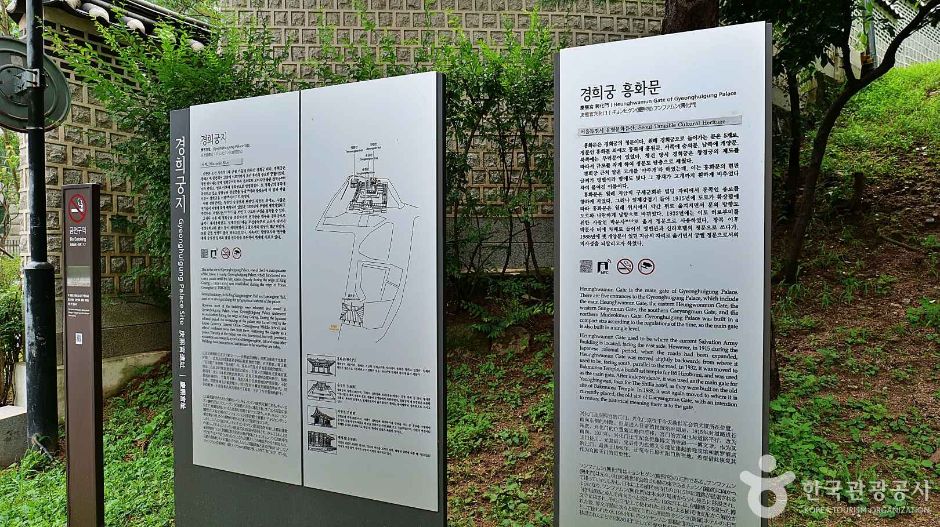
Heunghwamun Gate of Gyeonghuigung is, as its name suggests, the main gate of Gyeonghuigung. At the time of its construction, Gyeonghuigung was built on a relatively small scale following the system of Changgyeonggung, and Heunghwamun, as the main gate, was also modestly built as a single story. Originally, Gyeonghuigung had a total of five gates in addition to Heunghwamun: Heungwonmun Gate to the east, Sunguimun Gate to the west, Gaeyangmun Gate to the south, and Mudeokmun Gate to the north.
There is an interesting record that the shallow hill near Heunghwamun Gate was called ‘Yajugae’. This name was given because the inscription on Heunghwamun Gate was such excellent calligraphy that it glowed brightly even at night, and its radiance illuminated the hill. Like the legend of light emanating from the calligraphy, this gate was once a radiant presence symbolizing the dignity of Gyeonghuigung.
Heunghwamun Gate of Gyeonghuigung, Losing Its Place and Wandering
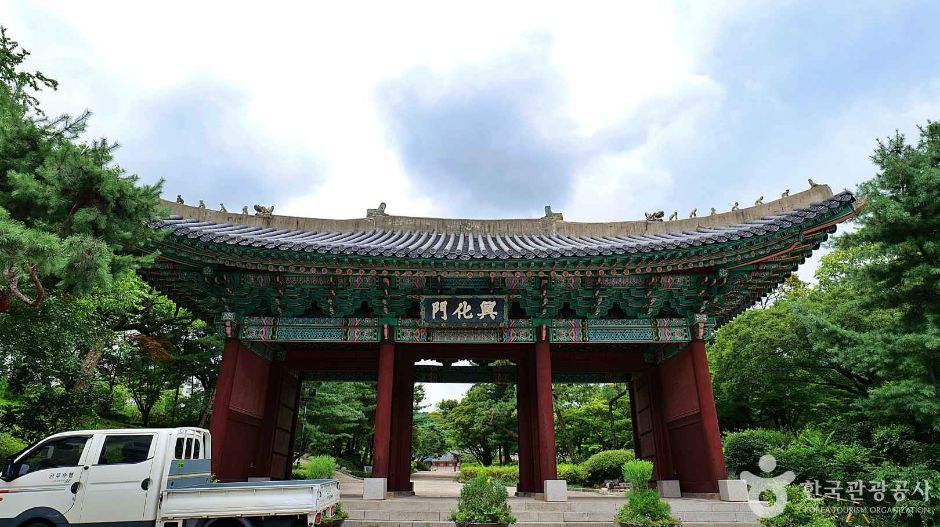
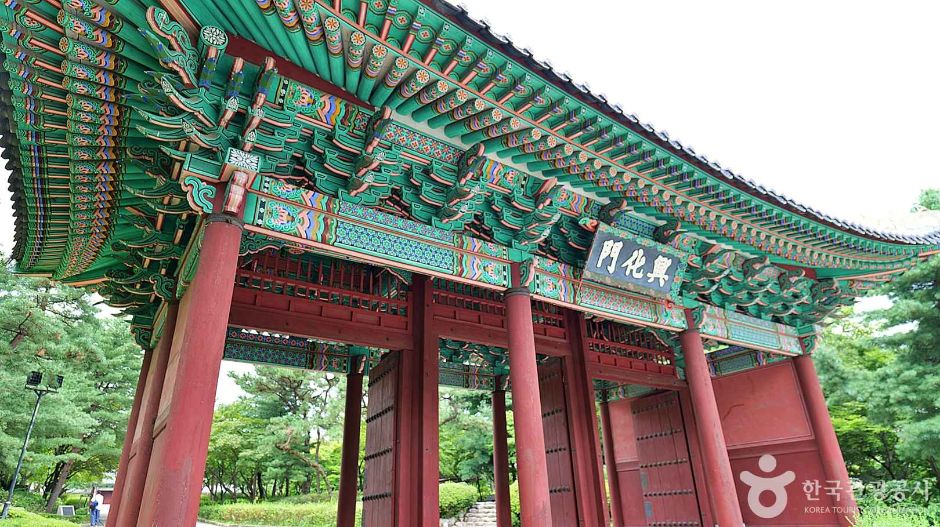
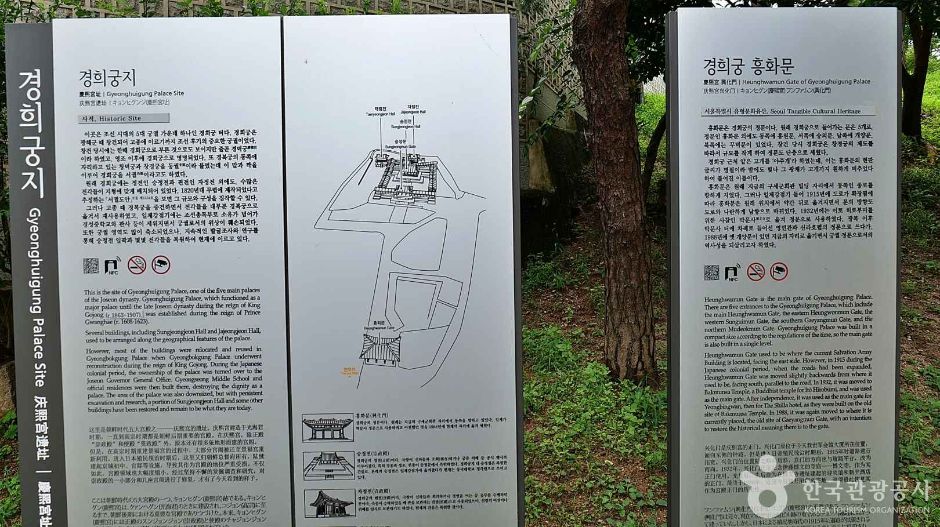
However, with the onset of the Japanese colonial period, the fate of Heunghwamun Gate began to change rapidly. Originally located east of Geumcheongyo Bridge, specifically where the current Salvation Army Hall building stands, and facing east towards Jongno, the gate was moved slightly back from its original position due to road expansion in 1915, and its direction also changed to face south, parallel to the road. This was the first change that shook the identity of Heunghwamun Gate.
A greater ordeal came in 1932. The Japanese Imperialists built Bakmunsa Temple, a temple to commemorate Ito Hirobumi, and detached Heunghwamun Gate of Gyeonghuigung to use it as the main gate of Bakmunsa Temple. The gate of a Joseon palace was repurposed as a symbolic site of colonial rule. After liberation, Bakmunsa Temple was abolished, and Yeongbingwan and Shilla Hotel were built in its place, with Heunghwamun Gate being used again as the main gate of that hotel.
- At the time of its construction As the single-story main gate of Gyeonghuigung, it held the ‘Yajugae’ legend.
- 1915 Relocated due to road expansion and the gate’s direction changed to south-facing.
- 1932 Forcibly relocated and repurposed as the main gate of Bakmunsa Temple by the Japanese Imperialists.
- After liberation A turbulent path, including being used as the main gate of Shilla Hotel.
The Lost Face of the Palace, Finding Its Place
In 1988, the Seoul Metropolitan Government began the Gyeonghuigung restoration project, making efforts to return Heunghwamun Gate of Gyeonghuigung to its original location. Heunghwamun Gate, which had wandered for a long time after losing its place, finally returned to its rightful owner. Thanks to these restoration efforts, we can today witness the unique beauty of Gyeonghuigung and its main gate, Heunghwamun, in the city center.
Gyeonghuigung Walking Path to Stroll Along with Heunghwamun Gate
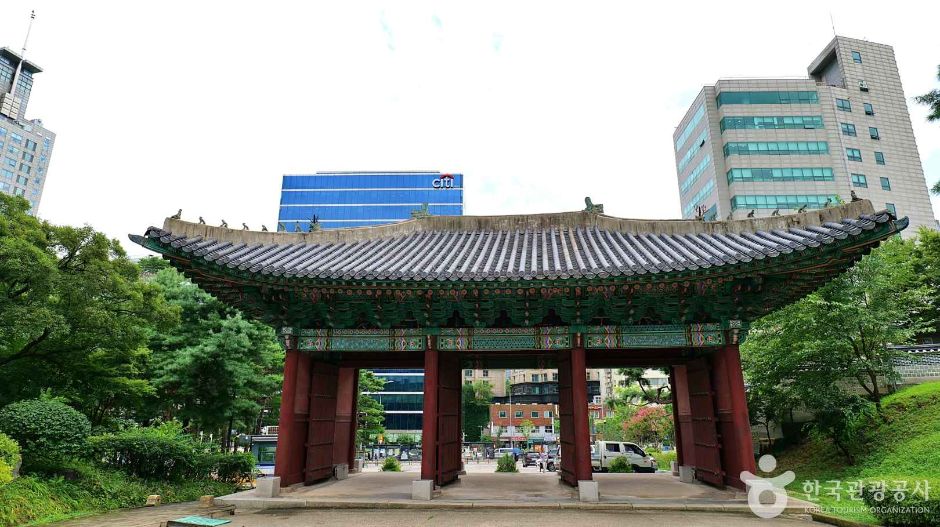
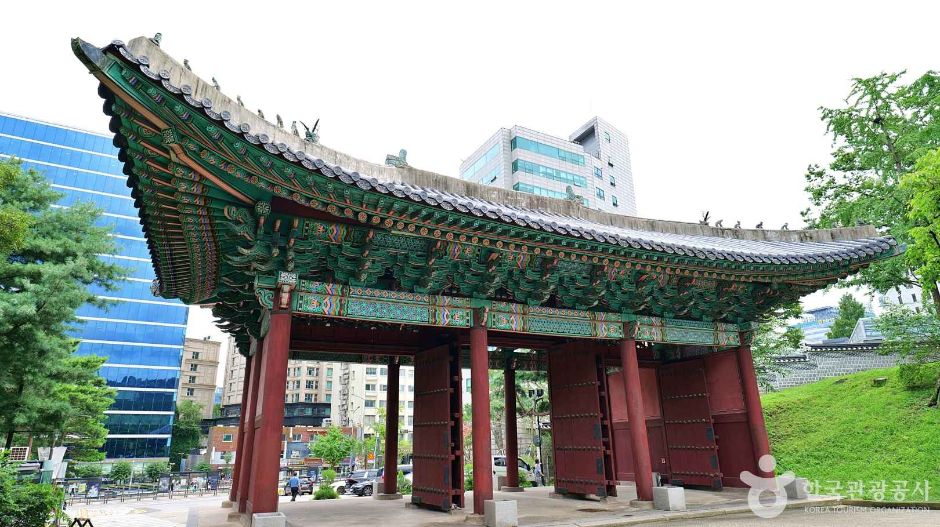

- Heunghwamun Gate Entrance Feel the dignity of the gate tower that has withstood the test of time. The moment you step through the gate, you can enjoy the feeling of traveling back in time.
- Sungjeongjeon Hall It is the main hall of Gyeonghuigung, where royal enthronement ceremonies and major events were held. It boasts a modest yet dignified architectural beauty.
- Jajeongjeon Hall It is the auxiliary hall where the king normally conducted state affairs or met with officials. It helps in understanding the history of Gyeonghuigung more deeply.
- Seoam (Rock behind Taeryeongjeon Hall) It is a rock located behind Taeryeongjeon Hall, said to be imbued with spiritual energy. It’s fun to discover the hidden stories of Gyeonghuigung.
Although Gyeonghuigung is smaller in scale compared to other palaces, it is also a historical site where kings of the late Joseon Dynasty frequently stayed and tried to overcome political crises. When you enter Gyeonghuigung through Heunghwamun Gate of Gyeonghuigung, you can calmly trace back the complex history of Joseon in a tranquil atmosphere.
| Palace Name | Key Features | Admission Fee |
|---|---|---|
| Gyeonghuigung | A palace that is modest but holds the turbulent history of the royal family. Heunghwamun Gate is representative. | Free |
| Gyeongbokgung | The main palace of the Joseon Dynasty, grand and splendid. Large scale. | Paid |
| Changdeokgung | A beautiful palace that emphasizes harmony with nature. The secret garden is famous. | Paid |
How to Get to Heunghwamun Gate of Gyeonghuigung: Location and Nearby Attractions
Heunghwamun Gate of Gyeonghuigung is located at Saemunan-ro 45, Jongno-gu, Seoul. It is in the heart of the city, making it very accessible. It can be easily reached on foot from Seodaemun Station (Subway Line 5) or Gwanghwamun Station, so public transportation is recommended.
In addition to a palace stroll, exploring various nearby cultural facilities is also a good idea. Right next to Heunghwamun Gate is the Seoul Museum of History, where you can gain a deeper understanding of the history of Gyeonghuigung and Seoul. Also, across the street is Deoksugung Palace, which holds the history of the Korean Empire, making it a good place to visit together.
Location Guide
Recommended Nearby Courses
- History Exploration Course Heunghwamun Gate of Gyeonghuigung → Gyeonghuigung → Seoul Museum of History → Deoksugung Palace.
- City Center Healing Course Heunghwamun Gate of Gyeonghuigung → Gyeonghuigung stroll → Relax at a nearby cafe → Jeongdong-gil Road stroll.
- Culture and Arts Course Gyeonghuigung → Seoul Museum of Art (next to Deoksugung Palace) → Sejong Center for the Performing Arts (towards Gwanghwamun).
Heunghwamun Gate of Gyeonghuigung is a gate that encompasses the glory and suffering of the past, and the tranquility of the present. We hope you will pause for a moment in the heart of Seoul and have a special time interacting with history through the many stories this gate tells.
Frequently Asked Questions
Q1. Where was Heunghwamun Gate of Gyeonghuigung originally located?
Heunghwamun Gate of Gyeonghuigung was originally located east of Geumcheongyo Bridge, specifically where the current Salvation Army Hall building stands, facing east towards Jongno. Its location was changed several times during the Japanese colonial period due to road expansion and the construction of Bakmunsa Temple, among other reasons.
Q2. What is the ‘Yajugae’ legend that Heunghwamun Gate shone even at night?
The shallow hill near Gyeonghuigung was called ‘Yajugae,’ a name derived from the legend that the inscription on Heunghwamun Gate was such excellent calligraphy that it shone brightly even at night, and its radiance illuminated the hill.
Q3. When was Heunghwamun Gate of Gyeonghuigung restored?
In 1988, as part of the Seoul Metropolitan Government’s Gyeonghuigung restoration project, Heunghwamun Gate found its way back to its original place. After being used for various other purposes for a long time, it was reinstated as the original palace gate.
Q4. Is there an admission fee for Gyeonghuigung?
Gyeonghuigung is currently a palace open to the public free of charge, with no admission fee. Any citizen can freely visit and experience history and culture.
Q5. What are some places worth visiting near Heunghwamun Gate of Gyeonghuigung?
Right next to Heunghwamun Gate is the Seoul Museum of History, and within walking distance are Deoksugung Palace, Jeongdong-gil Road, City Hall, and Gwanghwamun Square, making them excellent places for a combined history tour or city stroll.