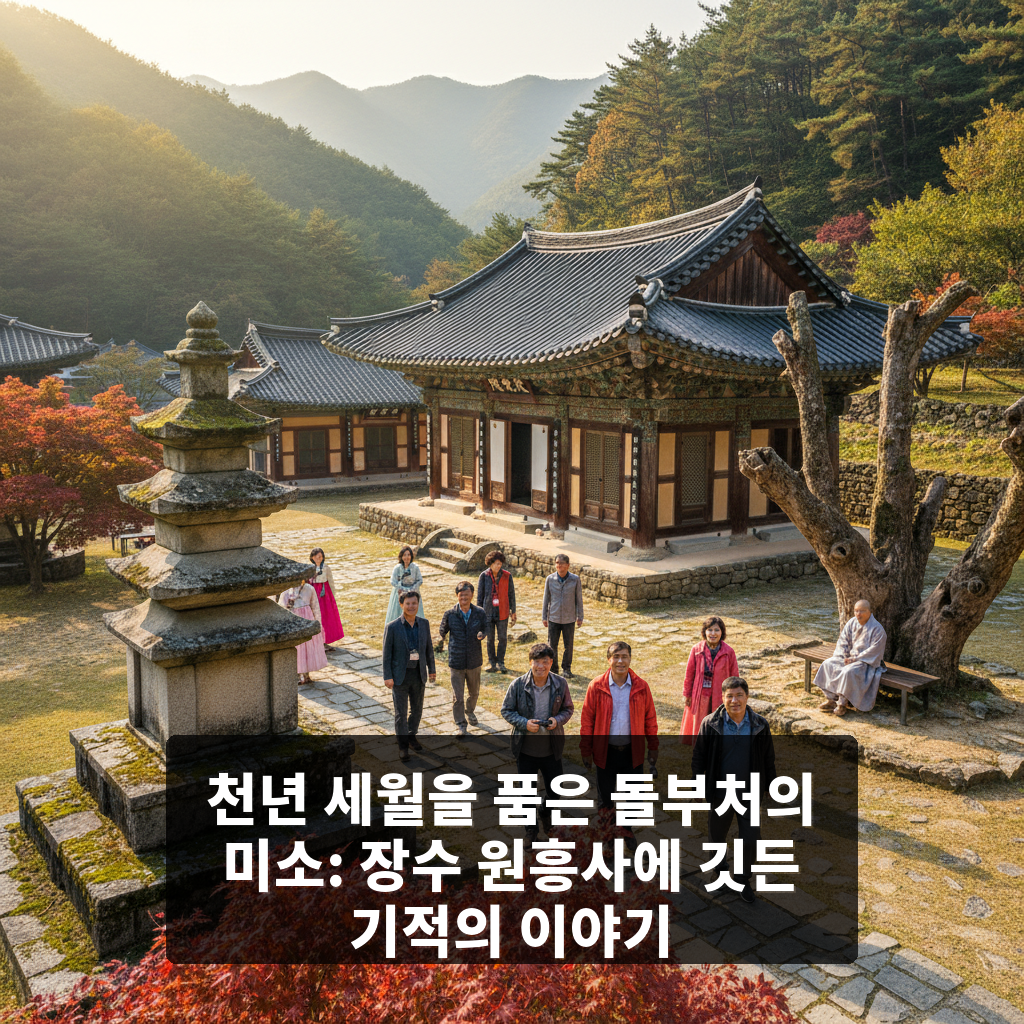
The smile of the stone Buddha embracing a thousand years: A story of a miracle enshrined at Jangsu Wonheungsa


Some histories seem to be buried in time and forgotten, only to reappear vividly before us at a certain moment. It’s like a drama: a story of a colossal Buddha statue, left alone at a ruined temple site, miraculously gaining new life, and the earnest wishes of a family adding to it, becoming the Wonheungsa (Jangsu) we encounter today.
From the ancient site of Baekje, through the breath of Goryeo, past the vanished sorrows of Joseon, to the modern era, this stone Buddha has silently endured the winds of time. What story, indeed, led this Buddha statue back into the light of the world? Let’s embark together into the mysterious story of Wonheungsa (Jangsu).
Beyond a simple temple, it is a miraculous space created by the accumulated faith and devotion of countless people. Wonheungsa (Jangsu) is a special place where traces of long history and warm human kindness coexist.
A Miracle Born from a Dream, The Secret of the Standing Stone Buddha of Wonheungsa
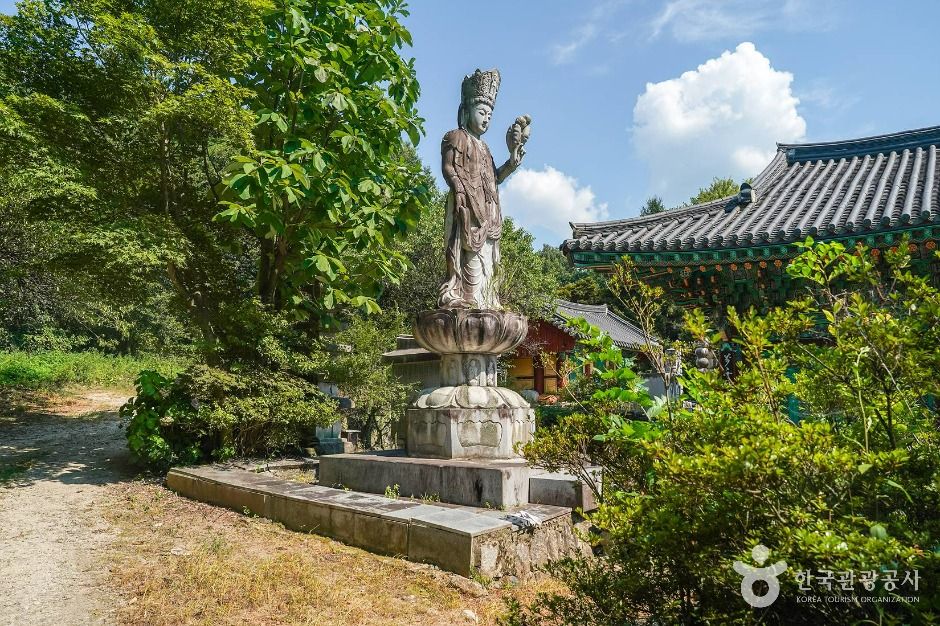
The current Wonheungsa (Jangsu) is said to have been one of the seven hermitages of Paljeongsa, founded during the reign of King Mu of Baekje. It was re-established during the mid-Goryeo period, but sadly, it seemed to disappear into the annals of history after falling into ruin in the early Joseon period. However, a transcendent being remained here alone: a colossal Standing Maitreya Buddha statue, measuring 4m in height and 3m in circumference. The story associated with this Buddha statue, which stood outdoors for centuries, is truly mysterious.
The Fate Chosen by the Stone Buddha, The Prelude to Wonheungsa’s Reconstruction
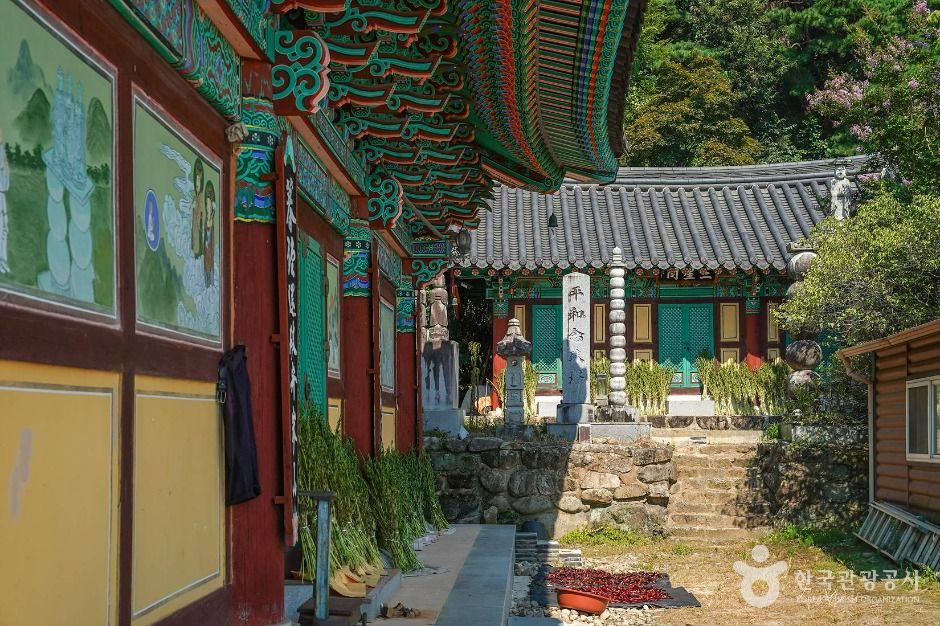
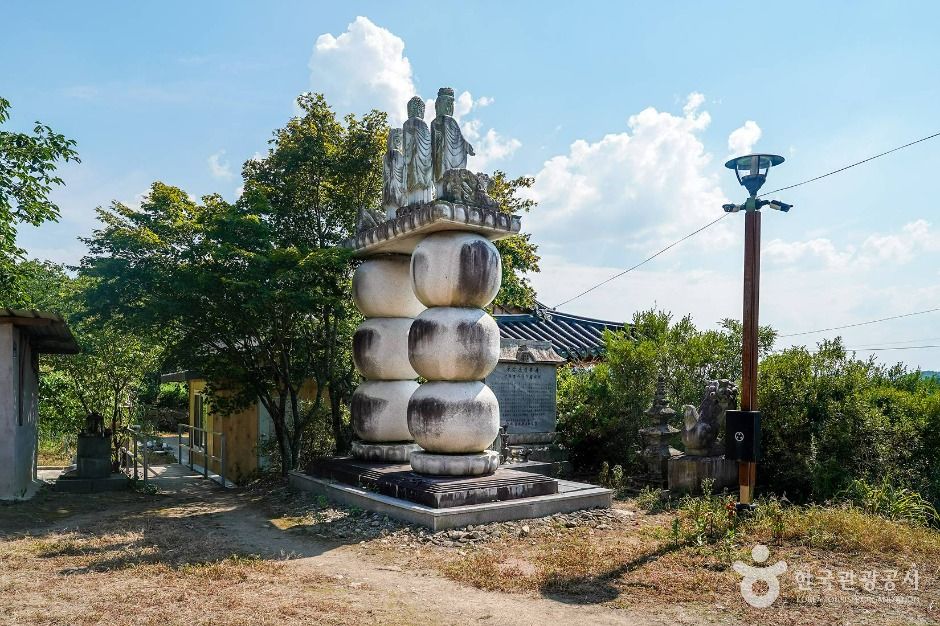
In 1904, the Standing Maitreya Buddha statue appeared in a dream to the Yi family residing in Wonheung Village. Following the Buddha’s revelation, the couple began building a Buddha hall to enshrine the statue, and the wife even entered monastic life, receiving the dharma name ‘Unseon’. With her utmost devotion, her daughter ‘Cheongsin’ and grandson ‘Kim Gwi-su’ carried on her will, and thus the majestic form of today’s Wonheungsa (Jangsu) was established. It’s a moving moment where a family’s dedicated efforts rebuilt a temple with a thousand-year history.
Features of Wonheungsa’s Standing Stone Buddha Statue, Bearing a Millennium of Time
- Large Face Compared to Body Displays a unique and impressive sense of proportion.
- Small Eyes and Mouth, Large Nose Clearly shows the characteristics of Goryeo-era Buddha statues, giving a somewhat friendly impression.
- Short Neck and Long Ears Adds subtle individuality within the overall harmony.
- Hands Neatly Gathered on the Abdomen Hidden in the sleeves, adopting a neat and humble posture.
- Estimated to be from the Goryeo Period Considering its size, proportions, and sculpting techniques, it is evaluated as a work from the Goryeo period.
Time Travel to Wonheungsa (Jangsu): Location and Accessibility
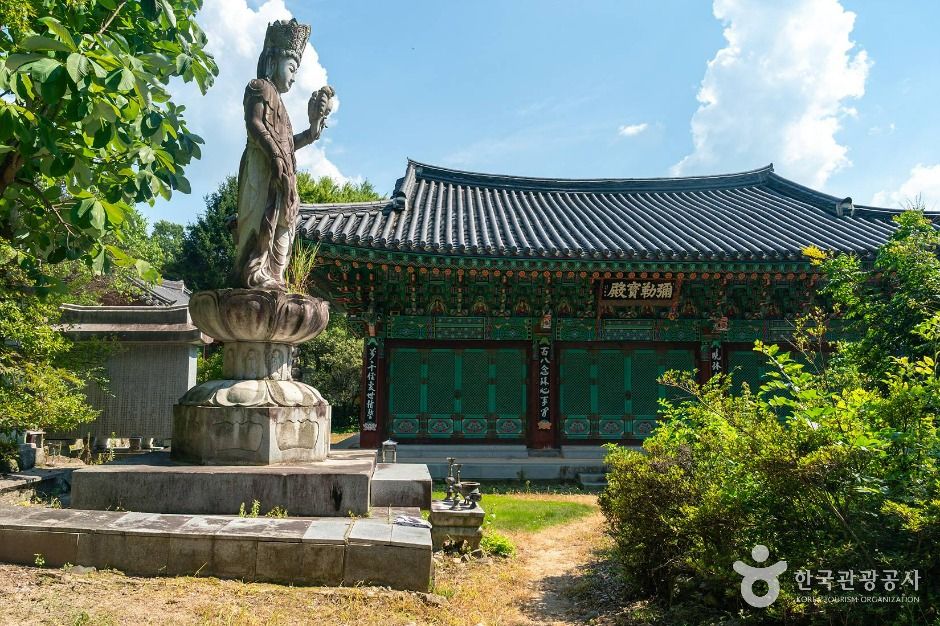
Wonheungsa (Jangsu), which preserves such a long and rich history, is located in Jangsu County, Jeollabuk-do. Nestled quietly within grand nature, it is an ideal place to escape the hustle and bustle of the city and enjoy peaceful contemplation. The noble aura emanating from the Buddha statue and the harmony of nature offer deep inspiration to visitors.
Wonheungsa (Jangsu): How to Get There?
Wonheungsa (Jangsu) can be somewhat difficult to access by public transportation. Using a private car is the most convenient, and you can easily find it by searching for ‘Wonheungsa’ on your navigation system. Surrounded by mountains, it makes for an excellent driving course, and beautiful natural scenery unfolds along the way, making the journey itself a healing experience. If you depart from Jangsu downtown, it’s not too far, making it easy to connect with other Jangsu travel destinations.
Strolling Through the Temple Grounds: From Daeungjeon to Sansingak
Wonheungsa houses various halls and relics in addition to the Standing Maitreya Buddha statue. In addition to the Standing Stone Buddha statue designated as Jeollabuk-do Cultural Heritage Material in 1984, take your time to explore the temple grounds and reflect on their meaning. You will be able to find peace of mind amidst the tranquil temple atmosphere.
Must-Visit Places at Wonheungsa
- Standing Maitreya Buddha Statue (Jeollabuk-do Cultural Heritage Material) It is the symbol of Wonheungsa and the center where all stories begin. Carefully examine the Buddha’s expression and sculpting style.
- Daeungjeon It is the main hall of Wonheungsa, a space dedicated to enshrining the Buddha. It is ideal for offering prayers or meditating briefly in a quiet and solemn atmosphere.
- Sansingak It is a hall dedicated to the Mountain Spirit, where one can see the integration of Korea’s indigenous folk beliefs with Buddhism. It is usually located at the highest point of the temple.
- Jonggak This is where the temple bell that announces the time in the temple is hung. If you are lucky, you might hear the sound of the bell.
- Yosachae This is the living space for monks. You can glimpse the quiet and orderly daily life of the temple.
Jangsu Attractions to Visit with Wonheungsa
| Category | Recommended Attraction | Features |
|---|---|---|
| Nature/Scenery | Jangsu Gayasan, Jangansan | Magnificent mountain ranges and beautiful natural scenery throughout the four seasons |
| History/Culture | Jangsu Hyanggyo, Nongae Shrine | Traces of Jangsu’s long history and its historical figures |
| Experience/Relaxation | Jangsu Horse Riding Experience Center, Banghwadong Recreational Forest | Leisure and comfortable relaxation for the whole family |
Wonheungsa, Reborn in Modern Times, Embracing the Aspirations of Goryeo People
Wonheungsa (Jangsu) is not merely an old temple. It is a living history imbued with the earnest wishes of the stone Buddha that steadfastly held its ground amidst the ruins, and of the people who received its dream revelation and dedicated their lives to rebuilding the temple. Visiting this place will be more than just touring a historical site; it will be a spiritual experience where past and present intersect.
At Wonheungsa (Jangsu), where traces of time and people’s stories are layered, why not pause for a moment and reflect on the meaning of life? Standing before the colossal Standing Maitreya Buddha statue, one might inexplicably feel at peace, perhaps even forgetting minor worries for a while. It will add peaceful and profound memories to your Jangsu trip.
Frequently Asked Questions
Q1. What is the history of Wonheungsa (Jangsu)?
It began as one of the hermitages of Paljeongsa, founded during the reign of King Mu of Baekje, was rebuilt in the mid-Goryeo period, but became ruined in the early Joseon period. Later, in the early 20th century, it was rebuilt around the colossal Standing Maitreya Buddha statue.
Q2. What are the characteristics of Wonheungsa’s Standing Stone Buddha statue?
It features a large face compared to its body, small eyes and mouth, a large nose, a short neck, and long ears. Both hands are neatly placed on the abdomen and hidden in the sleeves, and considering its size and sculpting techniques, it is presumed to have been produced during the Goryeo period.
Q3. Who were the people who rebuilt Wonheungsa?
It began in 1904 with the Yi family, who built a Buddha hall after the Standing Maitreya Buddha statue appeared in a dream, and the wife entered monastic life under the dharma name Unseon. Later, her daughter Cheongsin and grandson Kim Gwi-su carried on her will, establishing the current Wonheungsa.
Q4. Are there any other places to visit near Wonheungsa (Jangsu)?
You can visit places with beautiful natural scenery like Jangsu Gayasan and Jangansan, as well as historical sites such as Jangsu Hyanggyo and Nongae Shrine.
Q5. Are there any special precautions when visiting Wonheungsa?
As a temple is a space for prayer and meditation, it is recommended to observe quietly and reverently. Please also participate in cultural heritage protection by keeping the premises clean.