Haman Jangchunsan Temple (Haman), Silla’s millennial wisdom and secret garden visible only when bowing one’s head


When exhausted by daily life and needing a moment to pause, where can we find true peace? We often find the answer by escaping the bustling city into quiet nature, or in historical places imbued with the wisdom of ages.
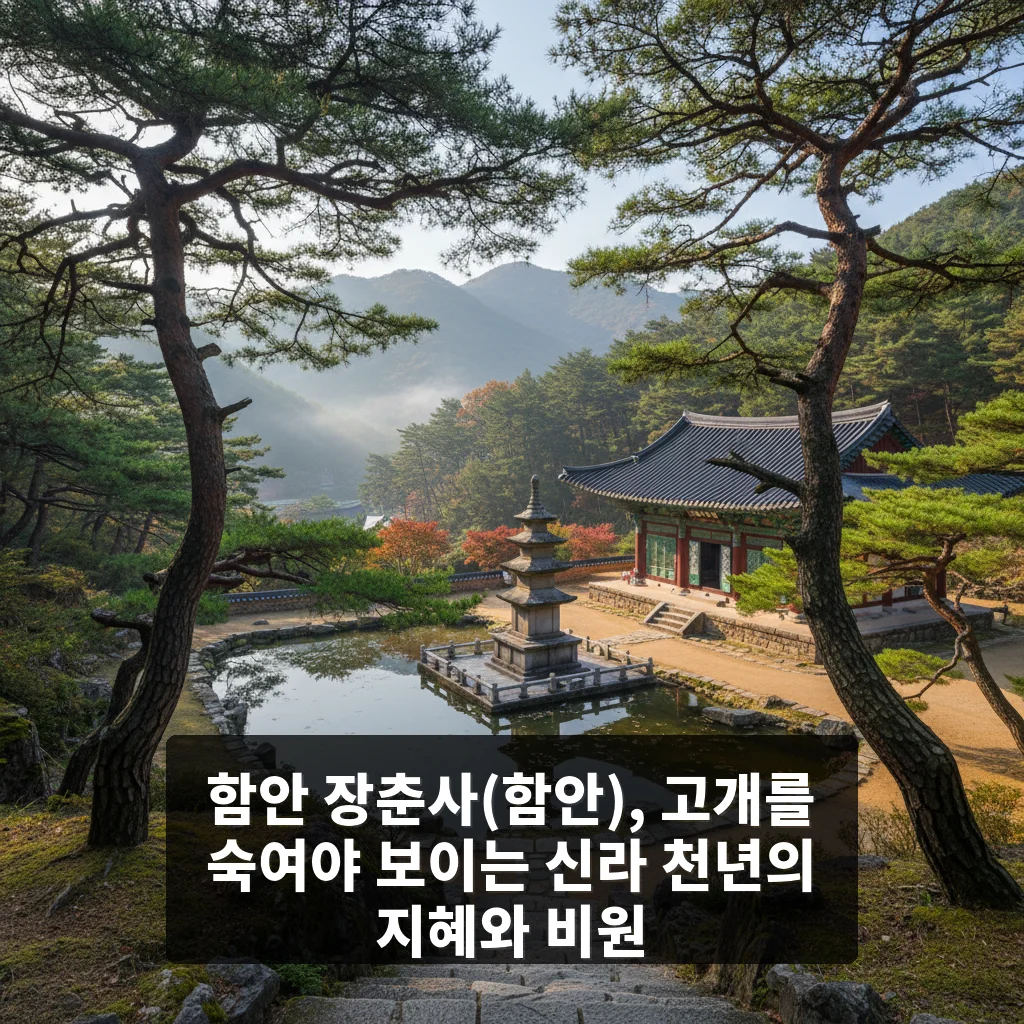
Jangchunsana (Haman), located at the foot of Mureungsan in Haman, Gyeongnam, is precisely such a place. From the legend that it repelled Japanese invaders during the Silla period with divine power, to its unique one-pillar gate that teaches humility to visitors, this is not just a temple but a place embracing living history and philosophy.
What stories does this tranquil temple hold, and what comfort does it offer us? Let’s explore the charm of Jangchunsana (Haman) that we will encounter as we ascend the narrow valley path.
Traces of Silla, the Story Imbued with the Spirit of Muyeom Guksa
815, the 7th year of King Heondeok of Silla, was a time of crisis when the nation was shaken by Japanese invasion. The story that Muyeom Guksa, also known as Mureung Seunim, repelled the foreign invasion with divine power, became the background for the birth of Jangchunsana (Haman). It is said that the king built this temple in return. Having stood here for over a thousand years, praying for the peace of the nation, this place can be called a microcosm of the history of the Korean Peninsula.
Traces of Divine Power that Repelled Japanese Invaders
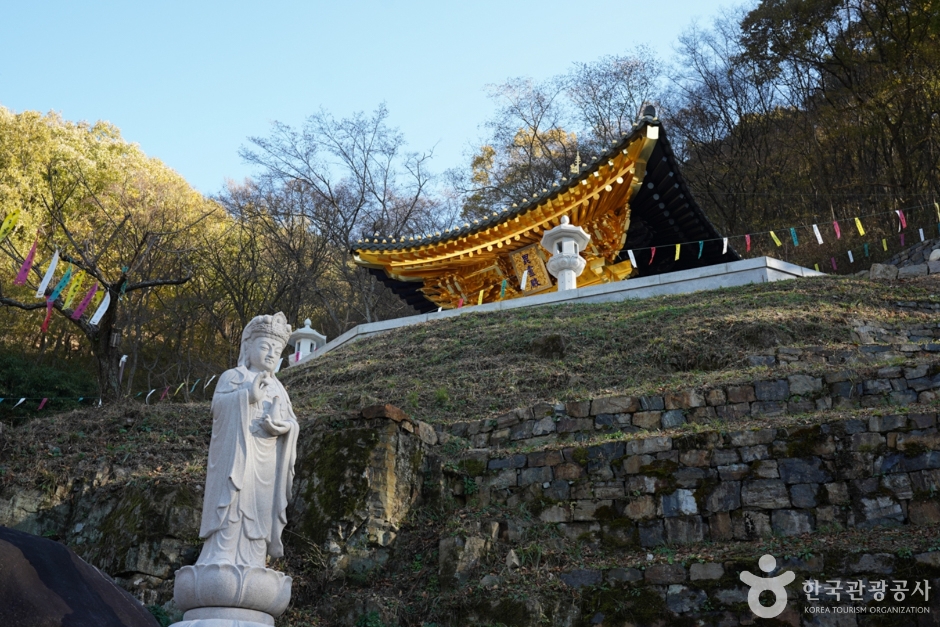
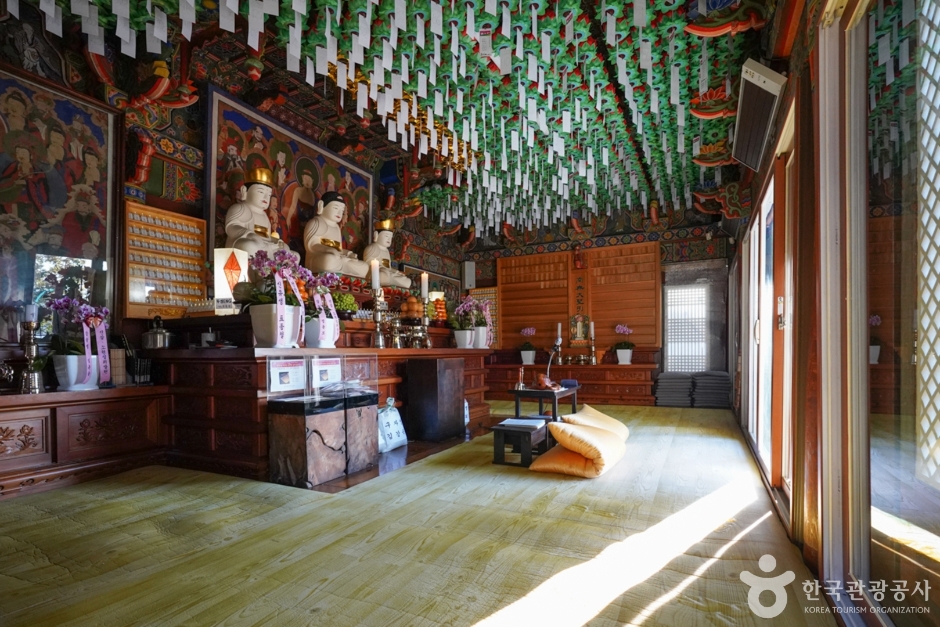
- Founding Year The 7th year of King Heondeok of Silla (815), built by the king in reward after Muyeom Guksa repelled Japanese invaders with divine power.
- Historical Significance It possesses the aspect of a patriotic temple embodying the desire to overcome national crises.
- Hidden Story As can be known from his alias Mureung Seunim, he has a deep connection with Mureungsan.
The Gate of True Humility, Visible Only When You Bow Your Head
Ascending a narrow path of about 1.5km along the valley from the village, you will encounter the cozy Jangchunsana (Haman). In particular, its one-pillar gate has a distinctly different appearance from other temples. The small gate, with the signboard ‘Mureungsan Jangchunsana’, hangs low as if made for a child’s height, naturally causing visitors to bow their heads.
The One-Pillar Gate, the First Step to Mastering the Mind
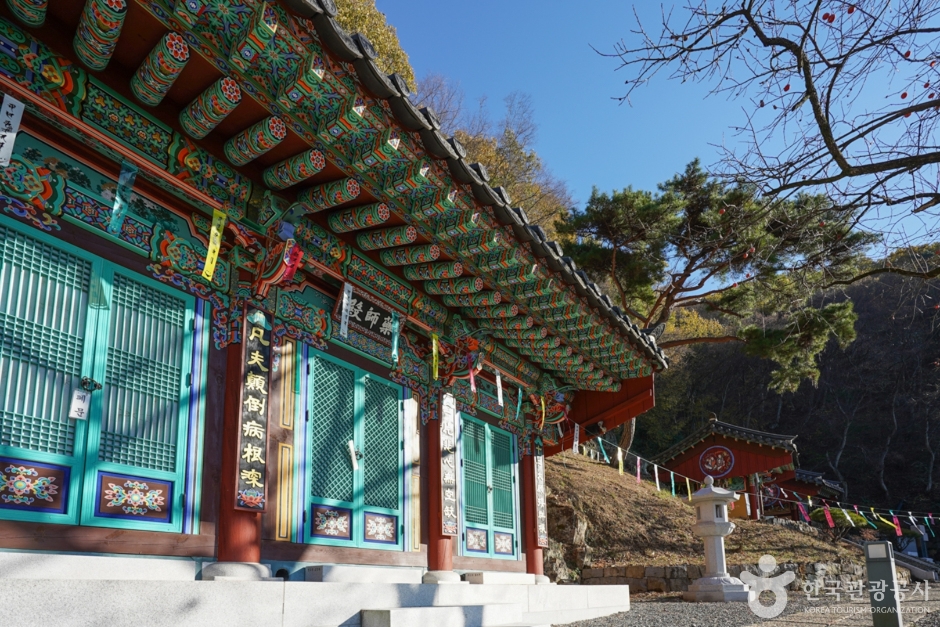

Through this small gate, we humble ourselves and temporarily forget our worldly attachments and worries Experience. It’s like a special rite of passage that makes us feel as if we are asking ourselves, ‘Have I been too arrogant in what I thought I knew?’ The moment you pass through the one-pillar gate, you can finally feel as if you are entering a space of true peace.
Main Hall Buildings within the Temple Grounds
- Daeungjeon A hipped-and-gabled roof building newly built in 1979, boasting a majestic appearance with 3 kan (bays) in the front and 2 kan (bays) on the sides.
- Five-story Stone Pagoda Quietly situated in the courtyard in front of the Daeungjeon, silently bearing witness to the long history of Jangchunsana (Haman).
- Yosachae The living quarters for monks, where their spiritual practice and training take place.
Small but Steadfast Dignity, the Earnest Wishes of the Seated Bhaisajyaguru Buddha
Behind the Daeungjeon is a small Yaksajeon with a gabled roof. The Buddha statue enshrined within this simple Yaksajeon, with one kan (bay) in the front and one kan (bay) on the side, is precisely the Seated Bhaisajyaguru Buddha, a designated cultural property of Jangchunsana (Haman). Although this Buddha statue is relatively small, measuring 94cm in height and 40cm in chest circumference, it boasts exquisite detail, carved from a single stone along with its mandorla.
This is a precious Buddha statue that has endured a long time, so much so that a regilding ceremony was carried out in 1978 due to a crack that formed on the left shoulder of the seated statue. As you look at the compassionate smile of the Bhaisajyaguru Buddha, who heals the suffering of those afflicted by illness and prays for the well-being of all sentient beings, you can feel a deep sense of peace settle in your heart.
| Item | Details |
|---|---|
| Height | 94cm |
| Chest Circumference | 40cm |
| Method of Creation | Carved from a single stone with a mandorla |
| Special Notes | Regilded in 1978 due to a crack on the left shoulder |
| Location of Storage | Yaksajeon |
Serenity Along the Forest Path, the Way to Jangchunsana (Haman)
Jangchunsana is located at 461-1 Juseo-ri, Yeohang-myeon, Haman-gun. The narrow 1.5km valley path extending from the village is a pleasant route for quiet contemplation. Ascending while listening to the sound of clear stream water and birdsong, the path itself is a meditation course. When using public transportation, it is convenient to take a bus towards Yeohang-myeon from Haman Bus Terminal, then walk or take a taxi from Juseo-ri village.
The small waterfall and clear stream valley located midway along the path offer an ideal landscape for a brief rest. You will begin to find peace of mind even on this path leading to the tranquil temple.
Enjoying Other Charms of Haman Together
- Haman Marisan Ancient Tombs A site where royal tombs of Aragaya are gathered, currently being pursued for UNESCO World Heritage listing.
- Mujinjeong A beautiful pavilion containing the elegance of Joseon Dynasty scholars, offering an exquisite view in harmony with its pond.
- Ipgok County Park Boasts outstanding natural scenery, with walking trails and a suspension bridge, making it ideal for family visitors.
Tips for a Deeper Experience at Jangchunsana (Haman)
- Visiting Hours If you wish to experience the tranquil temple atmosphere, early morning or late afternoon hours are recommended.
- Attire Since you will be walking along a valley path, wear comfortable shoes, and neat attire suitable for temple etiquette is recommended.
- Temple Etiquette Observe quietly, and when taking photos, be careful not to disturb other worshippers.
- Exploring the Surroundings Enjoying a light trek along the Mureungsan hiking trail near Jangchunsana is also a good option.
- Historical Exploration Knowing in advance the hidden stories and value of the cultural properties throughout the temple will make for a richer experience.
Frequently Asked Questions
Q1. What is the history of Jangchunsana (Haman)?
Jangchunsana is a historic temple said to have been built by King Heondeok of Silla in 815 (the 7th year of his reign) as a reward for Muyeom Guksa’s feat of repelling Japanese invaders with divine power. It has been a place of prayer for the peace and well-being of the nation for over a thousand years.
Q2. I heard Jangchunsana (Haman)’s one-pillar gate is unique; what makes it special?
Jangchunsana’s one-pillar gate is built much lower than those of other temples, requiring visitors to bow their heads to enter. This symbolizes the virtue of humility and offers a special experience that encourages visitors to shed worldly worries and prepare their minds to enter the temple.
Q3. What cultural property should not be missed at Jangchunsana (Haman)?
The Seated Bhaisajyaguru Buddha enshrined in the Yaksajeon behind the Daeungjeon is a designated cultural property of Gyeongsangnam-do, boasting excellent artistry carved from a single stone along with its mandorla. Although relatively small in size, its delicate carving and compassionate expression are impressive.
Q4. Is the way to Jangchunsana (Haman) difficult?
A narrow path of about 1.5km follows the valley from the village; it is a quiet and beautiful forest path, good for a leisurely walk. When using public transportation, you can take a bus towards Yeohang-myeon from Haman Bus Terminal and then walk or take a taxi.
Q5. Are there other places worth visiting around Jangchunsana (Haman)?
Haman offers various attractions, including the Marisan Ancient Tombs, which are being pursued for UNESCO World Heritage listing, the tranquil Mujinjeong, and Ipgok County Park where you can enjoy relaxation in nature. You can explore them together to experience the charm of Haman.