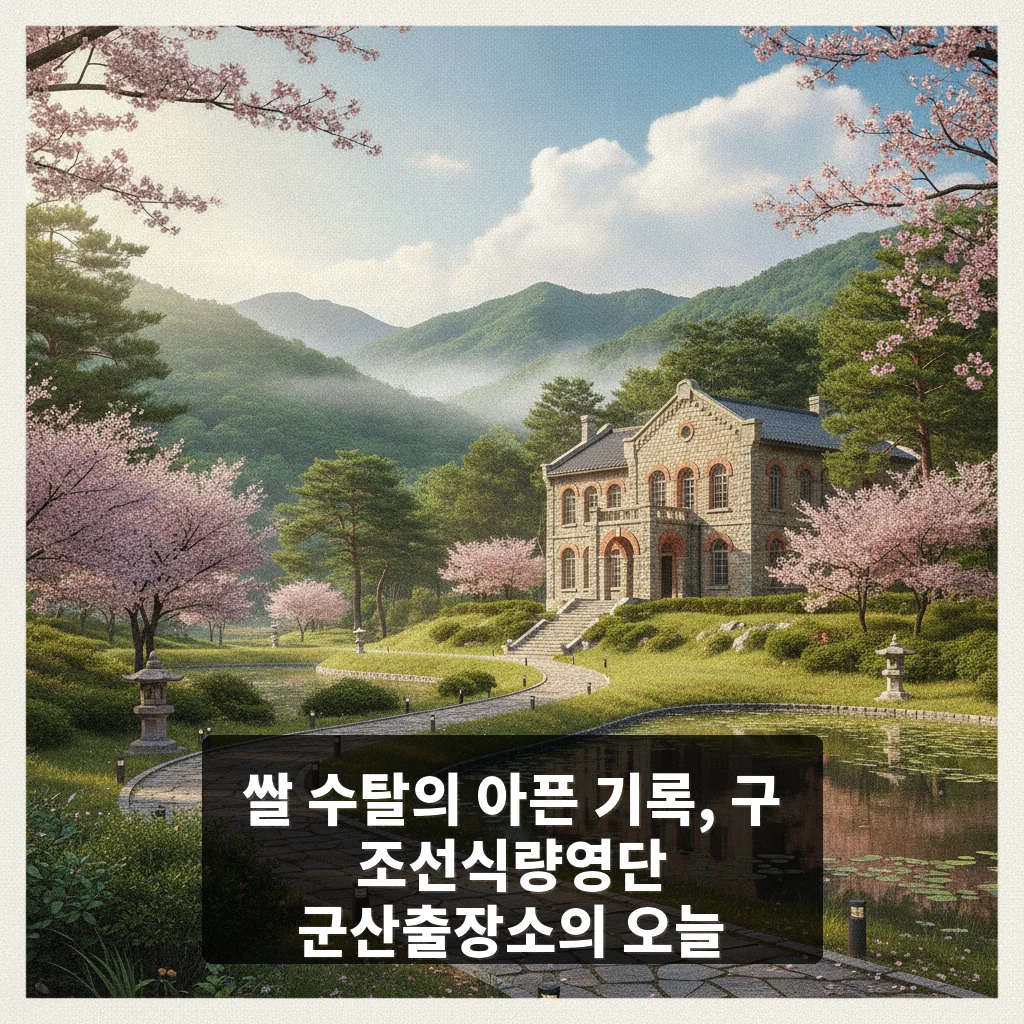
The painful record of rice expropriation: the former Joseon Siknyang Yeongdan Gunsan Branch Office today


If there’s a place where the scars of the past blossom into present wisdom, what image comes to your mind? In the heart of Gunsan, stands a building that fully embraces the painful history of the Japanese colonial period. More than just an old building, it is a site that silently testifies to the suffering and resistance of our people, that is, the former Joseon Food Corporation Gunsan Branch Office.
This place symbolizes the brutal colonial rule of imperial Japan, which controlled food prices and distribution after the Sino-Japanese War and plundered rice from the Honam Plain. Beyond the pain of exploitation, it has now been reborn as a modern history exhibition hall, healing wounds and speaking of growth, and delivering a message of hope that ‘Korea is alive’.
This building, standing firm under the weight of history, not only shows the past but also exhibits a significant transitional architectural style. Shall we delve into the hidden stories of this building, which changed through an era of oppression?
Silent History: Standing at the Center of Rice Exploitation


The former Joseon Food Corporation Gunsan Branch Office was a key institution established by Japan during the Japanese colonial period, especially after the Sino-Japanese War, to control and exploit Joseon’s food resources. Precious rice produced in the Honam Plain was forcibly transported to Japan through this place, which inflicted deep wounds and suffering on our people. The cruel reality of that time permeates every corner of the building, and even today, it vividly conveys the pain of that day.
Why Gunsan?
- Geographical Hub As a transportation hub connecting the Honam Plain and the West Sea, it was ideally suited for rice transport.
- Role as a Port City It was a main route through which plundered rice was shipped to Japan via Gunsan Port. This represents the painful history Gunsan experienced at the time.
- Core of the Food Control System Imperial Japan, through the Food Corporation, comprehensively controlled everything from food production to distribution and prices, completely depriving Joseon of its food sovereignty.
This place is not merely an administrative agency that managed food, but is recognized for its value as an important piece of evidence showcasing the brutal colonial rule and rice exploitation history of imperial Japan.
Architectural Beauty Embracing Time: Traces of Transition


The former Joseon Food Corporation Gunsan Branch Office holds not only historical significance, but also remarkable architectural value. This is because it is a building that shows transitional characteristics, moving from an era where authoritarian Western historicist architectural styles were dominant in the early Japanese colonial period, to gradually change towards modern tendencies.
The Spirit of the Era Embodied in Architectural Style
- Two-Story Reinforced Concrete Structure Applying the latest construction methods of the time, it emphasized robustness and practicality.
- Flat Slab Roof Along with the influence of Western architecture, it clearly shows the transitional characteristics moving towards modern architecture.
- L-shaped Plan and Rounded Corners While emphasizing functionality, the soft curves reveal efforts to move away from authoritarian tendencies.
- Symbolic Vertical Ornamentation This ornamentation, located at the upper corner of the building, is interpreted as an expression of its centrality and symbolism as a food control institution at the time.
These architectural features serve as important clues for understanding the social conditions of the era when the building was constructed and the trends in architectural technology. Beyond its mere exterior, it offers the pleasure of reading the stories contained within.
Beyond Pain to Hope: The Current Exhibition Space


The building, holding the pain of the past, has now transformed into a valuable space that conveys historical lessons and future hope to citizens. The former Joseon Food Corporation Gunsan Branch Office currently operates as an exhibition hall focused on the history of Korea’s modern era.
Two Stories, One Message
| Floor | Exhibition Theme | Main Content |
|---|---|---|
| 1st Floor | Pain, Healing, and Growth | It contains the history of exploitation during the Japanese colonial period, the suffering and resistance of the nation, and the recovery process after liberation. |
| 2nd Floor | Korea is Alive | It conveys a message of hope, showing our nation’s will for independence and its growth into a sovereign state after liberation. |
It is expected that a new exhibition titled ‘The Smuggling Story of the Food Corporation’ will be added starting June 2026, which is anticipated to offer more abundant attractions for future visitors. It is a space where one can glimpse current efforts to confront the past and move towards the future.
Gunsan Modern History Tour: Enjoy It This Way!
For those who wish to walk through the historical sites themselves, here are some tips for visiting the former Joseon Food Corporation Gunsan Branch Office. Located in the heart of Gunsan’s old downtown, it boasts excellent accessibility, and is great for exploring along with other modern cultural heritage sites nearby.
Directions & Nearby Attractions
It is convenient to visit by public transport or private car. You can easily reach it by taking a city bus from Gunsan Station or Gunsan Intercity Bus Terminal. If using a private car, you can use the nearby public parking lots.
Gunsan Modern Cultural Heritage Sites Worth Visiting Together
- Dongguksa Temple Korea’s only Japanese-style temple, where you can reflect on history alongside the Statue of Peace.
- Gunsan Modern History Museum A key museum where you can see Gunsan’s modern history at a glance.
- Hirotsu House A place where you can glimpse Japanese-style housing and daily life of that era.
- Lee Sung-dang Bakery A nationally famous bakery, where you can take a break and enjoy Gunsan’s flavors.
Checklist for a Smart Visit
- Check Opening Hours It is recommended to check the operating hours via the official website or information center before visiting.
- Utilize Docent Programs If you want to understand the exhibition content more deeply, it is recommended to listen to a docent’s explanation.
- Wear Comfortable Shoes As there are many places to explore on foot in Gunsan’s old downtown, comfortable shoes are essential.
- Prepare Your Camera Bring a camera to capture the historical value and architectural beauty.
Frequently Asked Questions
Q1. What is the former Joseon Food Corporation Gunsan Branch Office?
It was the Gunsan regional branch office of an institution established by Japan after the Sino-Japanese War during the Japanese colonial period to control food distribution and prices in Joseon and exploit rice. Currently, it operates as a modern history exhibition hall, with the 1st floor themed ‘Pain, Healing, and Growth’, and the 2nd floor themed ‘Korea is Alive’.
Q2. What are its architectural features?
It showcases a transitional style that evolved from authoritarian Western historicist architecture in the early Japanese colonial period to modern tendencies. It is a two-story reinforced concrete building characterized by an L-shaped plan, rounded corners, and symbolic vertical ornamentation.
Q3. Is admission to the exhibition free or paid?
As it is connected with most of Gunsan’s modern cultural heritage facilities, there may be an admission fee. It is most accurate to check Gunsan City’s integrated admission ticket information or inquire on-site before visiting.
Q4. What other places are worth visiting around the former Joseon Food Corporation Gunsan Branch Office?
Gunsan’s major modern cultural heritage sites such as the Gunsan Modern History Museum, Dongguksa Temple, Hirotsu House, and Lee Sung-dang Bakery are within walking distance, making them good to explore together. Including them in a modern alley tour course will make your trip even more rewarding.
Q5. I heard a new exhibition will open from 2026. What is it about?
A new special exhibition titled ‘The Smuggling Story of the Food Corporation’ is scheduled to be added starting June 2026. It is expected to consist of interesting content that offers a glimpse into another aspect of society during the Japanese colonial period.