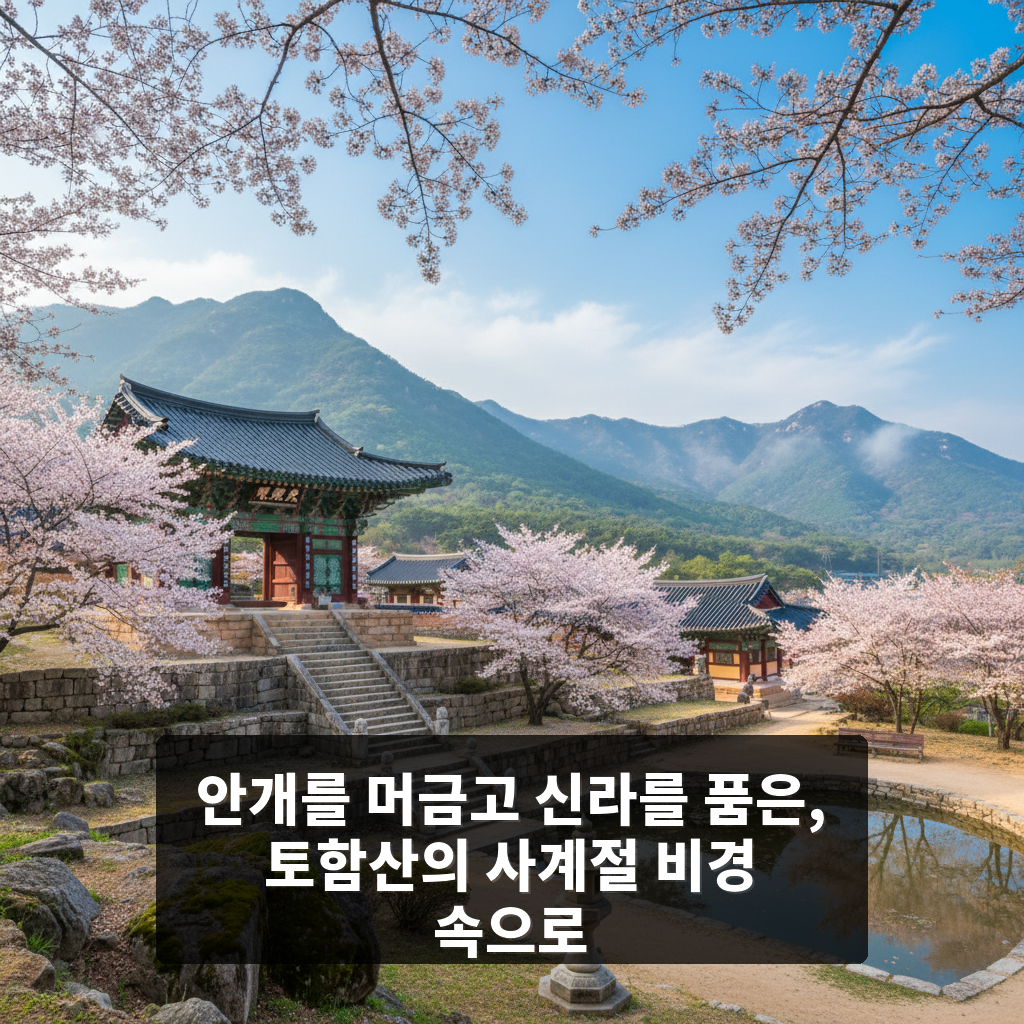
Imbued with mist and embracing Silla, into the spectacular four-season scenery of Tohamsan


Have you ever heard the mysterious legend that a mountain inhales fog and then exhales it again? This is the story behind the name of **Tohamsan**, a sacred mountain that the Silla people regarded as one of the Five Sacred Mountains. Located close to the sea, this place is often shrouded in fog, and its appearance, as if the mountain is inhaling and exhaling fog, is said to have given it the name ‘Toham (吐含)’.
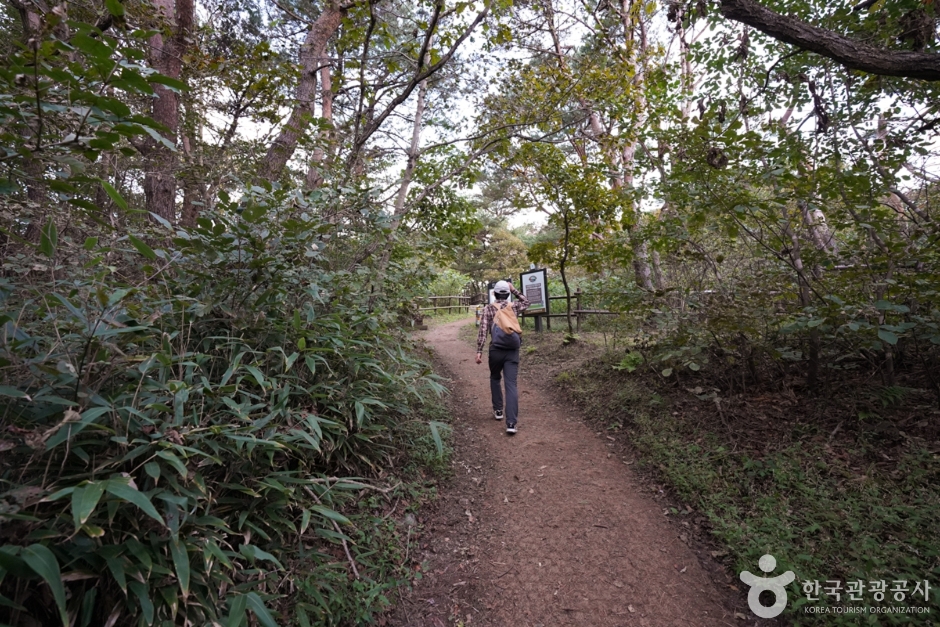
It is the second highest mountain after Gyeongju Danseoksan, but not steep, making it easy for anyone to climb. The magnificent sunrise viewed from the summit is considered an ecstatic experience that everyone should witness at least once. Shall we embark on a journey together to **Tohamsan**, a famous mountain that is not just a simple mountain, but a blend of history and nature, embracing Bulguksa Temple and Seokguram Grotto, Buddhist cultural heritage sites from a thousand years of Silla?
This place, where you can feel the breath of Silla along with the joy of hiking, captivates visitors with its diverse scenery each season.
The Name Forged by Fog, The Mysterious Identity of Tohamsan
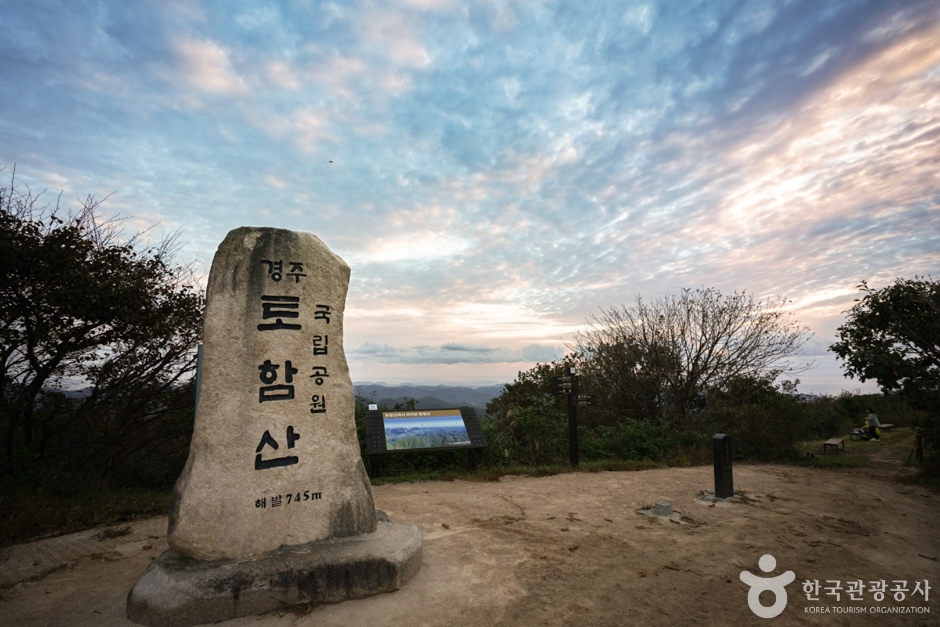
Beyond simply being the second highest mountain in Gyeongju, **Tohamsan** holds a profound meaning as one of the Five Sacred Mountains revered since the Silla period. Adjacent to the East Sea, the constant dense fog rising around the mountainside creates an illusion as if the mountain is breathing. The name ‘Toham’, derived from this natural phenomenon, inherently contains a mysterious and beautiful narrative.
A Mountain Breathing with a Thousand Years of Silla History
It’s not hard to guess why the Silla people regarded **Tohamsan** not just as a natural object, but as a spiritual pillar. The Buddhist relics scattered throughout the mountain tell us how deeply their lives and beliefs were connected. The mountain is not rugged, but the stories and values it holds are deeper and grander than any steep mountain.
Morning Bathed in Ecstasy, The Grand Spectacle of Tohamsan Sunrise
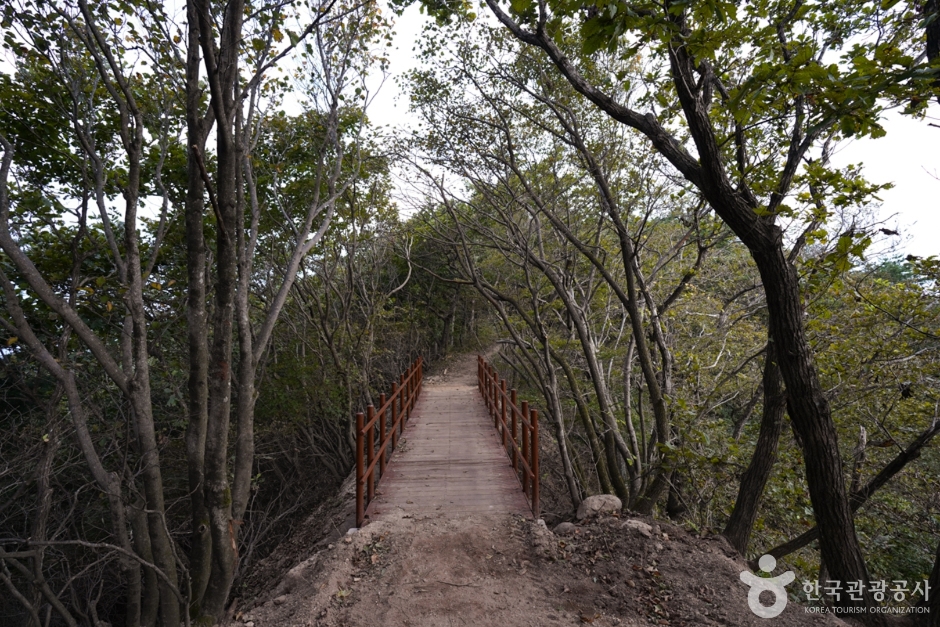
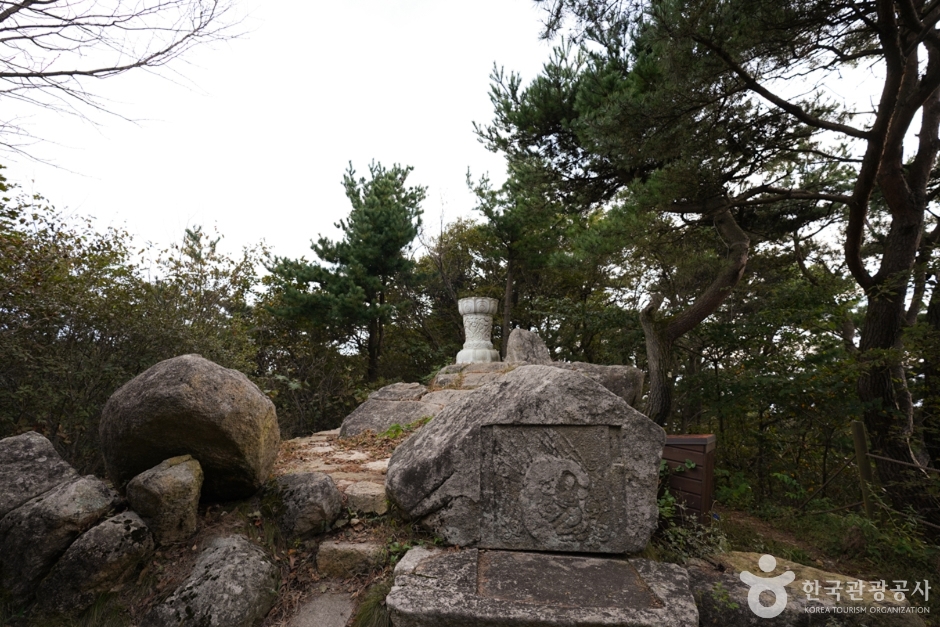
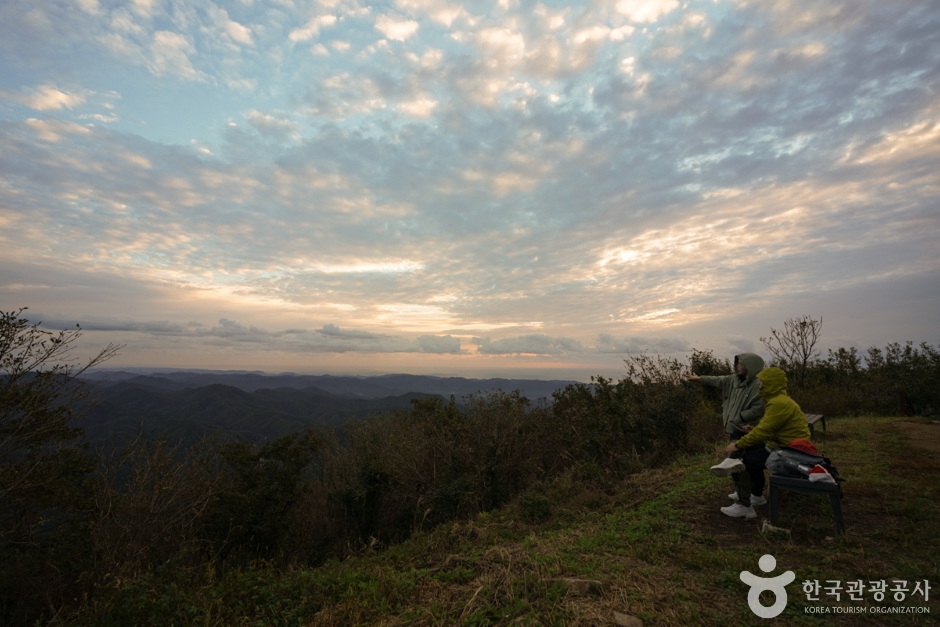
Climbing to the summit of **Tohamsan** through the dawn air, the sunrise emerging from the East Sea offers an unforgettable lifelong impression. As the dark blue dawn sky slowly turns crimson, and the majestic sun soon peeks over the horizon, one can feel a sense of wonder as if all worries disappear. Thanks to its moderate hiking difficulty, it is relatively easy to access, offering even novice hikers the chance to enjoy a sunrise hike.
Tips for a Successful Sunrise Hike
- Check the weather forecast It is difficult to see a clear sunrise on cloudy or rainy days. It is best to choose a clear and bright day.
- Sunrise hike essentials Prepare a headlamp or flashlight, warm clothing, warm tea in a thermos, and snacks to enjoy a safe and pleasant hike.
- Arrive early It is recommended to arrive at the summit with ample time to enjoy waiting for the sunrise. Arriving at least 30 minutes to 1 hour before sunrise is recommended.
- Safety precautions Since hiking in the dark early morning carries risks of slipping or falling, wear hiking boots and ascend slowly, watching your step.
The Essence of Silla Buddhist Art, The Cultural Heritage Embraced by Tohamsan
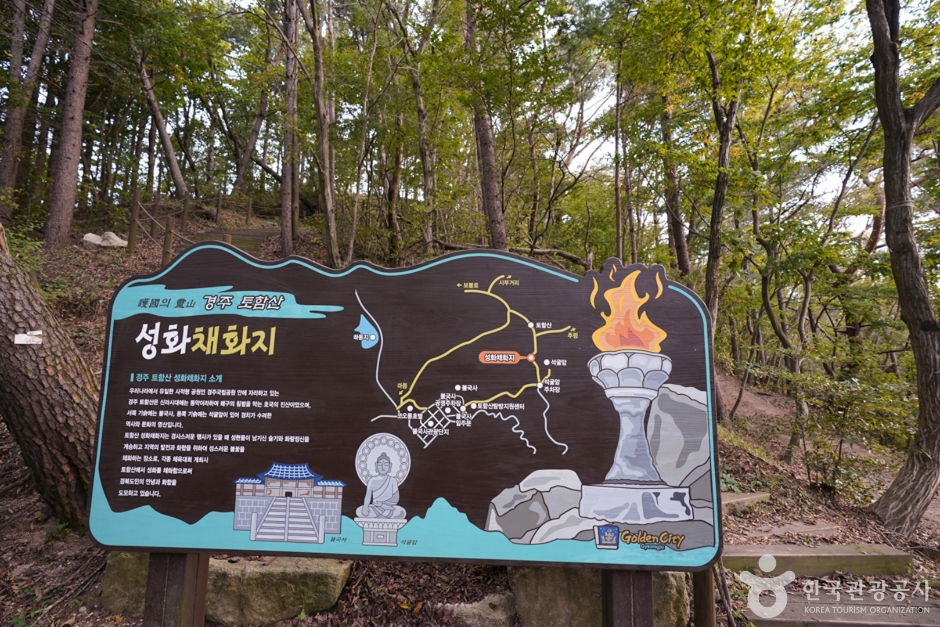
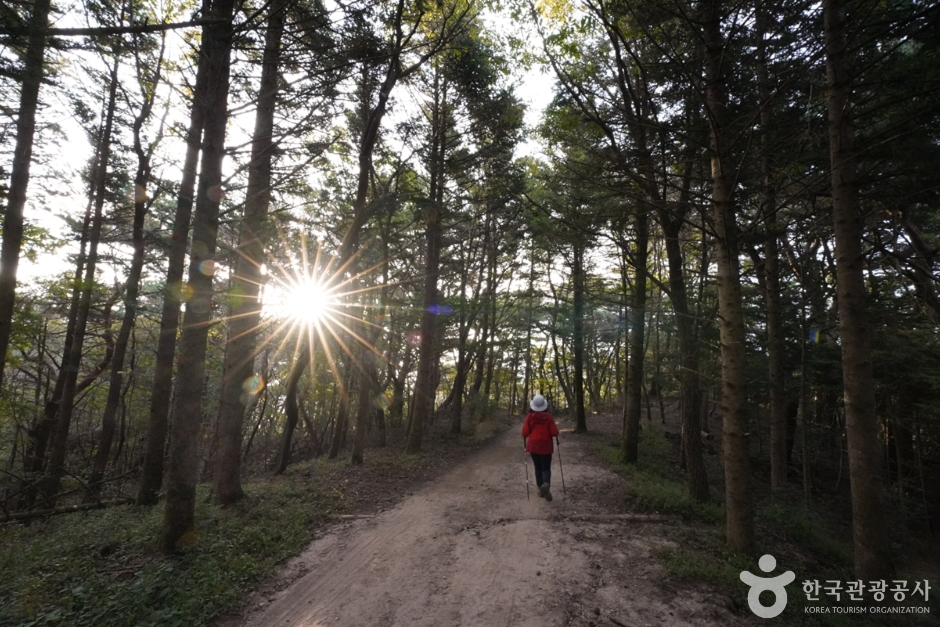
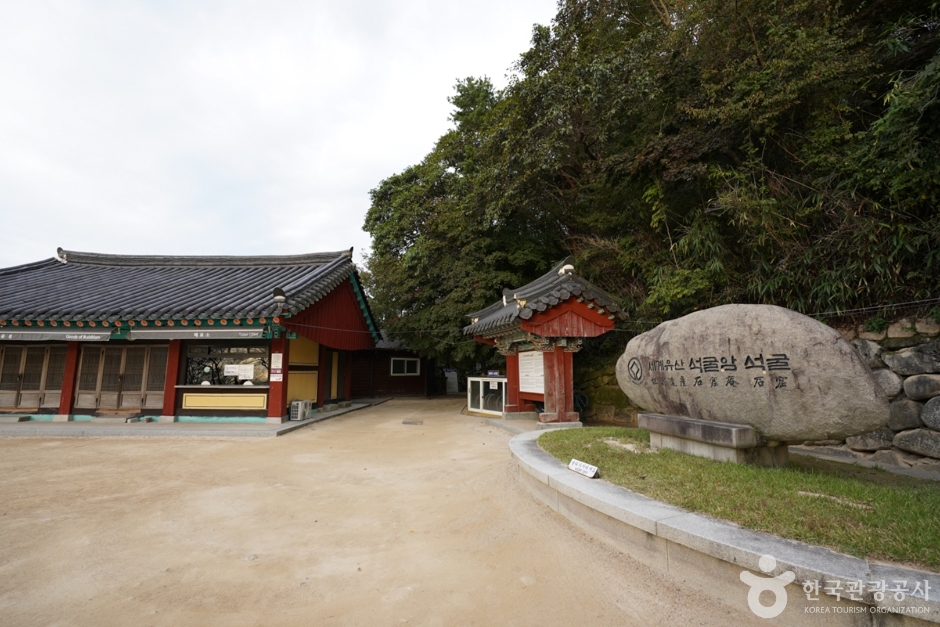
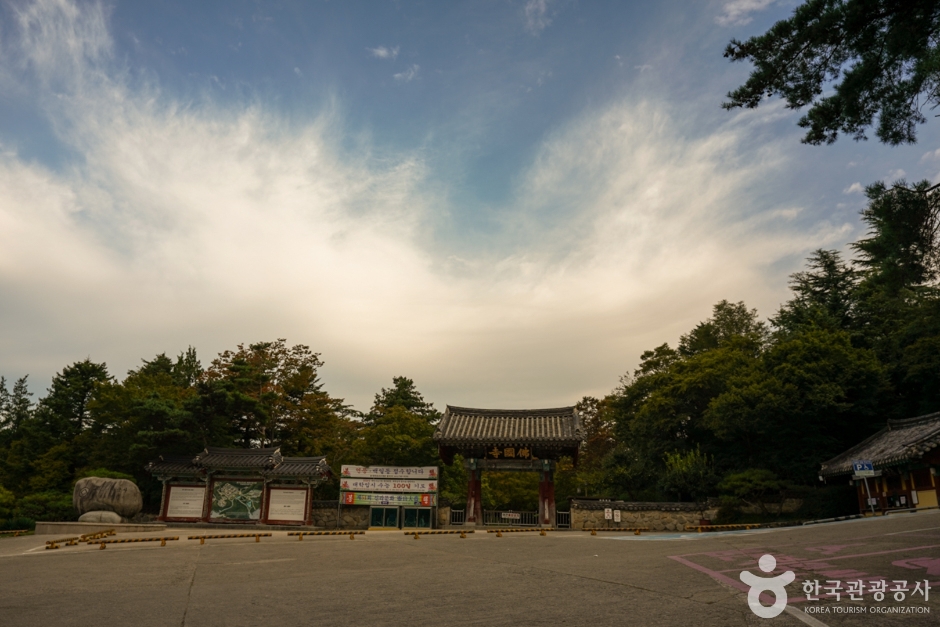
Beyond simply boasting beautiful natural scenery, **Tohamsan** fully embraces the legacy of brilliant Silla Buddhist art. Bulguksa Temple and Seokguram Grotto, nestled at the foot of the mountain, are treasures of humanity listed as UNESCO World Heritage Sites, and living evidence of the Silla people’s outstanding artistic sense and deep devotion.
Bulguksa & Seokguram, Their Subtle Harmony
| Heritage Name | Key Features | Viewing Points |
|---|---|---|
| Bulguksa | Representative temple of the Unified Silla period, including Seokgatap Pagoda, Dabotap Pagoda, Jahamun Gate, etc. | Appreciate the magnificent yet intricate architectural beauty, comparing the exotic form of Dabotap Pagoda with the simple elegance of Seokgatap Pagoda. |
| Seokguram | The epitome of artificial grottoes, main Buddha statue and niche Buddhas | The compassionate smile of the main Buddha statue, perfectly proportioned and harmonious; the scientific architectural technique utilizing Tohamsan’s natural humidity. |
Both historical sites preserve the mystery passed down for a thousand years, imbued with the spirit of **Tohamsan**. In particular, Seokguram Grotto demonstrates astonishing scientific technology by utilizing Tohamsan’s natural environment to regulate the internal temperature and humidity, making one marvel at the wisdom of the Silla people.
History at Every Step, The Road to Tohamsan
**Tohamsan** is easily accessible as it is close to Gyeongju city center. It is convenient to visit by public transport or private car, and the surrounding area is full of diverse attractions and entertainment, allowing for a fulfilling day trip.
Recommended Nearby Attractions
- Bulguksa Temple Gyeongju’s representative historical site, no explanation needed. Located at the foot of Tohamsan, it’s good to visit together.
- Seokguram Grotto Located within driving distance from Bulguksa Temple, and also famous as a sunrise viewing spot.
- Gyeongju World A great theme park for families, with thrilling attractions and various entertainment.
- Bomun Tourist Complex Centered around a lake, it offers well-equipped facilities like hotels, resorts, and cruise ships, allowing for comfortable relaxation.
Different Charms Each Season, The Diverse Faces of Tohamsan
**Tohamsan** changes into new attire each season, presenting diverse scenery to visitors. In spring, light green shoots and wildflowers color the mountain, and in summer, lush forests provide cool shade. In autumn, fall foliage peaks, painting the entire mountain red, and in winter, snow-covered landscapes display quiet and majestic beauty.
Which Season to Visit?
- Spring Good for enjoying a light hike amidst refreshing energy. The scenery with Bulguksa Temple’s cherry blossoms is especially beautiful.
- Summer Good for walking along forest trails with cool breezes. Escape the heat and enjoy a summer retreat in nature.
- Autumn The season when colorful autumn foliage creates a spectacular view. Red and yellow leaves form a magnificent sight, adding to the joy of hiking.
- Winter You can encounter quiet and mysterious snow-covered landscapes. Snow-covered Bulguksa Temple and Seokguram Grotto create an even more tranquil atmosphere.
No matter which season you visit **Tohamsan**, you will be deeply captivated by its unique charm. Feel the historical breath of Silla along with the vitality of changing nature.
Frequently Asked Questions
Q1. Why is the name of the mountain ‘Tohamsan’?
Tohamsan is close to the sea and often shrouded in fog. Its appearance, as if the mountain inhales and exhales fog, is said to have given it the name ‘Tohamsan’. It was one of the Five Sacred Mountains revered by the Silla people.
Q2. How can I see the sunrise from the summit of Tohamsan?
It is recommended to depart at least 1 hour before sunrise to reach the summit. Prepare a headlamp, warm clothing, snacks, etc., for the dark hike, and check the weather forecast to choose a clear day.
Q3. Is Tohamsan difficult to climb?
No. Tohamsan is the second highest mountain after Gyeongju Danseoksan, but its terrain is not steep, making it known as a good mountain for light hiking. Even novice hikers can climb it without difficulty.
Q4. What are some nearby tourist attractions worth visiting around Tohamsan?
Bulguksa Temple and Seokguram Grotto, UNESCO World Heritage Sites, are located at the foot of Tohamsan, making them good to visit together. Additionally, various attractions and amenities such as Gyeongju World and Bomun Tourist Complex are nearby.
Q5. What are the seasonal charms of Tohamsan?
In spring, you can enjoy light green shoots and wildflowers; in summer, the coolness of lush forests; in autumn, the splendid colorful autumn foliage; and in winter, quiet and majestic snowscapes. You can feel the unique changes of nature in each season.