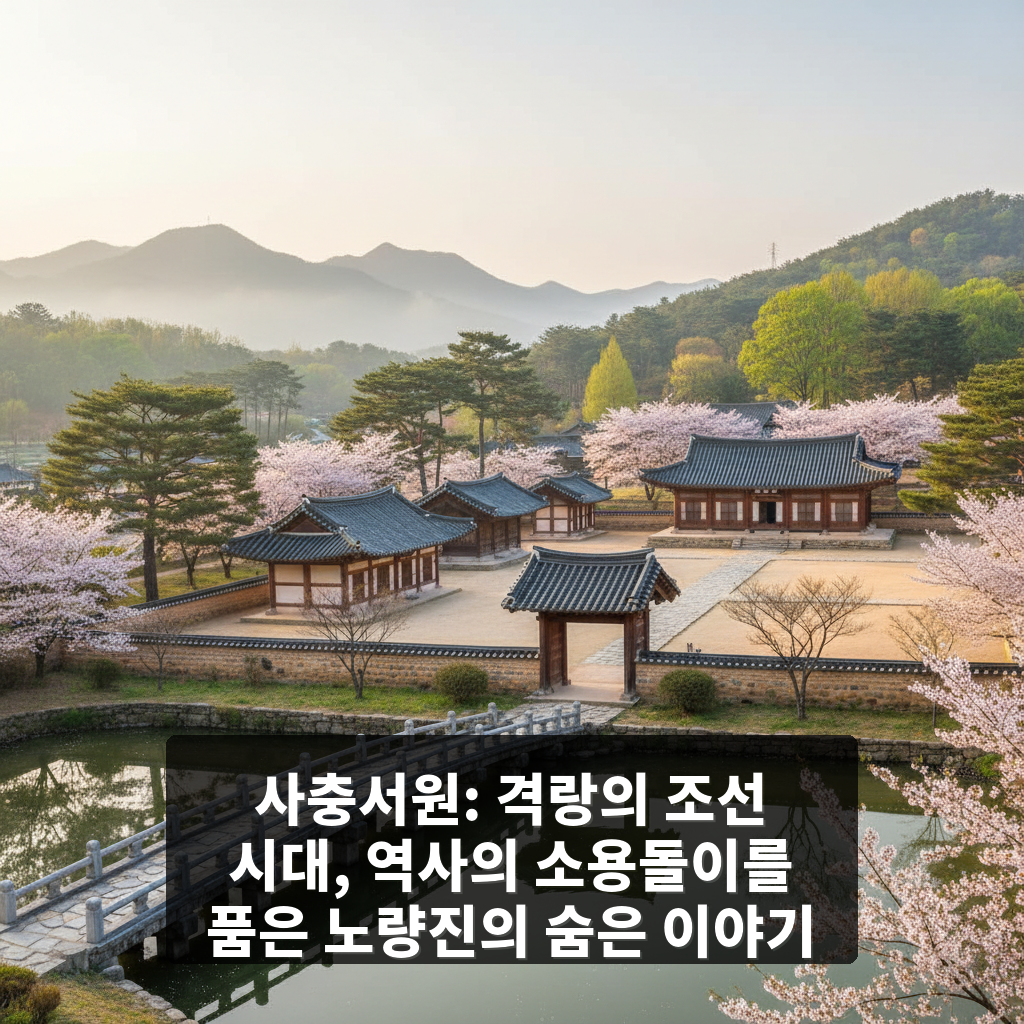
Sa Chung Seowon: Noryangjin’s hidden story, embracing the maelstrom of history during the tumultuous Joseon Dynasty


What exactly is the ‘truth’ of history? Once revered as loyal subjects, then becoming criminals overnight, only to be reinstated… Such a dramatic story is fully preserved in **Sachungseowon**, located in the heart of Noryangjin.
Built to honor four loyal subjects, this place endured the rise and fall amidst the fierce political struggles of the Noron and Soron factions during the Joseon Dynasty, remaining an important historical testament. Shall we take a time trip to this place, where historical events more vivid than any novel are intertwined?
The Prologue of History Embodied in the Name Sachungseowon, in the Heart of Noryangjin
In 1725 (Year 1 of King Yeongjo), **Sachungseowon** was established in Gwacheon, Gyeonggi Province (present-day Noryangjin-dong, Dongjak-gu) by the Noron faction to enshrine four loyal subjects: Kim Chang-jip, Yi I-myeong, Yi Geon-myeong, and Jo Tae-chae. At that time, these individuals, who had incurred the hatred of the Soron faction due to issues surrounding the appointment of the Crown Prince Regent and regency, were implicated in the ‘Sinimoksa’ incident and met a tragic end.
However, when the Crown Prince Regent ascended to the throne as King Yeongjo and the Noron government came into power, these individuals were exonerated, and the Confucian academy was also established with state support. Upon its establishment, it even gained the status of a ‘Sa-aek Confucian academy’ (Confucian academy with royal charter), seeming to walk on a smooth path. Just like its name, it seemed destined to be remembered forever as a ‘Confucian academy enshrining four loyal subjects’.
From Loyal Subject to Traitor: A Record of Political Upheavals That Shook the Dynasty
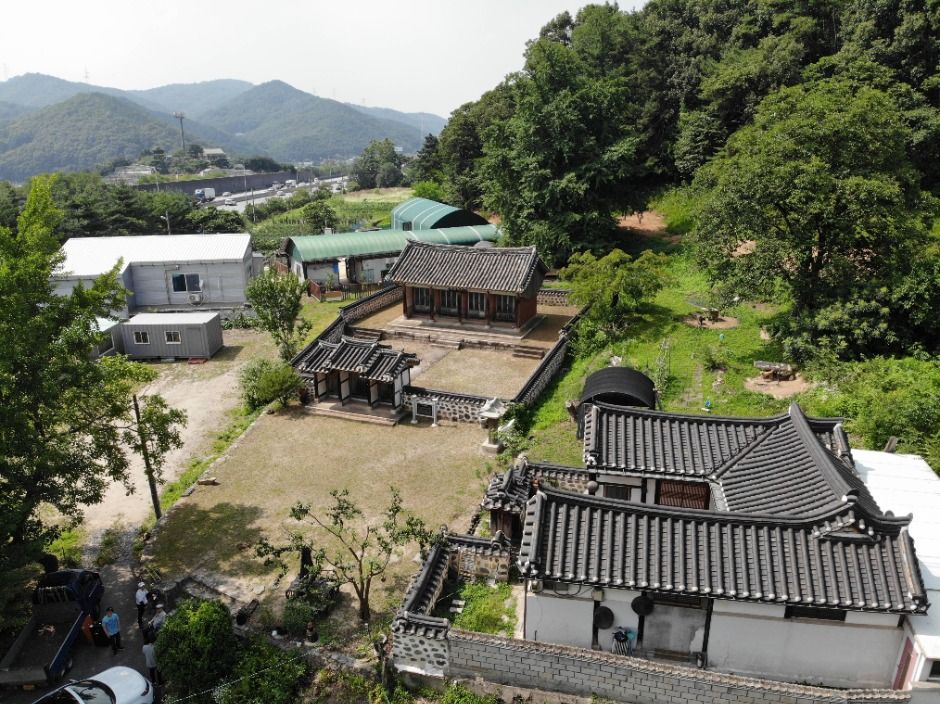
The Cycle of History: Crisis and Reconstruction of Sachungseowon
However, the winds of history were cruel. Just two years later, in 1727, with the ‘Jeongmihwanguk’ bringing the Soron government to power, the Sinimoksa incident was overturned again, and the four loyal subjects were once more branded as traitors. **Sachungseowon** also met the tragic fate of being abolished along with this. The sacred space that once enshrined loyal subjects seemed to vanish in an instant.
Time passed, and in 1740, with the ‘Gyeongsincheobun,’ they were once again judged as loyal subjects, but the reconstruction of the Confucian academy was not easy. It was only in 1756, after the complete downfall of the Soron faction, that **Sachungseowon** could finally be re-established, and to this day, it bears witness to the tumultuous Joseon Dynasty with its name.
Key Turning Points in the History of Sachungseowon
- 1722 Sinimoksa Incident The tragic end of the four great Noron ministers (Kim Chang-jip, Yi I-myeong, Yi Geon-myeong, Jo Tae-chae)
- 1725 Establishment of Sachungseowon Reinstatement of the four great ministers after King Yeongjo’s ascension, establishment of the Confucian academy led by Noron officials and scholars, and state endorsement
- 1727 Jeongmihwanguk Overturn of the Sinimoksa incident with the emergence of the Soron government, the four great ministers again branded as traitors, and abolition of the Confucian academy
- 1740 Gyeongsincheobun The four great ministers again judged as loyal subjects
- 1756 Re-establishment of Sachungseowon Reconstruction of the Confucian academy after the complete downfall of the Soron faction
Sachungseowon Connecting Past and Present: Visiting Tips and Nearby Attractions
Feeling the Breath of History with Every Step
Currently, **Sachungseowon** is managed by Hanyang University Seoul Hospital, carefully preserving its historical traces. While not a grand and magnificent edifice, standing here and imagining the turbulent times of history will allow you to vividly feel the political chaos and the anguish of the figures of that era. Experience a profound resonance at Sachungseowon, a small yet powerful historical site.
Practical Advice for Historical Exploration
- Locating the Site **Sachungseowon** is located in Noryangjin-dong, Dongjak-gu, Seoul, offering excellent public transportation accessibility. It’s convenient to check the exact location with a map app before your visit and identify nearby bus stops or subway stations in advance.
- Learning Historical Background If you learn about historical events such as the Sinimoksa Incident and the Jeongmihwanguk, as well as the conflicts between the Noron and Soron factions, before your visit, the meaning of the Confucian academy and the stories of the four loyal subjects will resonate much more deeply.
- Connecting with Nearby Attractions There are many attractions nearby, such as the Noryangjin Fisheries Wholesale Market and the War Memorial of Korea in Yongsan. It is recommended to plan a richer historical and cultural exploration by visiting these places together. Comparing the changed appearance of the Noryangjin area with its past traces is also quite enjoyable.
Please refer to the map below for the exact location of **Sachungseowon**.
Reasons Why We Should Remember Sachungseowon
Sachungseowon is more than just a place to honor four loyal subjects; it vividly demonstrates the brutality of power struggles during the Joseon Dynasty and the personal tragedies experienced within them. This place, which starkly reveals how political beliefs and loyalty can be overturned in an instant, is a living educational site where valuable lessons we can learn from history today are condensed. Listen to the voices of the past at Sachungseowon, Noryangjin’s hidden history.
Frequently Asked Questions
Q1. Why was Sachungseowon established?
After the Noron government came to power in 1725 (Year 1 of King Yeongjo), it was established to reinstate the four great Noron ministers (Kim Chang-jip, Yi I-myeong, Yi Geon-myeong, Jo Tae-chae), who had met tragic ends after being implicated in the Sinimoksa Incident, as loyal subjects and to enshrine them.
Q2. Why was the Confucian academy abolished and then re-established?
It was due to the fierce political confrontation between the Noron and Soron factions during the Joseon Dynasty. With the Jeongmihwanguk, the Soron government came to power, and the four great ministers were again branded as traitors, leading to its abolition. However, it was re-established in 1756 after the complete downfall of the Soron faction.
Q3. Who does ‘Sachung’ in Sachungseowon refer to?
It refers to the ‘four loyal subjects’: the four great Noron ministers Kim Chang-jip, Yi I-myeong, Yi Geon-myeong, and Jo Tae-chae, who incurred the hatred of the Soron faction due to issues such as the appointment of the Crown Prince Regent during King Gyeongjong’s reign in Joseon, were implicated in the Sinimoksa Incident, and sacrificed their lives.
Q4. Are there any special tips to know when visiting the Confucian academy?
Since it is located in Noryangjin-dong and offers good public transportation accessibility, it is advisable to check the exact location and travel route via a map app before your visit. Furthermore, gaining prior knowledge of the historical background, such as the political confrontation between the Noron and Soron factions during the late Joseon Dynasty and the Sinimoksa Incident, will allow for a deeper understanding during your visit.
Q5. Are there any places worth visiting near Sachungseowon?
Yes, the vibrant Noryangjin Fisheries Wholesale Market and the Seoul National Cemetery are located nearby. You can combine your trip with various themes, such as reflecting on historical significance and enjoying the lively market scenery.