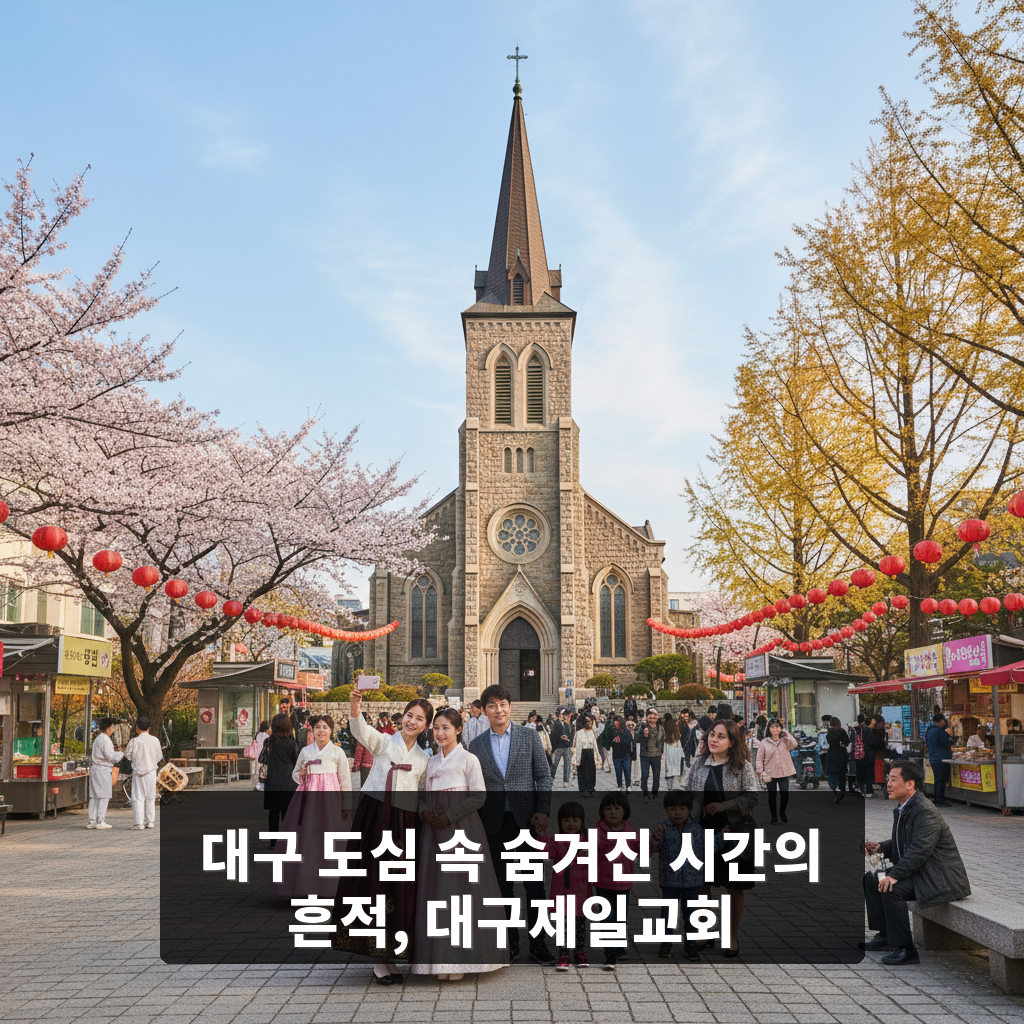
Traces of time hidden in Daegu’s city center, Daegu Jeil Church


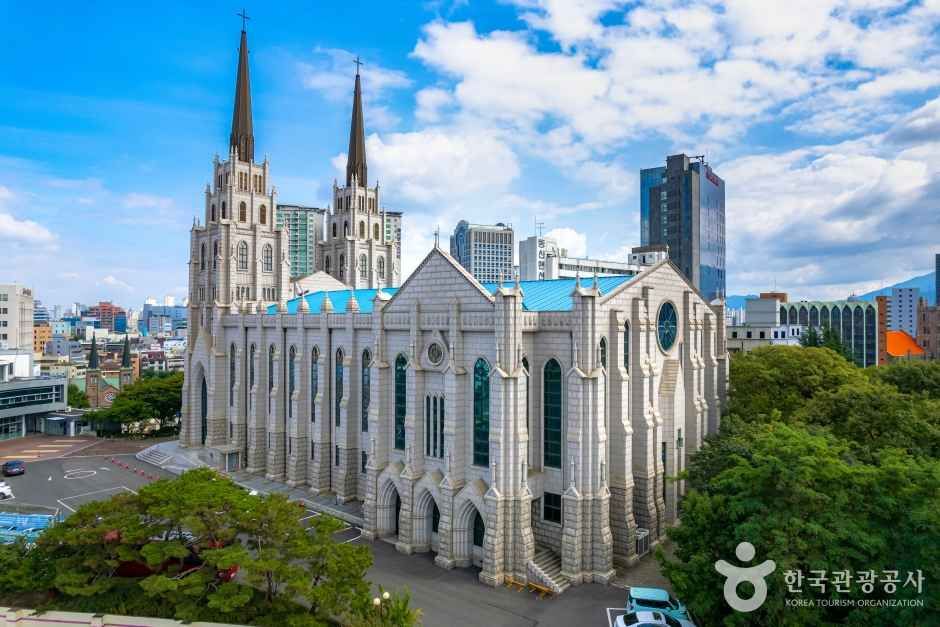
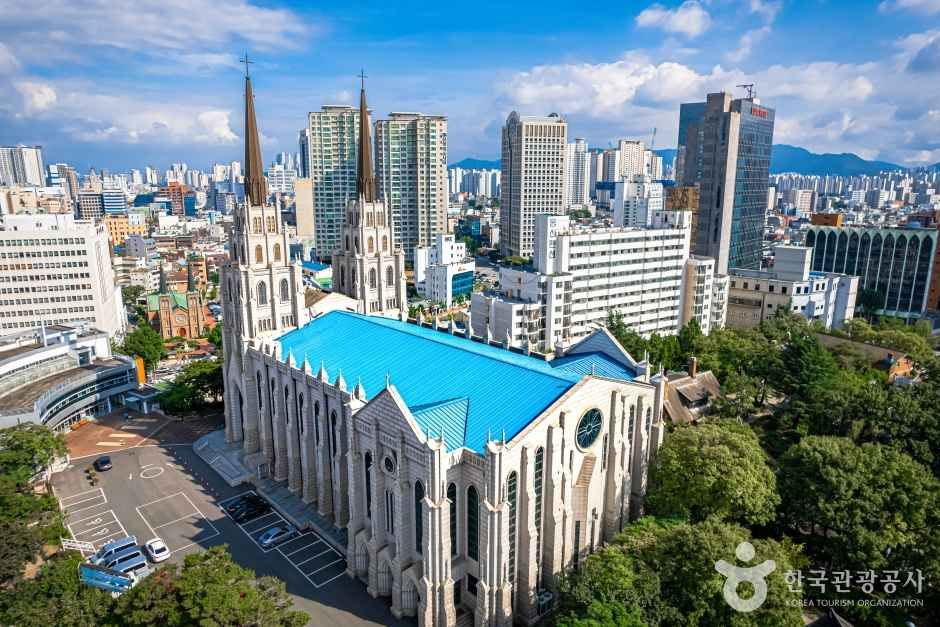
In Daegu’s Yaknyeongsi alley, a majestic Gothic building, embracing over 100 years of history, stands tall. It is the starting point of Daegu’s modern history and a living historical site, Daegu Jeil Church. This place has held countless stories since the first introduction of Western culture to Daegu, and conveys the echoes of that time when the footsteps of unfamiliar foreigners first touched Daegu soil.
Daegu Modern Era, the Beginning of its History
In 1893, Daegu Jeil Church opened the door to modern history as the first church in Gyeongsangbuk-do and Daegu City. Beyond being a mere place of worship, it played a crucial role as a hub for social change in Daegu, leading to the influx of Western culture.
In the past, it was known by names such as ‘Seongnae Church,’ ‘Nammunan Chapel,’ and ‘Namseongjeong Church.’ In 1908, the second Gothic-style chapel was built, laying the foundation for its current magnificent appearance.
Exotic Gothic Charm in Yaknyeongsi
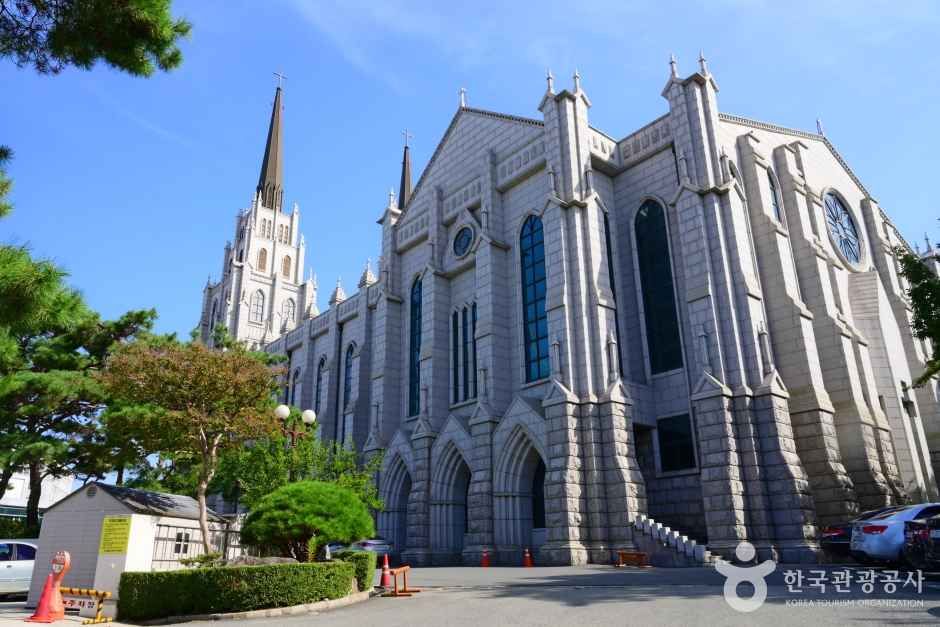
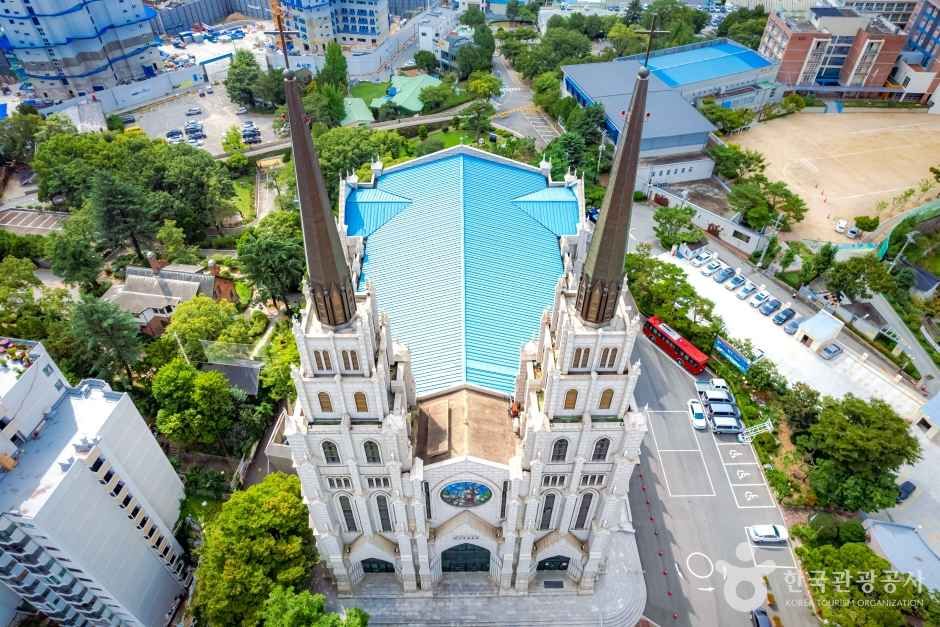
Upon entering Yaknyeongsi alley, the main hall of Daegu Jeil Church, in typical Gothic style, captures the eye. Its red bricks and sturdy stone evoke the antique charm of Western Europe, creating a unique contrast with the surrounding Hanok houses.
- Architectural Scale The main building is 2 stories, and the 5-story bell tower stands 33m high, making it an iconic building in Daegu.
- Construction Background In 1908, it was built through the collaboration of American missionaries and traditional Korean carpenters.
Crossroads of Culture: The Heart of Yaknyeongsi Alley
Daegu Jeil Church is located in the heart of Yakjeon Alley in Yaknyeongsi. Together with the Daegu Yaknyeongsi Oriental Medicine Cultural Center and the Daegu Gyonam YMCA Hall, it forms the core of the modern alley, and facing Gyesan Catholic Cathedral across Seoseong-ro, it reveals a special intersection of Daegu’s modern history.
- Festival Utilization During major Daegu festivals such as the Yaknyeongsi Oriental Medicine Cultural Festival, Daegu Jeil Church serves as a key tourist attraction.
- Recommended Course It is included in Daegu city tours and modern alley courses, making it popular among visitors seeking history.
Daegu Modern Alley Tour, Tips and Etiquette
Here are tips for visiting Daegu Jeil Church, an essential stop on the Daegu Modern Alley tour. It is located at 222 Namseong-ro, Jung-gu, Daegu, and is easily accessible by public transport, being within walking distance from Jungangno Subway Station.
- Walking Recommendation Explore it along the modern alley course, together with nearby historical sites like Gyesan Catholic Cathedral.
- Best Time to Visit Visit during the day, avoiding worship hours, and inquire in advance for interior viewing.
- Parking Information Parking space may be limited, so public transportation is recommended.
Beyond Time, Discussing Daegu’s Future
Daegu Jeil Church, which has steadfastly held its place through the storms of countless years. More than just a building, it is a witness to history, having breathed with Daegu’s modernization and embraced the lives and dreams of countless people.
This place, with its Gothic grandeur and significance as Daegu’s first church. If you visit Daegu, why not stop by Daegu Jeil Church for a special experience that takes you back in time? It will be a precious time to understand the past, feel the present, and envision Daegu’s future.
Frequently Asked Questions
Q1. What historical significance does Daegu Jeil Church hold?
Established in 1893, Daegu Jeil Church was the first church in Gyeongsangbuk-do and Daegu City, playing a crucial role as a channel for the influx of Western culture during Daegu’s modernization. Known by various names, it is a living historical site that has witnessed Daegu’s changes through different eras.
Q2. What are the characteristics of its architectural style?
Daegu Jeil Church is built in a typical Gothic style, giving it an exotic Western European feel. The main building is 2 stories, and the 5-story bell tower reaches a height of 33m, and the second chapel, built in 1908, is particularly significant as it was constructed through the collaboration of American missionaries and traditional Korean carpenters.
Q3. Are there other places to visit nearby?
Yes, the church is located in the heart of Yakjeon Alley in Yaknyeongsi, close to the Daegu Yaknyeongsi Oriental Medicine Cultural Center and the Daegu Gyonam YMCA Hall. Additionally, across Seoseong-ro is Gyesan Catholic Cathedral, Daegu’s first Catholic church, making it an excellent part of a Daegu Modern Alley tour course.
Q4. Are there any special considerations when visiting?
As the church is a place of worship, it is best to visit outside of worship hours. Inquiries may be required in advance for interior viewing. Furthermore, visiting during the Yaknyeongsi Oriental Medicine Cultural Festival, held every spring, offers a more diverse experience. Public transportation is recommended.
Q5. It is said to have been known by other names in the past; what were they?
Daegu Jeil Church was known by several names in the past. Located within the fortress, it was called ‘Seongnae Church.’ Because it was situated inside the South Gate, it was also referred to as ‘Nammunan Chapel’ or ‘Nammunnae Church.’ When a Hanok was purchased and used in 1896, it was also called ‘Namseongjeong Church.’