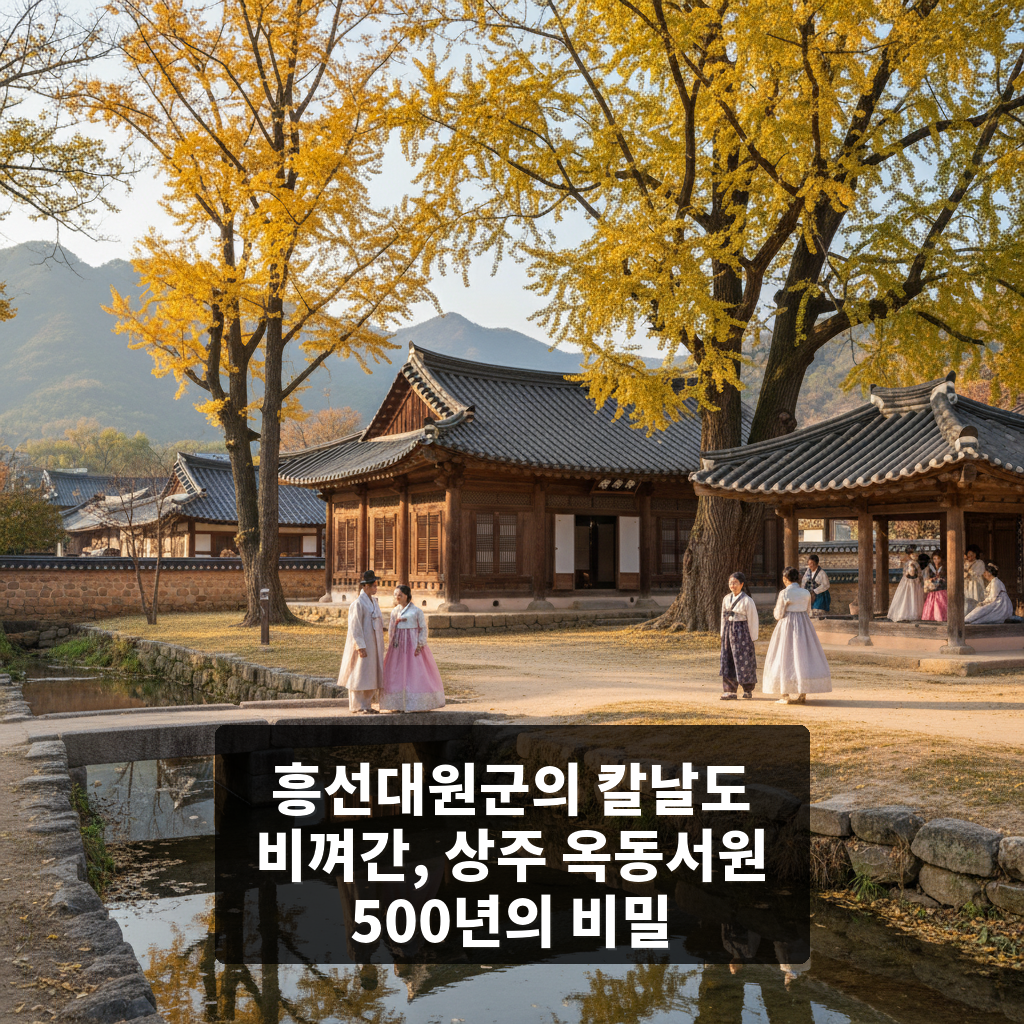
The 500-year secret of Sangju Okdongseowon, spared even by Heungseon Daewongun’s blade.


During a turbulent period when numerous seowon disappeared into history, only 47 places survived, preserving their majesty to this day. Among them, the immortal Sangju Okdongseowon is the only seowon dedicated to Hwang Hui Jeongseung that survived while fully retaining its original appearance, delivering a deep resonance to us. What power enabled Okdongseowon to endure such harsh trials?
On tranquil grounds layered with time, Okdongseowon is not just a building but living history itself. The moment we step inside, we can fully feel the breath and wisdom of Joseon-era sages and the values they sought to protect. Shall we follow the story of this seowon, which has shone unchanged for over 500 years?
Sangju Okdongseowon, embodying a tumultuous page of history. Within it lies the spirit of honoring the scholarship and virtuous deeds of great scholars and the timeless spirit of education. In this special space connecting past and present, we anticipate gaining new insights.
An immortal foundation that preserved its dignity amidst the trials of history.
Sangju Okdongseowon first opened its doors in 1518 as Baekhwaseodang. It was to commemorate the scholarship and virtuous deeds of Bangchon Hwang Hui, a renowned minister of Joseon. Later, in 1580, a new yeongdang (shrine) was built in Baekokdong, and Hwang Hui’s ancestral tablet was enshrined, with ancestral rites held in spring and autumn. Even amidst Heungseon Daewongun’s order to abolish seowon, which forced countless seowon to close, the fact that it is one of the 47 seowon nationwide that survived without being destroyed is a marvelous piece of history in itself. In particular, among the seowon dedicated to Hwang Hui, it is the only one that has well-preserved its original appearance, making its value shine even brighter.
The values preserved by Okdongseowon
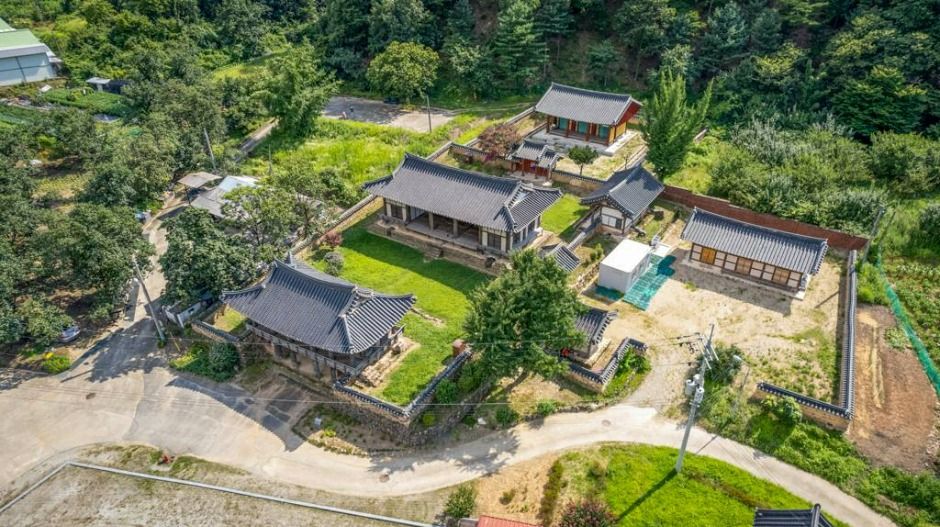
- Legitimacy It firmly inherited the spirit of Joseon Confucian education and carried on the will of the ancient sages.
- Historicity In 1714, it was elevated to a seowon, and in 1789, it received the ‘Okdongseowon’ royal charter from the court, establishing itself as a recognized educational institution and a spiritual focal point.
- Place of Education As a cradle for academic research and nurturing talent, it profoundly influenced the local community.
Thus, Okdongseowon is not merely a historical site but can be called a living history museum that has preserved unchanging values and spirit even amidst the changes of time.
Stories Forged by Time: The Deep Breath of the Seowon
The history of Okdongseowon is not merely about the year its buildings were constructed but is composed of the lives and scholarship of countless individuals imbued within it. Starting initially as Baekhwaseodang, it was moved to its current location and elevated to a seowon in 1714. In 1715, Gyeongdeoksa and a lecture hall were built, giving it its current scale and grandeur. This place has honored and enshrined the academic virtues of not only Hwang Hui Jeongseung but also various other scholars.
Who are the sages enshrined at Okdongseowon?
Klook.com| Figure | Key activities and enshrinement period |
|---|---|
| Hwang Hui (黃喜) | Renowned minister of the early Joseon period, model of scholarship and virtuous deeds (main figure) |
| Jeon Sik (全湜) | Additionally enshrined when the seowon was elevated in 1714, a highly virtuous Confucian scholar |
| Hwang Hyohyeon (黃孝獻) | Additionally enshrined in 1786, a civil official and scholar during the reign of King Jungjong of Joseon |
| Hwang Nyu (黃紐) | Additionally enshrined in 1786, a scholar during the reign of King Seonjo of Joseon |
In this way, Sangju Okdongseowon gathers the academic achievements and spirits of figures representing an era and is a valuable space that transmits them to future generations. As we walk through this place, we can trace the trajectory of their lives and glimpse the ideals and wisdom pursued by the scholars of that time.
Glimpse the wisdom of the sages: Architectural beauty and heritage of the seowon
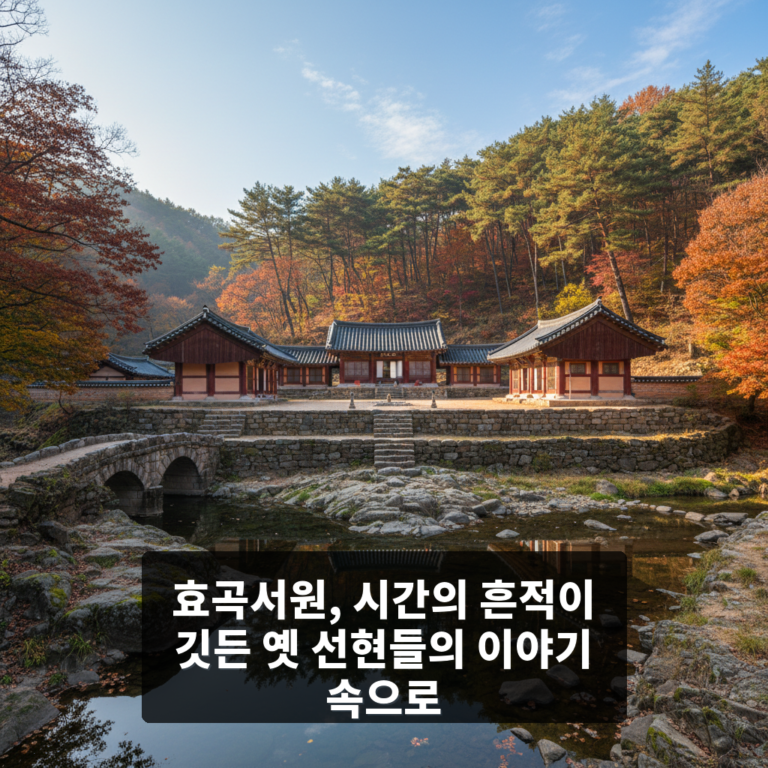
Okdongseowon holds precious cultural heritage commensurate with its historical depth. The tranquil buildings boast a simple yet elegant beauty, offering a glimpse into the architectural style of Joseon seowon at that time. In particular, the valuable documentary heritage preserved within the seowon are living evidence of history themselves.
Precious records preserved by Okdongseowon
- Portraits Three portraits of Hwang Hui are preserved, allowing us to imagine his appearance.
- Collected works and genealogies Valuable books such as Bangchonseonsaengmunjip, Bangganjip, and Hwangssisebo transmit the thoughts and family lineage of the ancient sages.
- Woodblocks A total of 241 woodblocks from 5 types of works, including Mannojip, are important materials that offer a glimpse into the printing culture of the time.
- Ancient documents and signboards Over 300 ancient documents and 11 signboards provide detailed information about the operation and history of the seowon.
These legacies show that Sangju Okdongseowon was more than just a memorial space, but a hall of learning that continuously inspired future scholars. Take time to explore the buildings and artifacts to deeply understand the lives and thoughts of the ancient sages.
Along the tranquil path: How to get to Sangju Okdongseowon and its surroundings
Sangju Okdongseowon is located at 157 Sanggok-ri, Hwaseo-myeon, Sangju-si, Gyeongbuk. When using public transportation, it is convenient to take a bus towards Hwaseo from Sangju Intercity Bus Terminal or to use a private car. While the tranquility of the seowon itself is wonderful, exploring the beautiful surrounding natural scenery and other historical sites together will make your trip even richer.
How can I get there?
For the exact location, please refer to the map below.
Places to enjoy nearby
- Hwaseoyugok A beautiful valley near Okdongseowon, perfect for relaxing in nature.
- Sangjuseong Fortress Visit Sangju Eupseong, a historically significant fortress, to imagine what Sangju looked like in the past.
- Gyeongcheondae Pavilion A renowned spot to admire the hidden beauty of the Nakdonggang River, boasting outstanding scenic views.
Enrich your journey: Tips for visiting Okdongseowon
Visiting Okdongseowon is more than just exploring a historical site; it can be a meaningful journey to experience the spirit of Joseon-era scholars. Here are a few tips for a more in-depth experience.
How to fully enjoy Okdongseowon
- Consider the season In spring, green sprouts, and in autumn, autumn leaves add to the tranquility of the seowon. Visiting during the ancestral rites in spring and autumn can offer a special experience.
- Utilize historical explanations To help with a deeper understanding of the seowon, look up related information in advance or check for explanation programs offered on-site.
- Plan nearby explorations Combine your visit to the seowon with the beautiful natural scenery or other cultural heritage sites nearby to create a fulfilling day trip.
- Maintain a quiet demeanor As the seowon is a place dedicated to honoring the spirit of the sages, it is recommended to view it in a reverent and quiet atmosphere.
- Document with photos Capture the unspoiled beautiful scenery and architectural beauty of the seowon with your camera to create special memories.
Sangju Okdongseowon is a special place that transcends centuries, offering us lessons and inspiration. We hope the time spent here will bring deep resonance and new inspiration to your life.
Frequently Asked Questions
Q1. When was Sangju Okdongseowon built, and who founded it?
Okdongseowon was first founded in 1518 as Baekhwaseodang, established to commemorate the scholarship and virtuous deeds of Bangchon Hwang Hui, a renowned minister of Joseon. It reached its current form after several changes.
Q2. Why was Okdongseowon able to avoid Heungseon Daewongun’s order to abolish seowon?
Okdongseowon is one of the 47 seowon nationwide that survived without being destroyed. It is presumed to have been exempted from abolition due to its historical and academic significance as the only seowon dedicated to Hwang Hui that has well-preserved its original form.
Q3. Besides Hwang Hui Jeongseung, who else is enshrined at Okdongseowon?
Hwang Hui Jeongseung is enshrined as the main figure, and subsequently, other highly virtuous Confucian scholars of the Joseon era, such as Jeon Sik, Hwang Hyohyeon, and Hwang Nyu, were additionally enshrined to honor their spirits.
Q4. What is the admission fee to visit Okdongseowon?
Okdongseowon can generally be visited for free. However, if special events or programs are held, it may become charged, so it is advisable to check before visiting.
Q5. What tourist attractions are worth visiting near Okdongseowon?
Near Okdongseowon, you can enjoy a rich trip by exploring Hwaseoyugok, which boasts beautiful scenery, Sangju Eupseong, a historically significant fortress, and Gyeongcheondae, a famous spot to admire the hidden beauty of the Nakdonggang River.
 Love Korea? Promote it & Earn.