Timeless Buddhist Devotion, Jeongeup Mangjedong Standing Stone Buddha Statue: The Mystery of the Hat-Wearing Buddha


On the tranquil mid-slope of Manjebong, a branch of Duseungsan Mountain in Jeongeup, stands a mysterious stone Buddha statue that has silently stood guard for a long time. It is the Mangjedong Seokbulipsang. With its unique appearance, as if wearing a large hat, and an expression seemingly imbued with folk imagination, it immediately captures the gaze of onlookers.
This Buddha statue, also known as Daeam Seokbul, is more than a mere religious sculpture; it is a historical artifact where the wishes and beliefs of the people of that era are condensed. Today, we will delve into the stories hidden behind the smile of this hat-wearing Buddha and the message he conveys.
Indeed, what kind of story gave this stone Buddha such a unique form? Amidst the beautiful nature of Jeongeup, where past and present coexist, we explore the charm of the Mangjedong Seokbulipsang.
The Mysterious Smile Blooming on Manjebong: Unique Features of Mangjedong Seokbulipsang
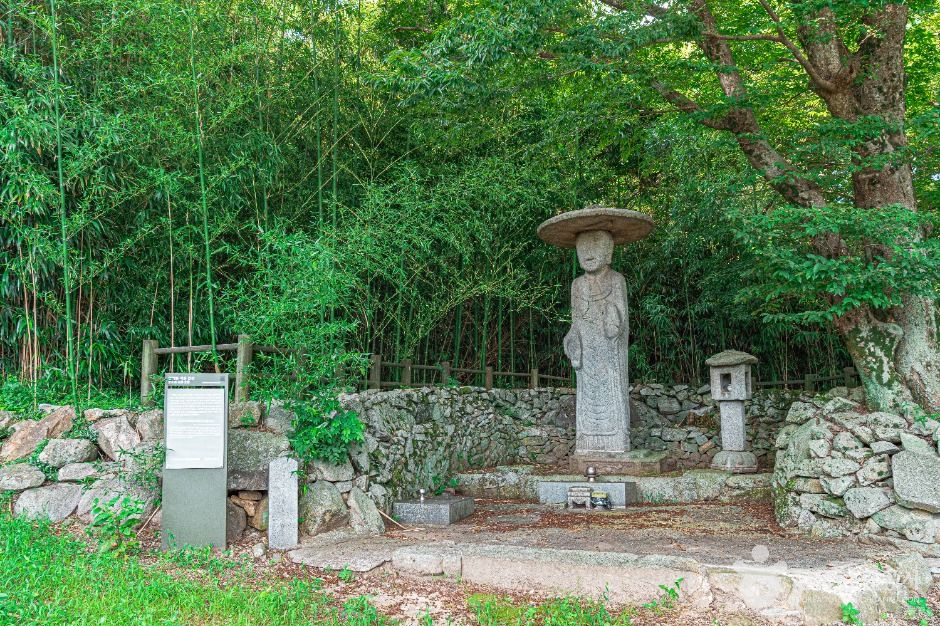
The Mangjedong Seokbulipsang boasts a more distinctive appearance than any other Buddha statue. What first catches the eye is the wide-brimmed hat placed on its head, resembling a large traditional Korean hat (*gat*). This is an unusual element, interpreted as the incorporation of Confucian characteristics into the Buddha statue, an interesting point through which one can glimpse the society of that time.
Gestures and Expression Containing the Wishes of the People
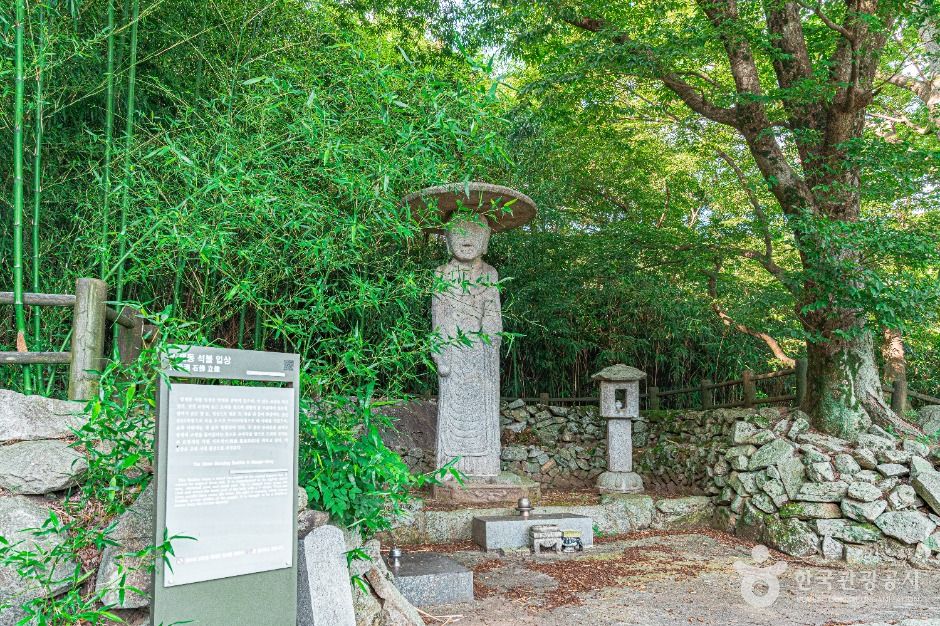
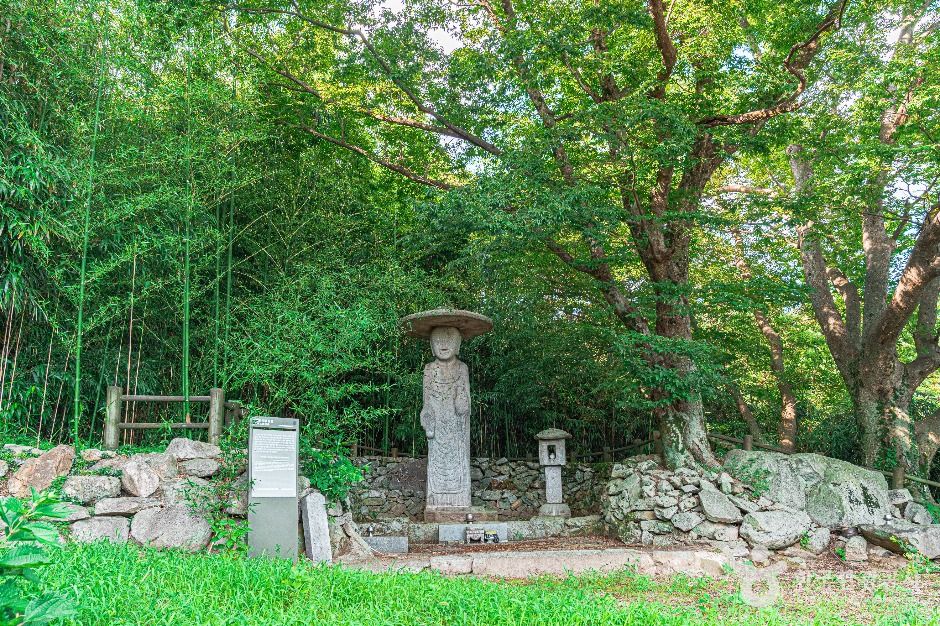
- Hat-shaped Headpiece A unique sculpture combining Confucian influence and folk characteristics, it confers a distinct individuality rarely found in other Buddha statues.
- Hunched Shoulders The somewhat hunched shoulders evoke a sense of human friendliness and humility even amidst its grandeur.
- Delicate Drapery The drapery flowing naturally below the chin adds to the three-dimensionality of the sculpture, and the three parallel lines extending below the wrists are a simple yet impressive expression.
- Unique Hand Gesture The right hand is raised to shoulder height, showing the palm with fingertips pointing skyward, while the left hand shows the palm with fingertips pointing towards the ground. This is interpreted as symbolizing the Buddha’s compassionate gesture to alleviate the suffering of sentient beings and bestow enlightenment.
The sculptor’s efforts are concentrated on the facial and hand expressions of this Buddha statue, and strong folk characteristics are evident. Despite being carved from a single large stone, its preservation is excellent, suggesting that it has received reverence and protection from many people over a long period.
Into the Tranquil Embrace of Jeongeup: The Way to Mangjedong Seokbulipsang
On a journey into the deep history of Jeongeup, to meet the Mangjedong Seokbulipsang, one must find the peaceful foothills of Manjebong. The path to encounter the Buddha statue standing quietly in nature will be a meditative experience in itself.
Visitor Tips: Using Public Transportation and Private Cars
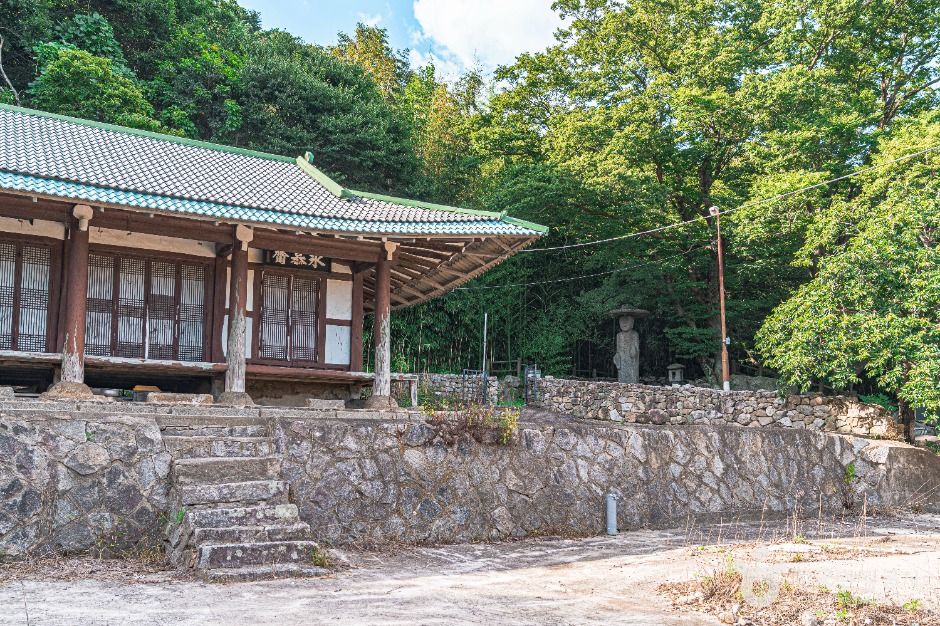
- Public Transportation From Jeongeup Station or Jeongeup Intercity Bus Terminal, take a city bus or taxi to near the Manjebong entrance, then follow the signs to walk to the Stone Buddha Statue. Checking the route is essential.
- Private Car If you search for ‘Mangjedong Seokbulipsang’ or ‘Daeam Seokbul’ on your navigation system, you can find the exact location. Parking spaces are available nearby, but please note that it can be crowded during peak visitor times.
- Walking Path Located on the mid-slope of Manjebong, a short hiking course should be expected. It is advisable to wear comfortable shoes and prepare appropriate attire according to the season.
Beyond the Stone Buddha, into the History of Jeongeup: Nearby Connected Tourist Attractions
If your visit to the Mangjedong Seokbulipsang alone leaves you wanting more, explore the scattered historical sites nearby and experience the deep history and culture of Jeongeup. From Buddhist heritage to traces of Confucianism, and even the footsteps of the Donghak Peasant Revolution, a variety of stories await you.
Jeongeup’s Attractions Woven with the Warp and Weft of History
| Tourist Attraction | Key Features | Significance in Connection with the Stone Buddha |
|---|---|---|
| Changdongseowon | A center for Confucian education during the Joseon Dynasty, where one can glimpse the Confucian spirit. | Along with Mangjedong Seokbulipsang, which incorporates Confucian elements, it helps understand the ideological trends of the Joseon Dynasty. |
| Baekunam Seokbulipsang | Another type of stone Buddha, showcasing the diversity of local Buddhist culture. | You can appreciate the sculptural beauty of stone Buddhas from different eras or with regional characteristics by comparing them with Mangjedong Seokbulipsang. |
| Malmokjeong Pavilion and Persimmon Tree | A pavilion and an old tree that embody the sentiment and history of the village. | An eco-friendly space where you can indirectly experience the history and daily life of the village around the Buddha statue. |
| Jeon Bongjun Teacher’s Old Residence | The birthplace of Teacher Jeon Bongjun, a leader of the Donghak Peasant Revolution. | Like Mangjedong Seokbulipsang, which likely contained the wishes of the people, it expands the historical significance as a place imbued with the nation’s aspirations. |
| Malmokjangteo Memorial Stone | A stele commemorating the historical significance of Malmokjangteo, which was an important stronghold of the Donghak Peasant Revolution. | Through the stories of people who lived through tumultuous times, one can imagine the era of the stone Buddha, which watched over for centuries. |
Encountering a Millennium of Wisdom: Advice for Visitors to Mangjedong Seokbulipsang
Here are some tips to fully enjoy the Mangjedong Seokbulipsang, where historical value and folk charm harmonize. Beyond merely observing, we hope you take the time to fully appreciate the meaning of the Buddha statue, its surrounding nature, and its history.
Checklist for a Deeper Experience
- Research in Advance If you research the historical background or folk stories related to Mangjedong Seokbulipsang before your visit, it will help you understand the Buddha statue more deeply.
- Enjoy the Tranquility As it is located on the mid-slope of Manjebong, its quiet and peaceful atmosphere is charming. Put down your smartphone for a moment and spend some time quietly meditating in front of the Buddha statue.
- Walk with Nature The path to the stone Buddha is an excellent walking course where you can enjoy nature. Enjoy the changing forest scenery with each season and take a leisurely stroll.
- Connect with Nearby Historical Sites If you plan your itinerary to include nearby tourist attractions such as Changdongseowon and Jeon Bongjun Teacher’s Old Residence, mentioned above, you can complete an even richer historical journey.
The Mangjedong Seokbulipsang is not just a mere stone. Having watched over the history of Jeongeup for centuries, it is a living witness that has shared people’s joys and sorrows. Through this unique stone Buddha, we hope you have a special experience where the wisdom of the past and the emotion of the present intersect.
Frequently Asked Questions
Q1. What are the characteristics of Mangjedong Seokbulipsang?
Mangjedong Seokbulipsang is characterized by wearing a large hat, similar to a traditional hat (*gat*), on its head, which incorporates Confucian characteristics. Strong folk characteristics are evident in its hunched shoulders, delicate drapery, and unique hand gestures.
Q2. When is the best time to visit Mangjedong Seokbulipsang?
There is no specifically designated time, but spring, with its sprouting green shoots, and autumn, with its beautiful foliage, are good times to experience the tranquility of the stone Buddha along with nature. During hot summers or cold winters, appropriate attire for the visit is required.
Q3. Is there a separate entrance fee for visiting Mangjedong Seokbulipsang Visit?
Yes, Mangjedong Seokbulipsang itself is a public historical site that can be freely viewed without a separate entrance fee. However, paid parking fees may apply when using nearby parking facilities, so it is advisable to check in advance.
Q4. Is the path to the stone Buddha difficult? Can the elderly or infirm visit?
Located on the mid-slope of Manjebong, there may be some inclines and stairs. As a short walk is required, the elderly or infirm can certainly visit if they wear comfortable shoes and pay attention to safety.
Q5. What other tourist attractions are there nearby to explore together?
Changdongseowon, Baekunam Seokbulipsang, Jeon Bongjun Teacher’s Old Residence, and Malmokjangteo Memorial Stone are located nearby, allowing you to deeply experience the history and culture of Jeongeup by connecting them.