
Traces sculpted by time, Whispers of Changwon Bulgoksa


In one part of Changwon, Gyeongnam, there is a temple nestled peacefully at the foot of Bieumsan Mountain. Did you know that this place holds the breath of Unified Silla? **Bulgoksa Temple (Changwon)**, forgotten over a long period but shining once again, is a place that embodies not just a simple temple, but also the deep history and cultural value of the region.
**Bulgoksa Temple (Changwon)**, whose name alone brings peace to the heart, stimulates our imagination with its legends. What kind of stories are truly infused in this tranquil space? Now, let’s unveil its mysterious veil together.
A millennium of history found close to downtown Changwon, **Bulgoksa Temple (Changwon)** offers contemplation, peace, and deep inspiration to its visitors. If you dream of a small escape from daily life on an ordinary weekend afternoon, this could be the perfect answer.
A Forgotten Name, the History of Bulgoksa Temple Reborn
**Bulgoksa Temple (Changwon)** is a traditional temple belonging to the Korean Buddhist Lotus Sutra Order, and its founding date is not clearly recorded. However, according to oral traditions in the Changwon area and the “Dictionary of Korean Buddhist Temples,” there is a story that it was founded in the 9th century during the Unified Silla period by State Preceptor Jingyeong (854~923). This is a passage that conveys the weight of over a thousand years of history.
Traces of Buddha Rediscovered in Ruins
During the late Joseon Dynasty, the former site of **Bulgoksa Temple (Changwon)** remained in ruins for a long time. At that time, behind the temple, there was a road connecting Gaeumjeong, Daebang-dong, and Sapajeong-dong. Along this road, Buddha statues and countless roof tiles Sculpture were scattered, leading residents to call the area ‘Bucheogol’ (Buddha Valley). From that name, one can infer that this was a site with an extraordinary Buddhist connection.
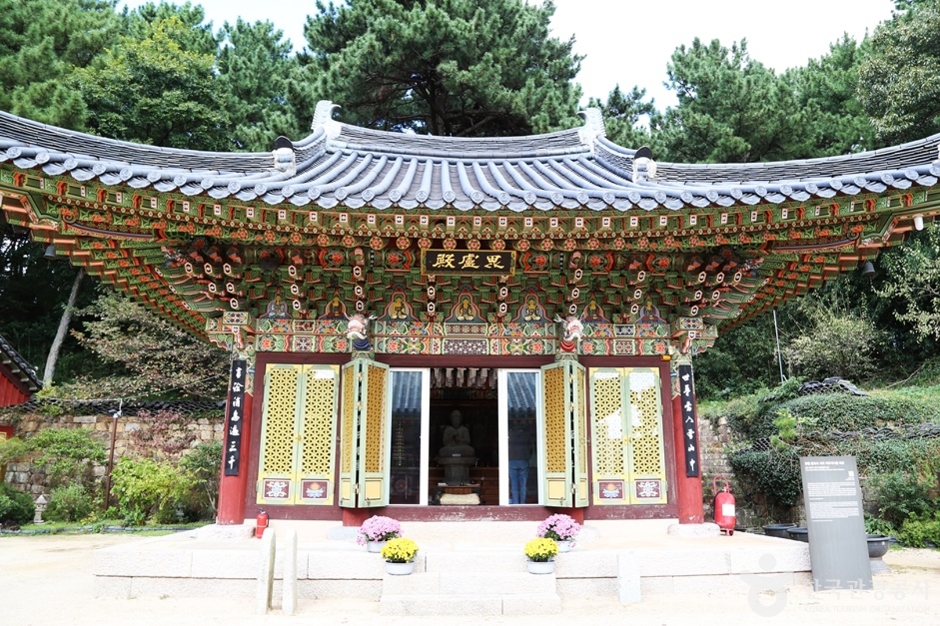
In 1929, Monk Udam (友潭和尙) discovered the Stone Seated Vairocana Buddha Statue that was exposed on the old temple site in Bucheogol. Centered around this, a temple was rebuilt, and thus, **Bulgoksa Temple (Changwon)** as we know it today was newly reconstructed. One naturally feels profound respect for Monk Udam’s vow and effort in finding the Buddha’s smile amidst the ruins.
- Founding Period Unified Silla period, oral tradition says it was founded by State Preceptor Jingyeong
- Reconstruction Period 1929, rebuilt by Monk Udam while enshrining the Stone Seated Vairocana Buddha Statue
- Former Name Called ‘Bucheogol’ (Buddha Valley) due to scattered Buddha statues and roof tile fragments on the old site
Symbols of Bulgoksa Temple Infused in Tranquility
Bulgoksa Temple encompasses various temple buildings and relics, centered around the Birojeon Hall. Located under the vital energy of Bieumsan Mountain, this place offers visitors more than just sights; it provides a time for deep reflection. Each temple building and relic holds its own story.
Iljumun Gate, Opening a Millennium’s Door
Klook.com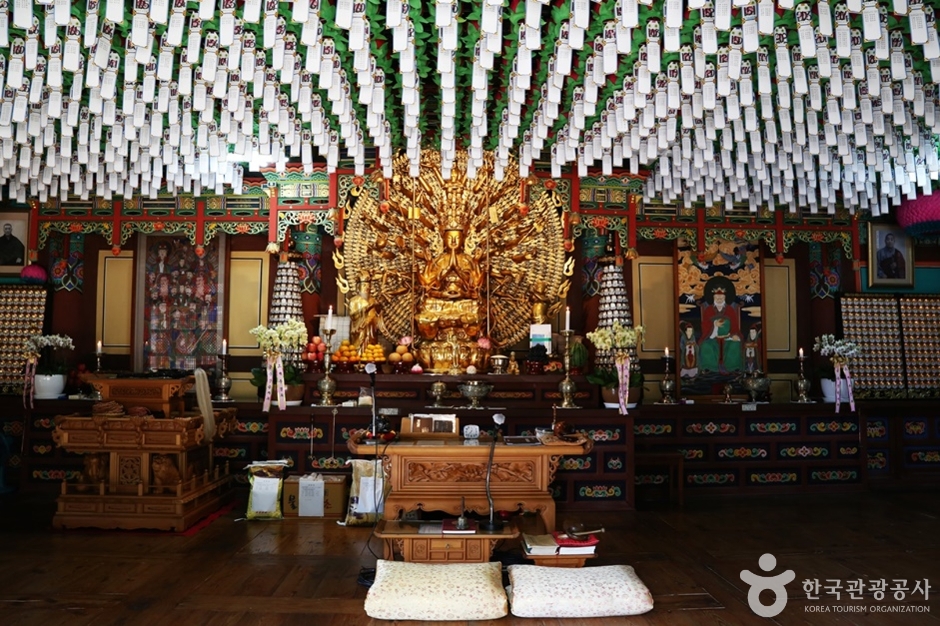

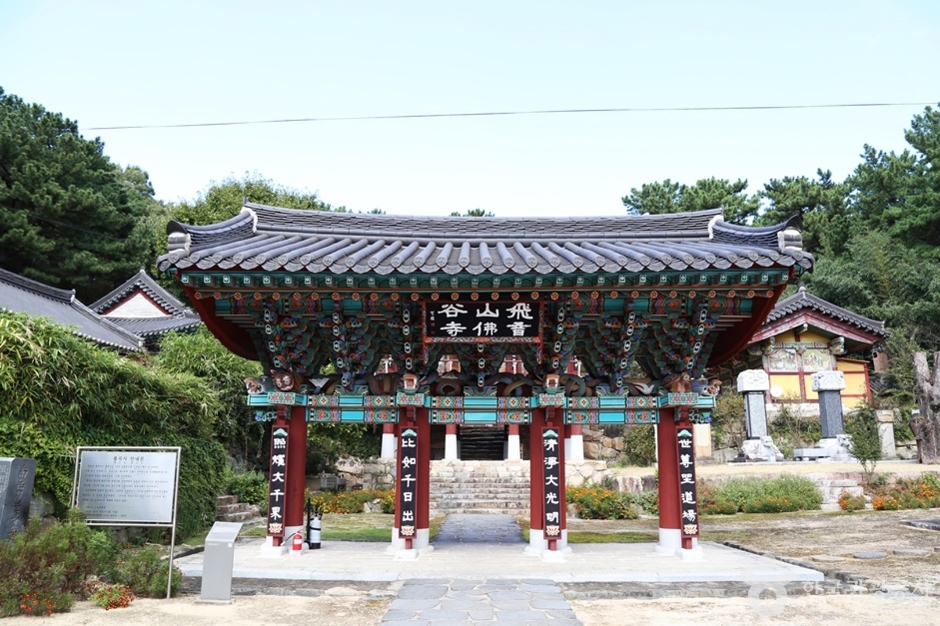
The Iljumun Gate standing at the entrance of Bulgoksa Temple has a particularly interesting history. This Iljumun Gate was originally one of the three gates of Changwonbu Gaeksa, and then, after being at Ungcheon Hyanggyo, it was moved to Bulgoksa Temple by Monk Udam in 1943. Passing through this Iljumun Gate, which arrived here after passing through various places over a long period, one can feel a mysterious sensation, as if traveling through time.
Treasures Not to Miss at Bulgoksa Temple
- Birojeon Hall The central building of Bulgoksa Temple, enshrining the Stone Seated Vairocana Buddha Statue discovered by Monk Udam. Find peace through the Buddha statue with its gentle smile.
- Iljumun Gate A historic gate that passed through Changwonbu Gaeksa and Ungcheon Hyanggyo. Pass through it, imagining the stories of history it holds.
- Stupa Components and Gwangbaejeon Hall The scattered stupa components and Gwangbaejeon Hall throughout the temple are relics proving Bulgoksa Temple’s long history. It is worth carefully examining each one and reflecting on its meaning.
- Igeonbi and Nammuamitabulbi Stele These steles record the temple’s history and contain the wishes of Buddhist devotees. In every inscription, you can glimpse the deep faith of our ancestors.
Finding Bulgoksa Temple (Changwon): A Journey Towards Tranquility
**Bulgoksa Temple (Changwon)**, located close to downtown Changwon for good accessibility, yet nestled in the foothills of Bieumsan Mountain, never loses its tranquil atmosphere. It will be an excellent choice for those seeking a temporary escape from busy daily life to find rest amidst nature and history.
| Category | Content |
|---|---|
| Address | 171 Bulgoksaro, Seongsan-gu, Changwon-si, Gyeongsangnam-do (Seongju-dong) |
| Public Transportation | Use Changwon city bus, alight at a stop near Bulgoksa Temple and walk (route confirmation needed) |
| Private Car | Search for ‘Bulgoksa Temple’ on navigation and drive there, free parking available |
Visiting Bulgoksa Temple, Remember This!
- Tranquility Bulgoksa Temple is a place for spiritual practice. It is important to maintain a quiet and respectful demeanor for other visitors.
- Surrounding Exploration The Bieumsan Mountain walking trail extends around the temple. Enjoy the beauty of nature with a light hike.
- Operating Hours Most temples are open without specific time limits, but access to the interior of temple buildings may be restricted outside of worship hours. It is advisable to check before visiting.
- Attire Comfortable and modest clothing is recommended. Please refrain from excessive exposure.
Bulgoksa Temple wears different attire each season, but its unique tranquility and historical depth remain unchanged no matter when you visit. We recommend taking some time to visit **Bulgoksa Temple (Changwon)**, forget the hustle and bustle of the city, and experience inner peace.
Frequently Asked Questions
Q1. When does the oldest history of Bulgoksa Temple (Changwon) date back to?
While there are no exact records, an oral tradition states that it was founded by State Preceptor Jingyeong (854~923) during the Unified Silla period. This is considered an important historical asset of the Changwon region.
Q2. How was the Stone Seated Vairocana Buddha Statue at Bulgoksa Temple (Changwon) rediscovered?
In 1929, Monk Udam discovered the Stone Seated Vairocana Buddha Statue among the scattered Buddha statues and roof tile fragments on the old temple site and rebuilt the temple while enshrining it.
Q3. Where was the Iljumun Gate of Bulgoksa Temple (Changwon) originally located?
The Iljumun Gate of Bulgoksa Temple was originally one of the three gates of Changwonbu Gaeksa, and after being at Ungcheon Hyanggyo, it was moved to Bulgoksa Temple in 1943. It is a historic gate that has passed through several locations.
Q4. Are there any places worth visiting near Bulgoksa Temple (Changwon)?
Yes, Bulgoksa Temple is located at the foot of Bieumsan Mountain, making it great for a light hike along the Bieumsan Mountain walking trail after exploring the temple. You can experience tranquility in nature.
Q5. Are there any special precautions to take when visiting Bulgoksa Temple (Changwon)?
As a temple is a place for spiritual practice, it is important to maintain a quiet and respectful demeanor. Additionally, it is recommended to wear comfortable and modest clothing and refrain from taking photos inside the temple buildings.
 Love Korea? Promote it & Earn.