
Tracing back 500 years: Hwasun Gwangsan I-ssi Seungji-gongbi, Joseon’s intellect dormant within it


Have you ever suddenly stopped in front of an old stele? Innumerable stories reside in the stone, which has silently stood in its place, gazing upon centuries of history. The place we will encounter today is the one that fully embodies the life and spirit of a figure from the Joseon Dynasty, the Hwasun Gwangsan Yi Clan Seungjigongbi.
Even amidst the faded characters eroded by wind and time, the upright spirit of the scholar and the traces of the era are clearly felt here. How could a seemingly ordinary stele become the history of a family and a record of the Joseon Dynasty? What message does this special relic, located in a tranquil village in Hwasun, convey to us?
From now on, we will delve deep into the mysterious stories the Hwasun Gwangsan Yi Clan Seungjigongbi holds and trace the footsteps of an intellectual from the Joseon Dynasty.
Recorder of History: The Life of Yi Dalsun Engraved on the Seungjigongbi
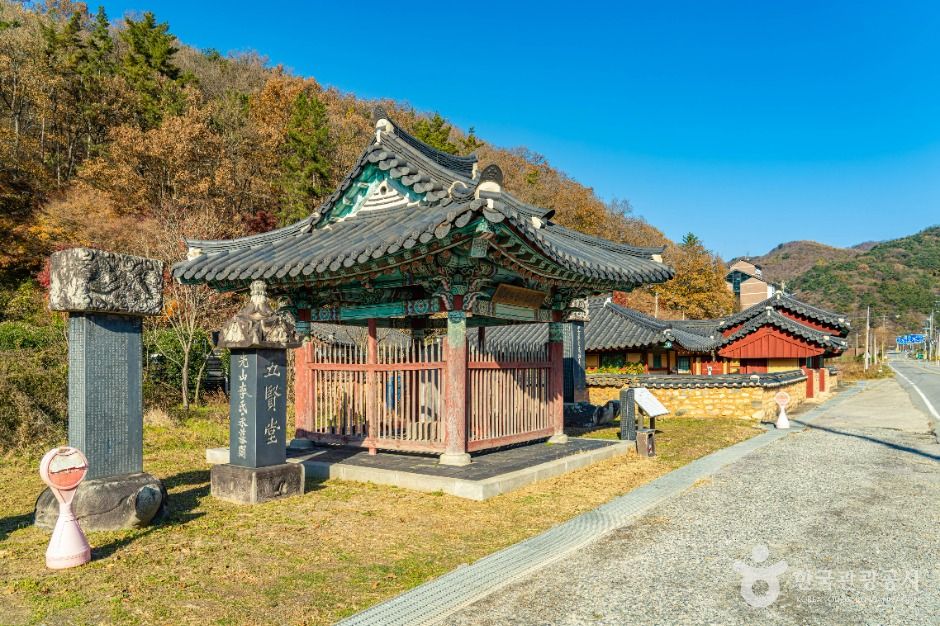
The Hwasun Gwangsan Yi Clan Seungjigongbi is the tomb-tablet of Yi Dalsun (李達善), a civil official from the mid-Joseon period. It is not merely a tombstone but possesses a monumental character, commemorating his life and achievements. To understand his stele, one must first know who he was.
Footsteps of an Intellectual Who Shone Amidst the Chaos of Joseon

- Lineage of Gwangsan Yi Clan Yi Dalsun was the 6th-generation descendant of Yi Sun-baek, the progenitor of the Gwangsan Yi Clan, born into a distinguished family and devoted himself to scholarship.
- Capable Official Although he suffered the pain of losing his father at the age of 23, he passed the civil service examination at 30 and held major government positions, including Seungjeongwon Bu-seungji (Deputy Royal Secretary).
- Contribution to Historical Compilation Beyond being a mere official, he participated in the revision of “Goryeosa” (History of Goryeo) and the compilation of “Taejong Sillok” (Annals of King Taejong), making significant contributions to Joseon’s historical record-keeping. This suggests his profound academic knowledge.
Yi Dalsun was also the grandson of Yi Seon-je, who served as Hongmun-gwan Jehak (Academician of the Office of Special Advisers), and the second son of Deputy Royal Secretary Yi Hyeong-won, who served as a Japanese envoy. His lineage was a prestigious family of the time, and he was also the grandfather of Jeolla Governor Yi Jungho, who married Haenam Yun-ssi, the daughter of Gyuljeong Yun Gu. Thus, the Hwasun Gwangsan Yi Clan Seungjigongbi is a valuable relic that goes beyond the history of an individual, allowing a glimpse into the flow of prestigious families and the academic depth of the ruling class during the Joseon Dynasty.
This stele is known to have been erected by Gongchung, the second son of Idal seon, in the 7th year of King Seonjo’s reign (1574). The profound filial piety and respect for his father were carved into the stone and have been passed down for over five hundred years.
Sculptural Beauty Carved in Stone: The Unique Form of the Seungjigongbi
The Hwasun Gwangsan Yi Clan Seungjigongbi is noteworthy not only for its historical value but also for the sculptural beauty of the stele itself. While myogal (tomb-tablet) and myobi (tombstone) were originally distinct, they became interchangeable terms in later generations, and this stele, in the form of a myogalbi, commemorates Yi Dalsun’s life.
What is the unique appearance of the stele, imbued with time?
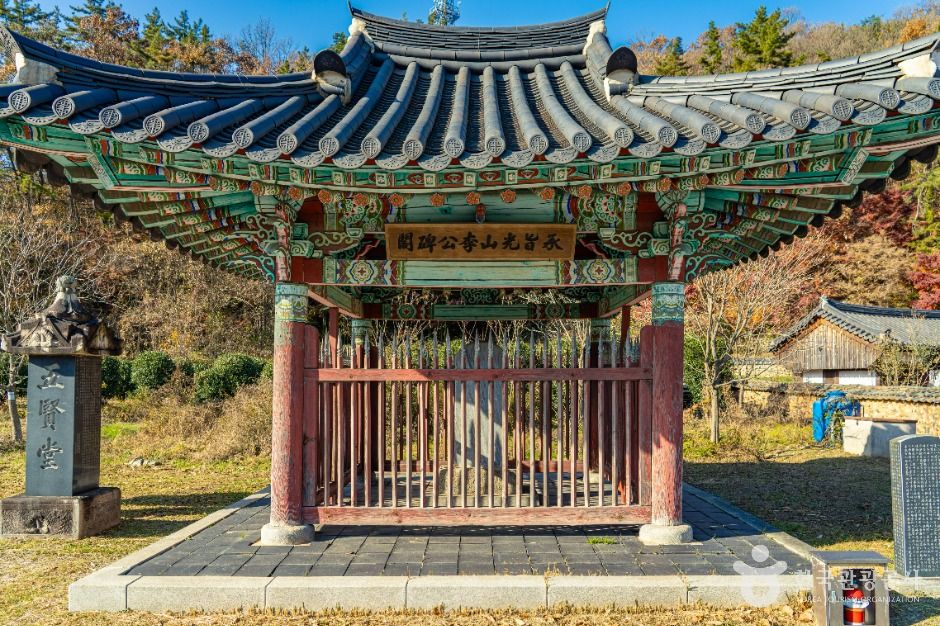
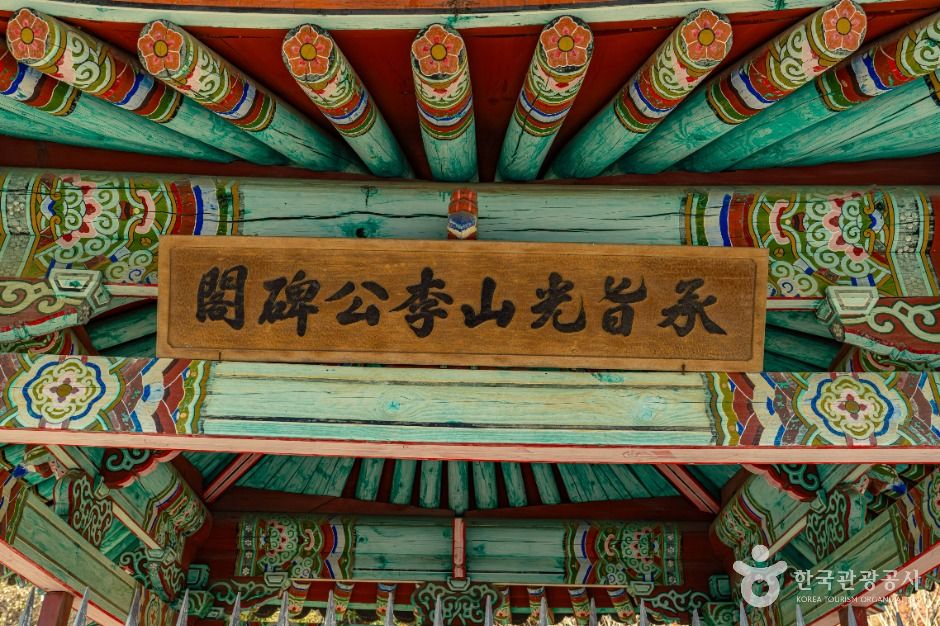
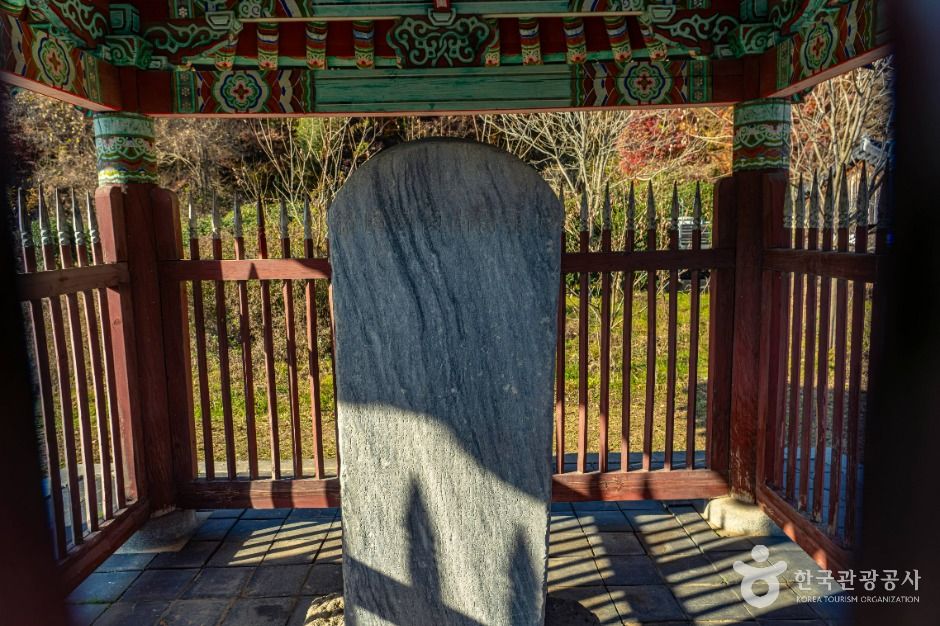
- Hopae-type Stele The stele’s form was crafted in a ‘hopae-type,’ resembling the ‘hopae,’ an identification tag from the Joseon Dynasty.
- Upward-Wide, Downward-Narrow Structure The stele’s head has no particular carvings or decorations, and it features a unique ‘sang-gwang-ha-hyeop’ (wide at the top, narrow at the bottom) shape, narrowing towards the base. This gives it a simple yet sturdy feel.
- Stele Inscription in Zhao Mengfu Style The inscription is written in the Zhao Mengfu style, mimicking the calligraphy of Zhao Mengfu, a calligrapher from China’s Yuan Dynasty. The clear and vigorous brushstrokes can be clearly seen, making it a valuable source for understanding the level and aesthetics of calligraphy at the time.
Although not elaborate, this stele, with its simple and dignified form, well illustrates the aesthetic sense and Confucian values of its era. The breath of the artisan and the spirit of the scholar, embedded in this single stone, seem to be fully conveyed even today.
Hwasun Gwangsan Yi Clan Seungjigongbi: Where Can You Find It?
The Hwasun Gwangsan Yi Clan Seungjigongbi, with its profound historical significance and unique aesthetic form, is located in Aengnam-ri, Hwasun-eup, Hwasun-gun, Jeollanam-do. It is relatively easy to access by public transportation, making it a good course for history enthusiasts.
Near Aengnam Station, Following the Breath of History
- Address 23-14 Aengnam-gil, Hwasun-eup, Hwasun-gun, Jeollanam-do (Aengnam-ri 110)
- Public Transportation Located near Aengnam Station, those using the train can alight at Aengnam Station and walk. For the exact location, you can refer to local guidance or use a map app.
- Private Car You can easily find it by entering the address into your navigation system. Please drive carefully as the surroundings are quiet country roads.
The journey itself to find the stele, nestled within the serene rural landscape, will feel like a journey through time. Also, enjoy the peaceful atmosphere around Aengnam Station.
Hwasun History Exploration Tips with Seungjigongbi
If you visit the Hwasun Gwangsan Yi Clan Seungjigongbi, we recommend exploring other historical sites or natural landscapes nearby. Hwasun is a charming region where history and nature harmonize.
Ways to Enrich Your Time
- Hwasun Dolmen Sites The Hwasun Dolmen Sites, designated as a World Cultural Heritage, are a place where you can feel the breath of prehistoric times. Plan a historical journey encompassing prehistoric times to the Joseon Dynasty, along with the Seungjigongbi.
- Ssangbongsa Temple Ssangbongsa Temple, home to the National Treasure Cheolgam Seonsa Stupa, boasts the dignity and beauty of a thousand-year-old temple. Please enjoy the essence of Buddhist art and the tranquil ambiance of the temple.
- Unjusa Temple Unjusa Temple, famous for its ‘thousand Buddhas and thousand pagodas,’ is full of mysterious charm. Its uniquely shaped Buddhas and stone pagodas spread across the mountain ridge will offer a special experience.
Through the Hwasun Gwangsan Yi Clan Seungjigongbi, imbued with the life and spirit of Yi Dalsun, we hope you have a meaningful journey where you trace the footsteps of the past and discover the hidden charms of Hwasun with its diverse attractions.
Frequently Asked Questions
Q1. What kind of historical site is the Hwasun Gwangsan Yi Clan Seungjigongbi?
The Hwasun Gwangsan Yi Clan Seungjigongbi is a tomb-tablet erected to commemorate the life and achievements of Yi Dalsun (李達善), a civil official from the mid-Joseon period. It was erected by his son, Gongchung, in the 7th year of King Seonjo’s reign (1574). Beyond a simple tombstone, it is an important cultural heritage that illustrates the life of an intellectual and the history of a family during the Joseon Dynasty.
Q2. Who was Yi Dalsun?
Yi Dalsun was the 6th-generation descendant of Yi Sun-baek, the progenitor of the Gwangsan Yi Clan, and a civil official of Joseon who served as Seungjeongwon Bu-seungji (Deputy Royal Secretary). He participated in the revision of “Goryeosa” and the compilation of “Taejong Sillok,” and his family was a prestigious one of its time. After losing his father at the age of 23, he passed the civil service examination at 30 and embarked on his official career.
Q3. What are the characteristics of the stele?
This stele is a unique ‘hopae-type,’ resembling a hopae (identification tag), and features a ‘sang-gwang-ha-hyeop’ (wide at the top, narrow at the bottom) shape with no particular carvings on its head. The inscription is written in the ‘Zhao Mengfu style,’ following the calligraphy of Zhao Mengfu, a calligrapher from the Yuan Dynasty, allowing a glimpse into the calligraphic aesthetics of the time.
Q4. Where is the Hwasun Gwangsan Yi Clan Seungjigongbi located?
The Hwasun Gwangsan Yi Clan Seungjigongbi is located near Aengnam Station in Aengnam-ri, Hwasun-eup, Hwasun-gun, Jeollanam-do. You can visit by private car or public transportation (alight at Aengnam Station), and the exact address is 23-14 Aengnam-gil, Hwasun-eup (Aengnam-ri 110).
Q5. Are there any nearby places to visit when I go?
Yes, you can visit representative historical sites and natural attractions in Hwasun, such as the Hwasun Dolmen Sites, Ssangbongsa Temple, and Unjusa Temple. We recommend planning a richer historical and cultural tour by linking it with the Hwasun Gwangsan Yi Clan Seungjigongbi.