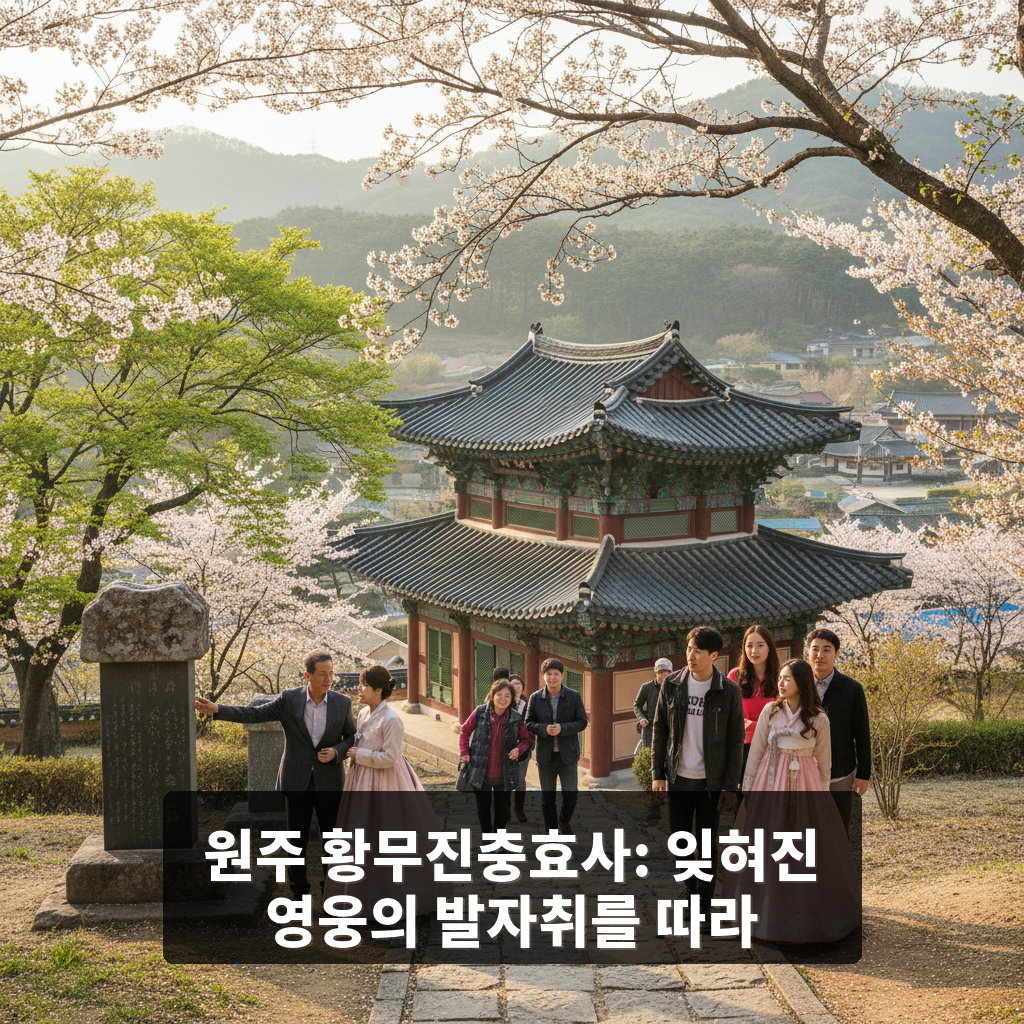
Wonju Hwang Mujin Chunghyosa: Following in the Footsteps of a Forgotten Hero


History may be written by the victors, but where are the stories of countless nameless heroes who silently walked their own paths amidst the tumultuous waves of their times?
The Hwang Mujin Chunghyosa Shrine, which we will visit today, is the beginning of a journey inspired by such questions. Located in a tranquil village in Munmak-eup, Wonju, Gangwon Province, this place is more than just a shrine; it preserves the traces of one person’s ultimate loyalty, filial piety, and passionate life, conveying a timeless message.
The story of Hwang Mujin Busagwa (黃武震 副司果), enshrined here, prompts us to reconsider the inherent human values that shone brightly even amidst the chaos of 17th-century Joseon. What kind of life did he lead to be called a ‘filial son sent by heaven’ and ‘Chunghyogo ng’ (loyal and filial lord)?
A Name Remembered Across Eras: Hwang Mujin’s Footsteps
Hwang Mujin Chunghyosa Shrine, as its name suggests, is a place commemorating Hwang Mujin Busagwa (黃武震, 1568~1652), the loyal and filial lord. His life spanned the turbulent periods of the Imjin War and the Jeongmyo Horan (Qing invasion of Joseon), demonstrating unwavering filial piety and loyalty even amidst hardship. Born near Mujingogae in Bongsan 1-dong, Wonju, he reportedly moved to Golmunaegi Village in Bangye-ri, Munmak-eup, due to difficult family circumstances, and lived there his entire life.
The ‘Filial Son Sent by Heaven’ of Golmunaegi Village


- Profound Filial Piety: Having lost his father early, Hwang Mujin served his mother with utmost devotion and was praised for his filial piety reaching the heavens. His acts of filial devotion were so extraordinary that they were widely discussed among people at the time.
- National Recognition: In the 12th year of Injo’s reign (1634), the nation ordered a ceremonial gate to be erected in front of his house to honor his filial acts, officially recognizing that his filial piety had transcended the family sphere to become a social example.
Loyalty Blossoming in Tumultuous Times, a Righteous Army Commander during the Jeongmyo Horan
A son of profound filial piety, he was also a righteous army commander loyal to his country. During the Jeongmyo Horan, which broke out in 1627, he led righteous army activities alongside scholars of his time, such as Sahan Kim Chang-il and Gwansul Heo Hu, playing a leading role in defending his homeland. In recognition of these merits, he was appointed Jeolchungjanggun Yongyangwi Busagwa, and his loyalty shone brightly even amidst tumultuous times.
Two Relocations, the Story of a Shrine Steeped in History
Klook.com

Hwang Mujin Chunghyosa Shrine is more than just a memorial space; it fully embodies the historical flow that has changed with time. Before settling in its current location, the shrine underwent two significant relocations.
A Space Erected After Long Waiting
- History of the Shrine’s Construction: It was not until 1721 (the 1st year of King Gyeongjong’s reign), 69 years after Chunghyogong Hwang Mujin passed away, that the shrine was finally constructed. His noble spirit was recognized as a value to be remembered and passed down by future generations.
- Two Homes: Originally, Hwang Mujin Chunghyosa Shrine was located at the site of the Hyanggyo (Confucian school) in Myeongnyun-dong, Wonju. However, due to the aging of the building that could not withstand the passage of time, descendants collectively decided to relocate it to its current location in Bangye-ri, Munmak-eup. This highlights the deep commitment of the descendants to preserve their ancestor’s legacy.
The Meaning of Heondarye (Tea Offering Ceremony) on March 23 Every Year
Currently, Hwang Mujin’s spirit tablet is enshrined inside Hwang Mujin Chunghyosa Shrine, and a Heondarye (tea offering ceremony) is held annually on his birthday, March 23, to commemorate him. This ceremony is more than just a ritual; it is an important cultural heritage event that reaffirms the values of filial piety and loyalty that Hwang Mujin’s life conveys to us and transmits his spirit to future generations.
A Path Where History and Nature Harmonize, and Chunghyosa
Bangye-ri, Munmak-eup, where Hwang Mujin Chunghyosa Shrine is located, boasts not only historical significance but also beautiful natural scenery. This place, in particular, is part of Course 6 of the Wonju Gubi-gil trail, making it an ideal spot to experience historical exploration and healing in nature.
Wonju Gubi-gil Course 6, A Journey Embracing History
Wonju Gubi-gil is a trekking course designed to uncover Wonju’s hidden charms, and Course 6, including Hwang Mujin Chunghyosa Shrine, is specifically designed for visitors to experience Munmak-eup’s long history and nature. As you walk along the winding paths, you will fully sense the passage of time in Wonju, from Hwang Mujin’s era to the present day.
Directions to Hwang Mujin Chunghyosa Shrine
Hwang Mujin Chunghyosa Shrine, located in Bangye-ri, Munmak-eup, Wonju, Gangwon Province, is relatively easy to access by car, and the drive itself along the quiet country roads offers a small respite. When using public transport, you can take a bus towards Munmak from downtown Wonju, get off at a nearby stop, and then walk.
Advice for Travelers Walking Through Time
Visiting Hwang Mujin Chunghyosa Shrine is more than just seeing a place; it is a meaningful journey through time, connecting the past and the present. Here are a few tips to enrich your experience here.
Things to Know Before Visiting
- Check the Heondarye Schedule: The Heondarye (tea offering ceremony), held annually on March 23, is a special moment to deeply feel Hwang Mujin’s spirit. Visiting during this period can provide a more meaningful experience.
- Enjoy the Tranquil Atmosphere: Hwang Mujin Chunghyosa Shrine is a great place for quiet contemplation away from the hustle and bustle. Visiting on a weekday morning allows you to reflect on its historical significance in an even more secluded and peaceful atmosphere.
- Combine with Wonju Gubi-gil: The area around Chunghyosa Shrine is connected to Course 6 of the Wonju Gubi-gil trail. After visiting the shrine, walking through the surrounding nature, following the breath of history, is also a great idea.
- Explore Nearby Cultural Heritage: There are many other historical sites in the Munmak-eup area, such as the Bangye-ri Ginkgo Tree (a national designated cultural heritage) and Heungwonchang, so consider visiting them together to plan an even richer historical tour of Wonju.
Embracing the Spirit of Loyalty and Filial Piety
| Category | Details |
|---|---|
| Meaning of Chunghyosa Shrine | A space commemorating a figure embodying the universal values of filial piety and loyalty |
| What you can gain from a visit | Historical knowledge, peaceful contemplation, empathy with a noble spirit |
| Recommended Visiting Period | March 23 (Heondarye) or a quiet weekday morning |
The spirit of loyalty and filial piety is not merely a tale of ancient times. It remains an important value that we should pursue even today. Visiting Hwang Mujin Chunghyosa Shrine, we hope you can momentarily forget daily life and discover insights from one person’s noble life.
A Message Traversing Eras, the Resonance of Loyalty and Filial Piety
Located in a tranquil village in Wonju, Gangwon Province, Hwang Mujin Chunghyosa Shrine is a precious space that conveys the story of a forgotten hero. Hwang Mujin’s life as a ‘filial son sent by heaven’ and a ‘righteous army commander in tumultuous times’ demonstrates the noble spirit of an individual who steadfastly upheld inherent human duties even amidst chaos.
His story goes beyond a mere historical record; it poses important questions for us living today. What values should we truly pursue in our lives? Hwang Mujin Chunghyosa Shrine will be a profoundly resonant travel destination, allowing visitors to feel the breath of the past and reflect on their present lives. If you have the opportunity to visit Wonju, we highly recommend experiencing the timeless message of loyalty and filial piety firsthand here.
Frequently Asked Questions
Q1. Who is enshrined at Hwang Mujin Chunghyosa Shrine?
Hwang Mujin Chunghyosa Shrine is dedicated to Hwang Mujin Busagwa (黃武震, 1568~1652), a loyal and filial lord of the Joseon Dynasty. He was a figure known for his profound filial piety and his loyalty to the nation through righteous army activities during the Jeongmyo Horan in 1627.
Q2. Was there a reason for the relocation of the Chunghyosa Shrine from its original site?
Yes, Hwang Mujin Chunghyosa Shrine was originally located at the site of the Hyanggyo (Confucian school) in Myeongnyun-dong, Wonju. However, due to the aging of the building, descendants decided to relocate it to its current location in Bangye-ri, Munmak-eup.
Q3. When can I visit to see the annual Heondarye (tea offering ceremony)?
Hwang Mujin’s Heondarye is held annually on his birthday, March 23. Visiting during this period will allow you to directly experience the noble memorial ceremony.
Q4. Are there any nearby places worth visiting when I go to Hwang Mujin Chunghyosa Shrine?
Yes, Hwang Mujin Chunghyosa Shrine is included in Course 6 of the Wonju Gubi-gil trail, allowing you to enjoy a walk in nature. Additionally, it’s a good idea to visit other historical sites nearby, such as the Bangye-ri Ginkgo Tree (a national designated cultural heritage) and Heungwonchang.
Q5. What is the relationship between Wonju Gubi-gil and Hwang Mujin Chunghyosa Shrine?
Hwang Mujin Chunghyosa Shrine is one of the important focal points of Course 6 of the Wonju Gubi-gil trail, a trekking course that encompasses the history and nature of the Wonju area. You can explore the historical significance of this place while walking along the Gubi-gil trail.
 Love Korea? Promote it & Earn.