A Gate Walking Through Time: Gyeongju Yangdong Mucheomdang, catching a glimpse of the Confucian scholar spirit


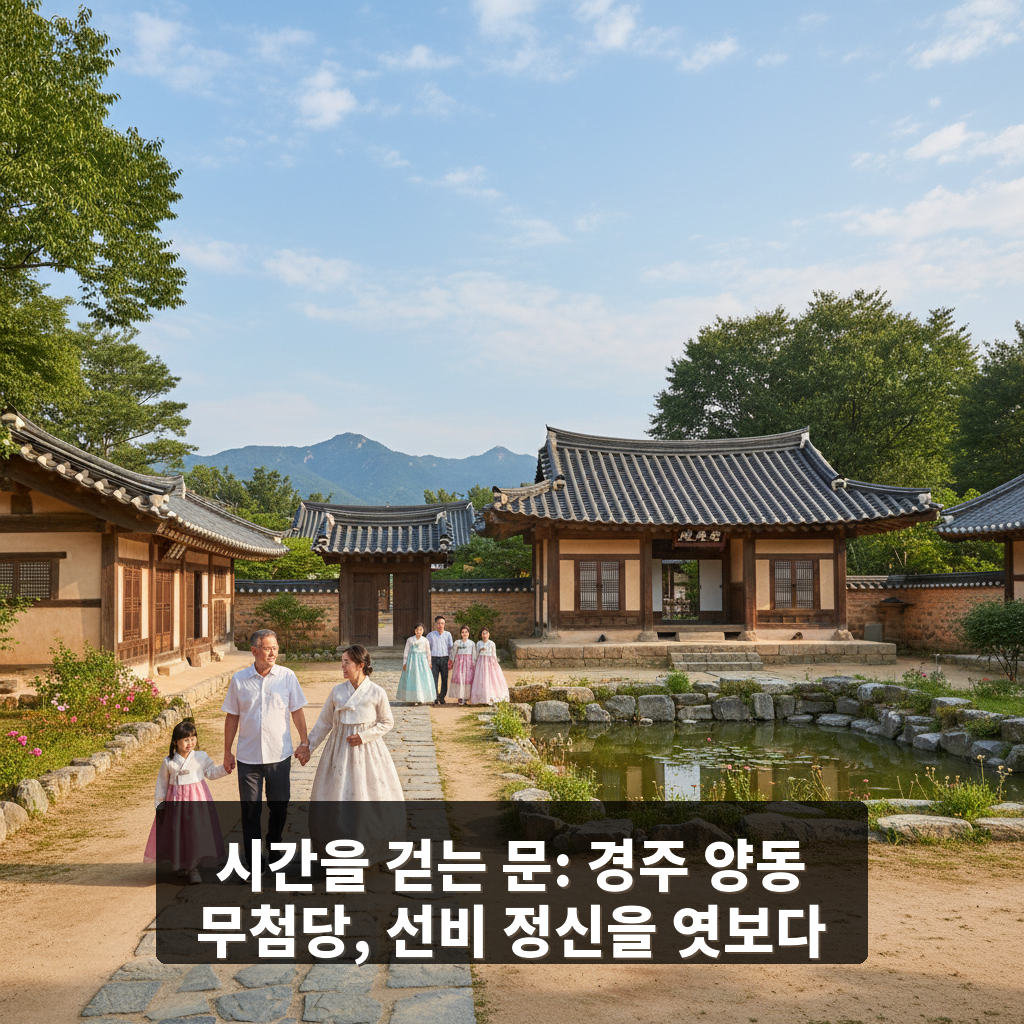
Have you ever considered an old house not just as an old building, but as a living history museum that fully embraces the breath and wisdom of ancestors? Deep within Gyeongju Yangdong Folk Village, Gyeongju Yangdong Mucheomdang is exactly such a place. As part of the main family house of Hoejae Yi Eon-jeok, a Neo-Confucian scholar during the Joseon Dynasty, this old house, which has stood firm for hundreds of years, holds a profound meaning beyond a mere building.
This place is a window through which one can glimpse the life and values of the scholars who once graced an era, and it is a space that lives up to its name, preserved by descendants with a firm resolve not to defile their ancestors’ heritage. Listen to the quiet yet powerful story told by Gyeongju Yangdong Mucheomdang.
Mucheomdang, The Sublime Promise Embodied in Its Name
Gyeongju Yangdong Mucheomdang is a historic building established in the mid-Joseon period, part of the main family house of Hoejae Yi Eon-jeok. This old house, measuring five bays in front and two bays on the side, was used by dividing its interior into three sections: the central three bays formed a cool main hall (daecheong), and one bay on each side was an underfloor-heated room (ondolbang). In particular, the main hall (daecheong) has its front pillars widely open, and the raised floor veranda (numaru) also opens towards the main hall, suggesting that it was a space where scholars of that time communicated with nature, studied, and enjoyed arts and leisure.
To Illuminate Ancestral Heritage: The Profound Meaning of Mucheomdang
The name Mucheomdang originated from the pen name of Yi Eon-jeok’s grandson, Yi Ui-yun (1564~1597). This name, meaning ‘I shall not defile the legacy left by my ancestors,’ goes beyond being merely a building’s designation; it embodies the firm resolve of descendants to inherit the noble spirit and teachings of their ancestors and preserve them for future generations. This place was an extension of the sarangchae (men’s quarters) of an upper-class residence, used for various purposes such as entertaining guests, resting, and reading, thus enriching the knowledge and emotions of many.
- Hoejae Yi Eon-jeok Respected civil official and Neo-Confucian scholar of the mid-Joseon Dynasty
- Mucheomdang A name embodying the meaning ‘I shall not defile the ancestral heritage’
- Main Functions Role as sarangchae for scholars, including entertaining guests, resting, and reading
Architectural Beauty Hidden in Simplicity, and the Wisdom of Life
Gyeongju Yangdong Mucheomdang is considered the pinnacle of byeoldang (detached building) architecture, showcasing simple yet refined craftsmanship. Its floor plan has a distinctive ‘ ㄱ’-shape (L-shape), and the arrangement of rooms and floors using a suitable mix of round and square pillars is impressive. The back and sides are walled and fitted with doors, designed to open or close the space as needed. This structure clearly demonstrates the lifestyle of scholars at the time, who sought inner tranquility while communicating with the outside world.
Aesthetic Elements of Mucheomdang Architecture
Klook.com- ‘ ㄱ’-shaped (L-shaped) Floor Plan An original arrangement pursuing both functionality and aesthetics simultaneously
- Harmony of Round and Square Pillars The charm of traditional architecture symbolizing the harmony between nature and artificiality
- Flexibility of Opening and Closing The wisdom of space utilization for communion with nature and contemplation
- Essence of Byeoldang (Detached Building) Architecture A unique building style that extended the function of the sarangchae (men’s quarters) in upper-class residences
Mucheomdang is also a place that preserves the relics of Hoejae Yi Eon-jeok. Through the spirit and lifestyle of ancient scholars imbued throughout the building, we can learn from the wisdom of the past and gain a precious opportunity to reflect on our present lives.
Mucheomdang within Yangdong Folk Village, The Beginning of a Serene Journey
Located within Gyeongju Yangdong Folk Village, a UNESCO World Cultural Heritage site, Gyeongju Yangdong Mucheomdang can be visited while fully experiencing the village’s atmosphere. Yangdong Folk Village welcomes visitors with a serene landscape as if time has stood still. Walking along the stone wall path that begins from the village entrance, you will naturally arrive at Mucheomdang.
Directions to Mucheomdang
- Address 134, Yangdongmaeul-gil, Gangdong-myeon, Gyeongju-si, Gyeongsangbuk-do
- By Car Park at Gyeongju Yangdong Folk Village parking lot and explore the village on foot. (Parking may be subject to a fee.)
- By Public Transport You can conveniently arrive by taking a city bus (seated bus) towards Yangdong Folk Village from Gyeongju Station or Gyeongju Terminal.
Within the village, following the signposts or getting a map from the village information center is also a good idea. As you walk along the winding alleys, you will feel both the beauty of Yangdong Folk Village and the excitement of heading towards Mucheomdang.
Tips for a More Enriching Mucheomdang Visit
Things to Know Before Visiting the Old House!
- Check Information in Advance It is advisable to check the operating hours of Yangdong Folk Village and the availability of cultural commentary programs before your visit.
- Maintain Silence Many old houses in Yangdong Folk Village, including Mucheomdang, are still private residences where people live, so it is important to observe quietly and respectfully.
- Utilize Cultural Commentary Yangdong Folk Village sometimes offers professional cultural commentary programs. It is recommended to learn about Mucheomdang and the village’s hidden stories by listening to the commentary.
- Explore Nearby Old Houses Together In addition to Mucheomdang, Yangdong Folk Village has many treasure-class old houses such as Gwanajeong and Hyangdan, so it’s good to explore them together and compare their architectural beauty.
Other Must-Visit Spots in Yangdong Folk Village
| Attraction | Features |
|---|---|
| Gwanajeong | The house where Hoejae Yi Eon-jeok’s mother, Lady Son, lived, boasting a wonderful view of the village. |
| Hyangdan | A treasure-class old house featuring a unique ‘ ㅁ’-shaped (square-shaped) structure and elegant beauty. |
| Entire Yangdong Folk Village | Korea’s largest clan village, designated as a UNESCO World Heritage site, and a treasure trove of living traditional culture. |
Learning from History and Reflecting on the Present
Gyeongju Yangdong Mucheomdang is a painting in itself and a space that offers timeless teachings. This old house, standing quietly, reminds us of the importance of spiritual values beyond material wealth and a harmonious life.
If you wish to pause in your busy daily life and encounter the wisdom of your ancestors, visit Gyeongju Yangdong Mucheomdang. It will be a precious time to gain peace of mind along with the beauty of the old house and discover new inspiration. A special experience that adds depth to life, rather than just a passing travel destination, awaits you.
Frequently Asked Questions
Q1. What kind of building is Gyeongju Yangdong Mucheomdang?
Mucheomdang is part of the main family house of Hoejae Yi Eon-jeok, a Neo-Confucian scholar during the Joseon Dynasty, primarily used as an extension of the sarangchae (men’s quarters) for entertaining guests, resting, and reading. It carries the profound meaning of ‘I shall not defile the ancestral heritage.’
Q2. What is the meaning of the name Mucheomdang?
Mucheomdang is the pen name of Yi Eon-jeok’s grandson, Yi Ui-yun, meaning ‘I shall not defile the legacy left by my ancestors.’ This demonstrates the strong will of descendants to inherit the spirit and values of their ancestors for future generations.
Q3. Besides Mucheomdang, where else is worth seeing in Yangdong Folk Village?
In Yangdong Folk Village, besides Mucheomdang, there are many historic old houses such as Gwanajeong and Hyangdan. As the entire village is designated a UNESCO World Heritage site, it is recommended to explore the whole village along with other old houses.
Q4. Is Gyeongju Yangdong Folk Village convenient to get to by public transport?
Yes, you can conveniently visit by taking a city bus (seated bus) towards Yangdong Folk Village from downtown Gyeongju (Gyeongju Station, Bus Terminal). If traveling by car, you can use the village parking lot.
Q5. Are there any special precautions when visiting Mucheomdang?
Many old houses in Yangdong Folk Village, including Mucheomdang, are still private residences where people live. Therefore, it is important to observe quietly and respectfully, use designated paths for cultural heritage protection, and avoid touching anything carelessly.
 Love Korea? Promote it & Earn.