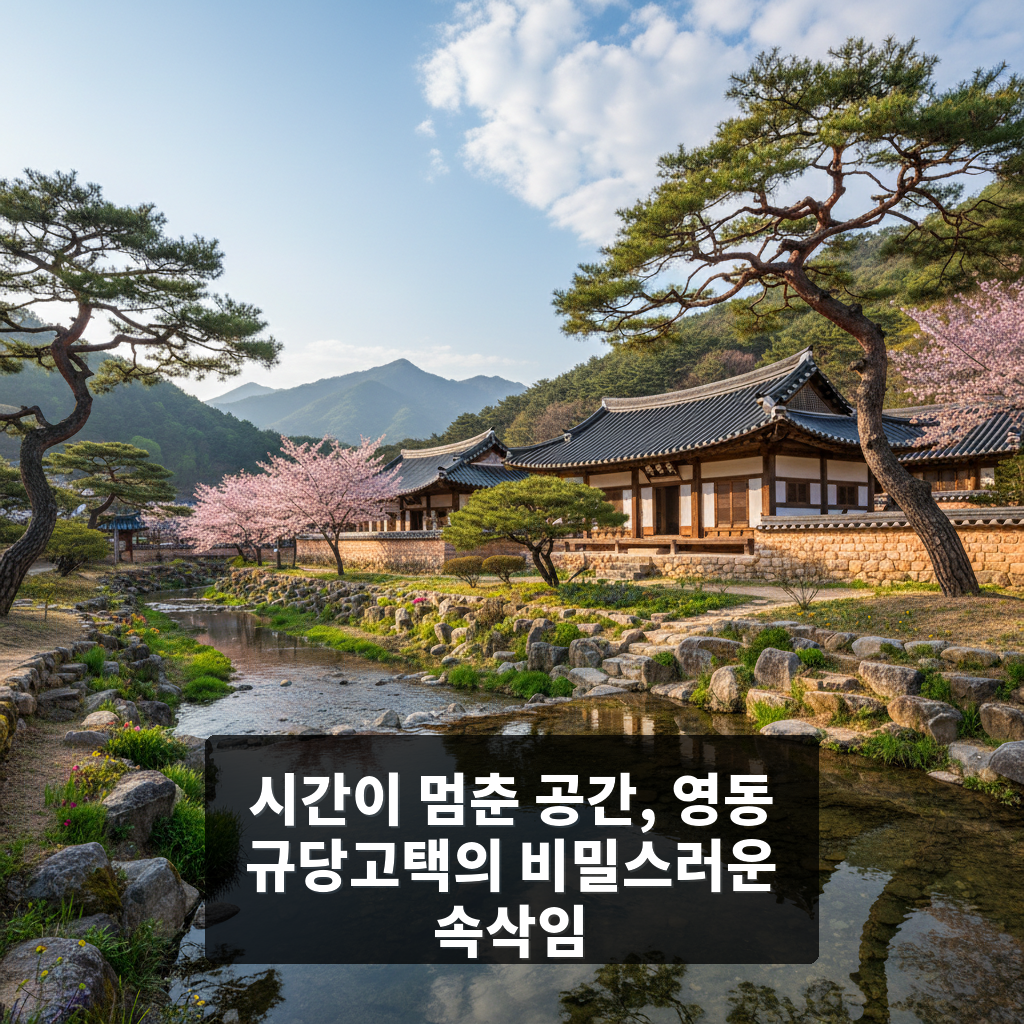
A space where time stands still, the secret whisper of Yeongdong Gyudang Goraek


When we face an old house that seems to have perfectly preserved time from the past, we are not just looking at an old building. We are catching glimpses of countless life stories and traces of an era embedded within it. Yeongdong Gyudang Old House, located in a tranquil village in Yeongdong, Chungcheongbuk-do, also embraces the architectural aesthetics and lifestyle of the late 19th century, welcoming visitors. What stories will this serene old house tell us?
The depth of time held within the tile records of the Eul-yu year and Byeong-sul year, 1885 and 1886, respectively. What meaning does the foundation of life, built by a family in Yeongdong in the late 19th century, hold for us today? Let’s embark on a time journey together to find the breath of the past on this spacious site.
This place, especially with its well-preserved inner living quarters and the prominent aesthetics of Southern architectural style, is more than just a building; it’s like a living history textbook. From now on, we will explore each charm of Yeongdong Gyudang Old House, where the wisdom, architectural skills, and lives of ancient people are intertwined.
The Breath of 19th Century Yeongdong, the Architectural Aesthetics of Gyudang Old House
Yeongdong Gyudang Old House is a solidly built Joseon noble house from the late 19th century, located in a quiet village in Yeongdong. Standing on the road behind the house and looking at the old house, the long continuous fence gives an idea of its scale. Although it generally forms a sturdy ‘ㅁ’ shape, it actually has a ‘ㄱ’-shaped anchae (women’s quarters) and a spacious gwangchae (storage building) that organically connect the spaces.
The Heart of the Old House: Anchae and Outer Living Quarters
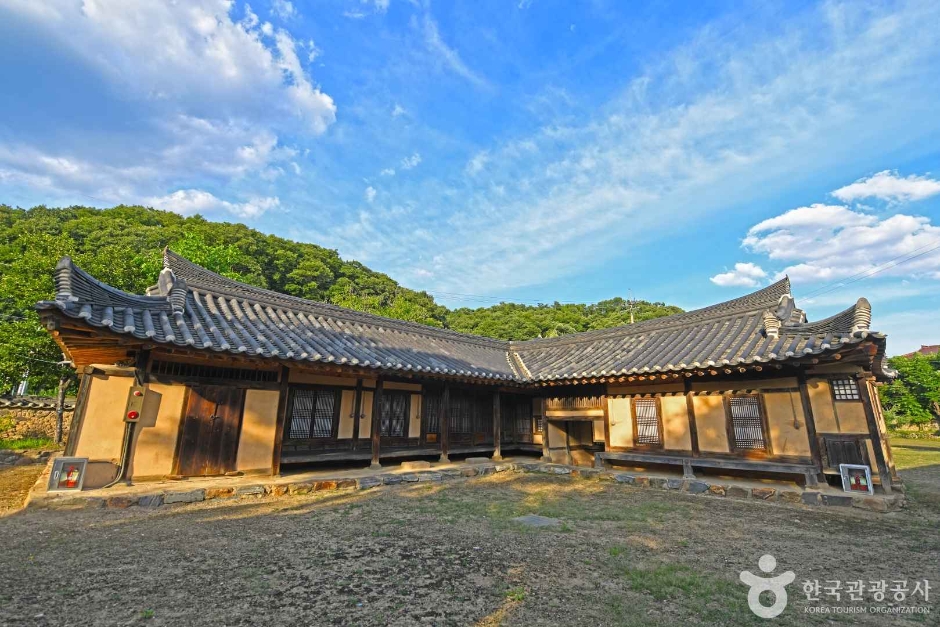
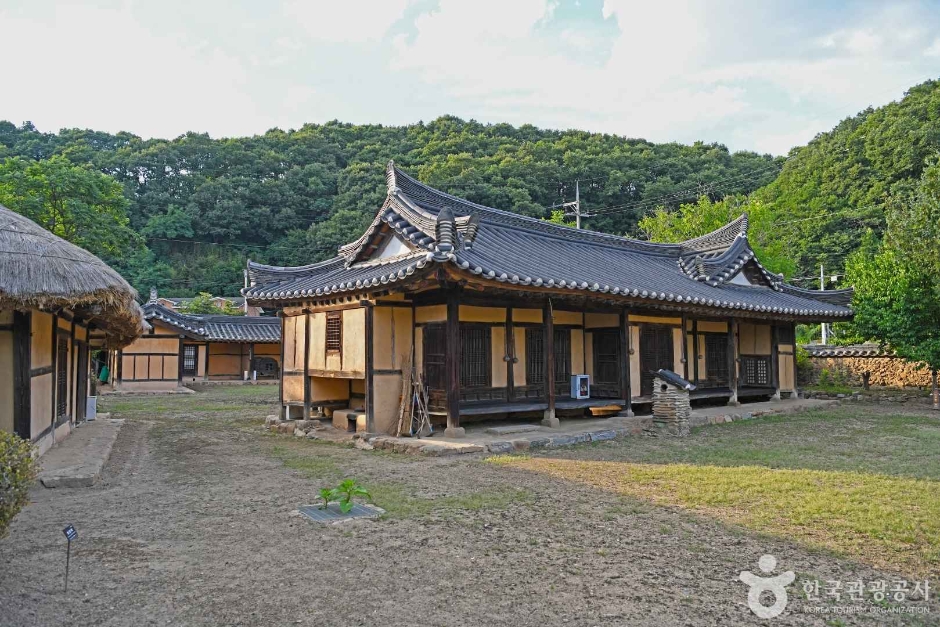
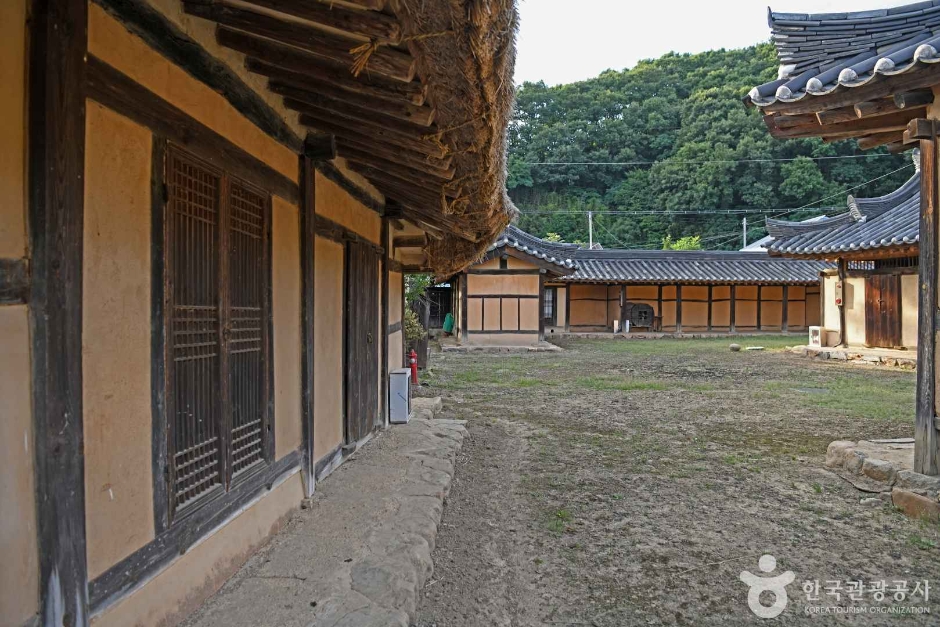
The inner living quarters of the old house are surprisingly well-preserved, vividly conveying the lifestyle of the time. The layout of the ‘ㄱ’-shaped anchae, connected in the order of kitchen, anbang (main room), daecheong (main hall), and geonnanbang (guest room), faithfully follows the architectural style of the southern regions. Although many parts of the outer living quarters, being exterior spaces, have been altered over time, making it difficult to fully grasp the original form, the anchae perfectly retains the dignity of the past.
Glimpse into the Characteristics of Southern Architecture
- Raised Ridge-End The ends of the roof ridge are particularly raised high, which is a beautiful architectural technique commonly seen in Southern folk houses. It boasts dynamic yet elegant curved beauty.
- Unique Outhouse The outhouse located east of the guest room is not just a functional space. Built formally as a single-room thatched square-roofed structure, its appearance is so beautiful that it feels like a hidden treasure of the old house.
Yeongdong Gyudang Old House has a unique structure where the sarangchae (men’s quarters) is not separate; instead, the study, sarangdaecheong (men’s main hall), and sarangbang (men’s room) are organically connected to the anchae. This can be seen as a result of the regional characteristics and the family’s lifestyle being reflected in the architecture of the time.
How to Get to Yeongdong Gyudang Old House?
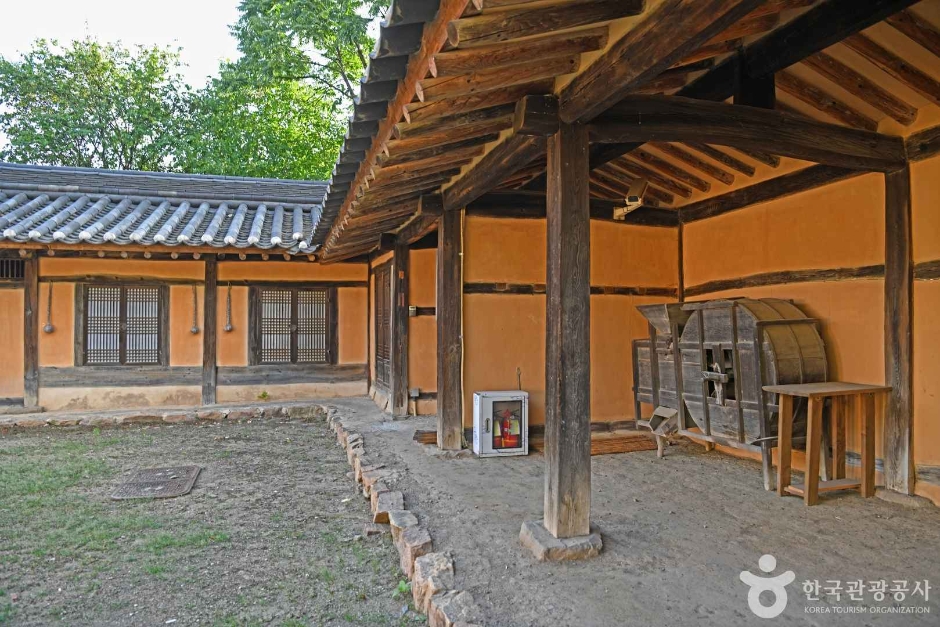
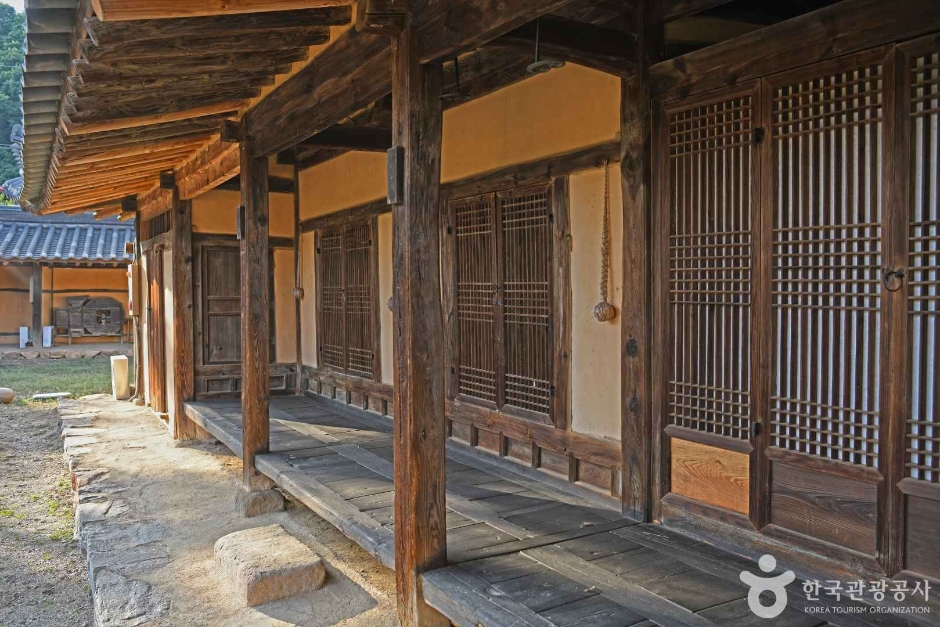
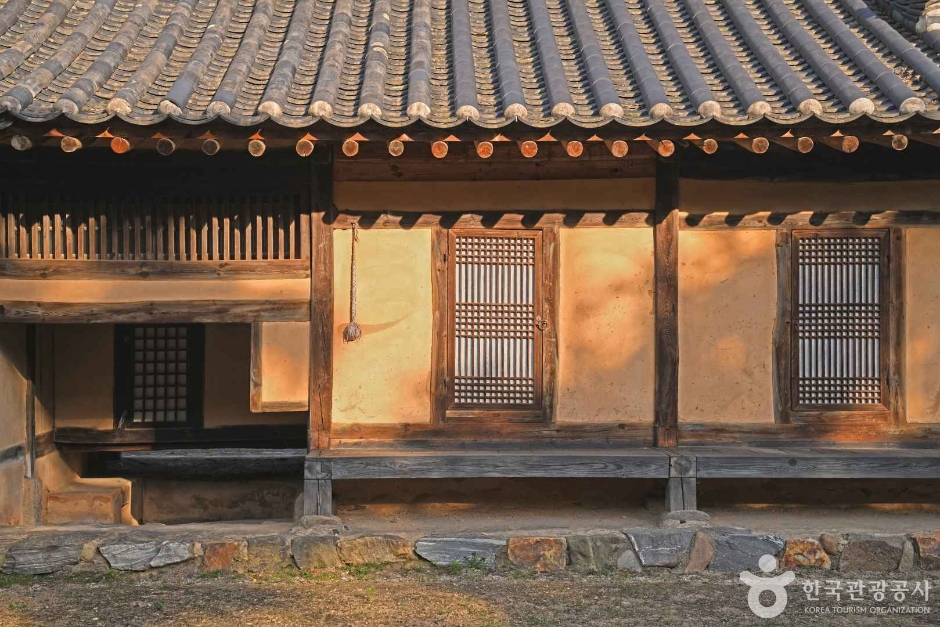
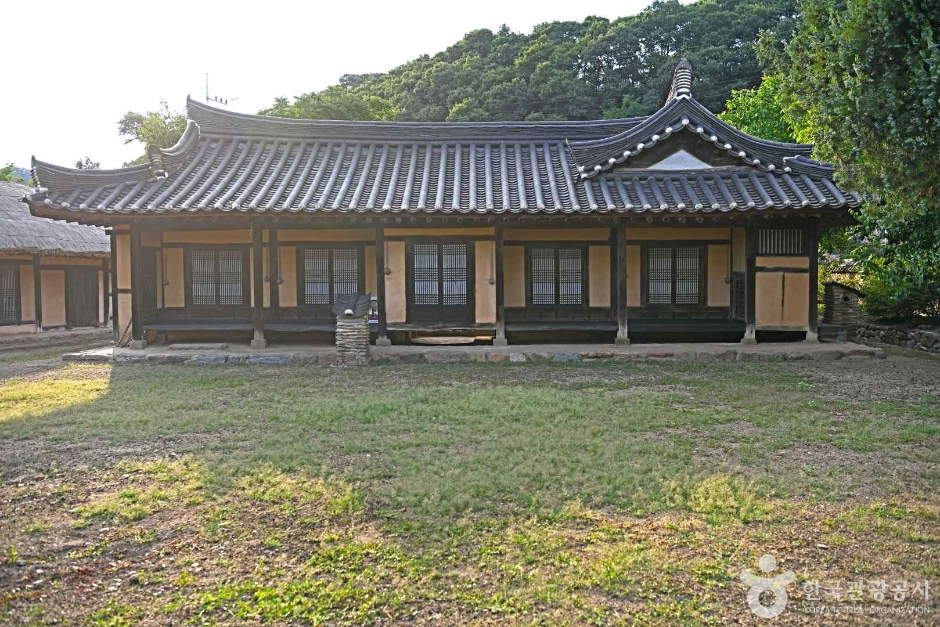
Yeongdong Gyudang Old House, located at 256 Hoedong-ro, Yeongdong-eup, Yeongdong-gun, Chungcheongbuk-do, is quietly situated amidst beautiful nature. It is more convenient to use a private car than public transportation, and it is recommended to visit with a relaxed mindset to fully experience the unique tranquil atmosphere of the old house.
Tips to Know Before Visiting an Old House
- Check Visiting Hours Old houses are often privately owned or managed as cultural heritage sites, so it’s advisable to check operating hours and visitor access before your visit.
- Quiet Observation It is necessary to observe quietly and calmly, respecting the traces of past lives. Please be especially careful to maintain silence so as not to disturb other visitors or local residents.
- Photography Etiquette It’s good to capture the beautiful appearance of the old house, but please take photos carefully, ensuring not to disturb the interior facilities or other visitors.
- Explore the Surroundings Also, take a look at the small alleys and scenery around the old house to further enrich your understanding of its historical context.
Enjoying the Charm of Yeongdong with an Old House
Yeongdong is a place with various charms beyond Yeongdong Gyudang Old House. After visiting the old house, how about experiencing Yeongdong’s beautiful nature and culture together? Nearby, markets where you can taste Yeongdong’s local specialties, beautiful walking trails, and other historical sites await visitors.
Recommended Nearby Attractions
- Wine Korea is a complex cultural space themed around wine, Yeongdong’s representative local product. You can observe the wine-making process and enjoy tastings, offering a unique experience.
- Nangyesa Shrine and Gugak Museum is a place commemorating the spirit of Master Park Yeon, also known as Nangye, one of Korea’s three greatest musicians. It will be a great opportunity to understand the history and value of Korean traditional music.
- Wollyubong Peak, boasting outstanding natural scenery, offers beautiful views as its name suggests, meaning “the moon rests here.” You can enjoy light trekking and revel in healing amidst nature.
As such, Yeongdong is a travel destination that offers diverse experiences, from the charm of serene old houses to the allure of sweet wine and the grandeur of natural beauty. Create unforgettable memories in this place where history and the present coexist.
The Wisdom of Gyudang Old House, Encountered Through Time
Yeongdong Gyudang Old House is a precious heritage that shows how people’s lives, architectural techniques, and aesthetic sensibilities harmoniously blended in the limited time of the late 19th century. If you wish to pause in the fast-paced, busy modern life and feel the wisdom and tranquility of the past, Yeongdong Gyudang Old House will surely provide special inspiration.
This old house, which has silently stood its ground for a long time, holds more value than just an old building. Through the countless stories and traces embedded within it, we can have precious time to understand the past and reflect on the present. The moment you open the door and step into Gyudang Old House, you become the protagonist of a time journey.
Frequently Asked Questions
Q1. In what era was Yeongdong Gyudang Old House built?
Yeongdong Gyudang Old House is presumed to have been built in Eul-yu Samwol (March 1885) and Byeong-sul Samwol (March 1886) according to the tile records, offering a glimpse into the late 19th-century Joseon Dynasty architectural style.
Q2. What is special about the architectural style of the old house?
The old house features a ‘ㅁ’ shape with a ‘ㄱ’-shaped anchae and gwangchae, and the raised roof ridge ends, commonly seen in southern folk houses, are particularly striking. The uniquely structured outhouse is also considered an architectural feature.
Q3. When is the best time to visit Yeongdong Gyudang Old House among the four seasons?
The old house boasts different charms throughout all four seasons. You can enjoy its serene atmosphere with flowers in spring, amidst green foliage in summer, with autumn leaves in fall, and with snowscapes in winter.
Q4. Are there any other attractions worth visiting around the old house?
Yes, around Yeongdong Gyudang Old House, there are many diverse attractions that highlight Yeongdong’s characteristics, such as Wine Korea, Nangyesa Shrine and Gugak Museum, and Wollyubong Peak, making it good to plan a combined trip.
Q5. Are there any specific precautions to take when visiting Yeongdong Gyudang Old House?
Old houses are often privately owned or managed as cultural heritage sites, so it’s advisable to check opening status and hours before your visit. Additionally, maintaining a quiet demeanor during your visit and being careful not to damage facilities is important.