
Hwasun Gaecheonsa, following the tranquil traces holding a thousand-year mystery


In this land filled with Buddhist devotion during the Unified Silla period, who indeed founded the ancient temple named Gaecheonsa? On one hand, it is whispered that the hand of the revered monk Do-ui Seonsa touched it, and on the other hand, it is said that the profound intentions of Doseon Guksa are embedded there. These stories, recorded only after the passage of time, are as faint as a foggy dawn, but that very mystery makes the beginning of the thousand-year history held by Hwasun Gaecheonsa even more captivating.
JeongyujaeranEven amidst the tragedy of the Korean War, Gaecheonsa, which steadfastly maintained its place, is not just an old temple. It is a living testament to the resilience of our people, who have preserved an immortal spirit through countless trials and tribulations, and a sanctuary beckoning to those who seek comfort and enlightenment in tranquil nature. Today, we will delve into the hidden stories of Hwasun Gaecheonsa, which holds mysterious legends and a turbulent history.
An Ancient Temple That Withstood the Trials of Time: The Footprints of Gaecheonsa
The story of the founding of Hwasun Gaecheonsa has been passed down like a legend. There are two parallel theories: one that Do-ui Seonsa founded it in the late King Heondeok period of Unified Silla (809-825), and another that Doseon Guksa founded it in the late Unified Silla period. Although it is difficult to confirm clearly as these are later records, the mere mention of these two great masters’ names allows us to infer the historical depth of Gaecheonsa.
Immortal Spirit Blooming from the Ashes
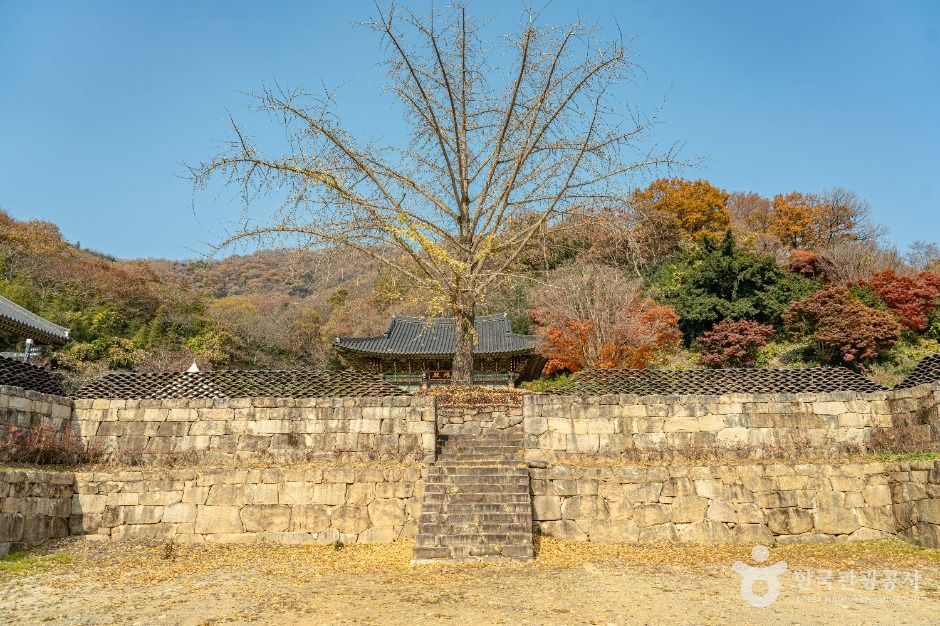

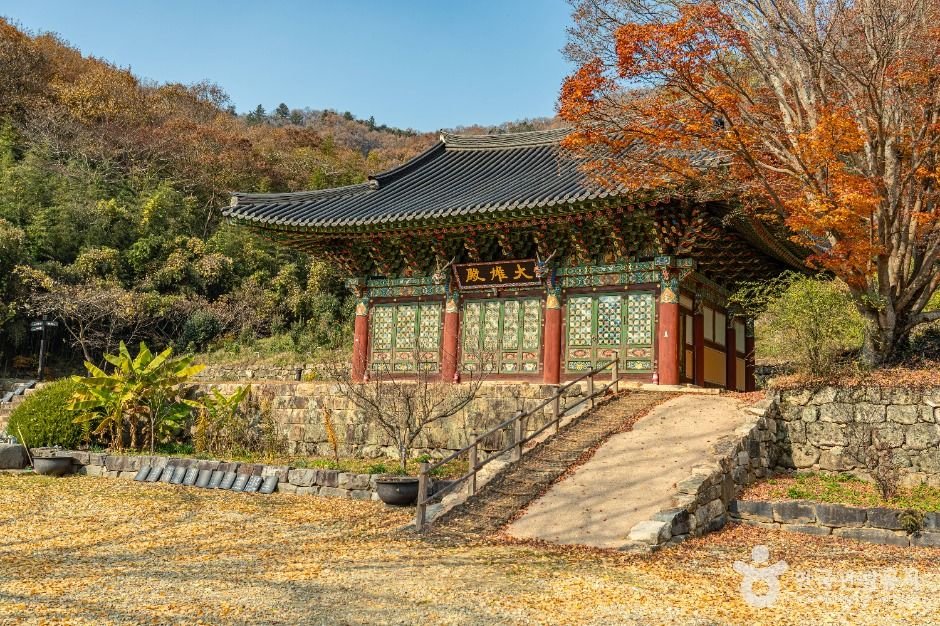
Gaecheonsa has endured countless trials throughout its long history. It suffered the pain of being burned down and destroyed during the Jeongyujaeran in the Joseon Dynasty, but was soon rebuilt, showing its strong vitality. During the Japanese colonial period, it was also known as ‘Yonghwasa’, and in 1950, it again faced the tragedy of the Cheonbuljeon being destroyed due to the Korean War. However, despair did not last long. In 1963, thanks to the warm cooperation of the head monk Kim Tae-bong and local residents, the Daeungjeon and Yosa were rebuilt, and the temple began to regain its former appearance.
Notably, in 1987, the then-head monk Hui-an gathered five scattered stupas from the surrounding area to create a stupa field beneath the nutmeg yew forest, bringing together the traces of past masters and offering even deeper reverence.
Architectural Beauty Forged by a Thousand Years and a Space for Serene Practice
Gaecheonsa perfectly preserves various architectural styles and traces of faith from its long history. Its modest yet dignified temple halls create a peaceful scenery in themselves.
Enlightenment Lingering in Every Breath
Klook.com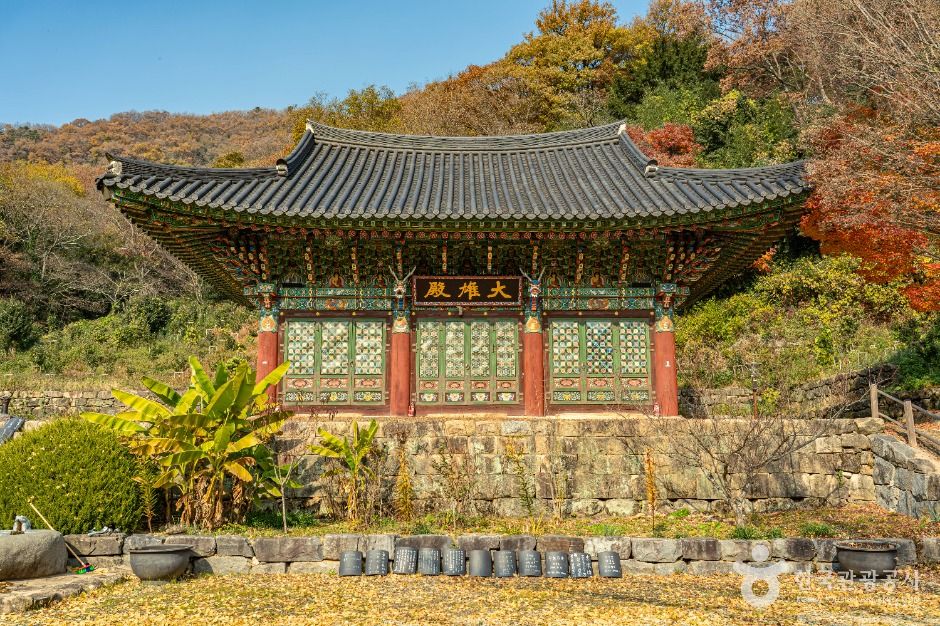
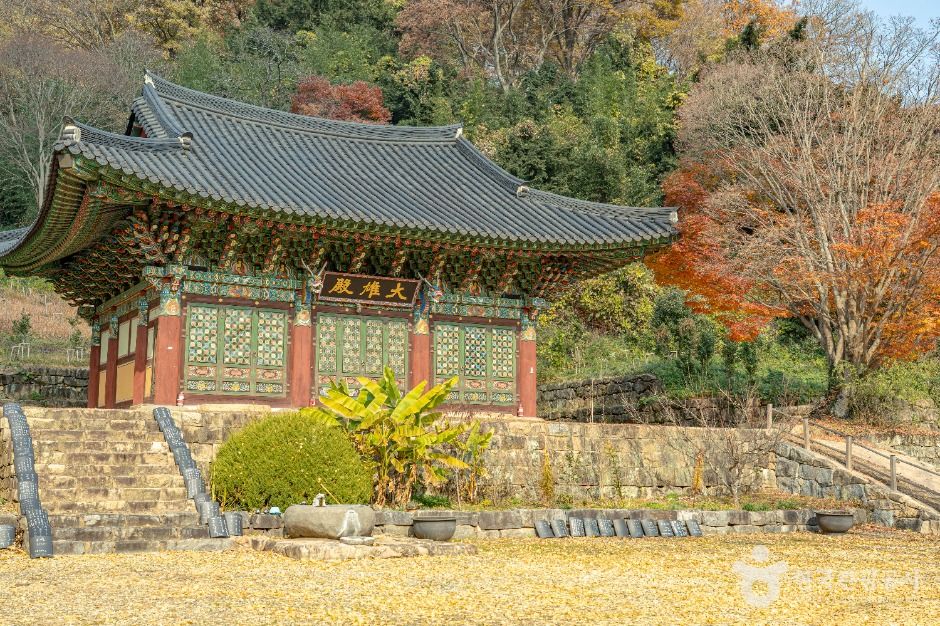
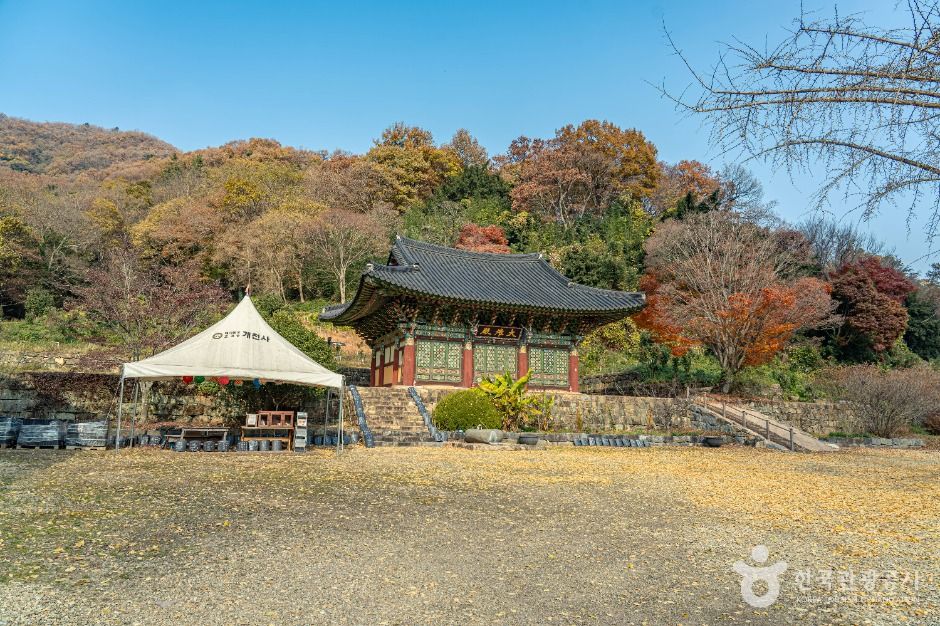
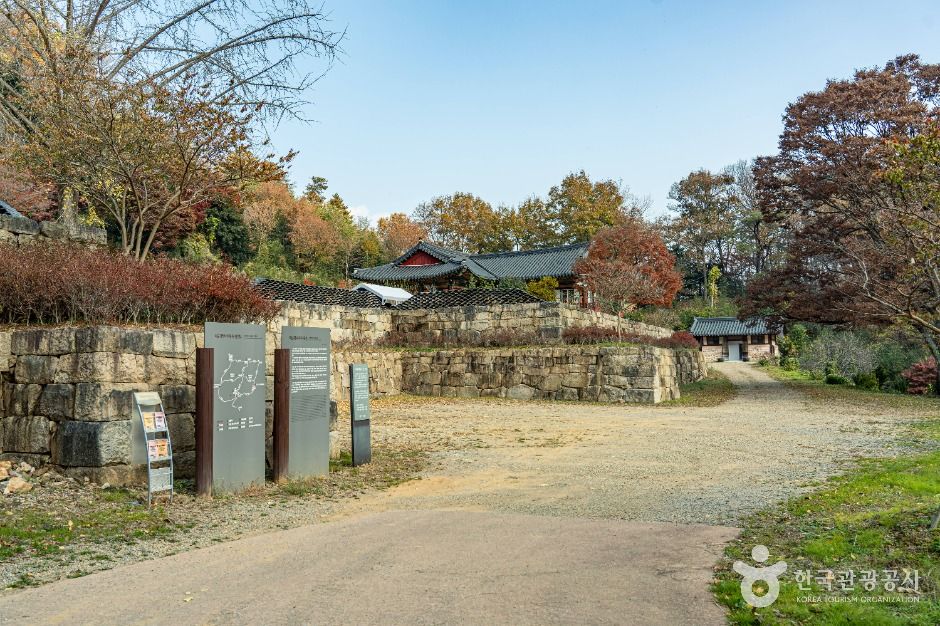
Main Halls of Gaecheonsa
- Daeungjeon: The central Dharma hall of Gaecheonsa, enshrining Sakyamuni Buddha as the sole deity. The subtle colors of dancheong and the beauty of wooden architecture harmoniously blend, leaving a deep impression.
- Cheonbuljeon: Enshrining over 200 Buddhas, this is where the Buddhist project to enshrine 1,000 Buddhas is continuously underway. Entering here, you can encounter the benevolent smiles of numerous Buddhas.
- Chimsumu: A pavilion serving as the entrance to the temple, it is a space where visitors can appreciate the serene scenery and rest for a while.
- Yosachae: The living quarters for monks, where the spirit of spiritual practice subtly pervades.
Hermitages Leading to Another World
Beyond its main temple, Gaecheonsa also encompasses three hermitages, including Cheongnyeonam and Baengnyeonam, providing spaces for deeper practice and devotion. If time permits, exploring these hermitages along the quiet mountain paths will be a special experience.
Mysterious Nutmeg Yew Forest and Nature’s Masterpiece, Geobukbawi Rock
If you visit Gaecheonsa, you cannot miss the surrounding natural scenery. The tranquil nutmeg yew forest and strange-shaped rocks, harmonizing with the quietness of the ancient temple, deeply move visitors.
A Thousand-Year-Old Nutmeg Yew Forest, a Meditation Path for Walking in Serenity
Located near Gaecheonsa, ‘Gaecheonsa Bijarim’ is a mysterious forest where a thousand nutmeg yew trees form a cluster. The unique subtle fragrance of the nutmeg yew trees and their evergreen leaves create the illusion of having arrived in another world. As you walk along the forest path, you will naturally feel your mind calm and your complex thoughts become organized.
Geobukbawi Rock’s Aspiration to Climb Towards the Mountain Peak
Passing through the nutmeg yew forest, you will encounter ‘Geobukbawi Rock’, shaped as if crawling towards the mountain peak. This strange-shaped rock, sculpted by nature over a long time, deeply resonates with visitors, appearing as if it’s slowly but steadily advancing with an earnest wish. These natural landscapes surrounding Gaecheonsa further enrich the temple’s historical value.
Wise Visit Tips to Experience Gaecheonsa More Deeply
How to Get to Gaecheonsa: What’s the Best Way?
Hwasun Gaecheonsa is located in Hwasun-gun, Jeollanam-do, making it accessible by both public transportation and private car. Whichever method you choose, you will be able to fully experience the charm of this serene temple amidst nature.
| Transportation Method | Features & Advantages | Notes |
|---|---|---|
| Public Transportation | Relaxed travel possible, easy to enjoy surrounding scenery. Use bus from Hwasun-eup. | Need to check bus schedule intervals, consider walking time from the bus stop. |
| Private Car | Convenient travel, easy luggage storage, convenient for connecting to nearby tourist attractions. | Search for ‘Gaecheonsa’ in your navigation. Parking is available for free. |
Things to Check Before Your Visit
- Operating Hours: Temples are generally open from dawn until dusk, but specific halls or hermitages may have restricted access. It is advisable to check in advance.
- Connecting with Nearby Tourist Attractions: In Hwasun, there are many historic places besides Gaecheonsa, such as the Dolmen Site, and Unjusa. Try planning an itinerary to visit them together.
- Dress Code and Essentials: If you plan to walk along the nutmeg yew forest paths, it’s recommended to wear comfortable shoes and prepare appropriate seasonal attire.
- Photography Etiquette: It is polite to refrain from photographing inside temple halls or monks during their practice, and to observe quietly and respectfully.
Frequently Asked Questions
Q1. Who founded Hwasun Gaecheonsa?
There are two theories regarding the founding of Gaecheonsa. One theory states that Do-ui Seonsa founded it in the late King Heondeok period of Unified Silla (809-825), and another states that Doseon Guksa founded it in the late Unified Silla period. However, as these are all later records, it is difficult to confirm definitively.
Q2. What trials has Gaecheonsa endured?
Gaecheonsa was burned down and destroyed during the Jeongyujaeran in the Joseon Dynasty, but was later restored. In 1950, it suffered the loss of its Cheonbuljeon during the Korean War. However, it was rebuilt thereafter and continues to exist today.
Q3. Are there any notable places to visit near Gaecheonsa?
Yes, near Gaecheonsa, there is ‘Gaecheonsa Bijarim’, a mysterious forest where a thousand nutmeg yew trees form a cluster. Additionally, ‘Geobukbawi Rock’, shaped as if climbing towards the mountain peak, is also a sight to behold. It’s great for a quiet walk.
Q4. What halls are there in Gaecheonsa?
Gaecheonsa features the Daeungjeon enshrining Sakyamuni Buddha as the sole deity, Cheonbuljeon where over 200 Buddhas are enshrined, Chimsumu, Yosachae, and more. It also has three hermitages, including Cheongnyeonam and Baengnyeonam.
Q5. What are the characteristics of Gaecheonsa Cheonbuljeon?
Currently, over 200 Buddhas are enshrined in Gaecheonsa Cheonbuljeon, and the Buddhist project to enshrine 1,000 Buddhas is continuously underway. This is a special space where you can encounter many Buddhas in one place.
 Love Korea? Promote it & Earn.