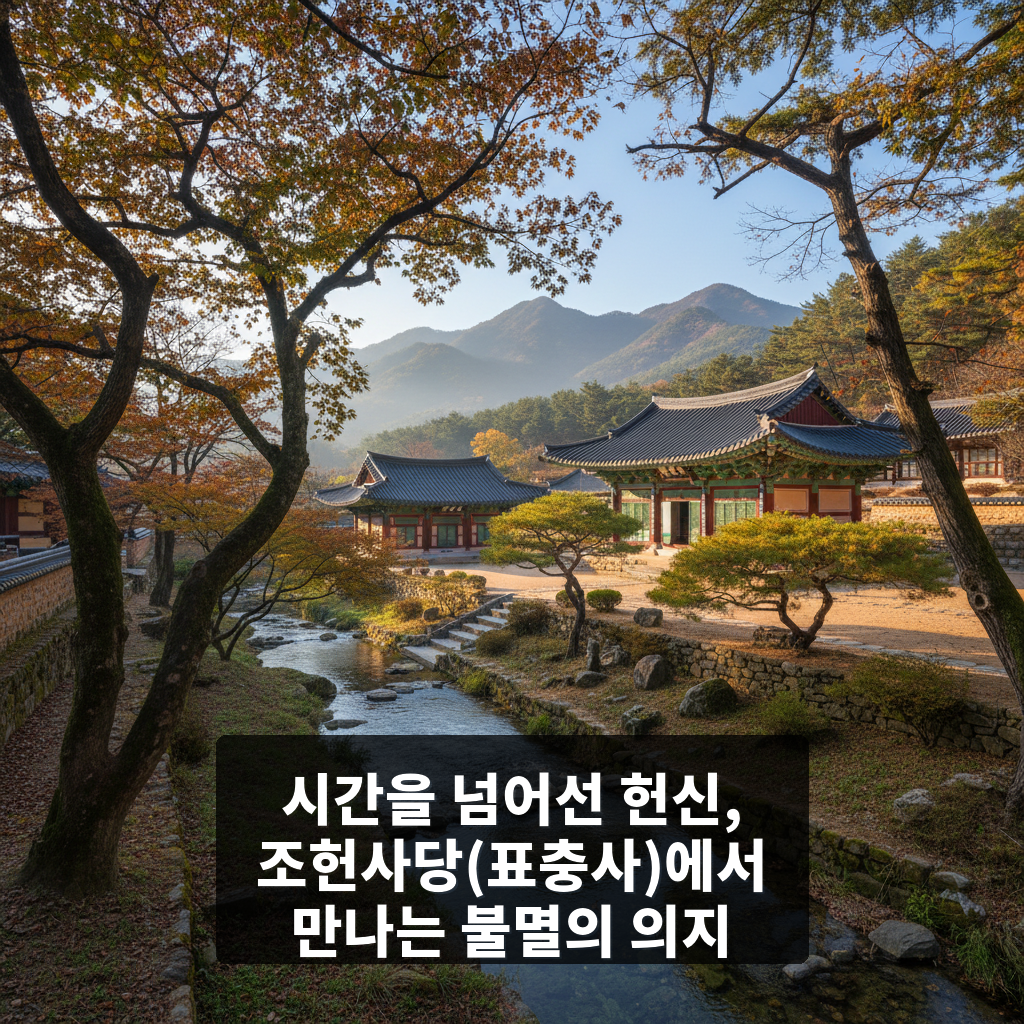
Devotion transcending time, an immortal will encountered at Joheon Sadang (Pyojeongsa)


Do you know of a place that breathes beside us, preserving a page of history intact? A place that fully embodies the traces of a hero who sacrificed his life for the nation amidst the turbulent waves of the Imjin War, it is none other than Joheon Shrine (Pyochoongsa), located in Geumsan, Chungcheongnam-do. This is not just a historical site, but a living historical ground where you can encounter the noble spirit of ancestors who endured an era with their whole being.
The moment you step into this serene shrine, you can vividly feel the passionate loyalty of Junghong Jo Heon and the tragic shouts of the Battle of Geumsanseong from over 400 years ago. Let’s explore together the profound meaning of how one hero’s story took root in the hearts of descendants across generations.
The value of Joheon Shrine (Pyochoongsa) as a bujo sau (ancestral shrine), a special space designated by the court to permanently enshrine the ancestral tablets of those who rendered great service to the nation, still resonates deeply with us today.
Following in the Hero’s Footsteps: Junghong Joheon and His Connection to Geumsan
Joheon Shrine (Pyochoongsa) is a bujo sau (ancestral shrine) dedicated to Junghong Joheon, who died a martyr in the Battle of Geumsanseong during the Imjin War. The name bujo sau itself holds deep historical significance, meaning a place designated by the court to permanently enshrine the ancestral tablets of those who rendered great service to the nation. Although the teacher primarily lived in Bamti, Aneup, Okcheon-gun, it is said that he frequently visited the Geumsan area and instructed his descendants to settle there.
Reconstruction of the Shrine, Overcoming Time


This shrine was originally built in 1734 (10th year of King Yeongjo) on Jinsan Mountain in Goknam-ri. However, over a long period, the building collapsed, and it was rebuilt in its current location through the dedicated efforts of Confucian scholars and descendants. Beyond merely restoring a building, this is a part where one can feel their desire to inherit the spirit of an era.
The Wisdom of Sages Engraved on Susimdae (水心臺)
Behind the shrine, the inscription ‘Susimdae (水心臺)’, personally named by the teacher and known to be in the handwriting of Uam Song Si-yeol, a great scholar of the late Joseon Dynasty, is preserved intact to this day. Take a moment to pause before Susimdae, which means a mind as calm and unwavering as water, and reflect on the thoughts of the sages who lived through turbulent times.
The Path to Joheon Shrine (Pyochoongsa): The Beginning of a Serene Journey


Joheon Shrine (Pyochoongsa), located along Geumsancheon Stream in Sang-ri, Geumsan-eup, is a place where you can feel tranquility even within the city. When using public transportation, you can take a bus towards Geumsan-eup from Geumsan Intercity Bus Terminal, or if driving, you can easily find it by entering the address into your navigation system. The area around the shrine is quiet and peaceful, perfect for contemplation and walking.
Information for Visitors
- Location 277-2 Sang-ri, Geumsan-eup, Geumsan-gun, Chungcheongnam-do
- Operating Hours Like most historical sites, it is open year-round, but it is advisable to check the viewing hours for internal facilities separately.
- Admission Fee Free to visit and view.
Geumsan’s Hidden Treasures, Along with Joheon Shrine (Pyochoongsa)
After visiting Joheon Shrine (Pyochoongsa), explore other nearby attractions and enjoy the charm of Geumsan. Geumsan is famous as the home of ginseng, but it is also full of diverse sights where history and nature blend harmoniously.
Recommended Linked Courses
- Geumsan Ginseng Market Located not far from Joheon Shrine. It is a lively market where you can see and purchase world-renowned Geumsan ginseng and various health foods. Don’t miss out on delicious treats like fried ginseng.
- Chilbaeguichong Shrine This is where the righteous army soldiers and monk soldiers who died as martyrs in the Battle of Geumsanseong are enshrined. It is a deeply meaningful place that commemorates the spirit of sacrifice of the common people during the Imjin War, alongside the loyalty of Teacher Joheon. Visiting it with Joheon Shrine (Pyochoongsa) will allow for a deeper understanding of the history of the Battle of Geumsanseong.
- Gaesamteo A place steeped in the legend of the origin of ginseng cultivation. You can glimpse the history and culture of ginseng in a serene atmosphere.
How to Enjoy Geumsan’s Nature
- Daedunsan Provincial Park Famous for its beautiful rock formations, sea of clouds, and thrilling suspension bridge. It’s a must-visit course if you enjoy hiking.
- Around Geumgang River You can enjoy a leisurely stroll along the riverside path, created to follow Geumsan’s beautiful natural scenery. The autumn foliage, in particular, is a spectacular sight.
Special Travel Tips for Feeling the Breath of History
Joheon Shrine (Pyochoongsa) is wonderful to visit any season, but especially in late autumn or early spring, it is ideal for deep contemplation in a serene and atmospheric setting. Choosing a quiet time to visit will allow for a more peaceful viewing experience.
Checklist for a Historical Journey
- Acquire Prior Knowledge You can have a richer experience by learning some basic information about Junghong Joheon, the Imjin War, and the Battle of Geumsanseong in advance.
- Comfortable Attire Prepare comfortable shoes and clothing suitable for walking around the shrine and along Geumsancheon Stream.
- Photographing Memories Capture the beautiful scenery and architecture, which fully embody the traces of history, in photos to preserve your memories. However, be careful not to disrupt the solemn atmosphere.
- Connecting to Nearby Attractions Plan a fulfilling day in Geumsan by visiting Chilbaeguichong Shrine, Geumsan Ginseng Market, and other places introduced above.
Geumsan’s Joheon Shrine (Pyochoongsa) is more than just a relic of the past; it is a precious space that awakens a correct historical consciousness and patriotism in us today. Why not take a meaningful trip to pause from your busy daily life, remember the dedication of unsung heroes, and reflect on their spirit? The experience here will surely leave a deep and lasting impression on your heart.
Frequently Asked Questions
Q1. What kind of place is Joheon Shrine (Pyochoongsa)?
Joheon Shrine (Pyochoongsa) is a bujo sau (ancestral shrine) dedicated to Junghong Joheon, who died a martyr in the Battle of Geumsanseong during the Imjin War. A bujo sau refers to a special shrine designated by the court to permanently enshrine the ancestral tablets of those who rendered great service to the nation.
Q2. What does bujo sau (不祧祠宇) mean?
Bujo sau is also called ‘bulcheonjiwi (不遷之位)’, and it refers to a shrine permitted by the state to permanently enshrine the ancestral tablets of individuals who rendered great service to the nation. While general shrines hold ancestral rites up to the fourth generation, bujomyo (ancestral shrines) hold rites eternally.
Q3. What is the connection between Teacher Joheon and Geumsan?
Although Teacher Joheon primarily lived in Bamti, Aneup, Okcheon-gun, it is said that he frequently visited the Geumsan area and instructed his descendants to settle there. After he died a martyr in the Battle of Geumsanseong, Geumsan became an important place commemorating his loyalty.
Q4. What are some recommended places to visit near Joheon Shrine (Pyochoongsa)?
We recommend visiting Chilbaeguichong Shrine, where you can feel the history of the Battle of Geumsanseong alongside Joheon Shrine (Pyochoongsa), Gaesamteo, where you can see the history of ginseng, and the bustling Geumsan Ginseng Market.
Q5. Are there any special tips for visiting Joheon Shrine (Pyochoongsa)?
Learning about Junghong Joheon and the Battle of Geumsanseong in advance through prior knowledge will make your visit more meaningful. Additionally, plan a course to deeply experience Geumsan’s history and culture by connecting it with nearby Chilbaeguichong Shrine and the Ginseng Market.