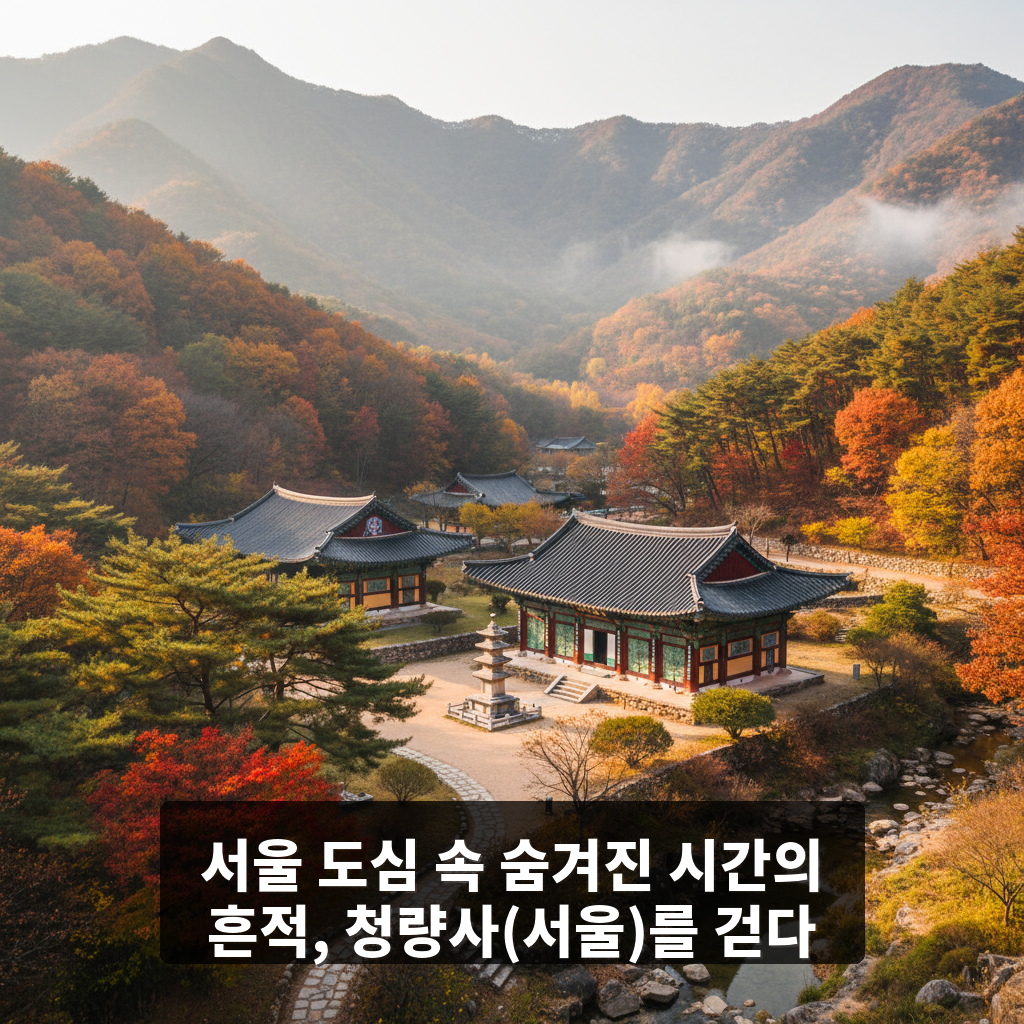
Walking Cheongnyangsa (Seoul), hidden traces of time in the city center of Seoul


Did you know that in the heart of bustling Seoul, amidst a forest of skyscrapers, lies a tranquil temple where time seems to stand still? It exists like a forgotten tale, yet it fully embraces the tumultuous modern and contemporary history of Korea – this place is Cheongnyangsa (Seoul) in Jongam-dong.
From the Joseon Dynasty to the present day, this place, where countless people have passed through, has served not just as a place of prayer but also as a witness to painful history and a haven for the weary. Today, we would like to take some time to experience together the whispers of the past and the tranquility of the present that Cheongnyangsa (Seoul) has to offer.
What indeed is the charm of this temple that firmly holds its ground amidst the noise of the huge city, delivering a quiet yet profound resonance to us?
Following the Traces of Time, a Hidden Historical Journey through Cheongnyangsa (Seoul)
Cheongnyangsa (Seoul) is a historic nunnery located on the southern foothills of Cheonjangsan. It was here that ‘Dolkkoji Seungbang’, famously known as one of the four great nunneries of Joseon, was originally situated. Although Cheongnyangsa and Dolkkoji Seungbang were originally separate temples, they came to share a single history due to a fateful event.
A Drama of Merger Spanning a Turbulent Era
In 1895, after Empress Myeongseong was tragically assassinated due to Japan’s plot to annex Joseon, and her royal tomb, Hongneung, was established, the existing Cheongnyangsa, located at the site of Hongneung, was moved to its current location. At that time, Dolkkoji Seungbang was also in decline, and these two temples were merged amidst an unavoidable historical trend, transforming into today’s Cheongnyangsa (Seoul). In essence, the histories of two temples came to coexist under the name of one temple.
| Period | Meaning and Role of Cheongnyangsa |
|---|---|
| Late Joseon Dynasty | A retreat and spiritual haven where people from the capital city often visited to rest |
| Japanese Colonial Period | A base for the independence movement, frequently visited by many patriots and eminent monks amidst the sorrow of a lost nation |
| Present | A serene space for practice connecting the past and present within the city |
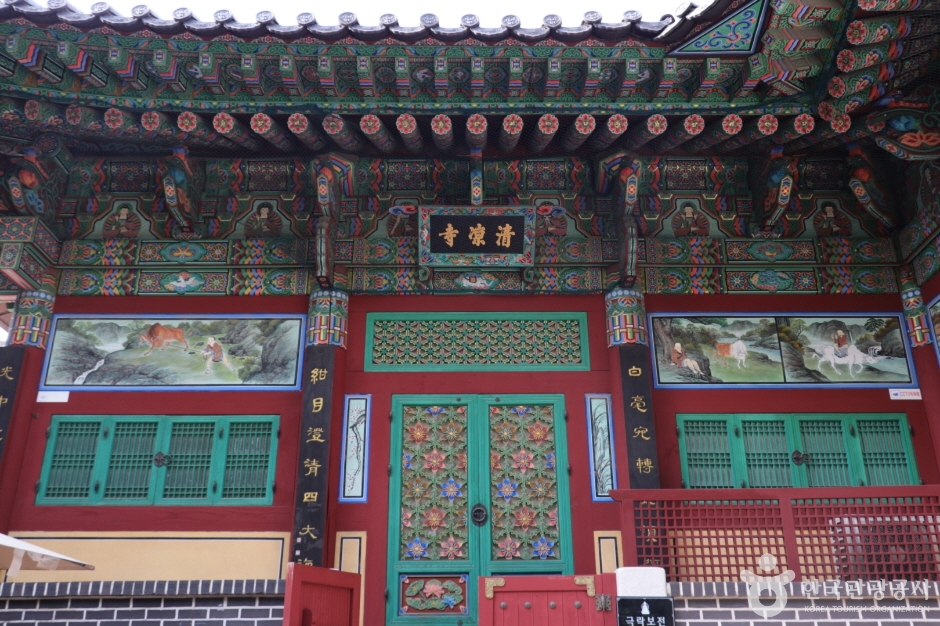
Notably, during the Japanese Colonial Period, it is said that Master Manhae Han Yong-un, who led the independence and Buddhist movements, once stayed at Cheongnyangsa. On July 12, 1939, a modest sixtieth birthday celebration for Master Manhae was also held here. It is also said that Master Park Han-yeong, a great scholar in the Buddhist community, resided and practiced at this temple during the same period, suggesting that Cheongnyangsa (Seoul) was more than just a temple; it was a historical space where the intellect and spirit of the era intersected. The calligraphy on the Cheongnyangsa signboard hanging in the temple’s main hall is said to be by Master Park Han-yeong, which adds to its historical Depth.
Amidst the City’s Noise, Encountering a Tranquil Present at Cheongnyangsa (Seoul)
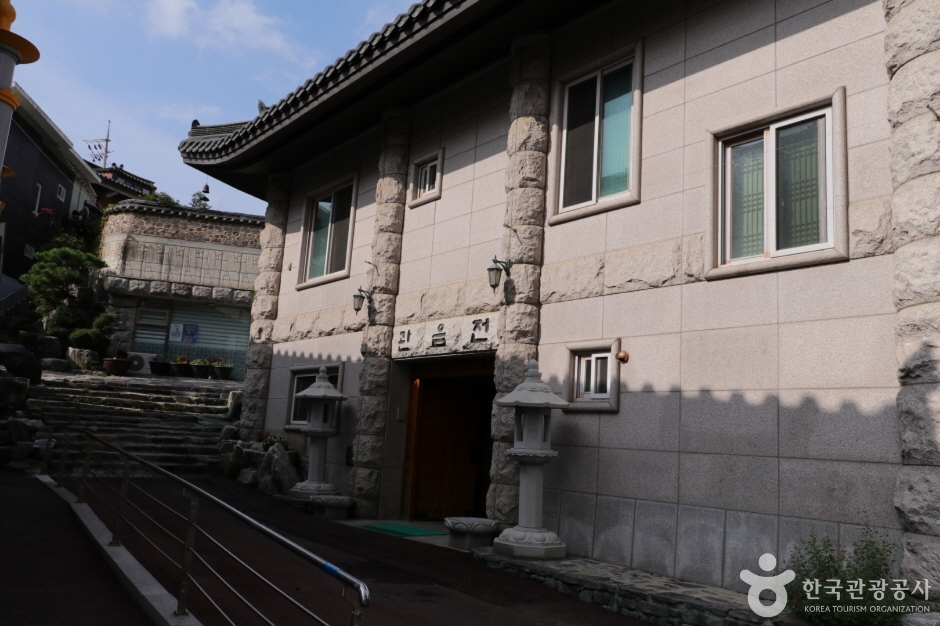
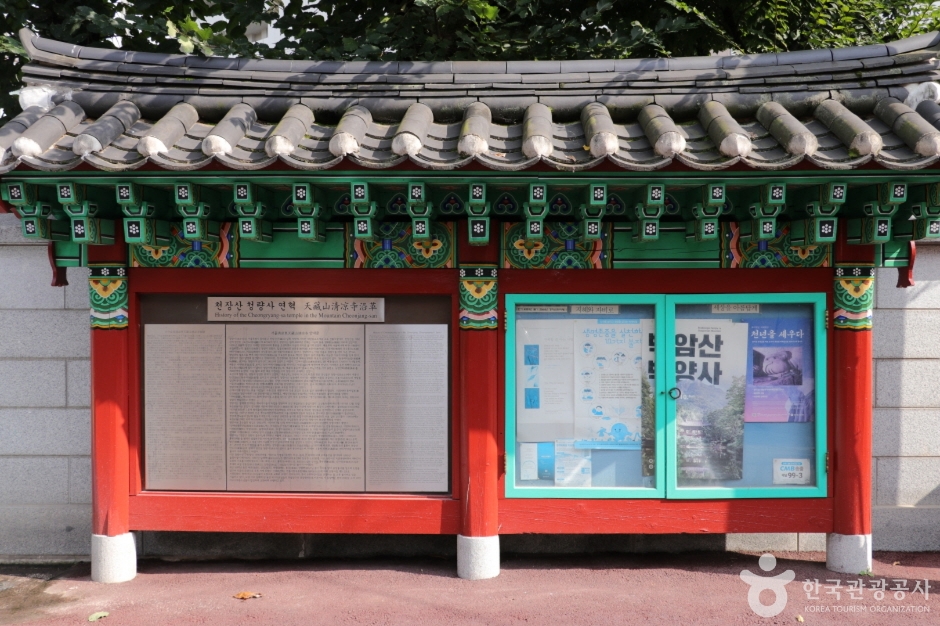
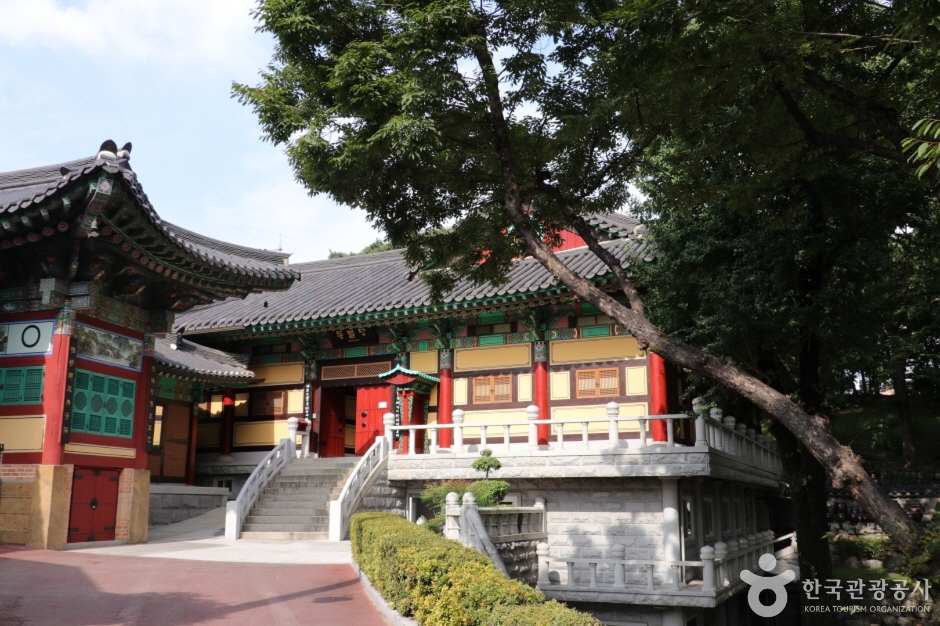
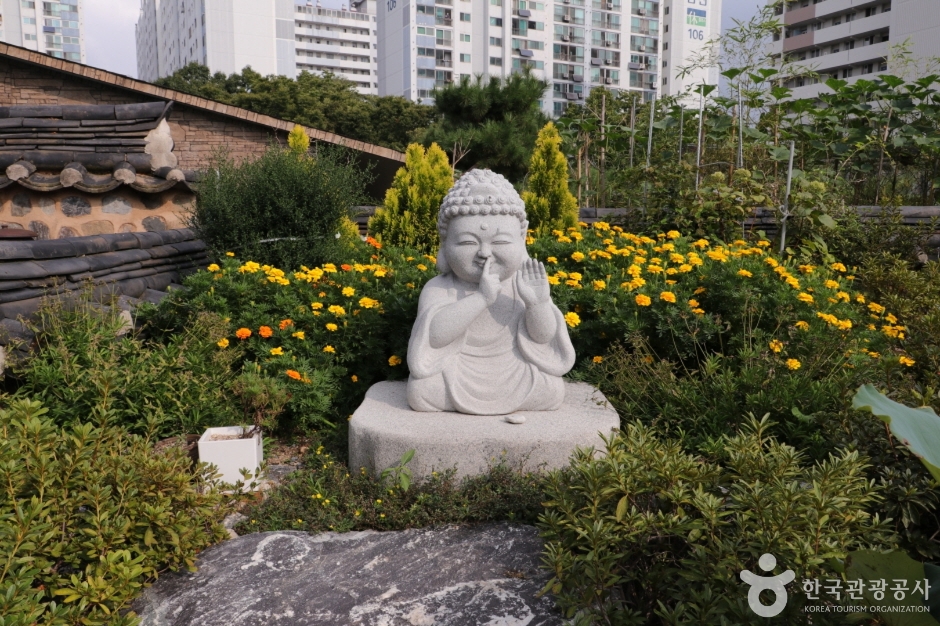
The moment you step through the temple’s main gate, it feels as if you’ve entered another world. However, the sight of tall apartment buildings overlapping behind the Gwaneumjeon Hall reminds you that this place is distinctly situated in the heart of Seoul. This is undoubtedly the unique charm of Cheongnyangsa (Seoul), where past and present coexist.
A Gift from Nature in the City Center
Klook.com- Lush Green Walking Trails Located on the foothills of Cheonjangsan, tranquil forest paths extend around the temple. Even for a short while, you can enjoy the pleasure of walking in nature and breathing fresh air.
- Scenery Reflecting Seasonal Changes With flowers in spring, green leaves in summer, autumn foliage in fall, and snowy landscapes in winter, it offers beautiful scenery to visitors throughout all four seasons.
How to Get to Cheongnyangsa (Seoul) & Nearby Attractions
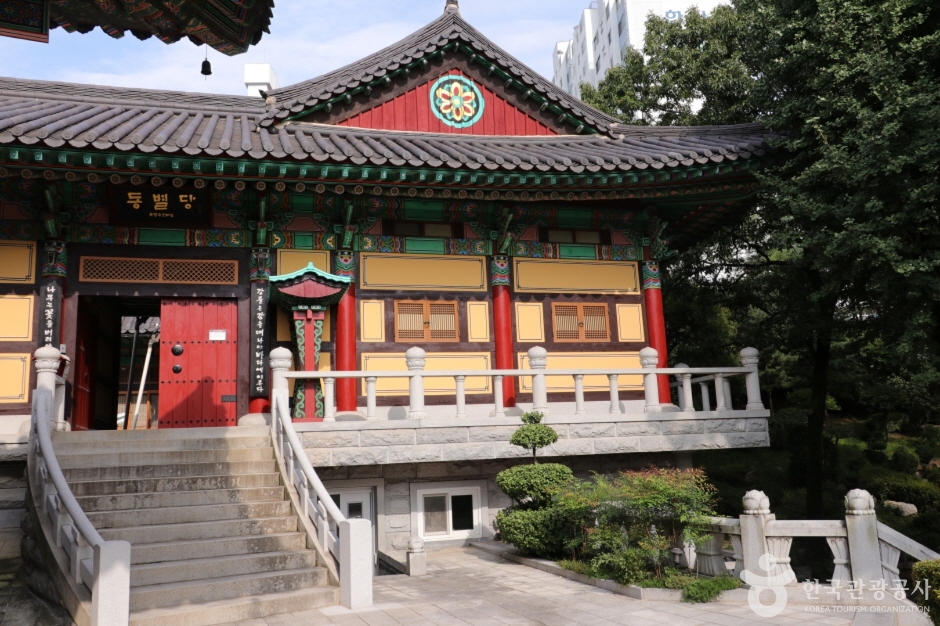
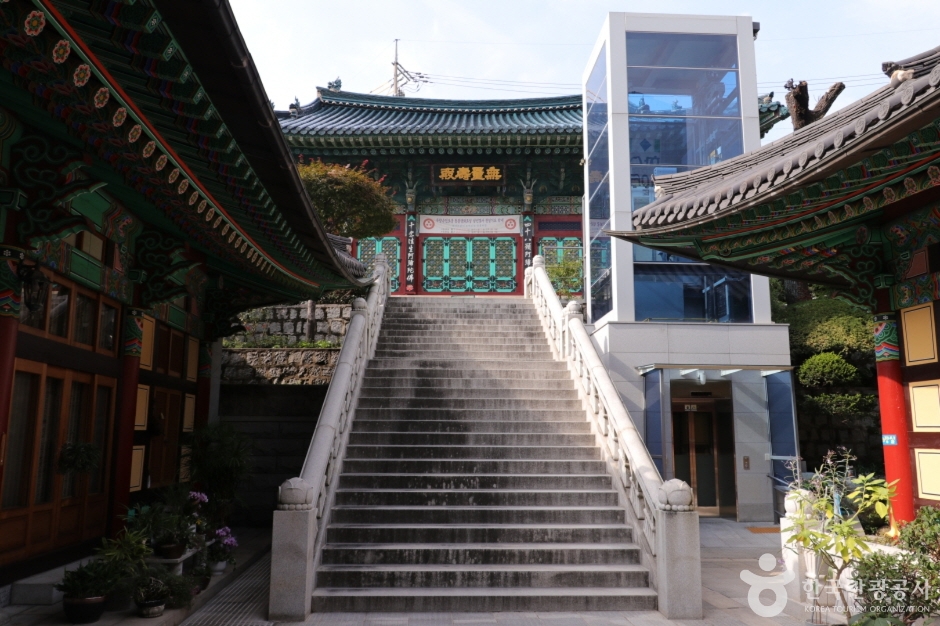
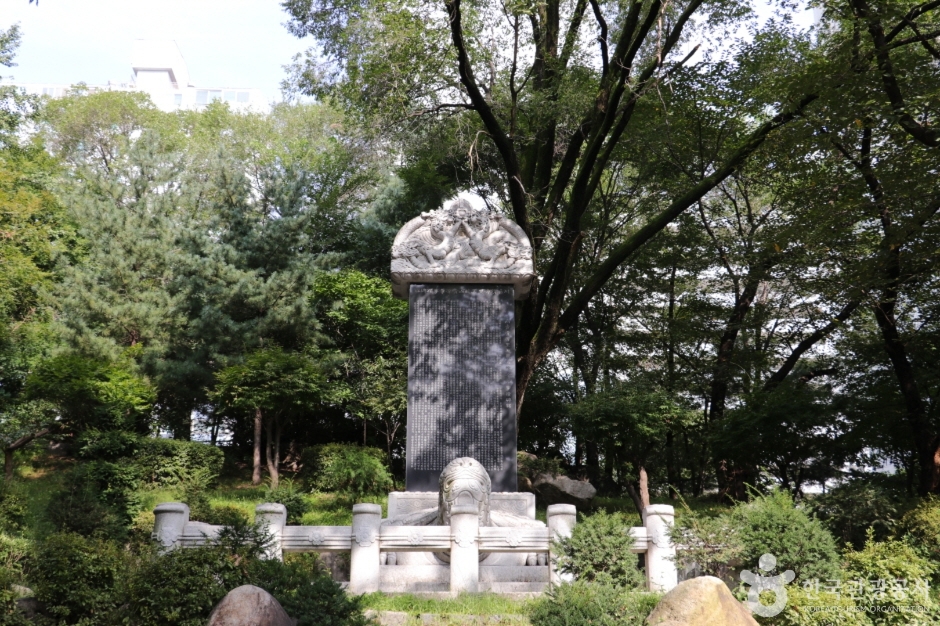
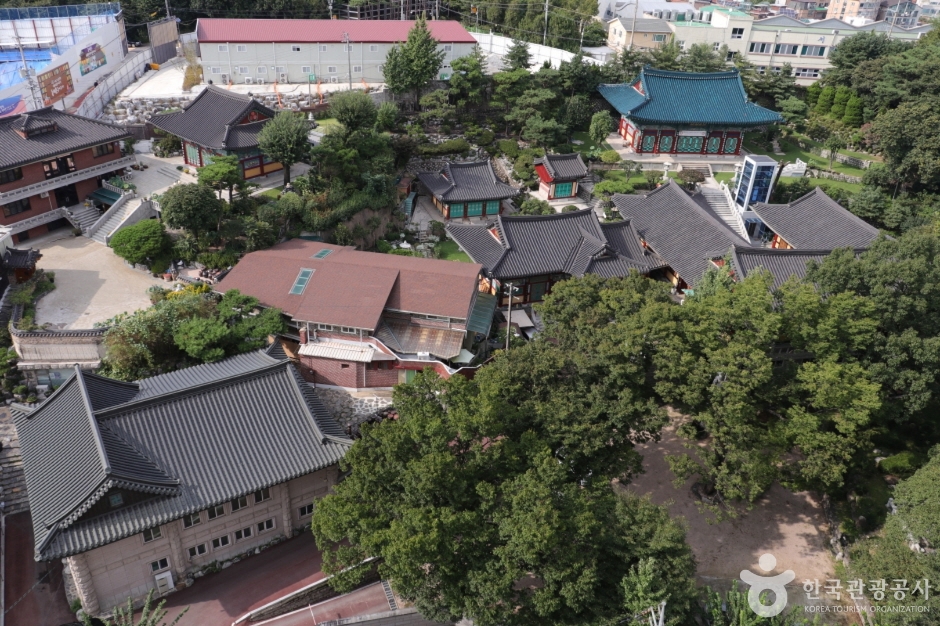
Jongam-dong, Seoul, an Easily Accessible Temple in the City Center
Cheongnyangsa is located in Jongam-dong, Seongbuk-gu, Seoul, and is easily accessible by public transportation. Its proximity to a subway station makes it a great advantage for a hassle-free visit.
New Delights at Every Step
- Korea University Museum Located not far from Cheongnyangsa, offers an opportunity to view Korean history and culture at a glance. It’s an excellent course to add academic depth after visiting the temple.
- Gaeunsa Gaeunsa is another ancient temple in Anam-dong. Exploring it along with Cheongnyangsa would be an interesting experience to compare the ambiance of traditional temples in urban Seoul.
- Seongbuk-dong Hanseongdaegil Seongbuk-dong Hanseongdaegil is recommended as a course where old-fashioned alleys blend with modern cafes and restaurants, allowing you to combine dining and relaxation.
Cheongnyangsa (Seoul) Visit: Be Sure to Know This!
- Check Operating Hours Temples are usually open from early morning until sunset, but hours may change due to specific events or during winter, so it’s best to check before visiting.
- Maintain Quiet Observation Etiquette As it is a nunnery where Bhikkhunis practice, please behave quietly within the premises and be careful not to disturb their practice.
- Adhere to Dress Code It is advisable to visit in modest attire to show respect for the sanctity of the temple. It is best to avoid overly revealing clothing.
- Be Mindful of Photography Photography may be restricted in certain halls or practice areas, so please check signs or inquire with a monk before taking photos.
- Practice Nature Conservation As it is situated within the natural environment of Cheonjangsan, it is important to refrain from littering and to explore with a mindset of caring for nature.
Cheongnyangsa (Seoul) is not merely an old temple. It is a living witness that has steadfastly maintained its place amidst the maelstrom of history, and a precious space that offers comfort and introspection to us who live today. This weekend, how about taking a moment to pause and reflect on yourself at Cheongnyangsa (Seoul), a secret haven in the city center?
Frequently Asked Questions
Q1. What kind of temple is Cheongnyangsa (Seoul) and what is its significance?
Cheongnyangsa is a historic nunnery located on the southern foothills of Cheonjangsan, formed by the merger with Dolkkoji Seungbang, one of the four great nunneries of the past. It is also a historical place where the independence activist Master Manhae Han Yong-un once visited.
Q2. What is the connection between Master Manhae Han Yong-un and Cheongnyangsa?
During the Japanese Colonial Period, Master Manhae Han Yong-un, who spearheaded the independence and Buddhist movements, once stayed at Cheongnyangsa, and in 1939, his modest sixtieth birthday celebration was held here. His spirit is imbued throughout the temple.
Q3. Are there any specific precautions to take when visiting Cheongnyangsa?
Cheongnyangsa is a nunnery where Bhikkhunis practice, so please behave quietly within the premises and wear modest attire. Additionally, photography may be restricted in certain halls, so it is advisable to check in advance.
Q4. Are there any other places worth visiting near Cheongnyangsa?
Yes, near Cheongnyangsa, you can find the Korea University Museum, where you can gain a deep understanding of Korean history and culture, and Gaeunsa, another ancient temple. Seongbuk-dong Hanseongdaegil, where old-fashioned alleys blend with modern cafes, is also a great place to visit.
Q5. Who is said to have written the calligraphy for the Cheongnyangsa signboard?
The calligraphy on the signboard hanging in Cheongnyangsa’s main hall is said to be by Master Park Han-yeong, a Buddhist scholar who resided at Cheongnyangsa during the Japanese Colonial Period. This is an important artifact that adds to the historical value of the temple.
 Love Korea? Promote it & Earn.