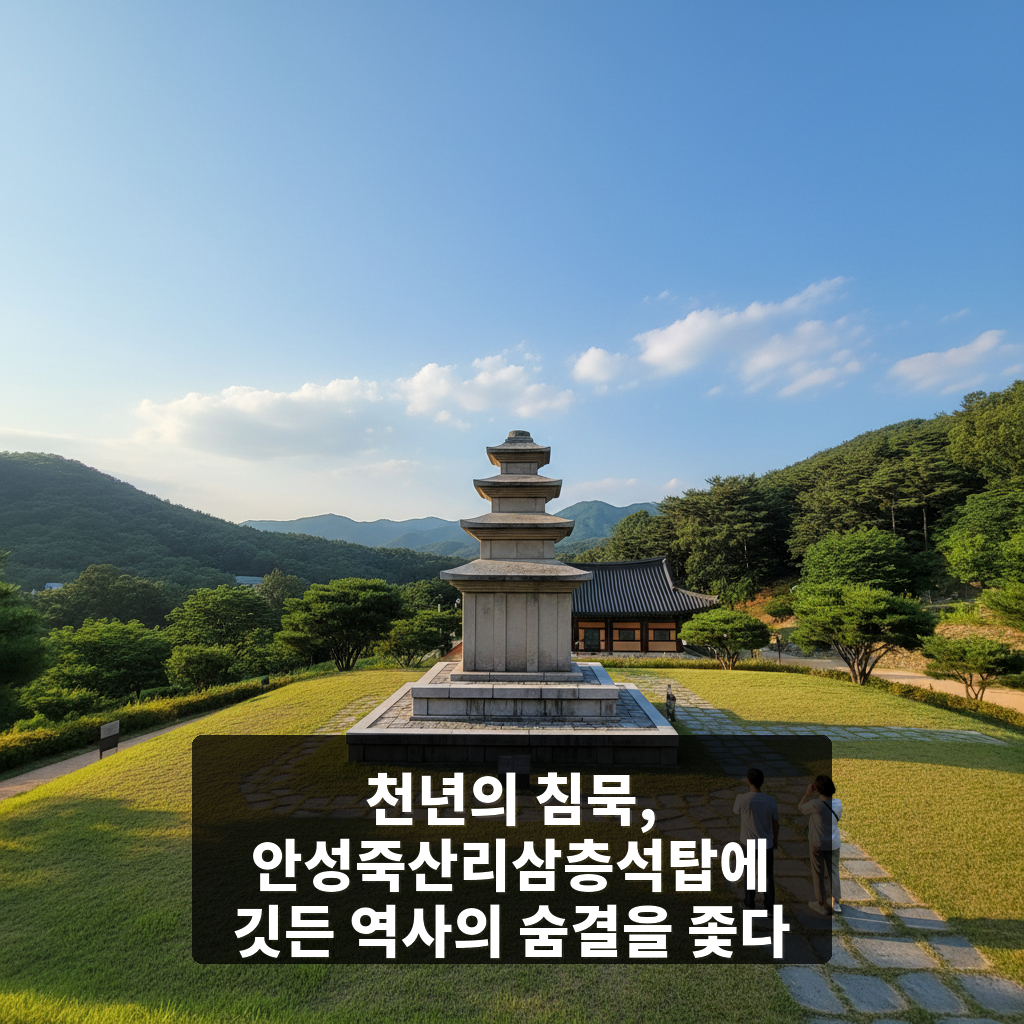
A millennium of silence, pursuing the breath of history enshrined in the Anseong Juksan-ri Three-story Stone Pagoda


In Anseong, Gyeonggi-do, a place where traces of time have accumulated layer by layer, there stands a stone pagoda majestically amidst a tranquil landscape, like an ink wash painting. Have you ever imagined what stories this pagoda might have held for a thousand years? Though seemingly simple on the surface, the Anseong Juksan-ri Three-Story Stone Pagoda whispers the forgotten secrets of the Silla and Goryeo periods, offering a profound historical resonance.
Beyond being a simple cultural heritage, this pagoda is like a living museum, silently testifying to the evolution of Buddhist art on the Korean Peninsula. Located on the former site of a great temple called Bongheopsa, its very existence poses endless questions to us. How about taking a journey through time in this place where the breath of the past lives on?
Time Held by Stone, How Were the Traces of the Bongheopsa Site Revealed?
Located in Juksan-ri, Juksan-myeon, Anseong, the Anseong Juksan-ri Three-Story Stone Pagoda guards the former site of a grand temple called Bongheopsa. Although the existence of Bongheopsa, a prominent ancient temple in the Anseong area, gradually faded into oblivion after the Joseon Dynasty, this stone pagoda remained a witness to its history. The traces of the temple, which had long been buried in the soil, were revealed through excavation surveys around the stone pagoda, astonishing the world.
Amazing Facts Revealed by Excavation

- Wisdom of Unified Silla It was revealed that a stone pagoda base from the Unified Silla period was reused beneath the lower foundation of the stone pagoda, strongly proving that a temple already existed in this area since the Unified Silla era.
- A Thousand-Year-Old Record From the lower part of the foundation, roof tiles inscribed with the phrase ‘Taehwa 6th year (太和六年, 832 AD)’ were excavated. This serves as a crucial clue to estimate the founding or reconstruction period of the temple, further supporting Bongheopsa’s long history.
Embodying the Aesthetics of Goryeo Stone Pagodas: The Formal Beauty of the Anseong Juksan-ri Three-Story Stone Pagoda
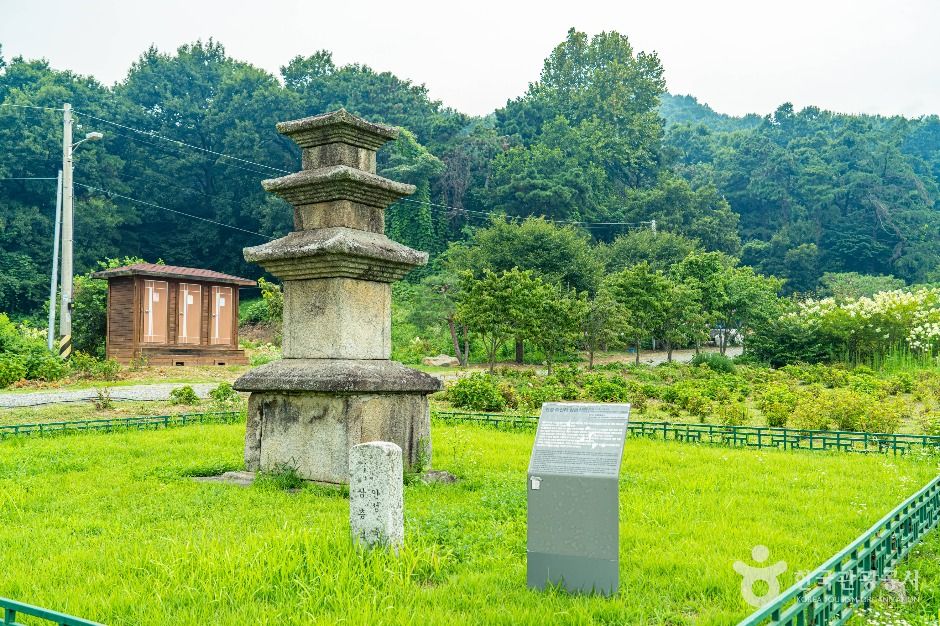
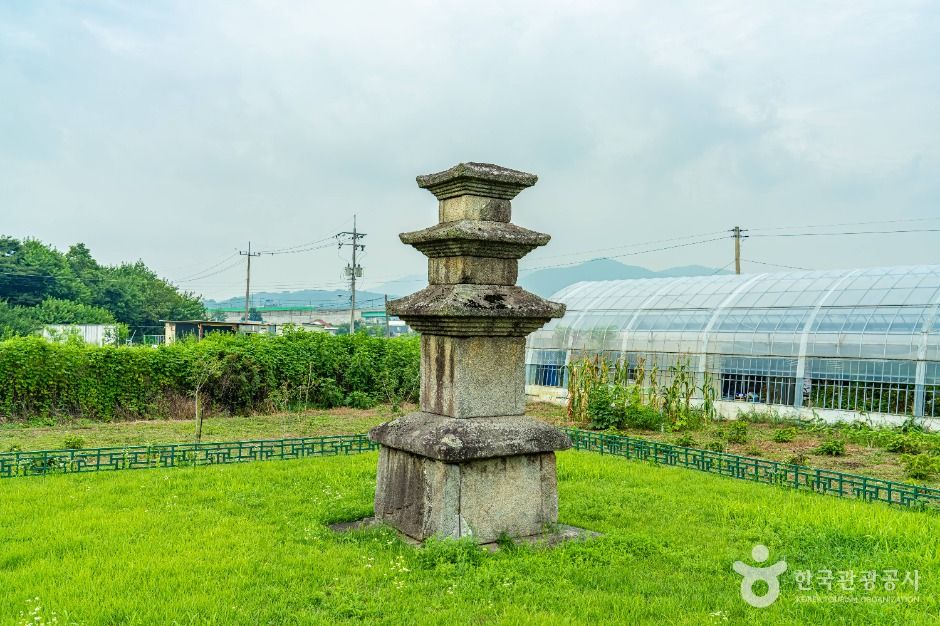
The Anseong Juksan-ri Three-Story Stone Pagoda, with its three-story body placed on a rectangular double base, is a representative artifact that fully displays the characteristics of Goryeo-era stone pagodas. Its appearance, seemingly rustic yet elaborate, grand yet delicate, leaves a deep impression on viewers. Shall we take a closer look at the unique beauty created by the harmony of its parts?
Harmony of Delicacy and Grandeur: The Base Section
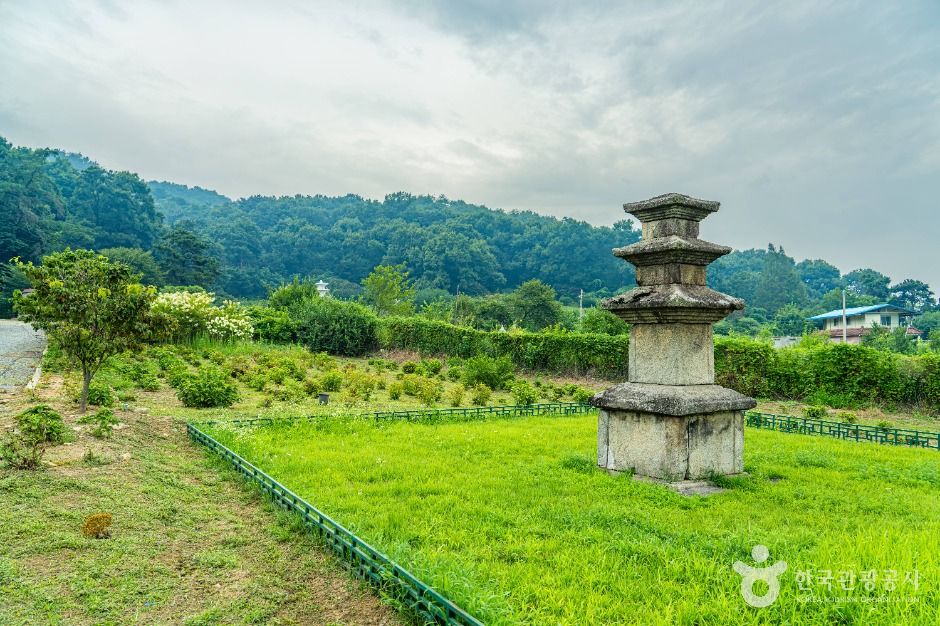
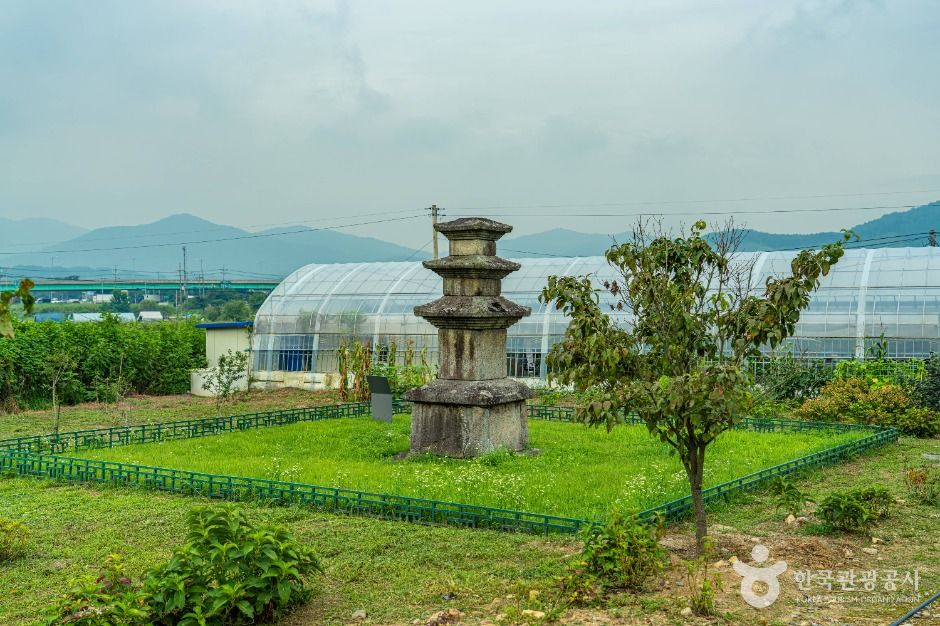
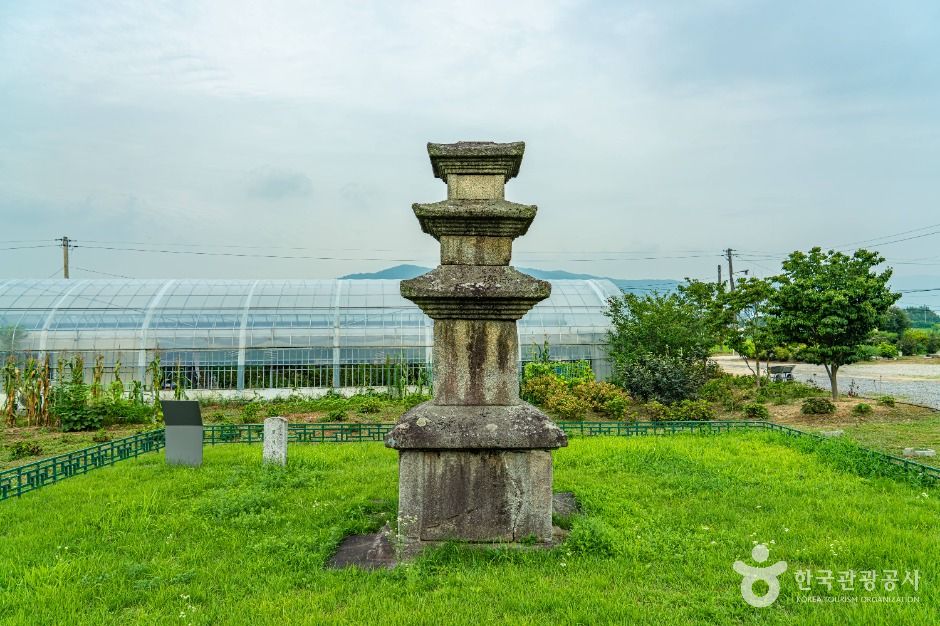
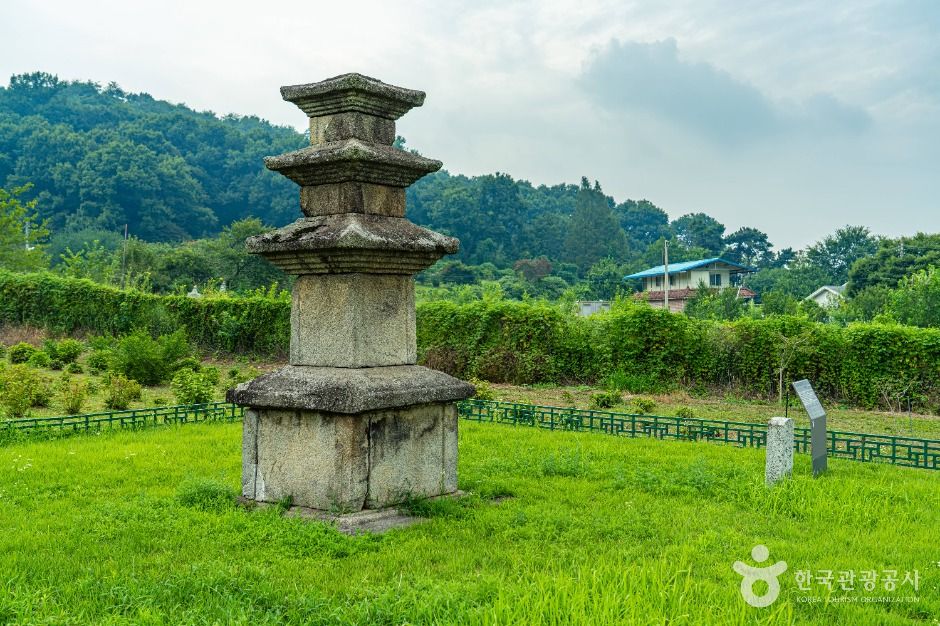
- Lower Base Only the capstone (甲石) appears above the ground, providing a stable foundation for the entire stone pagoda.
- Upper Base On the corners of the roughly hewn face stones, corner pillars (隅柱) are expressed, giving a sturdy and grand impression. This is an element that supports the weight of the stone pagoda and adds visual stability.
- Artistry of the Capstone On the upper surface of the thick capstone, lotus leaf patterns in the *bokryeon* (覆蓮) style, often seen in Goryeo-era stone pagodas, are carved, showcasing delicate beauty, and in the center, a low square body support is located.
Wisdom Piled Layer by Layer: Harmony of the Body and Roof Stone
- Independence of Each Story The body stones (*tapsinseok*), which are the main part of the pagoda, and the roof stones (*okkaeseok* 屋蓋石), which serve as the roof, are each made of a single stone, demonstrating structural stability.
- Aesthetics of Goryeo The first-story body was crafted to a similar height as the upper base, but from the second story upwards, it rapidly decreases in size, offering the dynamic and light formal beauty characteristic of Goryeo stone pagodas.
- Elegant Roof The sloping surface of the roof stone is relatively gentle, and the eaves maintain a horizontal line before curving slightly upwards at the corners (轉角), forming an elegant and beautiful line.
Steps Connecting Past and Present: Anseong Juksan-ri Travel Guide
To properly experience this precious cultural heritage that has endured a thousand years, it’s good to know a few tips. Spend some quiet time amidst the traces of the old Bongheopsa, and find your own meaning. This place is not merely a historical site, but a living historical ground.
Wise Ways to Encounter the Stone Pagoda
- Location Awareness The Anseong Juksan-ri Three-Story Stone Pagoda is located at San 24-2, Juksan-ri, Juksan-myeon, Anseong-si. When using public transportation, take a bus from downtown Anseong; if driving, please check for nearby parking spaces. You can easily find it by searching for ‘Anseong Juksan-ri Three-Story Stone Pagoda’ on your navigation system.
- Exploring the Surroundings The Juksan-ri area, where the stone pagoda is located, retains traces of the old Bongheopsa, making it ideal for a tranquil walk and discovering hidden historical traces. It is also recommended to visit in conjunction with other Anseong historical sites, such as the nearby Juksanseongji or Chiljangsa Temple.
- Visiting Hours Generally, it is open year-round, but as lighting may be insufficient in the late evening or early morning, daytime visits are recommended. For the protection of cultural heritage, please take your trash with you and strictly refrain from any acts of damage.
If you wish to fully feel the depth of history imbued in this place, it is best to visit in person and experience its thousand-year-old breath. Refer to the map below to plan your journey to the Anseong Juksan-ri Three-Story Stone Pagoda.
Frequently Asked Questions
Q1. What are the characteristics of the Anseong Juksan-ri Three-Story Stone Pagoda?
It is a stone pagoda with a three-story body on a rectangular double base. In particular, the lower base reused one from the Unified Silla period, and the upper base features carved lotus leaf patterns in the *bokryeon* style, often seen in Goryeo-era stone pagodas. The body of the pagoda, which rapidly decreases in size from the second story upwards, is also an important feature showcasing the unique formal beauty of Goryeo stone pagodas.
Q2. What kind of place was Bongheopsa, where the stone pagoda is located?
Bongheopsa is known as a historic temple that existed since the Unified Silla period. Through excavation, roof tiles inscribed with ‘Taehwa 6th year (832 AD)’ were unearthed, confirming that its history spans well over a thousand years. It served as an important center of Buddhist culture in the Anseong region.
Q3. Are there any special precautions to take when visiting?
The Anseong Juksan-ri Three-Story Stone Pagoda is a nationally designated cultural property, so Cultural heritage special care must be taken for its protection. Littering or damaging the property is strictly prohibited, and visitors should maintain a quiet viewing demeanor to be considerate of other visitors. It is recommended to follow the designated viewing paths.
Q4. Are there any other places worth visiting around the stone pagoda?
The Juksan-ri area, where the stone pagoda is located, retains traces of the old Bongheopsa, making it ideal for a tranquil walk. Nearby, there are other historical sites in Anseong, such as Juksanseongji and Chiljangsa Temple, which can be explored together for a richer historical trip. Anseongmajum Land is also nearby, making it suitable for family visitors.
Q5. What is the historical value of the Anseong Juksan-ri Three-Story Stone Pagoda?
This stone pagoda provides important material for studying the stylistic evolution of Buddhist art during the Unified Silla and Goryeo periods. In particular, its form, combining the reuse of a Unified Silla base with the formal beauty of the Goryeo period, is a valuable heritage that shows the interaction and changes between the two eras, and it holds high value as a key artifact proving Bongheopsa’s long history.